
A wall-mounted scratcher can save floor space, but the panel and its anchors must withstand repeated pulling without detaching. The goal is to support ordinary scratching without fear, punishment or forced paw handling. For animal comfort and safety boundaries, see our veterinary information disclaimer.
Choose a wall scratcher for a vertical-scratching cat
A wall-mounted panel works especially well when your cat prefers upright surfaces such as wallpaper edges or door frames. Cornell notes that some cats instead favor rugs and other horizontal surfaces, so watch the animal before drilling holes. A long panel can offer a full-body downward scratch without taking much floor area. However, the wall surface does not automatically solve a texture mismatch. Offer cardboard or a floor pad when the cat routinely scratches low. Choose a panel with an exposed, continuous scratching face and no hanging cords near the paw path.
Locate the studs or an approved wall fixing point
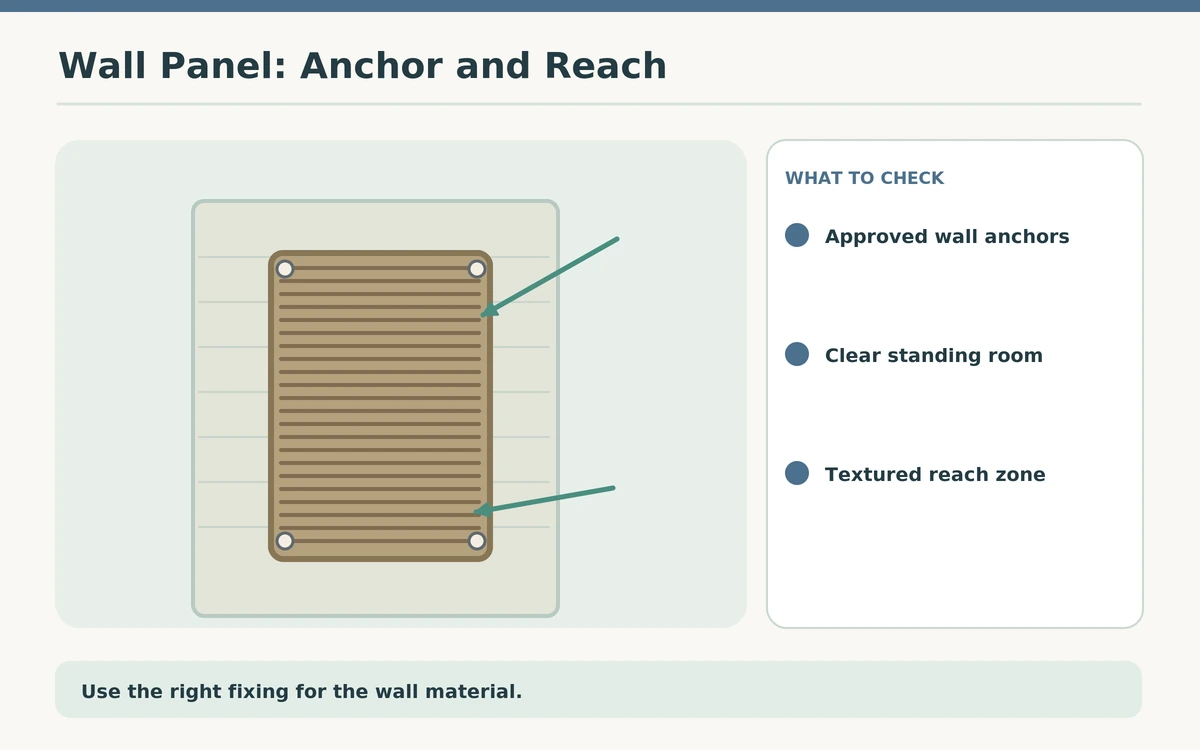
A scratcher repeatedly experiences pulling force, not just its own weight. Identify the wall construction and use the manufacturer’s mounting method for that substrate. Drywall, masonry, plaster and hollow doors need different anchors; one generic screw is not suitable for all. Follow the anchor load and installation instructions without inventing a universal weight limit for every wall. Avoid mounting over unknown pipes or electrical wiring. If you cannot establish safe attachment, select a freestanding stable post or floor scratcher instead. The wall panel should not become a surprise falling object.
Set height from the cat’s reach, not a floor diagram
Watch where the cat places its front paws for a comfortable upward stretch. Mount the scratchable section low enough for the cat to begin contact, but high enough for a natural downward pull. Leave clear footing so hind paws remain on a stable floor. A panel installed too high encourages jumps or awkward shoulder positions; one installed too low limits the stretch. Senior cats or animals with mobility limitations may benefit from a lower, horizontal option. Do not force the cat into a demonstration. Confirm real reach with voluntary play and adjust if the manufacturer permits.
Provide room to approach and move away
Keep the vertical zone free from coat hooks, exposed corner trim, power cords and furniture that blocks a full stretch. Leave floor space for a normal standing posture. Avoid placing a board behind an inward-swinging door where a moving door could strike the cat. A nearby lamp or shelf can become an obstacle when a cat leans back after a scratch. Check whether a textured panel has sharp cut edges or protruding screw heads. A flush mount with covered fixing points and a clear approach offers easier daily use.
Compare rigid panels with flexible hanging mats
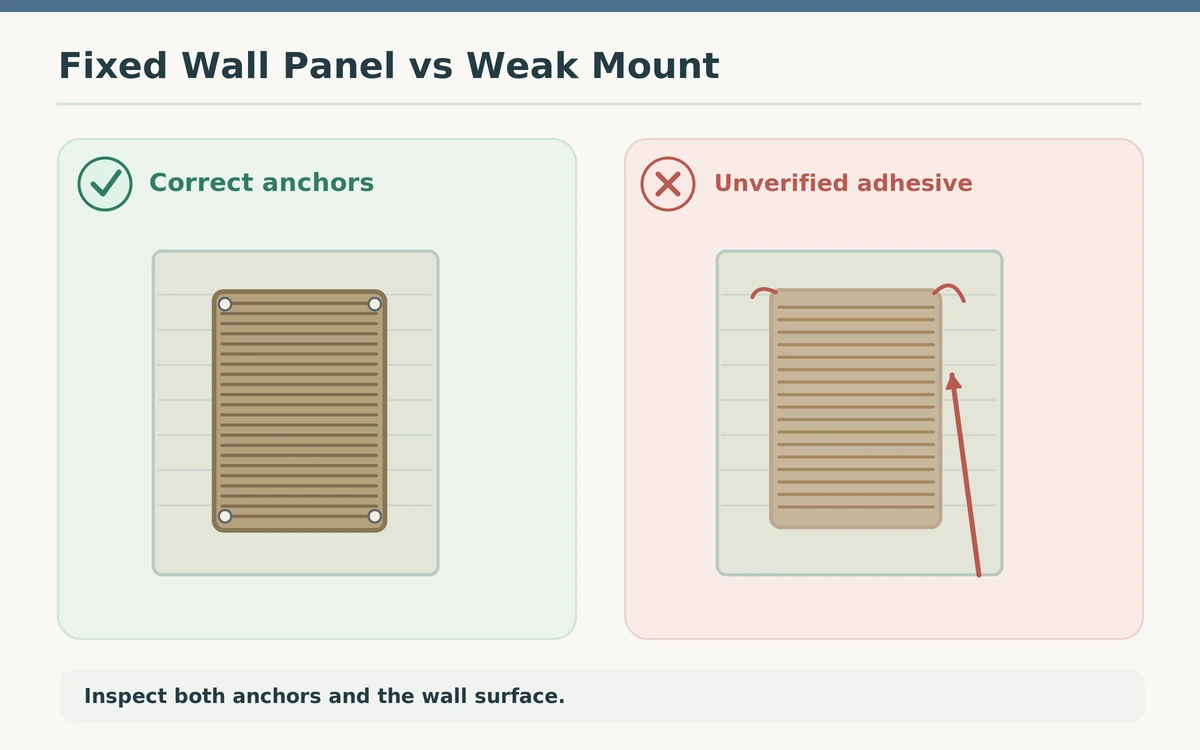
Rigid boards keep a predictable scratching plane when properly anchored. Flexible hanging mats may sway or fold, which some cats dislike. A door-hung mat also moves each time the door opens and may scrape paint or pinch fingers if placed badly. Consider whether the panel can accept strong downward pulls without peeling off. Adhesive strips may not perform like structural anchors, especially on painted or textured surfaces. Do not treat temporary adhesive as equivalent to verified load-bearing installation. Renters can choose a stable floor model when permission or wall quality is uncertain.
Check the fabric or cardboard module
Wall boards use varied contact surfaces, including woven sisal, textured wood and corrugated cardboard. Inspect seams and panels for detached edges, exposed staples or loose pieces the cat might chew. A replacement pad that fits the frame can make long-term upkeep simpler. Avoid thick raised borders that interrupt a claw’s downward path. If the panel contains carpet loops, look for catches when the cat scratches naturally. Choose a model whose manufacturer states how to remove and replace the scratchable section. Do not glue a homemade replacement over unknown old adhesive.
Install, then test without the cat present
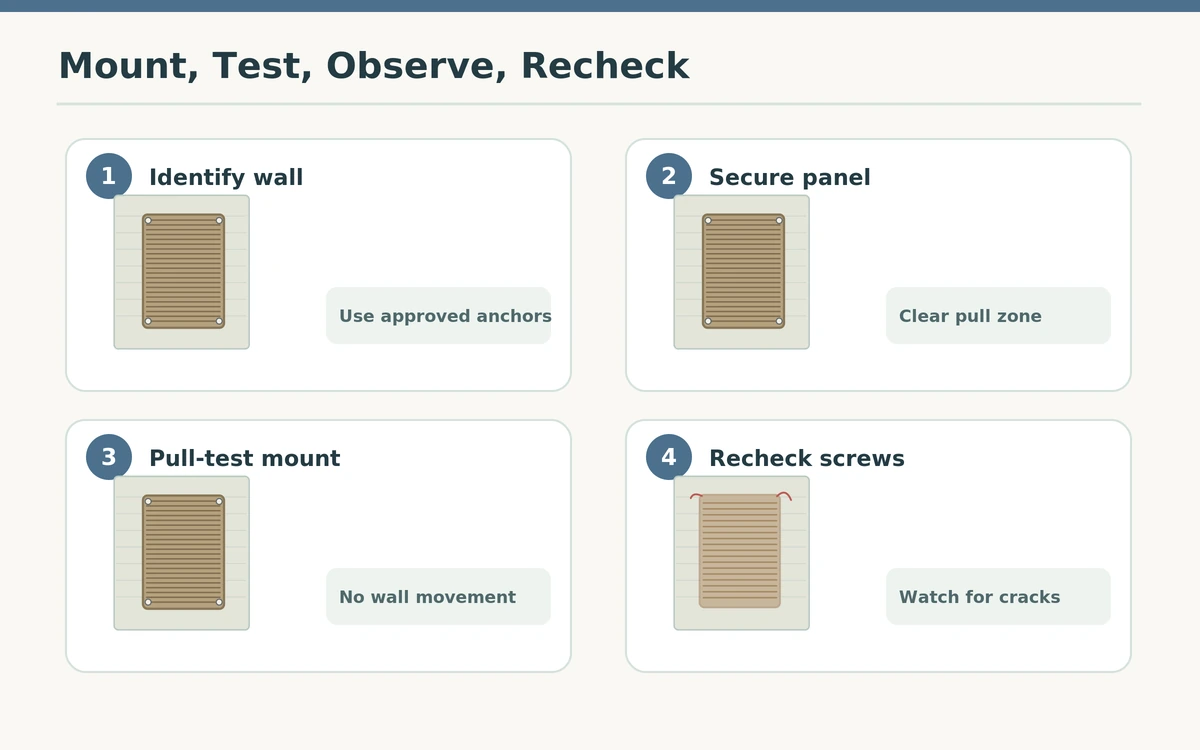
After mounting, pull gently from several points in the direction a cat would use. Look for shifting screws, loosened mounts, a panel that bows sharply or paint and plaster cracking around an anchor. Follow the maker’s assembly and torque guidance; do not overtighten into fragile material. Inspect behind a removable panel if there are exposed hooks. Only let the cat approach once the board feels stable and nearby tools are gone. Test again after a few sessions because the first repeated pulls can reveal movement that a static inspection misses.
Place the panel where scratching already occurs
A corner near the sofa or an ordinary route can work better than a hidden hallway. Cornell recommends matching a cat’s chosen orientation and placing acceptable scratching surfaces near preferred targets. If the cat uses a wall edge, position the board close to that location while protecting the damaged area. Keep an existing scratcher available as the new surface becomes familiar. Reward voluntary investigation with quiet praise, play or treats. Do not carry the cat over and scrape its paws on the panel. Forced handling can turn an otherwise useful device into an avoided place.
Monitor the wall as well as the pad
Check both the scratchable face and the fasteners during ordinary home cleaning. A board may remain textured while its attachment loosens. Watch for new gaps, leaning, torn anchors and plaster crumbs beneath the installation. If the panel shifts, block access until you can repair it correctly. Replace worn pads before sharp edges or fastener heads become exposed. In a rental, document any approved mounting method and plan for safe removal. A freestanding alternative can avoid wall damage if the panel needs frequent repositioning.
A wall-mount purchase and setup checklist
Confirm your wall material, permitted anchor method, clear scratching height and ability to inspect fasteners. Look for a removable pad and a base edge that does not snag claws. Measure the route of doors and nearby furniture, not just the empty wall rectangle. Test for pulling movement before inviting the cat. Keep a horizontal option available for different preferences. If you cannot verify the installation, do not depend on adhesive alone. Choose a stable standalone scratcher and protect the wall temporarily while you plan a safer mount.
How We Research
We reviewed the feline welfare and veterinary behavior sources linked below for wall mounted cat scratcher. This guide compares observable scratching preferences, construction details, safety checks, and owner-managed setup choices. We did not run laboratory abrasion tests, measure brand durability, certify mounts, endorse an individual product, or diagnose a cat from a single behavior. Follow maker instructions and an individual cat’s comfort, and consult an appropriate veterinary professional for sudden behavioral change or injury. See our editorial approach. Reviewed October 28, 2026.
Sources
Humane World for Animals, How to Help Your Cat Scratch in the Right Places. Read the original guidance. Accessed October 28, 2026.
Cornell Feline Health Center, Feline Behavior Problems: Destructive Behavior. Read the original guidance. Accessed October 28, 2026.
ASPCA, Destructive Scratching. Read the original guidance. Accessed October 28, 2026.
San Francisco SPCA, Scratching Posts. Read the original guidance. Accessed October 28, 2026.
Safety note: Stop use when a scratcher tips, shifts, exposes sharp hardware, traps claws or sheds pieces that the cat chews. For bleeding, persistent limping, possible swallowed objects or a sudden change in scratching with other symptoms, seek veterinary guidance. Never declaw a cat to solve furniture scratching.
The correct fixing depends on the wall, anchor design and manufacturer instructions. Use approved attachment for repeated pulling; choose a floor scratcher if you cannot verify the mount.
Place the usable texture where the cat can begin contact from the floor and stretch naturally without jumping. Test real voluntary reach rather than relying on a single generic dimension.
Do not assume adhesive strips provide the same security as a verified mount under repeated pulling. Follow the specific product instructions or use a freestanding alternative.
Ask about allowed fixings before drilling. A stable free-standing scratching post or floor pad avoids relying on unapproved wall attachment.
The texture, placement or usable height may not match the preferred surface. Offer another orientation and reward voluntary use without physically forcing the cat.