
A puppy pulling on a leash needs a teachable walking pattern, not a leash correction. Start with small steps indoors. This guide focuses on observable steps and realistic safety limits. Good walking equipment should be comfortable, and a reward-based lesson should leave the dog able to make voluntary choices.
Why a puppy pulls before learning the rules
A puppy walking outdoors may be encountering traffic, birds, neighbors, pavement textures, and new smells for the first time. Moving forward usually feels rewarding, so the puppy naturally walks faster and reaches the end of the leash. That is not defiance. A leash also feels unfamiliar until a young dog learns that staying nearby leads to interesting things. Instead of trying to overpower the puppy, decide which specific behavior you will reward: taking a step with slack in the line, looking toward you, or returning close enough for the leash to curve. Learning depends on these small, repeatable moments.
Check the harness and first-walk environment
Choose a well-fitting Y-shaped harness with an attachment that stays secure and does not restrict shoulder movement. Test the buckles, the distance from the front-leg crease, and whether the puppy can back out while you apply gentle, controlled tension to an empty harness. Use an ordinary fixed-length leash that gives room for a soft curve without dragging. Practice first in a quiet room or enclosed, safe area. Avoid narrow sidewalks, crowded dog parks, and unpredictable dog greetings during early sessions. If your puppy has not completed the vaccination plan your veterinarian recommends for the local area, ask about suitable safe places to practice.
Teach one-step attention before adding distance
Put a few tiny rewards where you can reach them without dropping the leash. Wait for the puppy to wander near your side. Mark that choice with a consistent word such as ‘yes,’ then deliver the reward near the seam of your pants. Take one relaxed step; reward again if the puppy stays close while the leash hangs in a curve. Gradually try two or three steps rather than demanding a formal heel. If the puppy rushes ahead, calmly stop, invite a turn, and reward when the line loosens. Do not tug the puppy backward or drag them to your preferred location.
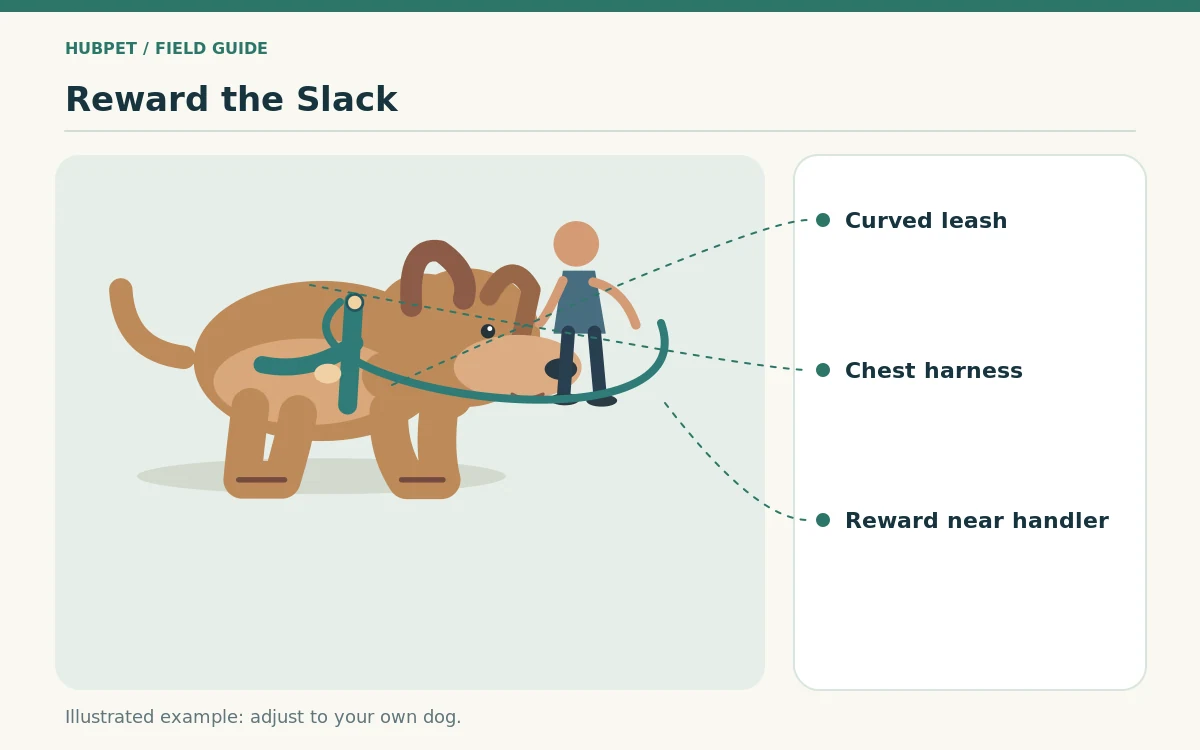
Spot the moment just before tension
Watch your puppy’s ears, pace, and shoulder line. A quick glance at a smell or sudden lengthening stride often happens before the leash becomes tight. You can reward an early check-in, call your puppy cheerfully, or turn toward a quieter path before tension develops. Once the leash does tighten, pause your feet and wait for an easy return; then walk again when the puppy can move without pulling. Timing matters more than a loud command. The aim is to make slack the reliable way to continue exploring, while avoiding repetitive stops that overwhelm a very young dog.
Let sniffing become part of the reward
Sniffing is useful canine exploration, not something to eliminate. Give a simple release cue, such as ‘go sniff,’ when the leash is slack and the area is safe. Let your puppy investigate for a brief moment, then invite them along and reward the return. This teaches two compatible skills: staying near you while moving and getting permission to explore. Never use access to a frightening person, an unsafe object, or another dog as the reward. If the puppy freezes or hides, the priority shifts from leash manners to comfort and distance. A pleasant first walk can be extremely short.
Practice a reset when the puppy is overexcited
When your puppy bounces, spins, or grabs the leash, stop the training demand. Move away from the busiest spot, scatter a few food rewards on safe clean ground if appropriate, and allow a brief sniff break. Check whether hunger, exhaustion, heat, or an overlong outing is part of the problem. Resume with just one or two easy steps near you. Persistent leash biting can reflect frustration or excitement rather than a need for punishment. Keep your hands steady and avoid tug-of-war with the leash. Practice handling the leash indoors later, when the puppy can concentrate.
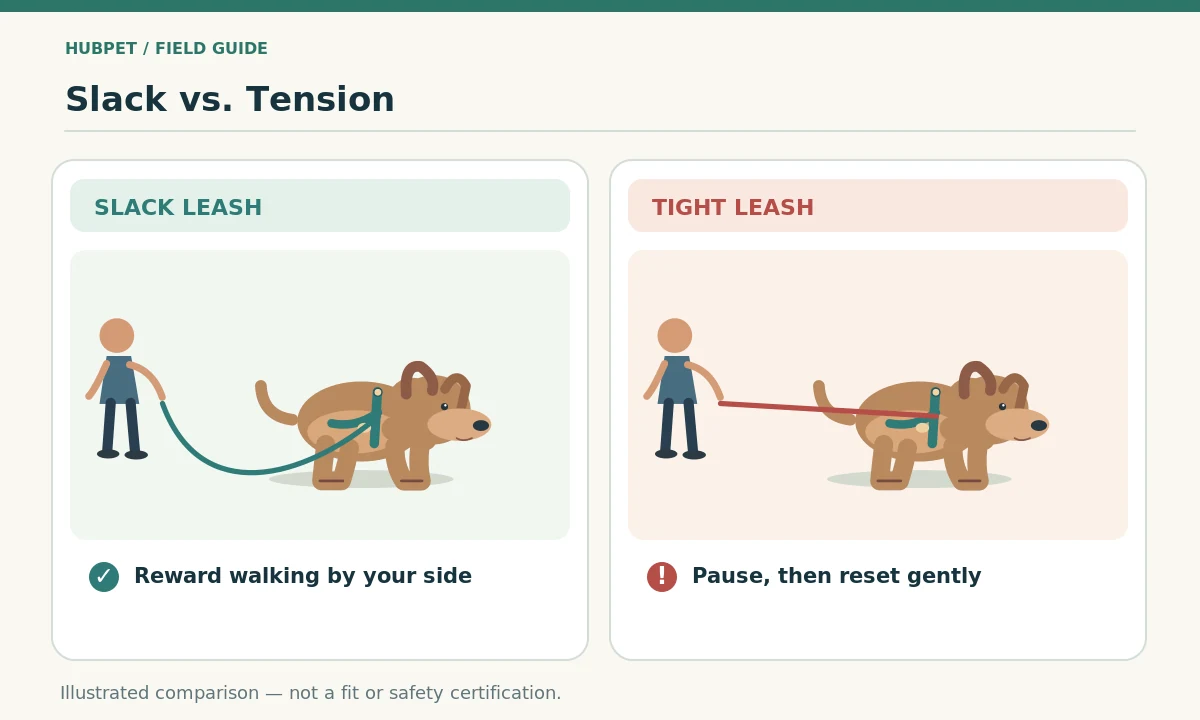
Add distractions in sensible stages
Begin at a distance from a mild distraction, such as a familiar person sitting still. Reward your puppy for glancing at the person and returning attention to you. If the puppy cannot take food, becomes frantic, or repeatedly lunges, increase distance instead of insisting on a closer approach. Only after calm practice should you try a quiet street, moving people, or other dogs at a comfortable distance. Do not require face-to-face greetings. A short successful session beats a long walk full of failed repetitions. Keep a mental note of which places make slack walking easiest.
Use a realistic plan across the first week
On day one, teach proximity without a leash indoors. On the next few days, add a clipped leash and move across one room, changing directions gently. Later, try a quiet doorstep or safe yard and practice stopping when tension appears. Repeat the same simple mark-and-reward pattern whenever the puppy offers slack. There is no universal number of sessions or exact age at which a puppy should walk perfectly. Age, temperament, previous experience, and local surroundings all change the pace. Stop before the puppy becomes too tired to learn.
Recognize issues that need a different approach
If the puppy coughs, struggles to breathe, limps, or yelps during leash contact, stop and contact your veterinarian rather than continuing the exercise. A puppy that consistently panics outdoors may need a careful confidence-building plan rather than more practice with pulling. Seek a credentialed, reward-based professional if you cannot keep outings safe or if the puppy repeatedly reacts intensely to dogs or people. Avoid neck-pinching equipment, electronic corrections, and deliberate leash jerks. These methods can create pain or fear without teaching a clear, voluntary walking behavior.
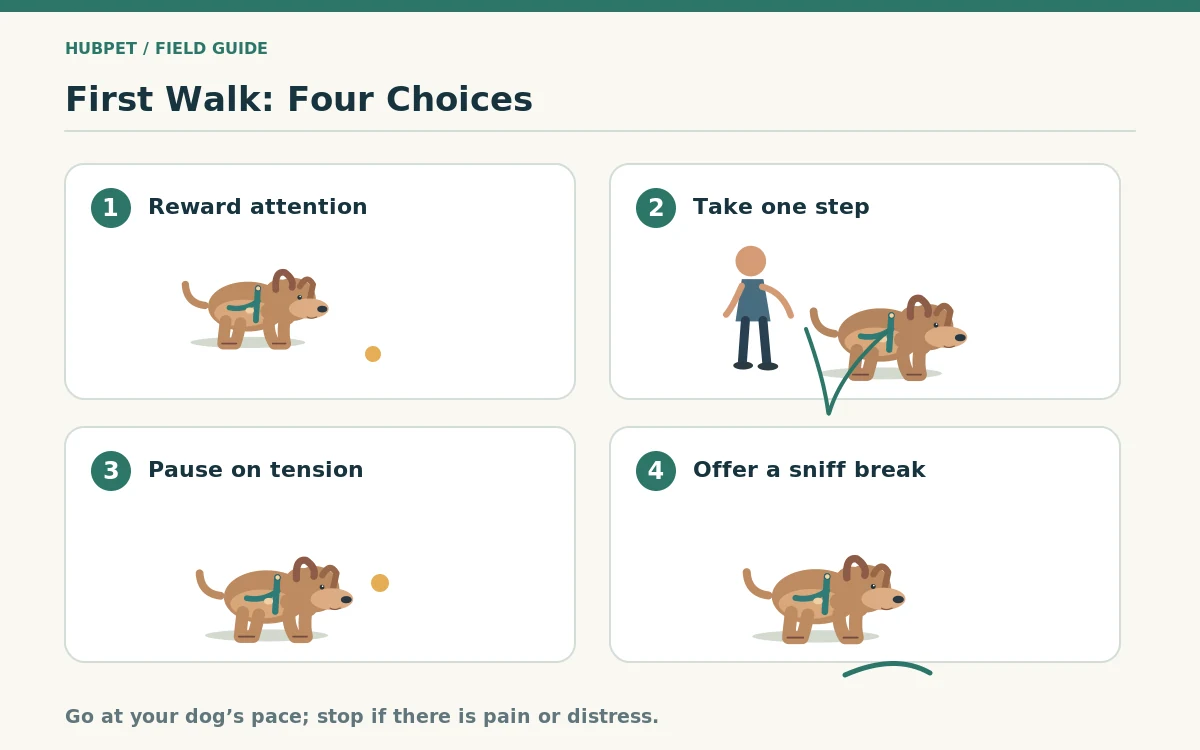
Measure progress by choices, not miles
A useful measure is how often your puppy chooses to return, whether leash slack lasts a little longer in familiar surroundings, and whether a simple reset works without distress. A walk with five calm check-ins may be more meaningful than a long route completed under tension. Review the harness fit as the puppy grows, carry rewards discreetly, and let all family members use the same cue and timing. Keep walks comfortable and exploratory. The ultimate goal is a puppy that understands how to move with you, not one that never looks away from your leg.
How We Research
We reviewed veterinary and animal-welfare guidance on puppy pulling on leash, then translated the recommendations into observable fit checks, walking decisions, and reward-based exercises. We did not test product strength, measure injury rates, or certify specific gear. Model-specific safety instructions must come from the manufacturer; health and behavior concerns require individualized professional advice. Sources checked October 28, 2026. Read our About HubPet page for editorial context.
Sources
American Veterinary Society of Animal Behavior — Humane Dog Training Position Statement. Read source. Accessed October 28, 2026.
Dogs Trust — Taking Your Puppy on Their First Walk. Read source. Accessed October 28, 2026.
Dogs Trust — Teach Your Dog to Walk Nicely on a Lead. Read source. Accessed October 28, 2026.
PDSA — Training Dogs Not to Pull. Read source. Accessed October 28, 2026.
Safety note: This guide offers general walking information. It does not provide a diagnosis, personal behavior treatment, or equipment certification. Stop the exercise if your dog develops pain, breathing changes, or marked fear. Consult a veterinarian or qualified reward-based behavior professional for persistent dangerous lunging. See the HubPet veterinary disclaimer.
Pause safely when the lead becomes tight, then reward the moment the puppy returns and the line goes slack. Use easier settings if constant stopping frustrates your puppy.
No. A loose leash and safe shared pace are usually enough; a formal heel is a separate behavior you can teach for brief situations.
Yes. Access to a safe patch of grass can reward loose-leash walking, as long as you also permit normal sniffing and exploration.
Move to a quieter place and shorten the session. A puppy who is too frightened or overstimulated to eat needs more distance and an easier task.
A comfortable, secure harness and ordinary fixed-length leash are common starting points. Fit matters more than a marketing claim that equipment stops pulling.