
Use calm, reward-based guidance only. Sudden behavior changes or signs of pain warrant a veterinarian’s advice. For medical concerns see the HubPet veterinary disclaimer.
To stop dogs chewing wood, protect access to the damaged baseboard or chair leg before trying to teach a replacement habit. Wood differs from soft upholstery: sharp splinters, coatings, glues and small swallowed pieces can create mouth or digestive hazards. This guide focuses specifically on wooden objects in the home, how to inspect the damage, what to tell a veterinarian if pieces are missing and how to set up a supervised reward-based swap to safe chew toys. It complements, rather than repeats, HubPet’s broader furniture-chewing guidance.
Inspect the wood and your dog before training
Check the damaged edge from a safe distance. Are there splinters, exposed staples, missing chunks, paint chips or signs a dog has been chewing treated lumber? Move the dog away from the area and collect loose fragments without letting them investigate the debris. If your dog may have swallowed sharp wood, paint, stain or glue, call a veterinarian immediately for advice; urgent symptoms include choking, repeated gagging, vomiting, abdominal pain, blood or unusual lethargy.
Do not pull a lodged splinter from deep inside the mouth, induce vomiting or offer bread to “push it through” without medical instruction. Even when a dog acts normal, describe missing material to a veterinary clinic. The risk differs by wood type and finish, so take a photo of the object or product label if available. Address possible injury and ingestion risks before training a new chewing habit.
| What is chewed | Main hazard | First action |
|---|---|---|
| Painted baseboard | Chips, unknown paint finish | Block access; ask vet if swallowed |
| Splintered chair leg | Sharp fragments and mouth injury | Remove dog; inspect safely |
| Loose plywood or MDF | Adhesive and fiber fragments | Secure material; prevent chewing |
| Wood when owner leaves | Stress or unattended access possible | Limit access; assess departure pattern |
| Chew toy breaking apart | Swallowed fragments risk | Remove toy; choose safer size |
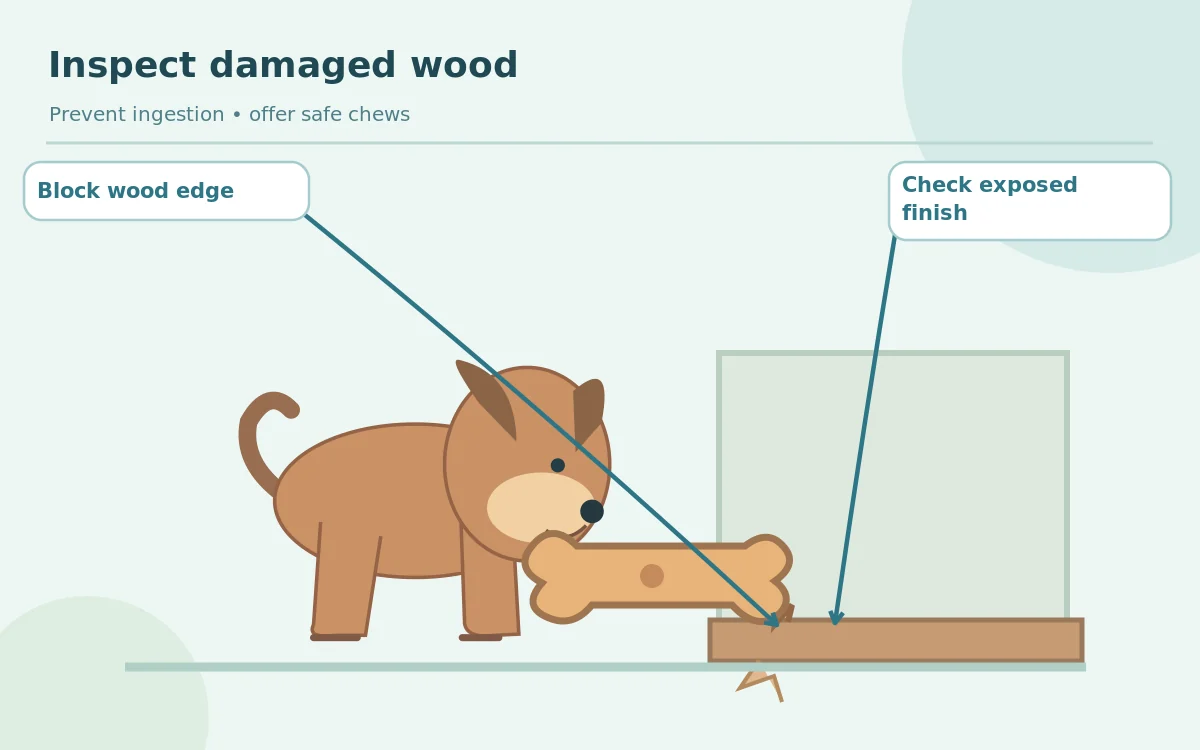
Remove access to the exact chewing hotspot
Use a sturdy freestanding barrier or secure room gate to prevent chewing while supervised training begins. The barrier should not create a trapping hazard or give the dog a new sharp edge to gnaw. Relocate lightweight chairs; protect baseboards with smooth, securely installed guards that cannot detach into pieces. Do not use loosely taped plastic, dangling wires, treated wood scraps or homemade repellents near a dog that swallows objects.
Pay attention to when the behavior occurs. A dog chewing while alone may be experiencing stress, while a teething juvenile may target hard corners during supervised play. Both patterns need suitable opportunities for chewing, but distress-related chewing may require individual behavior support. Our published guide to general furniture chewing covers broader causes and home management beyond wooden surfaces.
- Move the dog away from damaged wood and collect loose splinters safely.
- Contact a veterinarian promptly if material may have been swallowed or the dog shows symptoms.
- Block the exact wood surface with a stable, pet-safe barrier; inspect for loose coatings.
- Offer a suitably sized supervised chew toy and reward the choice to use it.
- Log chewing triggers and damaged materials for a week; seek qualified help if it persists.
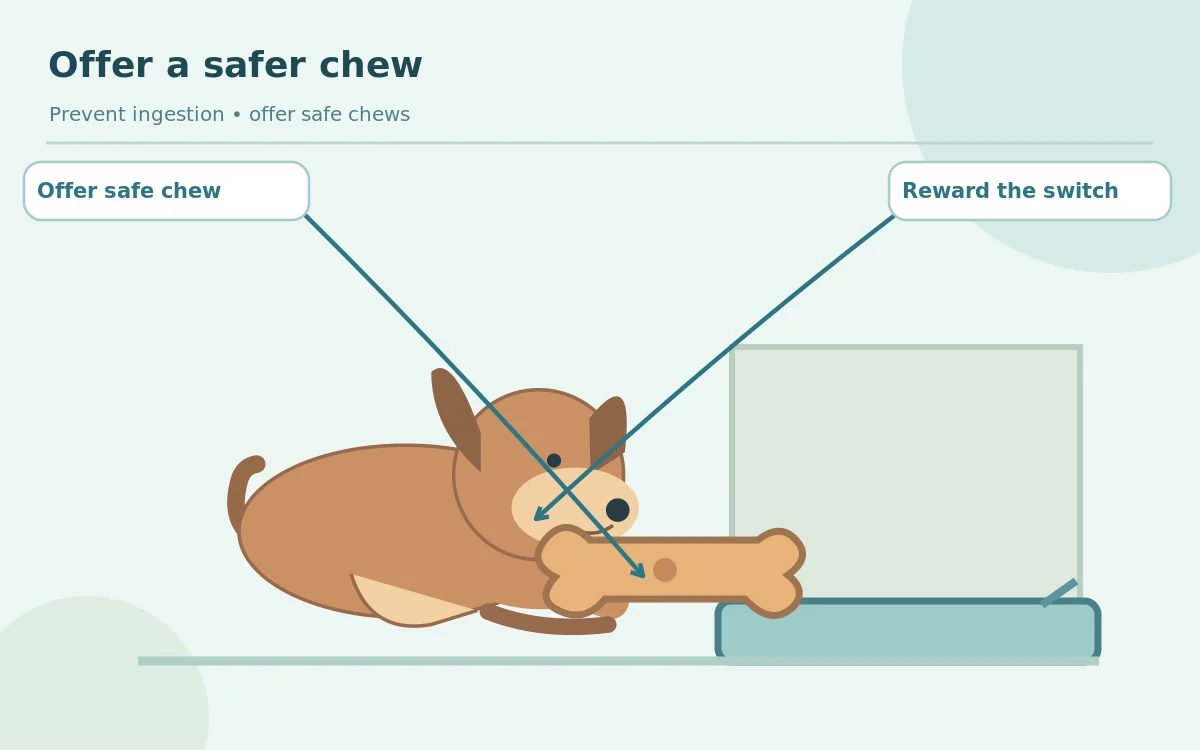
Teach an easy switch to a suitable chew object
Before allowing access to the room, prepare a dog-safe chew sized for the pet’s mouth and chewing style. Supervise use and retire anything that breaks into swallowable parts or is hard enough to damage teeth. When the dog notices the baseboard, calmly invite them toward an alternative; reward grabbing or settling with the chew. Do not grab the dog by the collar or forcibly pry items from the mouth if guarding is a concern; a qualified trainer can teach a safe trade.
Make a designated enrichment corner with a washable mat and a rotation of suitable chew toys or food puzzles. Introduce it during calm periods, not only after the dog damages trim. Reward voluntary use, then gradually practice with the barrier still in place. Avoid correction collars, threatening gestures or frightening noises; these can worsen anxiety and do not teach a safer choice.
Track the risk, not only the damage
For a week, record the location, time, what the dog had been doing and whether the dog actually swallowed any material. Check the chew toys and baseboards each day for new fragments; remove damaged objects promptly. If the behavior occurs mainly on departure, note vocalizing, pacing or panic for a veterinary behavior conversation rather than assuming boredom. ASPCA notes that exercise and mental enrichment can support appropriate chewing, but management must match the individual trigger.
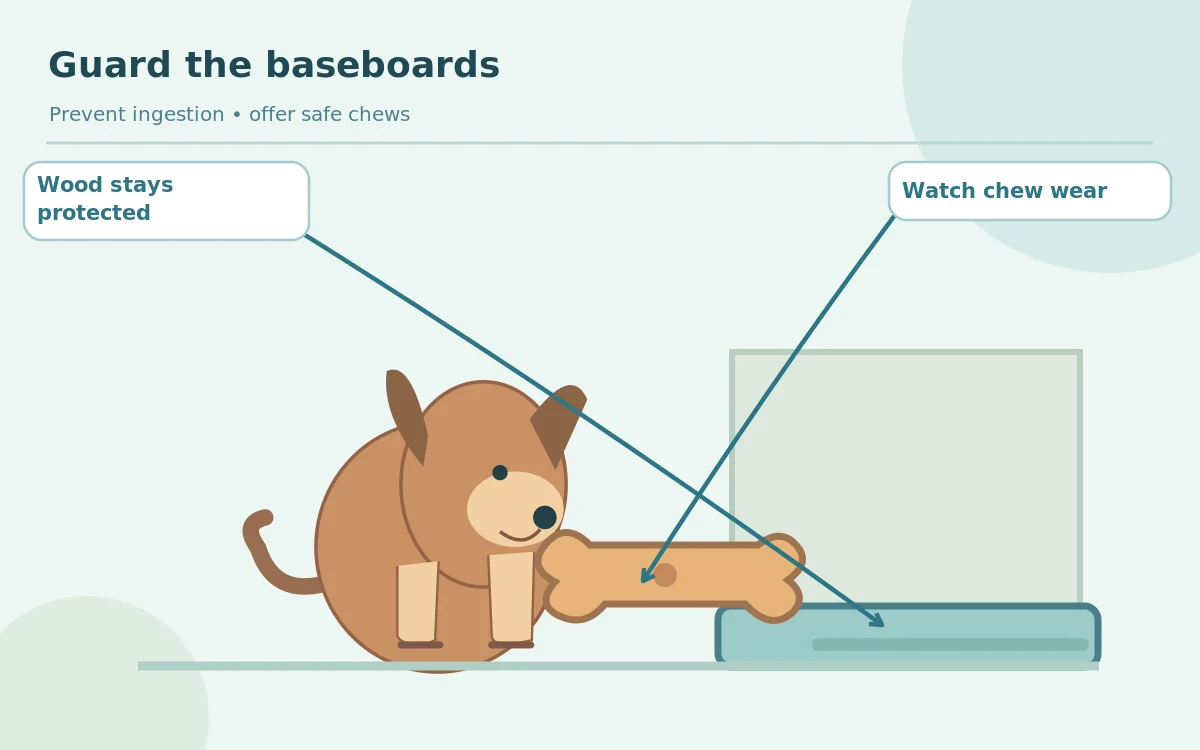
When wood chewing continues despite blocked access and engaging safe chews, seek veterinary and reward-based behavior support. Consider an oral or dental assessment if the behavior changes suddenly or chewing appears painful. The goal is not making the wood taste worse; it is preventing injury, meeting chewing needs and building a reliable alternative that works when people are present.
Do not assume a chew marketed as “indestructible” is safe: check actual wear and follow the manufacturer’s size and supervision instructions. Hard wood, antlers and very hard objects can also threaten teeth. Never let a dog chew discarded pressure-treated timber or wood with unknown paint. If you repair a baseboard, keep your pet away from adhesives and finishing products until the manufacturer’s drying and ventilation instructions are met. An environment change plus positive training is more reliable than any single deterrent taste.
When to Call Your Vet
Contact a veterinarian promptly if the dog may have swallowed wood or sharp fragments, if there is choking, vomiting, bleeding or pain, or when chewing behavior changes abruptly. The safety steps here cannot rule out injury.
How We Research
HubPet compared the linked veterinary, animal welfare and behavior resources with the exact search intent in this guide. We favor observable signals, a practical household decision chart and reward-based alternatives; we do not infer medical diagnoses from behavior or recommend punishment. Read our editorial approach for additional context.
Sources
ASPCA — Destructive Chewing — consulted for behavior, welfare and safety guidance.
American Society for the Prevention of Cruelty to Animals — Position on Chews — consulted for behavior, welfare and safety guidance.
Veterinary Behavior Guidance — Health Changes and Chewing — consulted for behavior, welfare and safety guidance.
Young dogs may explore through chewing, but stress, low enrichment or other causes are possible. Protect the wood and look for a repeatable trigger.
Wood splinters can injure the mouth or digestive tract. Contact a veterinarian if pieces are missing or swallowing is suspected.
Avoid homemade chemical or irritant coatings. They can expose the dog to hazards and do not teach what to chew instead.
Choose a dog-specific, appropriately sized chew that does not splinter or break apart and supervise its use.
Get qualified help if chewing persists despite safe management, occurs with departure distress or involves guarding and aggression.