
A slip lead combines a neck loop and lead; that convenience comes with important pressure and escape risks. This guide focuses on observable steps and realistic safety limits. Good walking equipment should be comfortable, and a reward-based lesson should leave the dog able to make voluntary choices.
How a slip lead actually works
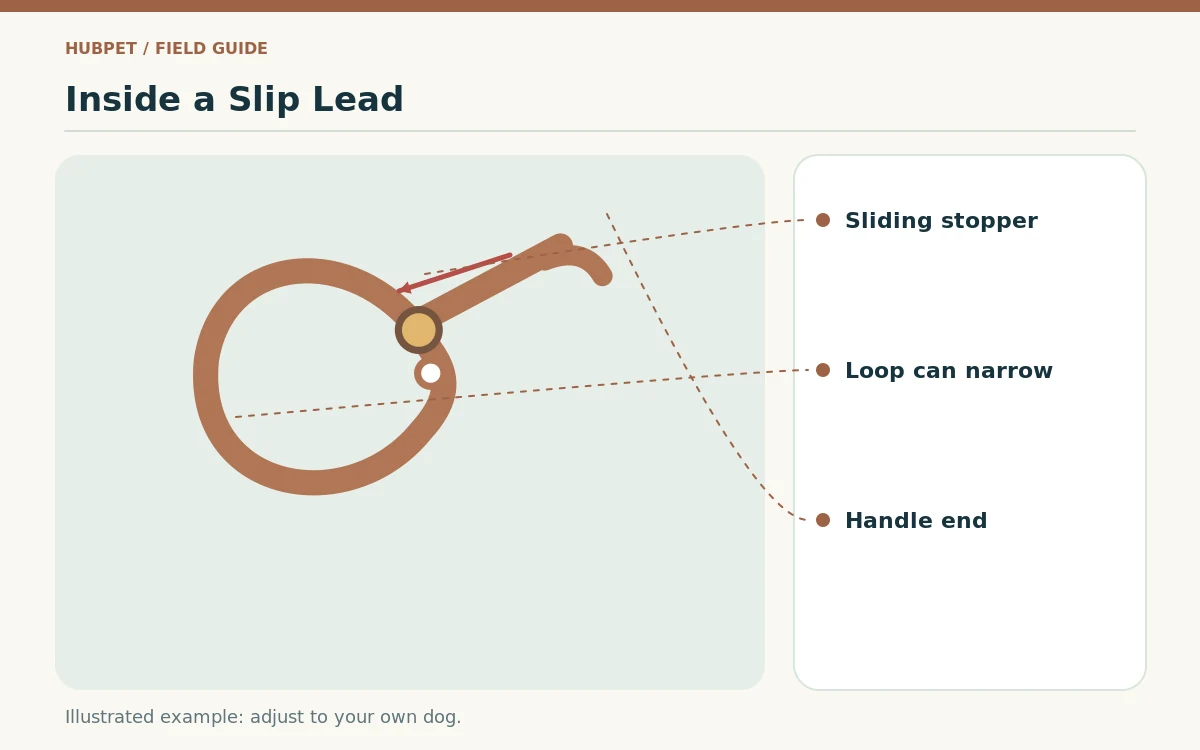
A slip lead is one piece of rope or webbing that forms a loop around a dog’s neck and extends into a handle. As the dog moves away, the loop may narrow and place pressure around the neck. Some models have a sliding stopper that limits loop movement. However, stopper designs differ and do not guarantee protection from choking. This is mechanically different from a regular leash clipped to a fixed-size, properly adjusted harness. A simple look does not make this a good everyday tool for a pulling dog. Brief professional handling has different goals.
Understand pressure on a sensitive area
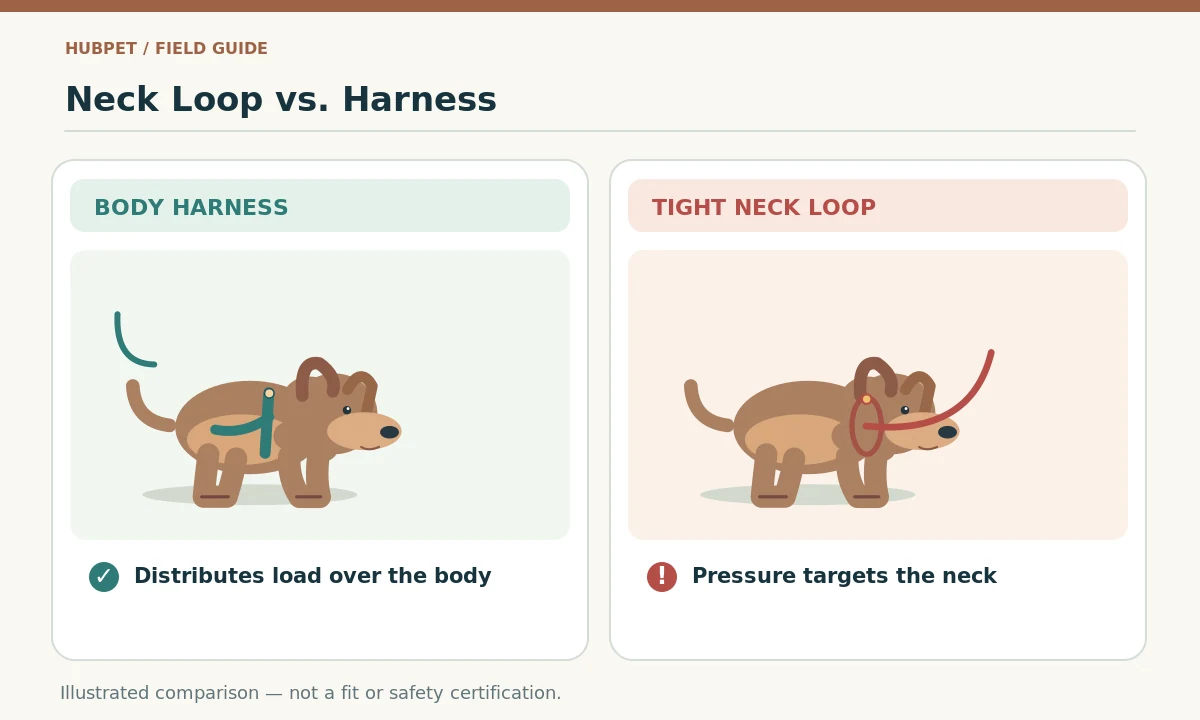
The neck contains important airway and soft-tissue structures. A dog that lunges, runs to the end of the lead, or struggles while restrained may experience concentrated pressure as the loop tightens. Neck sensitivity varies with age, health, and anatomy, but there is no safe universal amount of pulling force. Repeated jerks also risk teaching a dog to associate sights and sounds with pain. Never use a slip lead to correct, yank, or force a frightened dog to comply. A humane, secure harness is a better starting point for ordinary walks.
Distinguish emergency handling from training
Clinics and shelters sometimes use a temporary slip loop to move an unfamiliar dog a short distance with a trained handler. That controlled, brief use is not the same as walking several miles or teaching a dog not to pull. Owners may see a slip lead in a professional setting and conclude that it is the preferred walking system for home use. Ask why the professional chose that equipment and which precautions they take. Also ask whether a harness suits daily walks better. Never leave a slip lead on an unattended dog or use it to tether an animal.
Why a stopper is not a safety certification
A stopper changes where the loop slides. However, it may shift during movement, snag fur, or sit in the wrong position. There is no single standardized feature that makes every slip lead ‘no-choke.’ A loose loop can also slip off when a dog backs away, especially with a narrow head or when the handler momentarily drops tension. Examine the loop, sliding mechanism, rope surface, stitching, and handle with the dog absent. Do not rely on a manufacturer’s product name as evidence that the system cannot tighten or escape. Prefer a harness that fits the dog’s particular body shape.
Compare a body harness and regular leash
A well-fitted body harness distributes handling forces over the torso rather than narrowing around the throat. Look for shoulder clearance, smooth edges, and girth adjustment that prevents both rubbing and backing out. Pair it with a fixed-length lead and a robust, easy-to-inspect snap. Many dogs do well with a back-clip harness; some pullers benefit from a carefully fitted front-clip option with reward-based coaching. Avoid harnesses that cut across the front of the shoulder or tighten painfully under the forelegs. No harness teaches leash manners by itself, but good fit supports comfortable practice.
Use reward-based lessons instead of pressure
Start in a quiet room where the dog can choose to walk near you without a leash tug. Reward looking toward you, moving one step together, and maintaining a curve in the lead. Once the dog understands that proximity is worthwhile, practice near a quiet sidewalk. Pause if the leash tightens and resume when the dog returns voluntarily. Do not turn a slip loop into a punishment device to speed up training. Learning to stay near a person is a behavior; a tool that hurts when a dog leaves that position does not replace teaching.
Make an escape-prevention plan
If your dog has backed out of collars before, do not solve the problem by tightening a slip lead around the neck. Fit an escape-resistant harness according to its instructions, examine all buckles, and practice gentle back-out checks in a secure indoor area. Use a backup connection only if the equipment permits it and a reward-based professional can show a safe setup. Keep identification tags and microchip details current. Where the dog is likely to panic or bolt, choose quieter routes rather than relying on stronger restraint. Never leave loose loops accessible for chewing or entanglement.
Which dogs need extra caution?
Puppies, small dogs, dogs with breathing or neck problems, and dogs that surge unpredictably may face additional risks from a tightening neck loop. Dogs that become frantic when restrained need a low-stress handling plan rather than escalating force. If a dog coughs, gags, has noisy breathing, or shows pain during handling, remove pressure safely and contact a veterinarian. Do not use a slip lead as a substitute for a veterinary evaluation or individualized handling advice. An unfamiliar rescued dog may also need gradual, positive acclimation before any type of regular walking equipment.
Questions to ask before buying any walking tool
Can you describe exactly how the product changes fit under tension? Can you inspect the attachment and see whether the dog can back out? Are adjustments accessible without pinching skin? Does it stay comfortable when the dog turns to sniff? Does the seller provide clear limitations and cleaning instructions instead of promising instant results? These checks matter for any lead, not only slip designs. Watch a calm dog using the gear in a controlled setting with an experienced person. Stop immediately if the dog freezes, coughs, or struggles with the device.

The practical bottom line for everyday walks
For most pet owners, begin with a properly fitted harness, conventional fixed-length leash, and rewards for voluntary loose-leash movement. Slip leads have limited handling contexts but are not a shortcut to kind, dependable training. If you are considering one because an existing harness slips off, solve the fit or escape problem directly. If you are considering one because a dog pulls strongly, seek help from a credentialed reward-based trainer before selecting restraint that can load the neck. A comfortable dog learns more easily, and safe management protects both the animal and the person holding the leash.
How We Research
We reviewed veterinary and animal-welfare guidance on slip leads for dogs, then translated the recommendations into observable fit checks, walking decisions, and reward-based exercises. We did not test product strength, measure injury rates, or certify specific gear. Model-specific safety instructions must come from the manufacturer; health and behavior concerns require individualized professional advice. Sources checked October 28, 2026. Read our About HubPet page for editorial context.
Sources
American Veterinary Society of Animal Behavior — Humane Dog Training Position Statement. Read source. Accessed October 28, 2026.
RSPCA Australia — Equipment for Teaching Dogs to Walk on a Leash. Read source. Accessed October 28, 2026.
VCA Animal Hospitals — Collar and Harness Options for Dogs. Read source. Accessed October 28, 2026.
VCA Animal Hospitals — Controlling Pulling on Walks. Read source. Accessed October 28, 2026.
Safety note: This guide offers general walking information. It does not provide a diagnosis, personal behavior treatment, or equipment certification. Stop the exercise if your dog develops pain, breathing changes, or marked fear. Consult a veterinarian or qualified reward-based behavior professional for persistent dangerous lunging. See the HubPet veterinary disclaimer.
Yes, many slip-lead designs narrow at the neck as tension increases. A stopper does not automatically eliminate the risk of neck pressure.
They are not the preferred starting point for a dog that pulls. A properly fitted harness and reward-based teaching reduce reliance on neck pressure.
Yes. A loop that opens or shifts can come off, particularly when a dog reverses or twists. Never assume it provides escape-proof containment.
No. Remove it when active handling ends; an unattended loop can snag on furniture or other objects and cause injury.
Choose comfortable, secure harness equipment and seek a reward-based training plan. Strong pulling or panic deserves individualized support.