
This guide offers general feeding-equipment and hygiene information, not individual veterinary advice. If a pet has persistent eating difficulty, vomiting, or signs of pain, consult your veterinarian; see our veterinary disclaimer. A short muzzle changes how a dog reaches food in a deep dish, so bowl shape may matter more than extra height. A broad, shallow bowl or a modestly angled surface may make food easier to access for some flat-faced dogs. The right choice is individual: compare reach and comfort without forcing a position or assuming a special bowl treats breathing or digestive disease. These breeds can have health concerns that require veterinary attention. This article focuses on practical bowl fit, stable placement, and clear signs that the problem is larger than the dish.
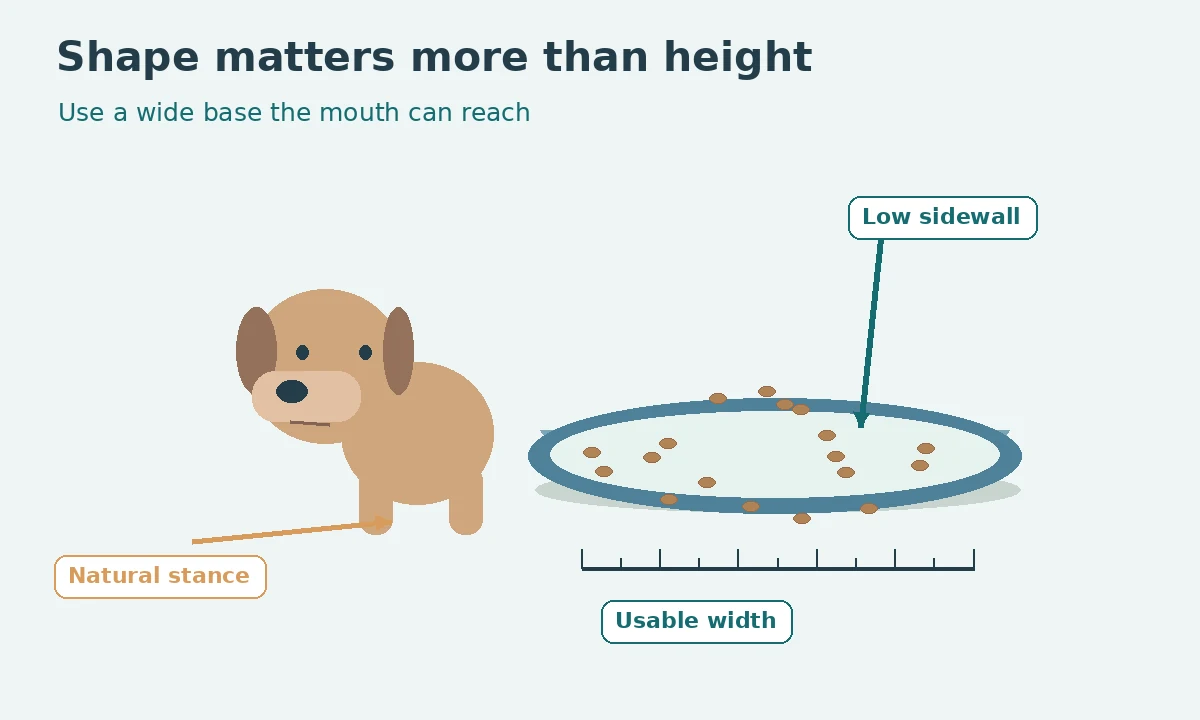
Start by watching an ordinary meal
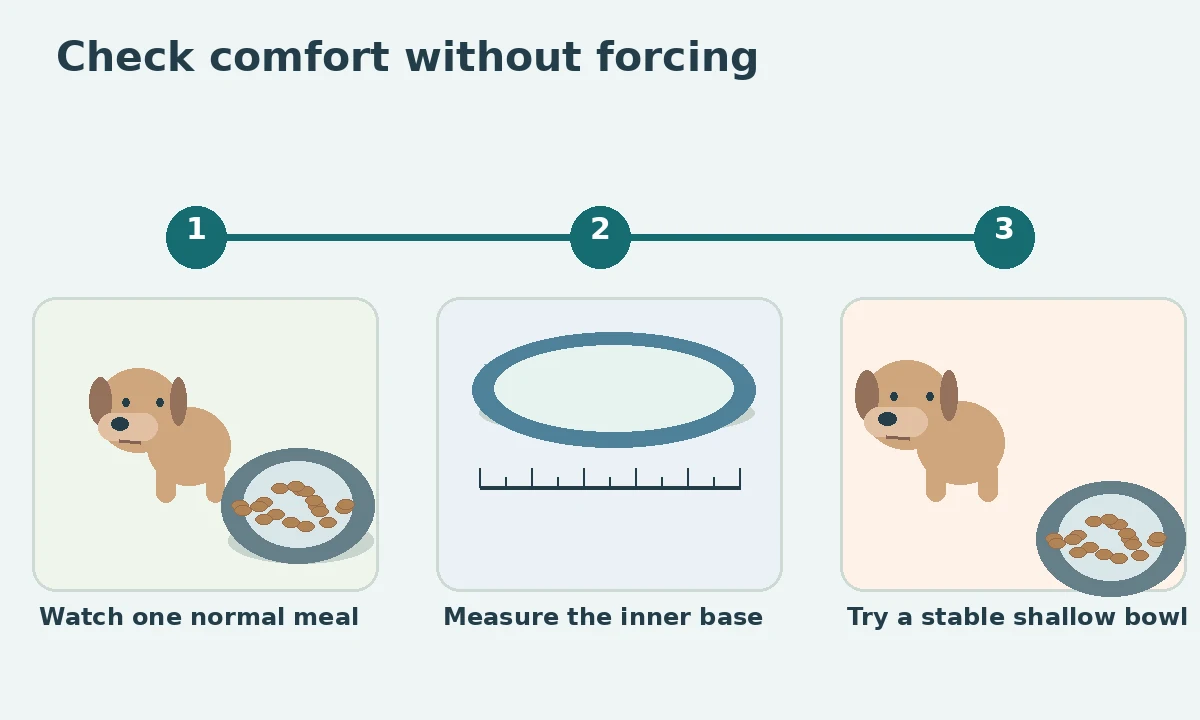
Observe your dog eating from its current bowl without changing the food or the usual feeding time. Does the dog have to push the whole face down a deep wall to reach pieces? Does kibble repeatedly remain around the far edge, or does the dog tip the bowl to get the final bites? Those clues help identify a reach problem. They do not prove that a certain angle will solve the reach concern. Notice breathing effort, coughing, gagging, and pauses as well. The RSPCA and UC Davis describe extra health risks in short-nosed dogs; signs of breathing trouble should prompt veterinary care, not an experiment with a taller or tilted dish.
Compare usable base width and sidewall depth
Measure the actual flat eating surface, not the outer diameter or decorative rim. A shallow bowl with a broad base can spread food where the dog can reach without reaching into a deep narrow cup. Look for a smooth rolled edge that will not press uncomfortably against the face. Bowls with high inward-curving lips may keep food tidy but create a barrier for a short muzzle. A tiny bowl may push food toward the sides and make eating harder. Test with the dog’s normal portion, preferably in a stable plain dish first, and watch whether the mouth reaches the edges without repeated snout pressure.
Use angled bowls cautiously
A modest tilt can move food toward the front, but a steep angle may also spill it onto the floor. Select a design that stays firmly seated and lets the dog keep all paws on level ground. Avoid sliding an unsecured prop underneath a standard bowl; that creates a tipping hazard. If you use an adjustable stand, lock its position according to the maker’s instructions and recheck every joint. Do not infer that a tilted bowl prevents bloat, aspiration, or other disease. Dish shape alone does not establish these health outcomes. If your dog has recurrent regurgitation or swallowing issues, discuss feeding posture and food texture with your veterinarian.
Keep the dish low enough for a natural stance
The dog should be able to approach with a balanced stance and no need to climb, stretch, or brace against furniture. Extra elevation is not automatically helpful to flat-faced dogs and may be inappropriate for some individuals. If a veterinarian has recommended a particular feeding arrangement, follow that tailored advice rather than the packaging claims of a generic stand. Place the dish on a level, washable surface that has enough clearance for the dog’s shoulders. Do not crowd the bowl between a wall and cabinet, especially when two dogs share a room. Allow the dog to back away comfortably and avoid touching the face while it eats.
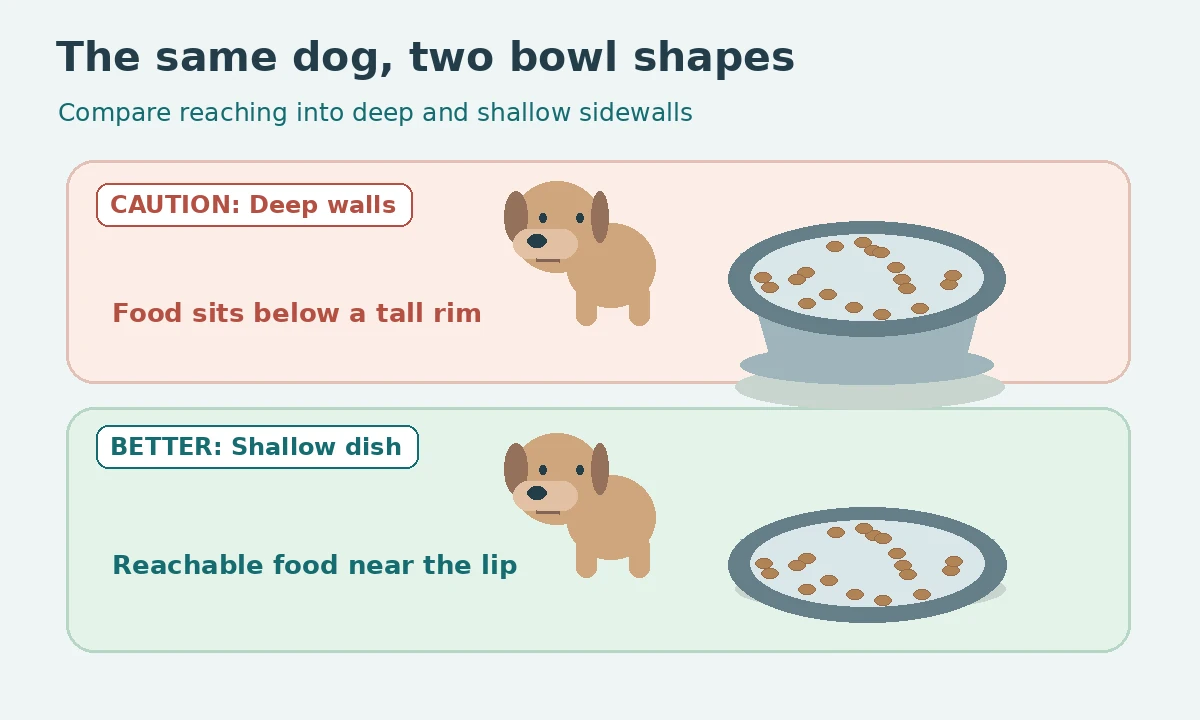
Check material, finish, and cleanability
A broad steel bowl may be easy to wash, a well-made ceramic dish can be stable, and light plastic may require closer scratch checks. Whatever the material, inspect for sharp chips, deep grooves, peeling coatings, and detachable feet. Short-faced dogs often contact the rim frequently, so the edge deserves an especially careful inspection. Choose an interior you can reach with a soft cleaning tool. Wash the bowl after each meal with soap and water, rinse, and dry. FDA guidance supports cleaning serving utensils too. Decorative grooves that trap food can erase any convenience gained from a specially shaped dish.
Run a simple side-by-side comfort trial
Offer the same measured portion on separate days in two safe dishes. Keep food type, room, and routine consistent, and place both designs on the same nonslip surface. Watch how the dog reaches the final pieces, whether it tips the bowl, and whether the eating posture looks relaxed. Stop if the dog seems distressed or struggles to breathe. Do not deliberately fast the dog or force repeated trials to produce a winner. A reasonable choice is the dish that your dog can use comfortably and that you can clean thoroughly, even if the preferred product looks plain rather than specialized.
Know when a bowl change is not enough
Persistent difficulty eating, gagging, coughing, regurgitation, noisy breathing, or a sudden change in appetite warrant a conversation with a veterinarian. A new dish may improve access but cannot correct an airway obstruction or underlying gastrointestinal disease. Flat-faced dogs may have dental crowding or other issues that change how the dog handles food. Do not try an extreme tilt or an elevated stand as a homemade medical treatment. Record a short description of the behavior and, if safe, an ordinary meal video for your veterinarian. Keep fresh water available separately and avoid making access to hydration depend on a feeding experiment.
How We Research
We compare guidance from FDA and CDC on equipment hygiene with veterinary and welfare advice relevant to this dish. We distinguish a product measurement or inspection from unproven health promises, and we favor practical checks an owner can repeat at home. This is editorial guidance, not laboratory testing or a product endorsement. Read more about HubPet.
Sources
UC Davis — Brachycephalic Dogs — context for bowl materials, hygiene, feeding access, or safe handling.
RSPCA — Care for Dogs With Brachycephaly — context for bowl materials, hygiene, feeding access, or safe handling.
Today’s Veterinary Nurse — Food Bowl Selection — context for bowl materials, hygiene, feeding access, or safe handling.
FDA — Food-Bowl Hygiene — context for bowl materials, hygiene, feeding access, or safe handling.
No. Some eat comfortably from ordinary shallow dishes. Watch the individual dog’s reach and ask your veterinarian if feeding looks difficult.
It depends on stable access and the dog’s posture. A gentle tilt may help reach, but a steep angle can spill food and is not a treatment.
Do not assume elevation is beneficial. Follow individualized veterinary advice when medical conditions affect feeding posture.
The bowl may have narrow corners, a steep wall, or an unstable base. Check the dimensions and also consider oral or medical discomfort.
Trouble breathing, gagging, coughing, repeated regurgitation, or a sudden inability to eat normally warrants professional assessment.