
Small dog toys should be easy for a petite dog to carry, but a toy should never be so small that it can disappear down the throat. That tradeoff makes shopping by a weight chart alone unreliable. A toy that suits a gentle toy-breed retriever may fail quickly with a determined terrier of similar size. Look at the whole object, including handles, ears, seams, and any opening that can trap a jaw. This guide focuses on usable dimensions, pickup comfort, durability and a repeatable first-play check rather than a brand ranking.
Start with the whole mouth, not the shelf label
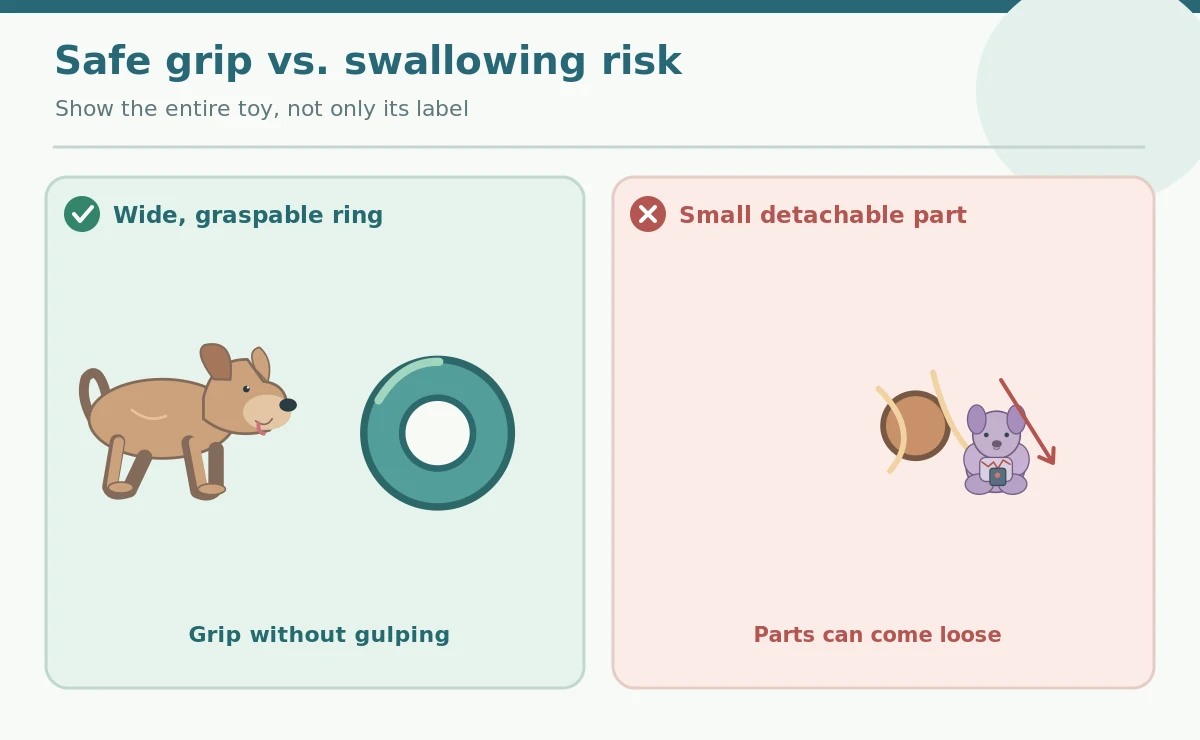
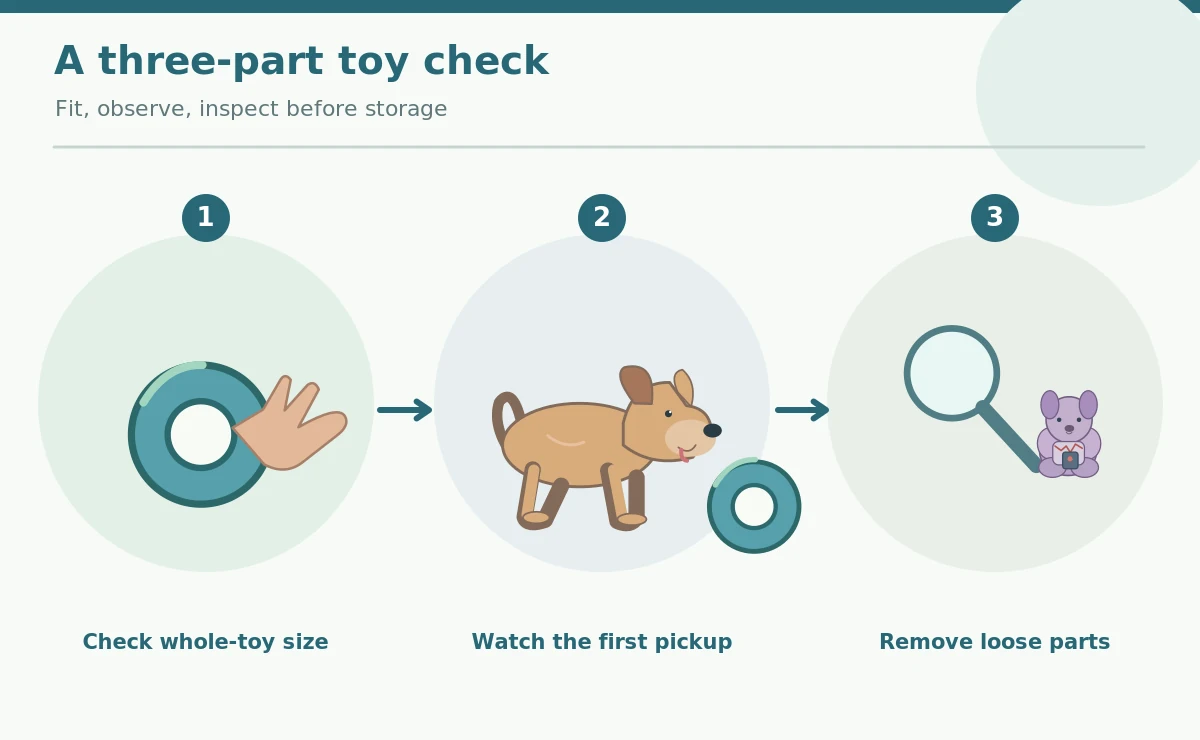
Size labels such as mini or extra-small are rough starting points, not a safety certificate. Compare the toy with the actual dog during a supervised, calm session. A ball should not fit entirely behind the teeth or slide deep into the mouth. A flat disc might appear wide from above yet fold into a narrow shape. Look at the smallest dimension under compression, not simply the package width. Small dogs vary substantially in muzzle length and jaw shape. If the dog keeps trying to swallow a toy instead of carrying it, remove it and choose a larger object with an easy-to-hold surface.
Choose a shape that small jaws can pick up
A dog needs a way to grasp a toy without straining the neck or pinching the lips. Gentle ridges, a curved middle or a broad handle can help. For a flat-faced dog, a shallow pickup edge may work better than a slippery, solid sphere. For a dog with narrow jaws, avoid thick rigid objects that force the mouth open unusually wide. Test the toy on the floor and watch whether the dog can lift it naturally. Repeated pawing without a comfortable grip means the design may be frustrating, even if its advertised diameter seems correct.

Match material to chewing style
Soft rubber can feel pleasant to hold, but thin walls may tear under concentrated chewing. Dense plush is useful for gentle carrying yet unsuitable for a dog that immediately opens seams and eats stuffing. Hard nylon and brittle plastic create a different problem: an excessively hard surface may damage teeth. VCA recommends a thumbnail indentation check for chew surfaces. The result is not a guarantee of safety; observe how your own dog bites. Choose flexible, intact materials and retire any toy that starts shedding chunks, sharp edges, fibers or internal parts.
Inspect all the little attachments
On a small toy, a decorative eye or squeaker can become a relatively large mouthful. Turn the toy over and check the eyes, nose, ribbon, stitching and any plastic sound unit. Prefer securely integrated features without glued-on ornaments. Squeeze and bend gently to see whether seams open; do not use the toy if the inner filling becomes accessible. A removable tag or hanging loop should not stay attached during play. Inspect the toy again after the first session, since the first bite marks often reveal a weak seam that looked sound on the store shelf.
Select play type before selecting a size
Consider whether your dog wants to carry, fetch, nose, lick or chew. Lightweight carry toys should not double as aggressive chew toys. A small treat toy needs an opening large enough for food to leave without creating a loose cap or detachable plug. A fetch toy should remain visible and easy to pick up on the flooring you use. For tug, leave plenty of distance between your hand and the dog’s teeth and choose a substantial grip. Rotate different activities instead of expecting one tiny toy to meet every need.
Set up a safe first trial
Begin on a clean, uncluttered floor and supervise directly. Offer one toy, then pause to watch how the dog holds and manipulates it. Does the dog chew the outer material gently, or search for a seam? Does the toy wedge awkwardly between the molars? Stop and exchange the object before a problem grows. Reinforce calmly dropping or trading for a treat instead of chasing the dog. If another larger dog shares the home, store the smaller toy separately: an item safe enough for one dog may be dangerously swallowable for the other.
Clean without hiding damage
Follow the maker’s cleaning directions. The CDC says many rubber and plastic pet toys can be cleaned with soap and water, while suitable soft toys may go through a washing machine. Allow all layers to dry completely before play. Do not scrub a cracked surface until it looks smooth and then declare it safe; washing cannot repair structural damage. Check small crevices that trap food or saliva. If a toy stays damp inside or develops an odor after washing, replace it. Keeping a small rotation makes drying and inspections easier.
Know when a toy should leave the rotation
Replace the toy if it develops a split, exposed stuffing, loose sound unit, sharp rim, detached rubber tip or strings the dog can swallow. Also remove an intact toy if your dog now tries to gulp it whole. Puppies grow; their mouths and chewing habits change. A toy once suitable under close supervision may no longer fit the current stage. Keep a separate discard basket rather than returning damaged items to the play bin. Never assume a label that says durable means the product can remain available without observation.
Make a quick in-store or online comparison
Compare each candidate against five specific questions: Is the entire shape too small to swallow? Can the dog grasp it comfortably? Are attachments secure? Can you clean it? What happens if the dog chews hard? Look for clear size measurements and care instructions rather than a vague label such as perfect for tiny dogs. Reviews can flag repeated failures, but they cannot substitute for watching your dog. Buying one well-matched toy is often more practical than purchasing a large pack of assorted mini shapes that differ in actual safety.
Adjust for households with more than one dog
Do not leave toy-size decisions to the smallest family member if a larger dog shares the room. Set up separate play areas or supervise a single mixed-size session with objects that meet the larger dog’s swallow-risk needs. Teach voluntary trades and separate dogs if either guards items. Put away toys when play ends, especially under couches where a larger dog may find them later. If your dog has swallowed a piece, contact a veterinarian promptly instead of waiting for symptoms. The safest home routine includes deliberate storage as well as a good purchase.
How We Research
We compared current animal-welfare guidance, veterinary safety information and the practical characteristics readers can inspect before buying. We did not conduct laboratory strength tests or claim that any toy is universally safe. Manufacturer instructions inform the product-specific electronics guidance. We reviewed sources on October 28, 2026. You can read more about HubPet and our editorial method.
Sources
PAWS, Dog Toys and How to Use Them. Read source.
VCA Animal Hospitals, How to Choose the Best Chew Toy for Your Dog. Read source.
CDC, About Cleaning and Disinfecting Pet Supplies. Read source.
ASPCA, Position Statement on Dog Chews and Treats. Read source.
Safety note: This is general product selection guidance, not a veterinary diagnosis. If you think your dog swallowed a toy fragment, strand, battery or heat-pack material, seek veterinary advice promptly. Do not induce vomiting or pull visible string without veterinary instruction. Review our veterinary disclaimer.
No. A ball that fits deeply in the mouth can be a choking risk even when a package says small dog.
Some can carry plush toys safely with supervision, but remove them if seams open or stuffing becomes accessible.
Check its dimensions, flex, seams, surface damage and how your dog bites it during a short supervised trial.
Only after you know the dog’s habits and the specific toy’s suitability; store questionable or damaged toys.
Contact a veterinarian promptly. Do not try home remedies or wait for an obstruction to become obvious.