
Removable silicone inserts can turn a plain bowl into a feeding puzzle, but weak suction and narrow grooves create practical limits. This guide focuses on the physical features you can inspect, the actual eating experience, and a repeatable cleaning routine. It does not recommend a particular brand or promise that a feeding accessory can treat a medical problem. Test the setup with your pet under ordinary home conditions, and stop using an item that becomes unstable or damaged. For feeding difficulty, ongoing appetite changes, or other health concerns, consult a veterinarian and read the HubPet veterinary disclaimer.

Confirm the insert is intended for food contact
Silicone slow feeder inserts are removable pieces that sit inside another container, often attached with suction cups. They are not the same as a molded one-piece slow feeder bowl. Read the material and intended-use information for the exact product. Do not rely on a bright color, marketing phrase, or a seller’s generic photo as proof of safety. Inspect the surface for rough seams, residue, cracks, or an unusual odor before use. Avoid anything with loose decorative pieces or detachable parts that the dog could bite off.
Measure the bowl interior and insert footprint
Measure the flat area at the bottom of the dog’s usual bowl. An insert measured by its widest outer edge may not settle inside a curved interior. The silicone must lie flat without curling up along the wall. Check the depth beneath the bowl’s lip, especially where the insert has raised ridges. If the base floats above the bottom, the suction cups cannot do their job. Choose the fit that leaves the dog comfortable room to reach food rather than crowding a small bowl with a bulky maze.
Understand how suction actually holds
Many suction cups need a smooth, clean, compatible surface, but the exact conditions differ by maker. Thoroughly wash and dry the bowl and insert before following the manufacturer’s seating directions. Press each attachment area as instructed; then apply a gentle lifting test before adding food. A bowl with textured, scratched, porous, or strongly curved walls may not provide a reliable grip. Never assume the insert will stay down just because it appears seated when empty. Recheck the bond during the first supervised meal.
Choose channels the dog can reach without strain
A high dense maze can turn eating into an unpleasant struggle for a small or short-muzzled dog. Shallow broad channels may be easier for wet food and for a new user. Watch whether the dog can lick or pick up food without scraping its nose across hard bowl edges. Do not pack sticky food into narrow pockets that you cannot clean. The insert should encourage a calmer pace while still allowing normal eating. A dog pawing aggressively at the insert is giving useful feedback about suitability.
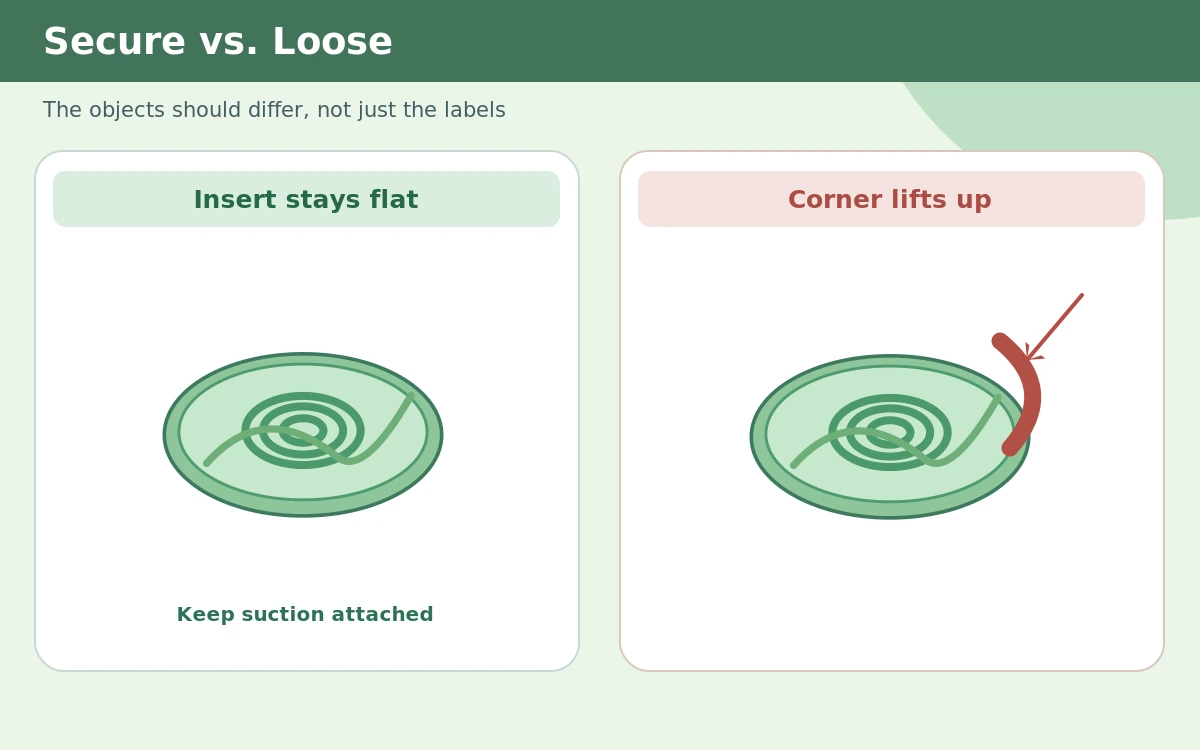
Compare a secure fit with a loose insert
In a secure setup, the insert remains flat as the dog licks and the surrounding bowl stays stable. In an unsuitable setup, one corner lifts, the insert folds, or the dog pulls it into the mouth. Those are reasons to stop the session and remove the insert, not reasons to push the suction cups down harder while the dog continues eating. A separate one-piece slow feeder may be more reliable when the original bowl cannot support suction. Never leave a dog alone with a loose chewable insert.
Match the design to the actual food
Wet food can spread across broad channels but can also remain trapped around tightly packed ridges. Dry kibble may bounce over an insert that has shallow pockets. Try a small portion and watch whether the dog can reach the full amount without flipping the mat. A slow feeder does not prescribe how much to feed; use the dog’s measured meal plan. If a product needs repeated scraping with a hard tool to release food, that can damage the silicone and complicate hygiene.
Clean underneath each suction cup after meals
FDA advises washing and drying feeding dishes after each use. Peel out the insert carefully, wash both the top channels and the backs of suction cups, rinse thoroughly, and dry completely before storage. Inspect for trapped food in the small circular recesses. Dishwasher use should follow the exact product label, not a general claim about all silicone. Avoid abrasive cleaners or sharp utensils that score the surface. If the silicone tears or becomes sticky in a way cleaning cannot resolve, replace it.
Know what a slow feeder cannot guarantee
Feeding more slowly may help some dogs, but an insert is not a medical device and cannot guarantee prevention of gastric dilatation-volvulus or digestive illness. AAHA recommends discussing bloat risk factors and feeding habits with a veterinarian. Dogs that retch without producing vomit, develop a swollen abdomen, or show sudden severe distress require urgent veterinary care. Do not treat those signs by changing a bowl or waiting to see whether a maze works better. Safety and appropriate medical assessment take priority.
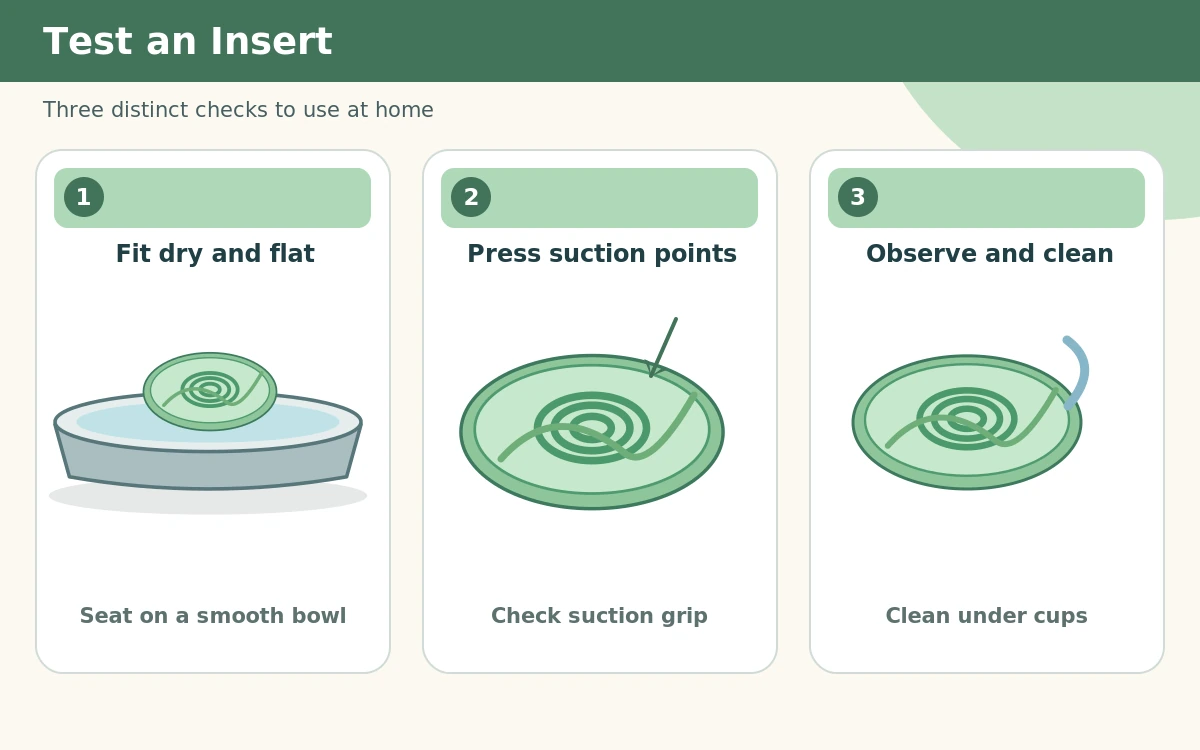
Run a short supervised first-use test
Before the full meal, seat the insert correctly and offer a small portion while you watch. Check whether the dog uses its mouth calmly and whether suction points remain in place. Stop if the insert folds or the dog starts chewing it. After the trial, remove the mat and inspect its edges for damage. If the product stays flat, the dog accepts it, and cleaning is manageable, you can incorporate it into normal meals while continuing supervision when needed. If not, try a simpler slow-feeding arrangement.
How We Research
We compare the stated purpose of silicone slow feeder inserts with observable design details: food access, fit, stability, cleaning, and failure points. Read more about our approach on the HubPet about page. General hygiene guidance comes from federal public-health and food-safety resources. Specific construction and dishwasher claims still require the exact manufacturer instructions. This article is an editorial buying and use guide, not a hands-on performance test of every model or a veterinary diagnosis.
Sources
FDA — Proper Storage of Pet Food and Treats. Used for the relevant animal feeding, cleaning, or safety guidance; not as a product endorsement.
CDC — Cleaning and Disinfecting Pet Supplies. Used for the relevant animal feeding, cleaning, or safety guidance; not as a product endorsement.
AAHA — Understanding Canine Bloat. Used for the relevant animal feeding, cleaning, or safety guidance; not as a product endorsement.
No. Interior base diameter, curvature, texture, and the suction surface all affect fit. Measure the actual bowl and follow the insert maker’s guidance.
Not always. Test the bond and supervise use. Remove an insert that lifts, folds, or becomes a chewable object during feeding.
Some designs work with wet food, but choose accessible channels and clean every ridge and suction cup after the meal.
No slow feeder guarantees bloat prevention. Ask a veterinarian about individual risk, and seek emergency care for signs such as unproductive retching or sudden distension.
Replace it when torn, chewed, cracked, persistently sticky, difficult to clean, or no longer able to remain safely seated.