
Cardboard scratchers can match a cat’s horizontal clawing preference, but orientation, secure placement and worn edges matter. The goal is to support ordinary scratching without fear, punishment or forced paw handling. For animal comfort and safety boundaries, see our veterinary information disclaimer.
Read the direction of the corrugated channels
A cardboard scratcher uses repeated fluted layers that claws can catch and tear. The orientation of those visible channels influences the feel of a long pull. Some products expose vertical corrugation along a flat board, while others arrange circular or angled strips. Compare the grain to the surface your cat already chooses, such as a rug or broad cardboard box. Do not assume a curved bowl offers the same reach as a long flat pad. Check the face closely for hard staples, sharp glue seams or loose liner strips before placing the scratcher.
Match length and width to the cat’s posture
A cat that scratches horizontally often stretches its front legs forward while its hindquarters stay low. The pad needs room for both front paws and a smooth pulling motion, not merely a footprint large enough to sit on. Measure the usable corrugated area after excluding side walls and decorative borders. If a cat regularly pulls off the end, choose a longer board or a model with more open space. Curved lounges may suit relaxed kneading but restrict a full flat stretch for some cats. Watch a normal session before deciding what shape works.
Keep a light pad from sliding across the floor
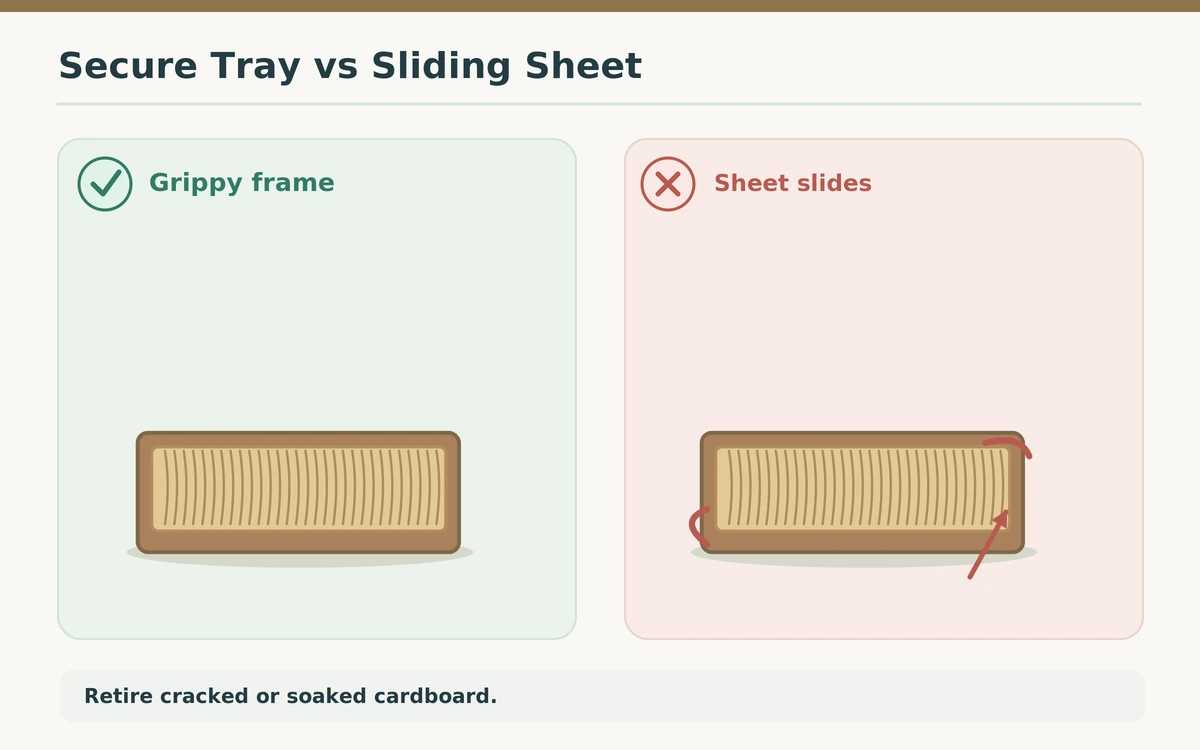
Thin cardboard trays can move as soon as a strong cat leans forward. Choose a sturdy frame, a manufacturer-approved non-slip base or a location against a stable wall that does not block the animal. Test the entire board by pushing it along the floor by hand. Avoid taped-down corners that leave sticky residue or create tripping edges. If the scratcher sits on tile, a lightweight pad may need a compatible grippy backing. A wide base can improve stability without turning the floor into an obstacle course. Recheck as cardboard layers wear.

Use placement to make the board useful
Place a flat scratcher beside a rug edge, sofa or sleeping area where the cat already scratches. The ASPCA recommends matching orientation and offering suitable surfaces rather than demanding that cats stop scratching entirely. A cardboard pad hidden behind a door may not attract a cat that marks a busy living room. If the animal uses one end repeatedly, rotate the pad only if the product remains stable. Keep a vertical post somewhere else for cats that also stretch upright. Multi-cat households may need separated horizontal boards to avoid resource conflict.
Expect shreds, but distinguish debris from failure
Loose cardboard flakes and paper dust can appear after ordinary claw use. Sweep or vacuum the surrounding floor so tiny scraps do not accumulate near food or water bowls. Light wear does not automatically mean the scratcher has reached the end of its life; cats often value familiar scent and softened texture. Replace the unit when layers collapse, sharp edges appear, a frame breaks or the animal begins chewing off large chunks. Do not assume that cardboard marketed as recyclable is safe if covered with unknown glue or coating. Follow local recycling rules for clean used products.
Check adhesives, inks and detachable extras
Some scratchers include printed sleeves, dangling balls or attached bells. Inspect these additions for small pieces, strings and exposed fasteners before use. A plain, solid board can be easier to inspect than a complex toy combination. If the cat gnaws cardboard rather than scratching it, supervise closely and remove loose chunks. Avoid applying essential oils or strong fragrances to the surface. Catnip can encourage some cats, but it is optional and not every animal responds. A scratcher should support normal clawing without relying on chemical scents or small removable decorations.
Compare flat boards, angled ramps and curved lounges
A low flat board supports forward pulling, an angled ramp changes wrist and shoulder position, and a curved lounge may double as a rest spot. None of these shapes is automatically superior. Watch whether the cat uses the whole surface and leaves comfortably. A high, steep cardboard ramp may wobble unless the frame supports it. Curved bowls can trap debris in the bottom, while open boards are easier to vacuum around. Choose based on the cat’s posture and your cleaning routine rather than the most unusual product silhouette. Keep at least one other orientation available during testing.
Rotate or replace the pad thoughtfully
Some products allow a reversible insert. Follow the manufacturer’s method and confirm the frame secures the flipped piece. If the animal favors one worn side, abrupt replacement can reduce interest because the familiar texture disappears. Introduce a new pad near the old one, then retire the damaged board after use transfers. Avoid stacking loose inserts that slide as the cat pulls. Record how often a pad actually fails rather than replacing it on a fixed marketing schedule. A durable, safe and well-used pad provides more value than a new one that stays untouched.
Clean around the scratcher without strong sprays
Pick up visible strips, vacuum with a suitable upholstery or floor attachment and wipe the external frame only if the maker permits it. Wet cardboard can warp, soften or grow unpleasant odors, so avoid soaking the corrugated face. Keep the pad away from spills and litter-box splash zones. If cardboard becomes damp, moldy or heavily soiled, discard it according to local waste rules. Do not use a heavily scented disinfectant to mask deterioration. A clean, dry scratching spot is easier for the cat to revisit and easier for people to maintain.
A simple comparison checklist before buying again
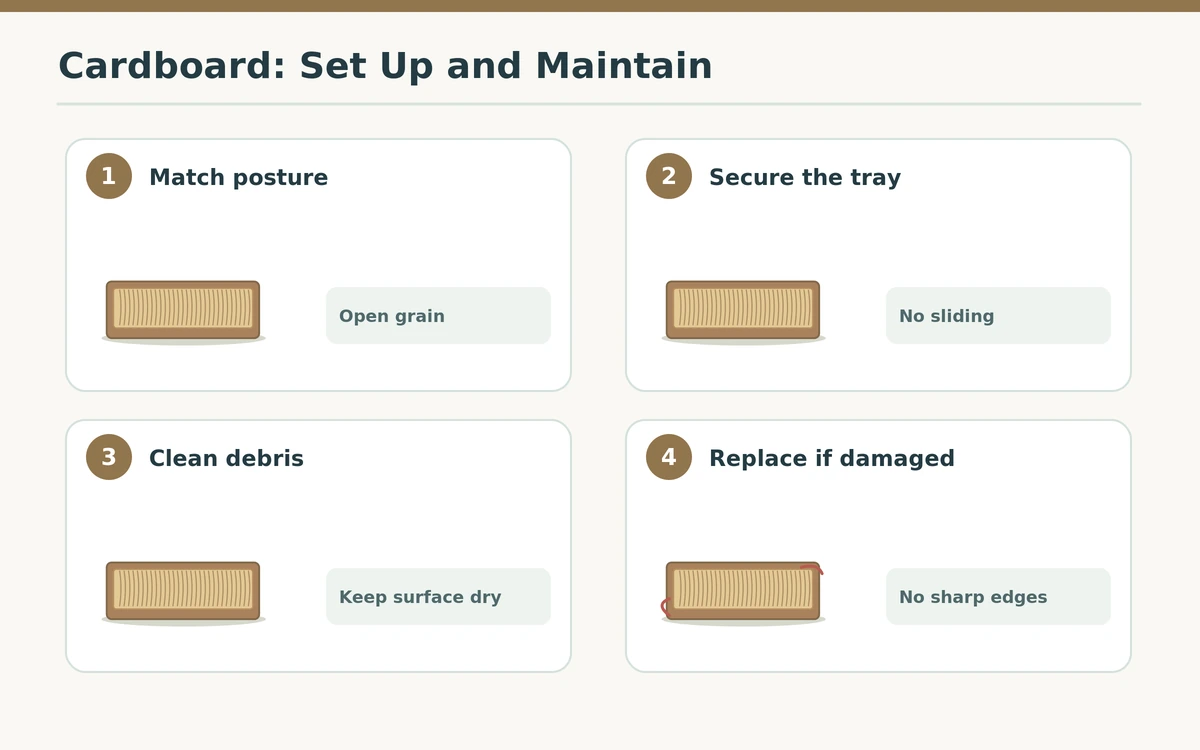
Look at your cat’s preferred body position, length of pulling stroke and tolerance for sliding. Check the cardboard grain, frame stability, open usable area and ease of changing inserts. Choose a model without snagging hardware or loose decorative parts. Place it near a normal scratching target and observe use over several days. Clean debris as part of ordinary household care and replace the board when the structure fails, not just when the surface looks shredded. Keep a stable vertical post available too if the cat switches between upright and horizontal scratching.
How We Research
We reviewed the feline welfare and veterinary behavior sources linked below for cardboard cat scratchers. This guide compares observable scratching preferences, construction details, safety checks, and owner-managed setup choices. We did not run laboratory abrasion tests, measure brand durability, certify mounts, endorse an individual product, or diagnose a cat from a single behavior. Follow maker instructions and an individual cat’s comfort, and consult an appropriate veterinary professional for sudden behavioral change or injury. See our editorial approach. Reviewed October 28, 2026.
Sources
ASPCA, Destructive Scratching. Read the original guidance. Accessed October 28, 2026.
San Francisco SPCA, Scratching Posts. Read the original guidance. Accessed October 28, 2026.
Cornell Feline Health Center, Feline Behavior Problems: Destructive Behavior. Read the original guidance. Accessed October 28, 2026.
Humane World for Animals, How to Help Your Cat Scratch in the Right Places. Read the original guidance. Accessed October 28, 2026.
Safety note: Stop use when a scratcher tips, shifts, exposes sharp hardware, traps claws or sheds pieces that the cat chews. For bleeding, persistent limping, possible swallowed objects or a sudden change in scratching with other symptoms, seek veterinary guidance. Never declaw a cat to solve furniture scratching.
No. Adult cats can prefer horizontal corrugated surfaces. Choose a usable size and solid frame that matches the individual cat.
Replace it when the structure collapses, develops unsafe edges or becomes soiled. Cosmetic shreds alone do not necessarily mean failure.
A lightweight frame or smooth floor may offer too little traction. Use the maker-approved non-slip setup or a sturdier board, then retest before the cat uses it.
Avoid soaking cardboard. Remove surface scraps and follow product directions; discard material that becomes wet, moldy or heavily soiled.
Some do, especially cats that prefer low surfaces. For upright sofa scratching, also provide a tall stable post beside the original target.