
A slow feeder for wet cat food works differently from a kibble puzzle. Pâté and shredded food can cling to textured surfaces, and a complicated maze may cause a cat to give up before eating enough. A shallow plate with gentle ridges can add a small amount of foraging effort, but it is not necessary for every cat and it is not a treatment for vomiting or weight problems. This guide focuses on plate geometry, voluntary use, portion tracking, and food safety. It also explains why claims about ‘whisker fatigue’ deserve nuance: one published study did not find improved intake from specially marketed whisker-friendly dishes in the cats tested.
Start with the way your cat already eats
Watch a normal meal on a familiar flat dish before buying any puzzle plate. Does the cat lick smooth pâté, pick up chunks, leave large pieces behind, or carry food away? A cat that needs several short visits may be better served with a simple flat plate and smaller fresh portions. If the cat often eats too quickly, check whether competition with another pet contributes. Separate feeding locations can help reduce pressure without adding a maze. Do not make a healthy cat work for every calorie if it prefers an ordinary dish; enjoyment and adequate intake matter more than novelty.
Match ridge height to the food texture
Thin strips of wet food can be spread between low rounded ridges. Larger chunks need broad shallow areas; they may remain stranded in tiny deep pockets. Run a spoon across the plate to confirm a cat can reach the whole portion in every groove. Avoid patterns with narrow tunnels that a cat cannot reach with its tongue or jaw. A model sold for dry pellets may be completely unsuitable for sticky wet food. Treat promotional claims about ‘maximum difficulty’ cautiously. In this category, easy access and rapid cleanup are advantages, not evidence that a puzzle is too simple.

Compare material and damage tolerance
Choose a smooth food-contact surface with no flaking coating, sharp molding seams, or detachable pieces a cat might chew. Silicone plates are flexible and often have suction bases, but check whether their ridges collapse under the cat’s tongue. Rigid plastic is lightweight yet may scratch; a scratched feeding surface can become difficult to clean. Ceramic is more rigid but may chip if dropped. Inspect a new plate by touch, wash it according to instructions, and watch for cracks or damaged edges over time. Whatever the material, replace it when damage makes cleaning difficult or could injure the mouth.
Keep portions measurable across the plate
Measure the normal daily ration first. Spread only one intended meal or a clearly counted part of it across the plate; do not add extra food as bait to make the puzzle attractive. The ridges can make the serving look larger or smaller than it really is. After the session, check whether food remains in the grooves and record the approximate amount eaten. Particularly with cats, repeatedly missing meals or a sudden drop in appetite is not an enrichment challenge to push through. Return to a familiar bowl and contact a veterinarian for new appetite changes, especially if the cat is unwell.

Introduce enrichment at the cat’s pace
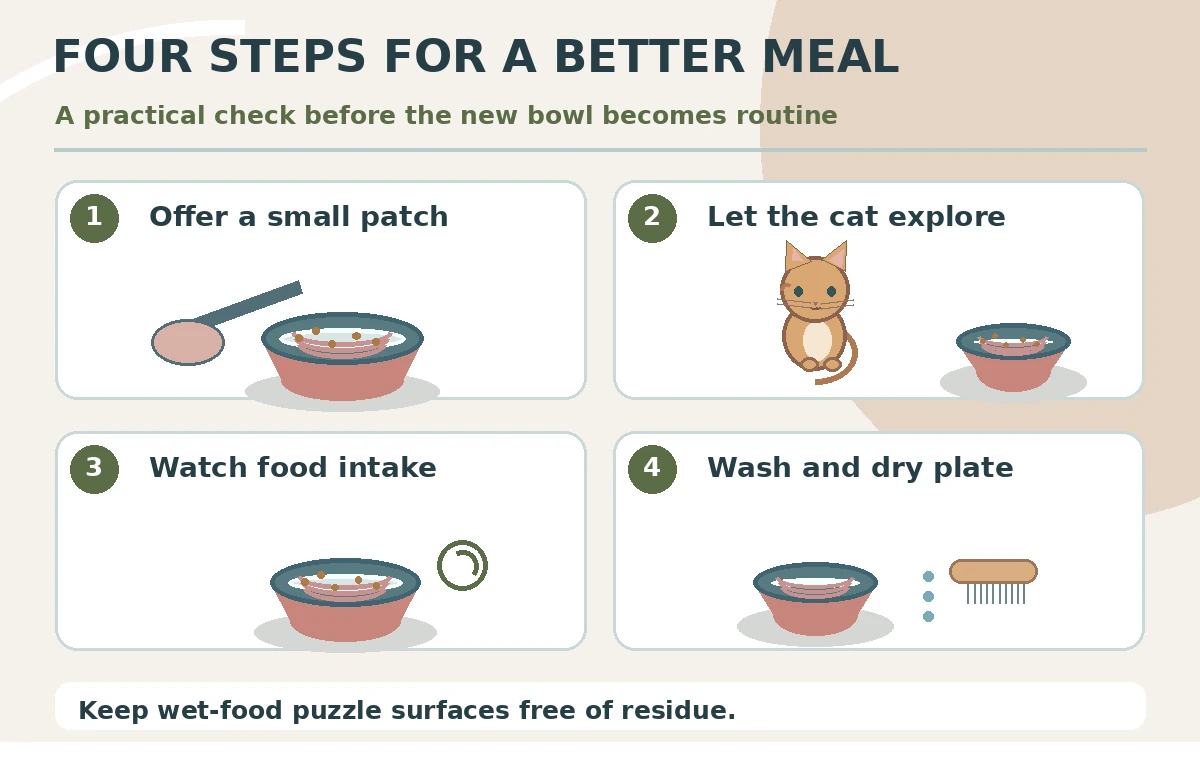
Begin with a few easily accessible dabs on the flattest part of the plate alongside the usual feeding dish. Let the cat approach voluntarily and end the attempt if it shows avoidance. Over subsequent sessions, spread the familiar food over two or three shallow channels while keeping all other conditions stable. Avoid putting the plate in a busy doorway or next to another cat’s station. Cats Protection advises households to feed cats apart when competition seems likely. A calm eating posture and consistent intake are better signals of acceptance than whether the owner thinks the plate looks interesting.
Be accurate about whisker-contact claims
Some cats appear to prefer wide shallow dishes, yet that observation does not prove whisker contact causes a distinct disorder in all cats. A 2020 controlled comparison of 40 indoor cats did not detect the expected improvements in eating duration, food intake, or dropped food when the study offered a whisker-friendly bowl instead. Preferences can still differ among individuals. Choose a comfortable open shape as a practical option, not as a solution to a supposed universal problem. If a cat refuses a textured feeder, try a flat plate rather than insisting it should overcome a sensory issue.
Clean wet-food plates promptly
Wet food caught in grooves needs more cleaning attention than dry kibble on an open dish. FDA recommends washing feeding utensils with soap and hot water after each use and promptly refrigerating or discarding leftover canned food. CDC offers similar guidance for wet-food bowls. Scrub the base of each ridge with a soft brush, rinse thoroughly, and dry completely before the next meal. Check under any suction cup or removable liner for trapped residue. A plate you cannot thoroughly wash with your usual method is not the right model, regardless of how attractive its design looks.
Make a one-week comfort assessment
Compare a normal plate and the textured feeder under similar quiet conditions, without withholding food to force a choice. Note whether the cat approaches, finishes the measured meal, steps away repeatedly, or leaves hard-to-reach scraps. Keep water available in a separate area and maintain normal feeding times. If the textured dish adds interest without reducing comfort or intake, continue short supervised sessions. If the cat eats less or seems unsettled, revert to a simple dish. Feeding enrichment should be adaptable; a successful setup is one the cat can use without stress and the caregiver can keep clean.
How We Research
We compared primary veterinary, government food-safety, and established animal-welfare guidance with real-world bowl geometry and maintenance trade-offs. We separated general feeding principles from product-specific fit questions and did not treat a manufacturer’s claim as independent evidence. The illustrations explain practical checks rather than certifying any product. We reviewed sources October 27, 2026. Read more about our editorial approach on About HubPet.
Sources
US Food and Drug Administration: Tips for Safe Handling of Pet Food and Treats: Read primary guidance. Accessed October 27, 2026.
US Centers for Disease Control and Prevention: Cleaning and Disinfecting Pet Supplies: Read primary guidance. Accessed October 27, 2026.
Journal of Feline Medicine and Surgery: Evaluation of Whisker Stress in Cats (2020): Read primary guidance. Accessed October 27, 2026.
Cats Protection: Feeding Your Cat: Read primary guidance. Accessed October 27, 2026.
Safety note: These product-selection tips are educational, not an individualized feeding or medical plan. A sudden change in appetite, swallowing, breathing, or behavior warrants veterinary advice. Our veterinary disclaimer has more context.
Some shallow textured plates work well with pâté or soft pieces; avoid deep channels where food becomes inaccessible or hard to clean.
Do not assume a bowl solves vomiting. New, frequent, or persistent vomiting calls for veterinary advice and an assessment of the whole feeding routine.
No universal need has been demonstrated. A study found no consistent intake benefit, although some cats may prefer an open shallow dish.
Wash with soap and hot water after every use, scrub the grooves, rinse well, and discard or refrigerate leftovers promptly.
Try flatter grooves or a regular plate, track intake, and consult a veterinarian if reduced appetite persists or starts suddenly.