
A puppy slow feeder bowl can spread a meal across shallow ridges, making each mouthful harder to gulp. It should not turn feeding into a frustrating obstacle course. Puppies have small mouths, changing body sizes, and varying levels of patience. A feeder that works for an adult dog may be too deep or difficult for a young puppy; our veterinary information disclaimer explains the limits of general feeding advice.
VCA suggests slow-feed bowls among several options for puppies that eat rapidly, alongside spreading food on a tray or using smaller frequent meals. The right choice depends on how easily your puppy can reach the food, whether the bowl stays still, and how thoroughly you can clean every groove after use.
Decide whether slow feeding is needed
Observe a normal supervised meal and note whether the puppy rushes, coughs, spits food out, or seems uncomfortable afterward. A fast finish by itself does not establish a medical problem. If the puppy has repeated vomiting, persistent gagging, poor growth, or unusual hunger, consult a veterinarian rather than attempting to manage symptoms with bowl geometry.
Keep the existing food and meal schedule during a first comparison. You want to evaluate the feeder, not a simultaneous diet switch. Puppies often benefit from several appropriately portioned meals per day, so ask your veterinary team what schedule fits the puppy’s age and expected adult size.
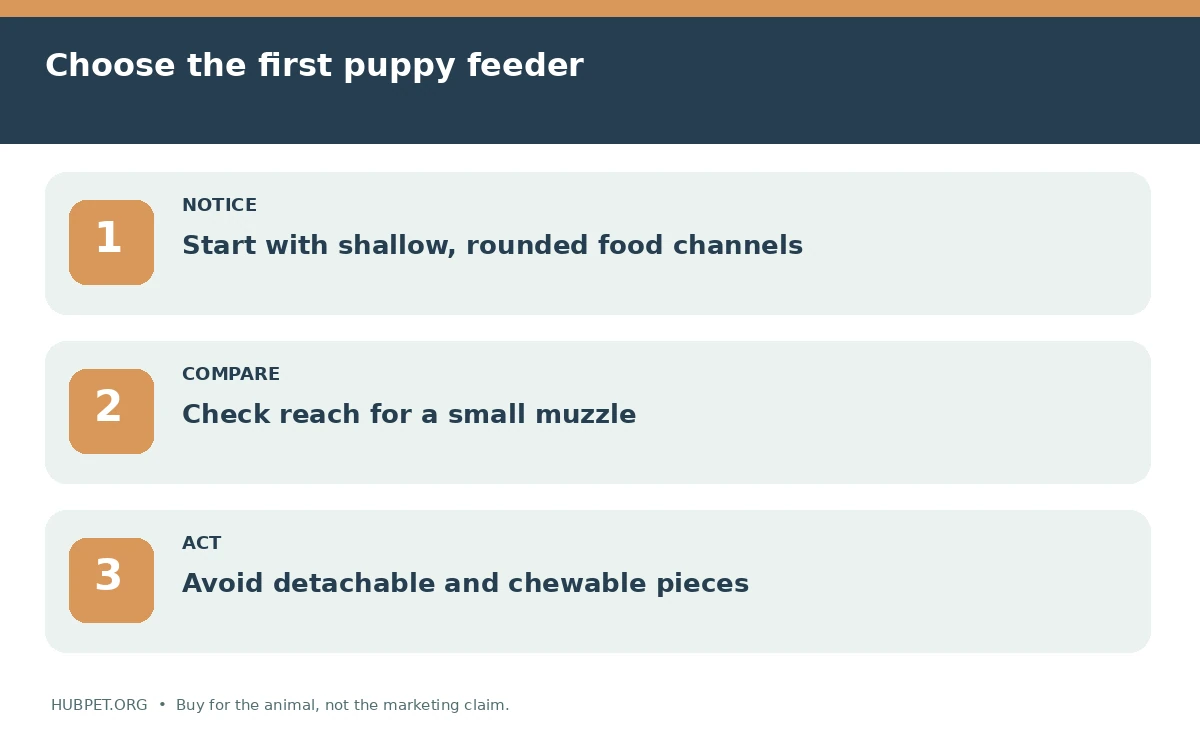
Start with open, shallow channels
Choose a maze with broad paths and rounded ridges that let the puppy reach pieces with the tongue and muzzle. Very narrow spiral channels may trap food and cause frantic pawing. If the puppy must scrape teeth against rigid walls, the design is too challenging for a first trial.
A shallow beginner pattern gives you room to judge comfort before increasing difficulty. Put only part of a usual meal in the feeder at first. The goal is calmer, successful eating, not the longest possible feeding time. Keep the remaining portion available through a simple dish.
Match the maze to the food texture
Dry kibble moves differently from wet food. Small round pieces may scatter out of broad channels; sticky food can cling behind tall ridges. Before purchase, check whether the manufacturer permits the food type you use and whether all recesses are reachable with a cleaning brush.
Do not add thick pastes, unfamiliar ingredients, or frozen meals simply to make the bowl more challenging. Puppies have specific nutritional needs. Keep treats and enrichment portions within the feeding plan set with your veterinarian, and preserve their usual complete and balanced diet.
Check size and a slip-free base
Place the feeder at ground level on stable flooring. The puppy should be able to stand normally without reaching over a high rim. A broad nonslip base helps prevent the bowl sliding across tile; a lightweight dish that keeps escaping may encourage chasing and rough handling.
Press gently at several points around the edge with the empty bowl in place. It should not flip or wobble. If suction cups are present, inspect their condition often and confirm they are not small detachable pieces a chewing puppy could swallow.
Avoid chewing and trapped debris
Some puppies explore a feeder after finishing by biting the ridges. Supervise the whole meal and remove the bowl when eating ends. If your puppy tears material, swallowable pieces, or coating flakes off, discontinue use. Never leave an unfamiliar slow feeder as an unsupervised chew toy.
Inspect maze corners for chips, sharp transitions, and burrs before use. A complex food-safe-looking shape can still be hard to clean. Favor a bowl with simple continuous surfaces over deep wells that retain fat, food residue, and moisture after rinsing.
Make sanitation part of the choice
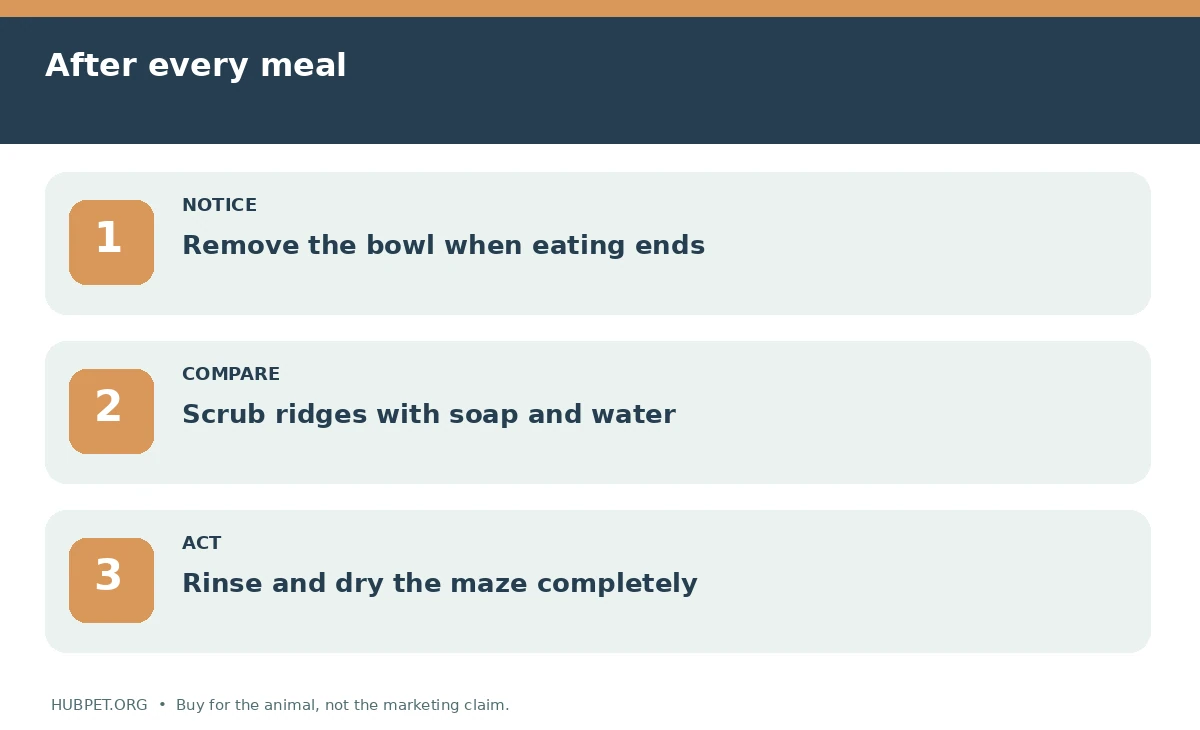
FDA recommends washing and drying food bowls after each meal. More maze walls mean more places where scraps can hide, especially with soft food. Check dishwasher claims against the maker’s actual care directions, and confirm that the maze tolerates the wash cycle you intend to use.
Scrub the base, back, and ridge intersections with soap and water, then rinse and dry fully. Do not rely on a quick wipe between meals. Use a dedicated brush if the geometry needs one, and replace the bowl if you can no longer clean a damaged groove.
Compare with no-purchase alternatives
A shallow tray can spread food over a wider surface. A muffin tin can separate kibble into several small portions, provided the edges are smooth and the puppy cannot flip or chew it. Hand feeding part of the measured ration during reward-based training can also make mealtime less frantic.
These alternatives are not suitable in every home; choose what you can supervise and clean. Never add marbles, loose stones, or small toys to a bowl as obstacles. A swallowed object can create a much greater problem than quick eating.
Run a three-meal tolerance check
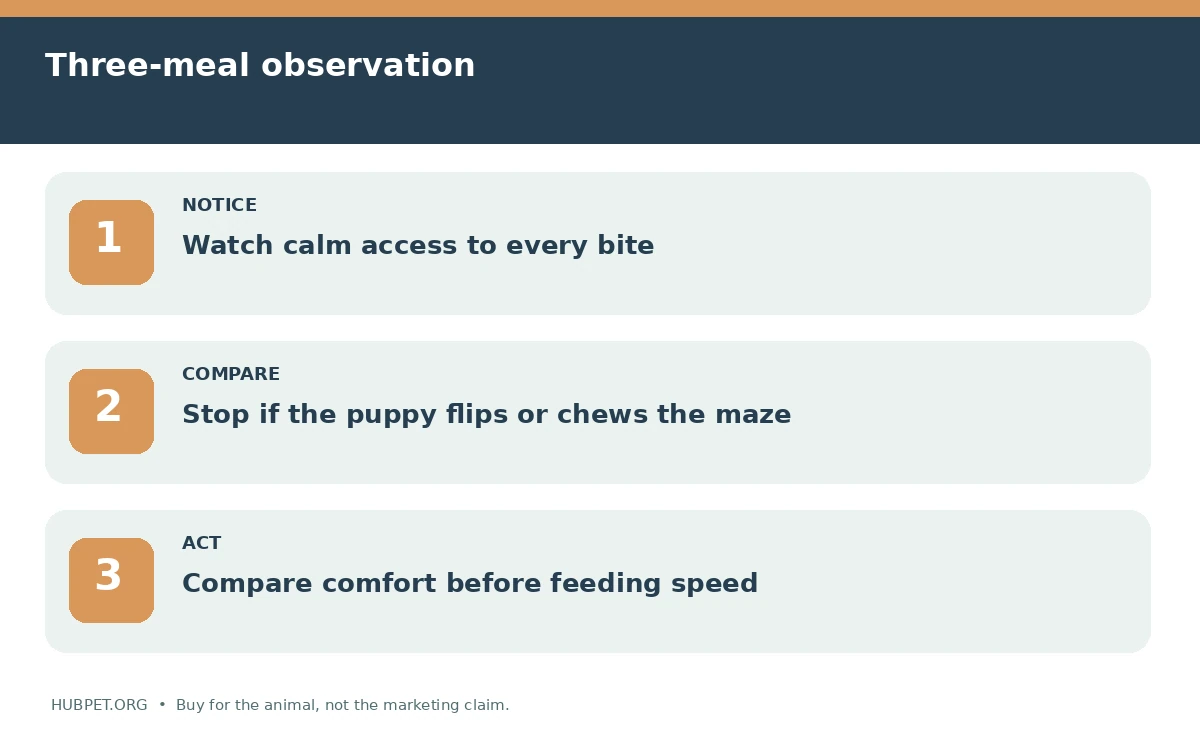
For the first three supervised uses, watch whether the puppy approaches readily, can reach almost every piece, and finishes without obvious frustration. Look for scratching, frantic flipping, avoidance, or repeatedly abandoning food trapped in the maze. Those signals call for a simpler design.
Do not measure success only by the stopwatch. A feeder that triples the time but leaves the puppy distressed is not a win. Focus on smoother behavior, easy access, consistent portions, and no coughing or other warning signs. Discuss concerning symptoms promptly with a veterinary professional.
Replace the design as your puppy grows
As the muzzle and jaw grow, a tiny maze may become cramped or easier to bite apart. Recheck fit monthly during rapid development rather than assuming the first bowl will last into adulthood. Choose a size based on usable eating space, not only the manufacturer’s recommended weight band.
Keep the familiar meal schedule, fresh water, and a quiet location. If your puppy continues to inhale meals or shows appetite changes, ask a veterinarian to review feeding amount and health status. A slow feeder is an optional tool; persistent digestive symptoms need veterinary attention.
How We Research
HubPet reviewed published veterinary, animal-welfare, and public-health guidance relevant to puppy slow feeder bowl. We separated established safety and hygiene recommendations from product features that have not been independently measured. These are desk-researched criteria, not hands-on product tests or professional endorsements. Sources were checked October 26, 2026. See About HubPet and our editorial approach. This information does not replace individualized veterinary care.
Sources
VCA Animal Hospitals: How to Stop a Puppy From Eating Too Fast. Accessed October 26, 2026.
VCA Animal Hospitals: Feeding Times and Frequency for Your Dog. Accessed October 26, 2026.
U.S. Food and Drug Administration: Tips for Safe Handling of Pet Food and Treats. Accessed October 26, 2026.
Centers for Disease Control and Prevention: Cleaning and Disinfecting Pet Supplies (2026). Accessed October 26, 2026.
No. Consider one if meals are rushed, but consult a veterinarian about repeated gagging, vomiting, or poor growth.
Begin with shallow rounded ridges and wide paths that allow comfortable access to every bite.
No. Supervise unfamiliar bowls and remove them when the puppy starts chewing the material.
Some do, but clean every groove thoroughly and follow manufacturer guidance on compatible food and washing.
Switch to a simpler feeder or spread the meal on a shallow tray; do not force the puzzle.