
An open cat litter box offers a direct entrance, a clear view of the room, and easy access for scooping. That does not mean every uncovered tray is automatically comfortable. A tiny open pan may be harder to use than a spacious alternative, while a good tray in a noisy location can still become unpopular. This guide focuses on the actual floor space, sight lines, surrounding clearance, and daily routine. Use the cat’s movement and willingness to use the box as evidence, not just the product label. For sudden changes in elimination, consult your veterinarian; our veterinary disclaimer explains the limits of general pet-care advice.
Start with interior room, not the outside footprint
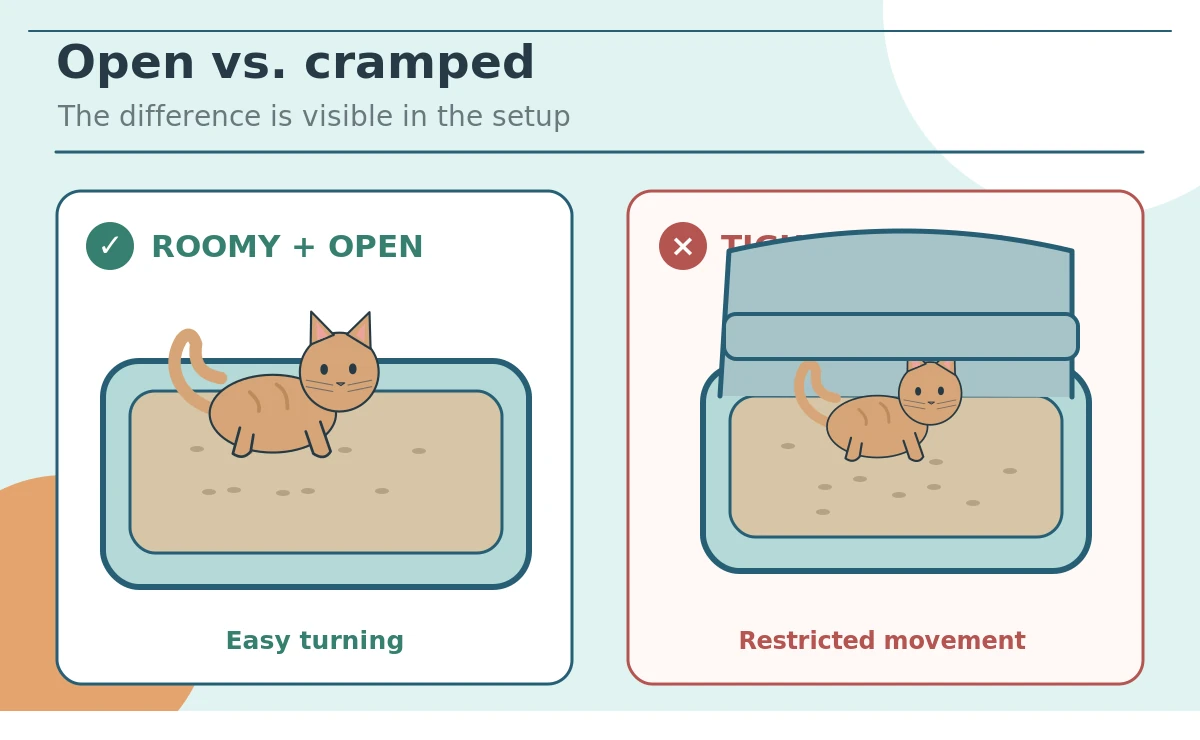
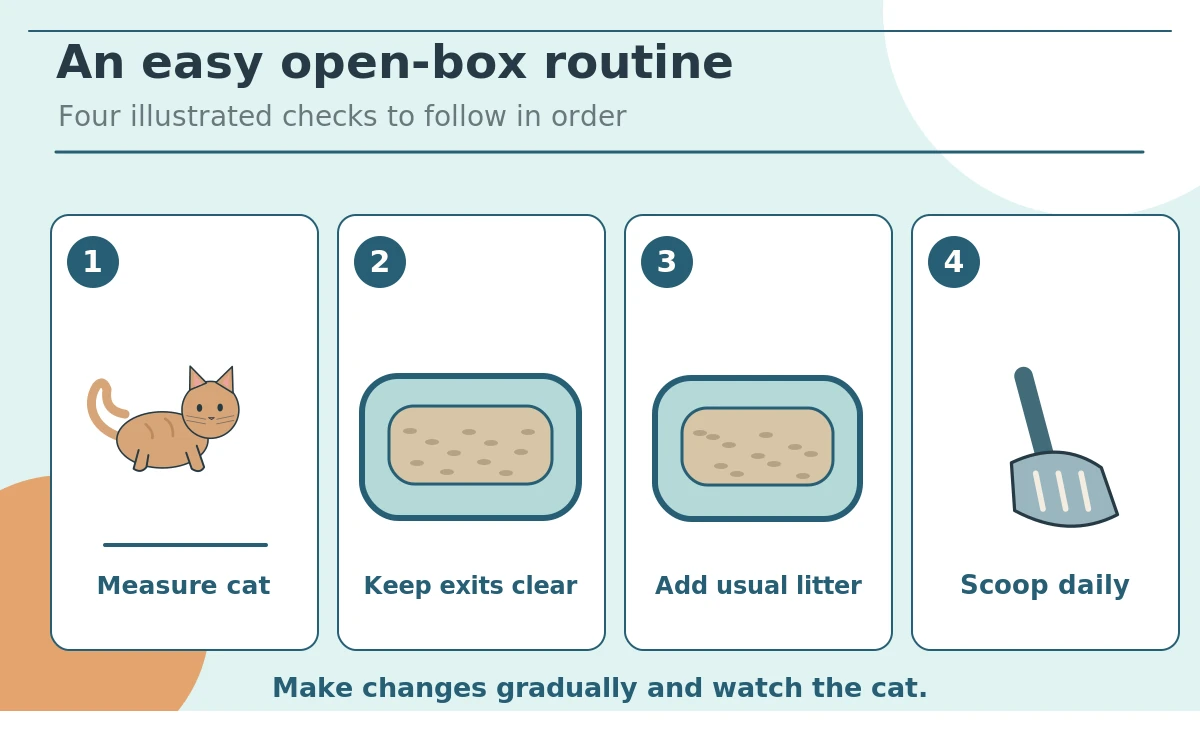
Measure the flat floor inside the tray, excluding curved corners and sloping walls. Your cat should be able to enter, turn, dig, and choose a clean spot without brushing both sides at once. Feline veterinary guidance often suggests a box about one and a half times the cat’s body length, measured without the tail. That is a planning guide, not a substitute for observing your cat. A large pawprint on the package does not tell you how much usable room remains after adding litter.
Keep the entrance easy to reach
An open top does not guarantee a low entry. Some trays have tall continuous sides that a kitten or older cat may find difficult to climb. Look at the lowest clear entrance and consider how the cat approaches it from the floor. A firm, level mat can help with traction, but a slippery folded mat can be worse than a bare stable surface. Never make a cat leap into the tray simply to keep litter from scattering. Accessibility comes before neatness.

Understand why open sight lines can help
An uncovered litter tray lets the cat see nearby movement and leave without pushing through a door flap. That can be valuable where other animals might approach. Yet an open box in the middle of a busy hallway offers too much disturbance. Choose a quiet location with a clear exit path and enough space around the opening. Avoid putting a tray in a narrow dead end where a second cat or dog can block the way. The best arrangement offers privacy without making the cat feel trapped.
Choose sides that match the cat’s habits
Low sides make entry easier but may allow litter to scatter when a cat digs vigorously. Higher rear and side walls can help contain material, provided the front remains accessible and the interior stays generous. Some cats urinate near a side wall; in those cases, a taller rear panel may reduce mess. None of these adjustments should force the cat into an awkward stance. If the cat starts perching on the rim or standing half outside, check the usable space and entry height before buying another accessory.
Compare the open tray with a hooded box
An open tray offers a wide exit, easy visual cleaning checks, and usually fewer moving parts. A hooded box conceals waste from people but can restrict turning space and hold odors unless cleaned diligently. Some cats accept both, and individual preferences matter. Rather than imposing a sudden swap, offer a suitable open tray alongside the familiar one and monitor use. Do not remove the working box until the cat consistently uses the alternative. An exposed tray can be the better choice even when it looks less discreet.
Manage scatter around the box, not at the cat’s expense
Put a washable, non-slip catch mat where paws land after leaving the box. Choose a low edge that is easy to cross and an area large enough for a normal step. Scoop promptly and sweep scattered grains with a dedicated tool. Avoid rough grates or adhesive strips that may irritate paws. If scatter remains heavy, evaluate litter texture, the cat’s digging pattern, and the tray wall shape. Do not reduce litter depth drastically just to protect the floor; cats need material they can dig in.
Check how cleaning actually works
With an open tray, waste is visible and a scoop can move around the corners without a roof in the way. Look for smooth interior seams and a base that does not flex when lifted. Empty and wash the box on an appropriate schedule with mild, unscented soap, then rinse and dry it completely. Avoid harsh fragrances, ammonia, or strong cleaners that might deter the cat. If a rim clips onto the top, remove it for cleaning so trapped grains do not remain in the joint.
Watch for subtle signs of discomfort
Hesitating at the entrance, balancing on the edge, rushing out before covering waste, or using only one narrow corner can point to a poor fit or unwanted location. These signs do not prove the tray is the only cause. Pain, urinary trouble, and stress can also change toilet habits. If the behavior is new or persistent, consult your veterinarian promptly. An open design is an option to test, not a substitute for assessment when the cat suddenly changes elimination behavior.
Test one change at a time
Place the candidate open box in a quiet accessible spot while retaining the current tray. Start with the cat’s familiar litter and similar depth, then observe several ordinary visits. Resist changing box style, litter brand, depth, and room at the same time, because that makes preferences difficult to interpret. If the cat chooses the new tray, continue keeping it clean and available. If the cat avoids it, check size and location before assuming it dislikes open boxes in general.
Make an everyday inspection routine
Look at the entrance, floor, and corners when scooping. Check that the pan sits flat and does not slide on damp flooring. Inspect for cracks and scratches that hold odor. Confirm nothing has been moved in front of the cat’s approach, especially a laundry basket, dog bed, or closing door. Keep enough separate boxes for the household rather than grouping every tray in one corner. This quick inspection protects the original advantage of an open box: uncomplicated, predictable access.
How We Research
We reviewed guidance from veterinary and established cat-welfare organizations about litter box size, hygiene, placement, and changes in toileting behavior. We distinguished general cat preferences from product-specific claims and from the needs of an individual cat. Measurements and diagrams are practical aids, not guarantees that a cat will accept a tray. We prioritize access, choice, and prompt veterinary evaluation for new elimination problems. Read more about our editorial approach.
Sources
Ohio State University Indoor Pet Initiative, Litter Boxes — https://indoorpet.osu.edu/cats/basic-indoor-cat-needs/litter-boxes (accessed October 2026).
VCA Animal Hospitals, Housetraining for Kittens and Cats — https://vcahospitals.com/know-your-pet/litter-box-training (accessed October 2026).
ASPCA, Litter Box Problems — https://www.aspca.org/pet-care/cat-care/common-cat-behavior-issues/litter-box-problems (accessed October 2026).
Cats Protection, Preparing Your Home for a Cat — https://www.cats.org.uk/help-and-advice/getting-a-cat/preparing-for-a-cat (accessed October 2026).
Feline Veterinary Medical Association, Cat-Friendly Practices: Client Education — https://catvets.com/resource/client-education-cat-friendly-practices/ (accessed October 2026).
Health and safety note: Straining to urinate, repeated attempts with little or no urine, blood, obvious pain, or sudden elimination changes need prompt veterinary assessment. Inability to pass urine is an emergency. Never punish a cat for avoiding a litter box.
Many cats do well with spacious uncovered boxes, but individual preferences differ. Offer a choice when practical and watch normal use.
Yes, if it has generous floor space and appropriate side walls. Add an easy-to-cross catch mat rather than limiting entry.
It can sit near a wall for privacy, but avoid a cramped dead end. Leave a safe approach and exit route.
Look for the cat touching both sides while turning, standing on the rim, or struggling to dig around waste.
No. Scoop daily or more often as needed, and wash the tray regularly. Visibility helps you notice mess; it does not remove it.