
A roll-up mat gives your dog a recognizable place to settle at a hotel, a friend’s home, or a quiet stop outdoors. The challenge is choosing one that works both open and packed. A mat can look roomy in product photography but become narrow after edge seams, while a very thick model may stay bulky and damp after a muddy outing. Start with the space your dog actually uses when resting. Then check the underside, closures, cleaning process, and the surface where you plan to unfold it. Remember that a comfort mat is not a vehicle crash restraint or a substitute for a secured carrier.

Measure the unfolded sleeping area
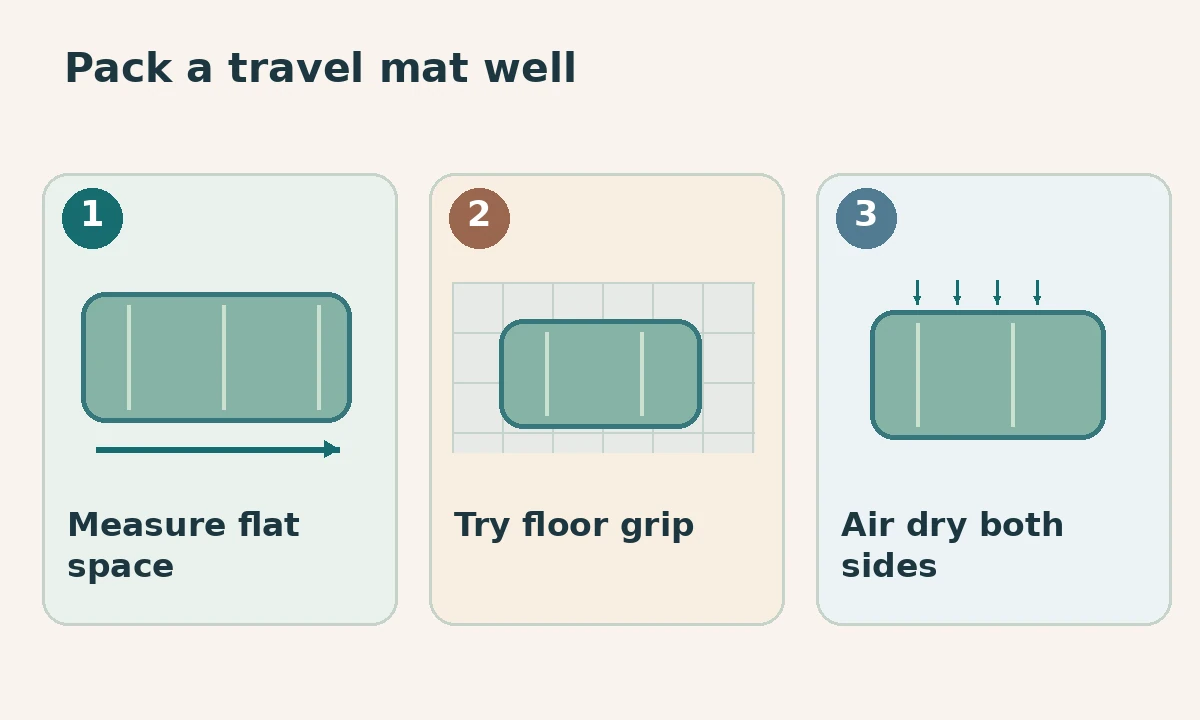
Ask your dog to rest naturally on a familiar surface and note the space used when curled and stretched. Then compare that with the mat’s usable flat panel, not just its outer dimensions. Folded hems and raised seams can reduce the area a dog feels comfortable using. A mat that barely fits a curled dog may feel cramped during a long visit. Before purchasing, draw the advertised footprint on paper and place it on the floor. Watch how your dog turns and settles without prompting. Leave room for paws and ordinary position changes.
Compare packed bulk with real storage
Some mats roll into a tube, while others fold into a rectangle with straps. Neither shape is automatically better. A long roll may fit a vehicle trunk but stick out from a daypack. A square folded mat may slip into luggage but create a thick lump. Measure your available storage space before shopping. Inspect whether the closure strap stays attached when the mat is open. Loose straps and dangling cords should remain beyond the dog’s reach. A packed size is useful only if you can transport the mat without crushing nearby essential supplies.
Inspect the floor-contact side
Smooth indoor tile, rough outdoor decking, and campsite ground create different friction. Choose a base that lies flat and does not bunch beneath your dog. Set an empty sample on the planned surface and press gently at its edges. A slick waterproof coating can protect from dampness yet slide on polished flooring. Avoid claiming that one backing works on every surface. If your dog races onto a resting mat, select a stable location away from steps, thresholds, and wet walkways. Do not force the dog to stay on an unstable surface.
Check seams, ties, and closures
Look at rolled edges, carrying handles, hook-and-loop straps, and any snaps. A seam that opens during repeated folding can expose loose batting, and long ties can become attractive chewing targets. Choose closures that tuck away or remain secured while the mat lies open. Before every trip, gently inspect the fabric for pulled threads and cracked buckles. If a dog has a history of swallowing textile pieces, a travel mat requires additional supervision and a safer material choice. A repair should not leave sharp or detachable parts accessible.

Keep wet layers from staying packed
After a rainy outing, the top may feel dry while the padding still holds moisture. Unroll the mat at home, separate any removable layers per the care instructions, and allow air to reach both sides. Never seal a damp cushion inside a storage bag for days. VCA advises thorough washing and drying of dog bedding. If the inner fill develops persistent odors or cannot dry fully, replace it. Instead of relying on a waterproof label, check seams and folding points where water can enter. Carry a washable spare for unexpectedly wet trips.
Use the mat only in suitable places
A mat can provide comfort on a hotel floor, inside a safe pet-friendly room, or during a supervised rest outdoors. Do not place it in a parking lane, on a moving vehicle seat as a restraint, or on a hot surface. In vehicles, follow appropriate crash-restraint guidance for the dog’s carrier or harness. At a campsite, check for sharp debris, insects, standing water, and trip hazards before unfolding bedding. Supervise dogs outdoors and maintain access to shade and clean drinking water. A portable bed supports rest; it does not make every location safe.
Introduce travel bedding at home first
Let your dog explore the open mat on familiar flooring before the trip. Mark and reward calm, voluntary stepping onto it, then allow the dog to walk off. The AKC describes a reward-based “go to place” exercise using a bed or portable mat. Practice brief rests without turning the mat into a confinement tool. Once your dog relaxes at home, try another quiet room. A familiar texture can help with routine, but some dogs still need distance from unfamiliar people and sounds. Never expect the mat to resolve fear by itself.
Choose an easy-clean surface for the trip
Smooth coatings wipe more easily after spills, while soft fabrics may feel more familiar but hold hair or dirt. A removable washable cover can offer a useful compromise, provided the zipper remains protected. Brush off loose debris before washing. Use only cleaning products allowed by the care label and rinse thoroughly so residue does not remain against the skin. Consider how quickly the complete mat dries, not just how easily the top surface wipes clean. A difficult cleaning routine may discourage using the mat consistently.
Set up the rest spot away from traffic
In an unfamiliar room, avoid positioning the mat right beside the entrance, under a rolling chair, or where luggage may fall. Give the dog a clear line to water and to a person they trust. Dogs differ in their desire to watch activity or withdraw from it. If your dog prefers a corner, allow a quiet approach without trapping the animal between furniture. Keep electrical cords, food wrappers, and loose luggage straps away from the bed. Let the dog choose another safe spot if the proposed area proves uncomfortable.
Run a pretrip and after-trip checklist
Before leaving, unfold the mat and inspect seam strength, surface grip, moisture, and size. Check that the carrying closure works and that no loose parts invite chewing. After returning, remove hair, follow the washing instructions, and dry the entire mat before storing it. Recheck folding creases for cracking or worn coating. If your dog stops using a previously familiar mat, inspect its odor, texture, and location before assuming a behavior problem. Reassess the setup if a trip involves different flooring or weather.
How We Research
We reviewed veterinary and humane handling information alongside practical features of dog beds: entry height, usable floor space, fabric wear, cleaning labels, and the room around a resting animal. These are illustrated inspection guides, not claimed laboratory product tests or guarantees for every dog. Sources were checked for this guide in October 2026. Our editorial information explains our approach, and the veterinary disclaimer explains why behavior changes, distress, and possible ingestion require qualified attention.
Sources
American Kennel Club — Teach Your Dog to Go to Place — Reward-based instructions for helping dogs choose and settle on a designated mat or bed.
AKC — Moving With a Dog — Practical guidance on familiar resting spots and belongings in a changed environment.
AKC — Dog Travel Tips — Safety context distinguishing a comfort mat from a secured travel restraint.
VCA Animal Hospitals — Safe Spring Cleaning With Your Dog — Veterinary guidance on washing and fully drying pet bedding and reducing exposure to cleaning products.
No. A comfort mat does not restrain a dog in a collision. Use suitable travel restraints and follow their instructions.
Water resistance can help with spills, but check seams, surface grip, and whether the inner padding can dry fully.
Move it to a safer surface or choose a more stable design. Do not hold your dog on a mat that shifts during entry.
Introduce it at home with brief voluntary exploration and calm rewards. Practice in quiet places before traveling.
Unroll it and dry all layers first. Packing damp bedding can trap moisture and odor between folds.