
This article offers general pet-care information, not a diagnosis or treatment plan. For urgent ingestion concerns, pain, or sudden behavior changes, consult a veterinarian. See our veterinary information disclaimer. A dog that catches the leash in its mouth may look as though it is playing tug with the handler. Sometimes the behavior appears after a fast turn, a busy crossing, or an exciting greeting. Pulling back strongly can turn the leash into an even more appealing tug toy. Instead, notice the trigger, reduce pressure, and teach a calm alternative away from traffic. Leash biting is not a diagnosis or a sign of defiance by itself. Sudden severe changes, mouth pain, or aggression toward the handler need professional evaluation. Start with safety and shorter, more predictable walks.

Map the moments before the grab
Write down when the dog first mouths the leash. Does it happen at the front door, after meeting another dog, or as the walk ends? Note body movement, leash tension, noise, and distance from distractions. A dog with loose wiggly movement may be excited, while one with tight posture and hard staring may be overwhelmed. Avoid categorizing every episode as play. Keep the next walk simple enough to test one variable at a time. This information helps you prevent rehearsal instead of reacting after the dog is already jumping and biting.
Keep the walk physically safe
If the leash enters the dog’s mouth near traffic, move to a safe, quieter location if you can do so without pulling the dog toward danger. Maintain control of the leash but do not wrap it around your fingers or wrestle over the clip. Stop before the situation becomes a tug contest. Do not attach a heavy chain or use a choking correction to discourage mouth contact. Such responses may increase discomfort and risk. A well-fitting harness and sturdy undamaged leash can support safer handling, but hardware cannot replace gradual training.
Look at tension and frustration
Leash biting sometimes appears when a dog wants to reach a smell, person, or another animal but cannot. Continuous backward pressure may intensify that frustration. Instead, plan a route with more space and reward moments when the leash forms a soft curve. Give your dog opportunities to sniff where it is safe. Notice whether the grabbing decreases when the walk offers more choice. If the dog becomes overexcited around specific sights, change distance before practicing. Do not use direct encounters as repeated tests of willpower.
Teach an easy alternative at home
Practice a simple hand target or turning toward your voice in a quiet room without the leash first. Mark the instant the dog responds and deliver a small reward from its normal food allowance. Add the harness, then the leash, while keeping the game easy. Reward a few loose steps and stop before the dog becomes wound up. This creates a rehearsed behavior you can ask for on a calm stretch of sidewalk. A cue trained only during a frantic leash-biting episode will be difficult for the dog to follow.
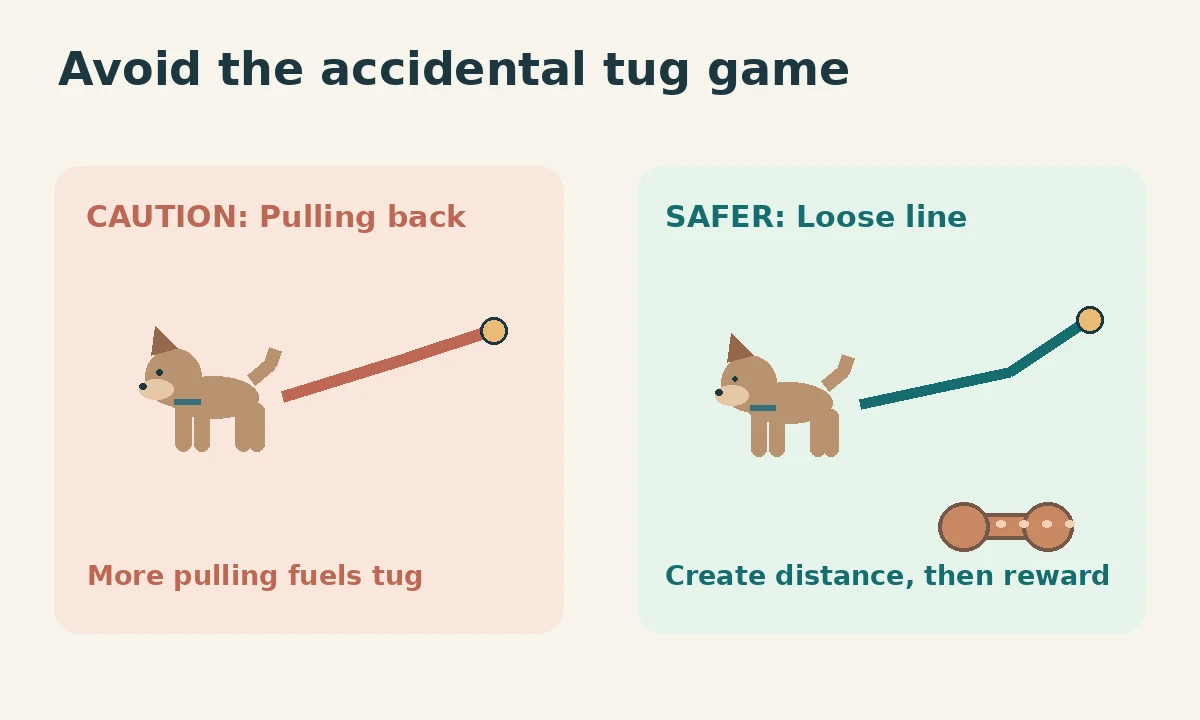
Respond without making a tug game
When the dog first reaches for the leash, pause and soften your movement if the environment is safe. Present a familiar cue or scatter a few appropriate treats on clean ground away from the road, only if your dog can safely eat there. Reward release and quiet orientation, then continue gently. If food increases excitement or the dog guards objects, stop that strategy and seek individualized guidance. Avoid jerking the leash upward, shaking it, or shouting. A calm reset should reduce stimulation, not add a second conflict.
Consider a carry item for suitable dogs
Some dogs can learn to carry an appropriate toy during the most exciting part of a walk. Choose an item without loose strings or detachable pieces and test it under supervision at home. Do not introduce a toy that makes the dog more frantic or invites a chase. Offer it before a predictable trigger, then reward calm walking. Keep your hands free enough to handle the leash safely. This option is not suitable for every dog; a dog who swallows toy parts or guards items needs a different plan.
Shorten the difficult section
Reduce the route to a manageable distance when leash biting happens repeatedly. A calm five-minute outing with sniffing can teach more than a long walk filled with rehearsed struggles. Choose quieter hours, move away from crowded entrances, and leave enough space for smooth turns. Consider one brief training goal per outing, such as passing a driveway with loose leash tension. End on a calm moment whenever possible. The dog still needs appropriate exercise and enrichment; you can provide some of that indoors while rebuilding walking skills.
Inspect leash damage afterward
Once home, examine the leash webbing, stitching, handle and clip. Teeth can weaken fibers even when damage looks small. Replace any leash with frayed load-bearing sections, exposed stitching, or a faulty snap. Do not rely on tape or knots to restore a damaged leash. Check the harness for rubbing if the dog suddenly began grabbing near a certain movement. Mouth pain can also change chewing behavior, so consult your veterinarian if the pattern appears abruptly, causes injury, or seems linked to discomfort.

Get help before the pattern escalates
Seek a credentialed reward-based trainer if episodes grow intense, include jumping at the person, or make walks hard to control. A veterinary behavior professional can help when fear or distress seems significant. Bring notes about timing and distance, plus a short safe video if available. Do not stage a risky scene to capture footage. Over several weeks, judge progress by calmer transitions, fewer attempted grabs, and easier recovery after surprises. Keep adjusting the environment instead of increasing correction strength when the dog struggles.
How We Research
We compare veterinary behavior guidance and humane animal welfare advice with real household setup decisions. Our practical checks address access, chewing or digging opportunities, equipment wear, and warning signs that require professional help. We favor management and reward-based teaching over aversive techniques. Learn about our editorial approach. This is an educational guide, not a product test or a promise that one solution fits every dog.
Sources
ASPCA — Destructive Chewing — Guidance on normal behavior, welfare and safer household or outdoor management.
VCA Animal Hospitals — Dogs and Destructive Digging — Guidance on normal behavior, welfare and safer household or outdoor management.
Dogs Trust — Keeping Your Garden Dog Friendly — Guidance on normal behavior, welfare and safer household or outdoor management.
No. It may reflect excitement, frustration, conflict, or discomfort. Observe the situation and body language before choosing a response.
Avoid turning the incident into a tug game or a physical struggle. Reduce stimulation in a safe place and reward a practiced alternative.
It may help some dogs if offered before the trigger and used safely. Stop if the toy increases excitement, guarding, or chewing hazards.
A sturdy, comfortable leash is important, but equipment alone will not change the behavior. Replace damaged webbing and practice calm walking.
Seek qualified help if episodes intensify, include biting toward people, show distress, or put the dog or handler at risk near traffic.