
A soft dog bed can still be a poor fit for a tile floor if its base moves every time your dog steps on it. A slick bottom may creep toward a doorway, while a curled corner can catch a paw during a quick turn. The goal is not the stickiest material on a label. It is a bed that stays level on your own floor, gives your dog a stable approach, and allows practical cleaning underneath. Check the bedding and floor together, especially if your dog rushes onto the bed or changes resting places often. Sudden reluctance to walk or lie down deserves veterinary attention rather than a new mat alone.

Test the floor before you buy
Tile changes the way bedding grips. Smooth glazed tile, textured tile, and grout lines can make the same backing behave differently. First, wipe a small test area dry and look for old wax, soap residue, or moisture. Then place a comparable fabric or a sample on the floor and move it gently with your hand. A backing that grips clean dry tile may slide on damp tile. Therefore, assess the actual room rather than relying on a product name such as “anti-skid.” A mat should never replace cleanup of a slick floor.
Look closely at the underside
Turn the bed over and inspect the full contact surface. Some designs use printed silicone dots; others use a rubberized panel or a separate grippy layer. Dots that touch the floor only at their tips can wear or collect hair. A heavy cushion without gripping material may still skate during an energetic entry. Look for an even contact pattern and a base that sits flat without stiff folded corners. Avoid a coating that flakes, leaves residue, or has an odor the dog avoids. The manufacturer’s care directions should identify whether the backing tolerates washing.
Match the bed shape to the approach
Observe where your dog comes from and where the paws land. A dog approaching from a narrow hallway may step on the same edge each time. If that edge folds up or bunches, a trip hazard appears exactly where the dog changes direction. A lower entry can help a dog step onto a cushion without pushing against a tall side wall. However, a low bed with no support may feel too thin for another dog. Check usable sleeping space and the first landing zone separately, not just the overall advertised length.
Keep the resting spot away from spills
A kitchen tile floor may be washable, but a dog bed beside a water bowl or sink often faces splashes. Moisture trapped beneath a dense backing can lead to an unpleasant floor surface and stubborn residue. Position the bed beyond normal water spills, appliance drips, and door tracks. If your dog likes a cool kitchen, provide a dry route to the bed rather than blocking that preference entirely. Lift the bedding during routine cleaning so both the floor and its underside can dry completely before you put it back.

Compare grips without guessing
A useful comparison checks the same floor in the same condition. On clean dry tile, press an empty bed gently from the side and watch for movement. Then check the corners for lifting when a hand pushes near the rim. Do not pull or shove a dog to test the design. Instead, offer a calm invitation and allow the dog to approach voluntarily. If the bed shifts under normal entry, choose a more stable model or a suitable washable base. A rug without slip protection is not an automatic solution.
Choose cleaning methods that protect grip
Hair and lint can collect between raised dots on a backing. Shake off loose debris outdoors where practical, then use the cleaning method on the care label. VCA recommends removing loose fur before washing dog bedding and rinsing detergent thoroughly. Strong scrubbing, excessive dryer heat, or unapproved solvents can change some gripping finishes. Consequently, test washing on an older item before committing to a large new bed. Do not return bedding while its inner cushion remains damp; a dry cover cannot prove a thick insert has dried.
Watch for lifted edges and wear
Inspect the rim after several washes. Look for corners that curl upward, torn stitching that exposes filling, and backing that peels into small fragments. A dog who mouths loose rubber pieces may swallow them. A second concern is a mat that slides into a door swing or underneath a chair. If an edge no longer lies flat, remove the bed rather than fastening it to the floor with improvised tape. Replace worn parts only when the maker provides an appropriate repair or replacement option.
Offer your dog a choice of surfaces
Some dogs prefer a soft cushion for part of the day and cool tile for another part. Do not interpret sleeping beside a bed as evidence that the dog is stubborn. Consider warmth, noise, bed height, the direction of traffic, and whether another pet occupies the preferred spot. Place a second resting option where the dog already settles safely. Rewarding voluntary exploration can help a hesitant dog become familiar with a new texture. Never block access to water, an exit, or a cooler resting place.
Check floor and paws together
A stable bed cannot correct a slick walkway leading to it. Observe whether your dog loses footing when turning or rising. Also check nail length and paw comfort as part of ordinary care; avoid home treatment of painful feet. A dog with sudden stiffness, repeated slipping, or changed gait should see a veterinarian. For everyday maintenance, wipe water promptly, keep the walkway open, and examine the backing weekly at first. The best design is one you can inspect and clean consistently.
Use a simple home acceptance test
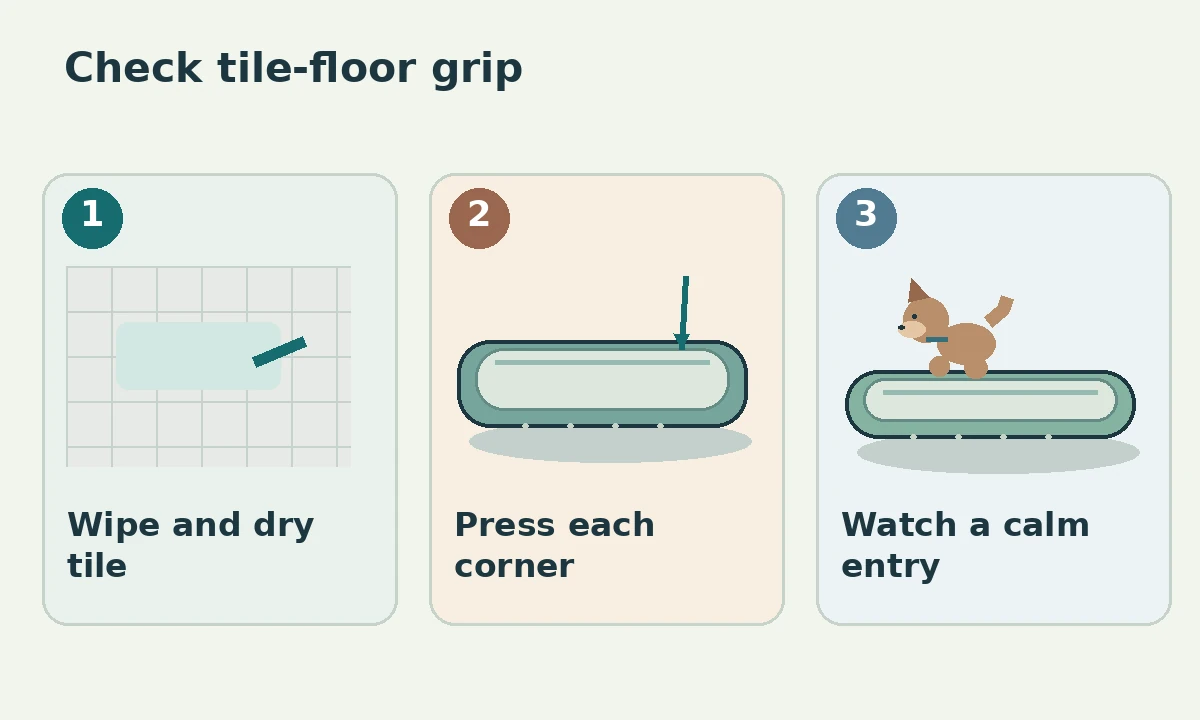
Set the empty bed in its planned location, press each corner, and confirm no door or cabinet hits it. Next, let the dog investigate without pressure. Watch several normal entries and exits while you remain nearby. Then lift the bed to make sure its underside stays dry and leaves no marks. Recheck after the first washing cycle, because water and drying can change the base. If any part slides, curls, flakes, or bunches, treat that as a practical failure regardless of a marketing claim about grip.
How We Research
We reviewed veterinary and humane handling information alongside practical features of dog beds: entry height, usable floor space, fabric wear, cleaning labels, and the room around a resting animal. These are illustrated inspection guides, not claimed laboratory product tests or guarantees for every dog. Sources were checked for this guide in October 2026. Our editorial information explains our approach, and the veterinary disclaimer explains why behavior changes, distress, and possible ingestion require qualified attention.
Sources
VCA Animal Hospitals — Safe Spring Cleaning With Your Dog — Veterinary guidance on washing and fully drying pet bedding and reducing exposure to cleaning products.
VCA Animal Hospitals — Should My Dog Sleep in My Bed? — Veterinary discussion of individual comfort, access to resting places, and dogs choosing different surfaces.
VCA Animal Hospitals — Dog Behavior Problems: Stealing and Stay Away — Guidance on providing desirable comfortable resting zones rather than forcing a dog into an area.
Yes, if it sits flat and remains stable during normal entry. Test it on clean dry tile; a slick bottom may need a different bed or safe grip layer.
No. Their contact area, wear, lint buildup, and your tile texture all affect grip. Inspect the entire underside after washing.
Avoid improvising with adhesive where a dog can chew the material or where it might damage the floor. Choose a stable, washable setup.
The tile may feel cooler, the bed may sit in a busy spot, or another surface may suit that dog better. Offer another calm resting option.
Replace or repair it according to maker guidance if its corners curl, seams open, backing peels, or the bed moves under ordinary use.