
A dog travel water bottle is only helpful when the dog can actually drink from it. Some models attach a shallow trough to the bottle; others depend on a squeeze mechanism, flip-out cup, or narrow channel. The travel-friendly choice depends on muzzle size, hand comfort, cleaning access, and how securely the container closes inside a backpack. American veterinary travel guidance advises carrying drinking water rather than assuming a stop will have it, and hiking guidance warns against relying on unknown ponds and streams. This practical guide focuses on the bottle as a delivery tool, not as a promise that a particular capacity can meet every dog’s hydration needs.
Start with the drinking surface
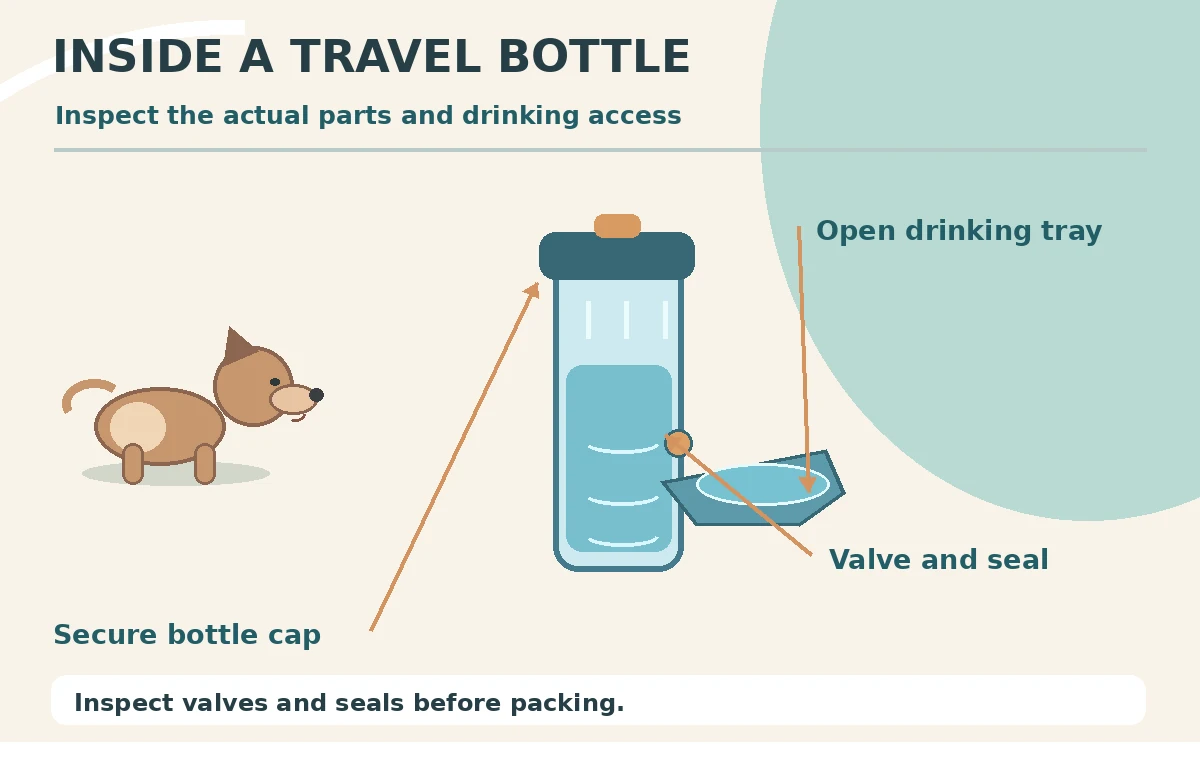
Compare the dimensions of the actual trough, not only the bottle volume. A broad-muzzled dog needs a reasonably open cup, while a small dog may prefer a shallow, steady surface with water visible near the rim. Some molded trays curve tightly around the bottle neck and offer very little space for a tongue. Look for photographs showing a dog drinking from the tray at ground or hand level. Test whether the dog can lap normally without pushing its nose against the release mechanism. If the dog turns away, offer water from a familiar clean bowl rather than assuming it is not thirsty.
Choose a valve you can control reliably
Push-button gravity valves, squeeze bottles, and twist-open mechanisms all make different demands on the handler. A button that requires constant pressure can become awkward when you are holding a leash. A squeeze model needs an intact seal and may dribble while you walk. Practice filling and releasing it over a sink before a trip, including operating it with one hand if that is how you usually handle your dog. The control should release water into the trough without surprising spurts. Avoid mechanisms that pinch fingers or collect dirt in an uncleanable groove. Simplicity often helps more than extra features.
Test leaks before a long drive or hike
Close the bottle as instructed, dry its outside, and place it upright on an absorbent towel for a brief test. Then turn it onto its side in a waterproof bag and check the cap, button, and gasket for dampness. This is a practical leak test, not proof that the bottle will remain watertight under all pressure changes. Check whether a removable silicone seal seats correctly and whether you can replace it if lost. Carry the filled bottle in a separate pouch away from electronics and documents. A backup container matters if a valve jams, the cap cracks, or the bottle falls.
Match the carrying method to the outing
Although a clip can help with storage, a loose, heavy bottle swinging from a leash may interfere with walking. Secure storage in a backpack side pocket or carrier usually offers better control. Check the bottle’s weight when full, the width of its base, and whether it will stand safely at a rest stop. For longer hikes, the water amount you carry depends on weather, terrain, distance, and the individual dog. Ask a veterinarian about a dog with a medical restriction rather than trusting a generic ounces-per-pound chart. Offer regular opportunities to drink and adjust or shorten the outing when conditions become unsafe.

Avoid sharing or returning dirty water
Some travel bottles advertise a button that returns unused water from the trough to the reservoir. That can reduce spills, but the drinking water may also carry saliva, dust, or trail grit back inside. Decide whether that feature suits your cleaning habits; discarding the small amount left in the trough is a reasonable alternative. Keep the drinking end off the ground and do not let multiple unfamiliar dogs share it. Carry water from a known safe source. AKC highlights contamination risks in outdoor water bodies, while CDC recommends cleaning pet water equipment regularly to reduce buildup.
Inspect materials and removable seals
Look for smooth food-contact surfaces, an intact cap thread, and accessible seal channels. A narrow cap passage can retain residue even if the visible bottle looks clean. Check instructions for whether the body, tray, and gaskets are dishwasher-safe; do not assume that because one part is. Replace brittle or cracked plastic, worn silicone, and any component the dog has chewed. Avoid decorative detachable parts that might be swallowed. If the seal is difficult to remove for washing, weigh that drawback against portability. Hygiene should be a daily maintenance step rather than an occasional deep-clean project.
Introduce the bottle before departure
At home, offer a small amount of fresh water in the travel trough while the dog is relaxed. Hold it at a comfortable height and keep your hands steady. Let the dog investigate voluntarily, without pressing the spout into its mouth. A dog accustomed to a floor bowl may take several short exposures before understanding the new delivery method. Reward calm investigation, then offer an ordinary bowl so water remains available. Repeat the introduction at the door or in the yard before using it on a busy trail. During travel, pay attention to actual drinking rather than counting each button press.

Make a rinse-and-dry routine
Empty remaining water after the outing. Separate the tray and gasket where the manual allows, wash with soap and warm water, scrub crevices, rinse thoroughly, and let all parts dry. CDC advises cleaning water bowls daily; a portable bottle that touches mouths and outdoor surfaces deserves the same consistent attention. Never seal damp parts in a warm bag for days. At the next fill, check smell, clarity, cap fit, and free flow. A model earns a place in your bag when the dog drinks comfortably, the bottle does not leak, and you can clean every wetted surface without special tools.
How We Research
We reviewed first-party guidance from veterinary associations, established animal welfare organizations, government agencies, and electrical safety authorities where relevant. We compared practical water access, product geometry, materials, and maintenance rather than ranking untested products. Drawings are explanatory and do not represent product certifications or testing. Sources reviewed October 27, 2026. Learn more at About HubPet.
Sources
American Veterinary Medical Association — Traveling with Your Dog or Cat. Read guidance. Accessed October 27, 2026.
American Kennel Club — Hiking With Your Dog: Safety and Gear. Read guidance. Accessed October 27, 2026.
CDC — About Cleaning and Disinfecting Pet Supplies. Read guidance. Accessed October 27, 2026.
FDA — Tips for Safe Handling of Pet Food and Treats. Read guidance. Accessed October 27, 2026.
Safety note: These are general equipment-selection tips, not a diagnosis or an individualized hydration or medical plan. A sudden change in drinking, severe weakness, or unusual behavior calls for veterinary assessment. See our veterinary disclaimer.
Select a bottle capacity for the outing and a trough that fits your dog’s muzzle; neither size alone determines an individual dog’s water needs.
They can move saliva and debris from the drinking tray into stored water; follow cleaning instructions and consider discarding leftover tray water.
Use the manufacturer’s drinking surface and let the dog lap voluntarily; do not squirt water forcefully into the mouth.
Carry fresh water from a trusted source because ponds, streams, and standing water may contain harmful microbes or other contaminants.
Disassemble approved parts, wash wetted surfaces with soap and water, rinse, dry fully, and inspect the seal before refilling.