
Puppies explore with their mouths, and fast hands and moving ankles can make a lively game even more exciting. Most playful mouthing does not mean a puppy wants to hurt anyone, but it still needs a clear, consistent response. Dogs Trust recommends appropriate toys, brief pauses in play, and rewards for calmer choices. The best routine prevents many nips before teeth touch skin. It also protects children and gives an overtired puppy a realistic chance to settle instead of escalating the game.
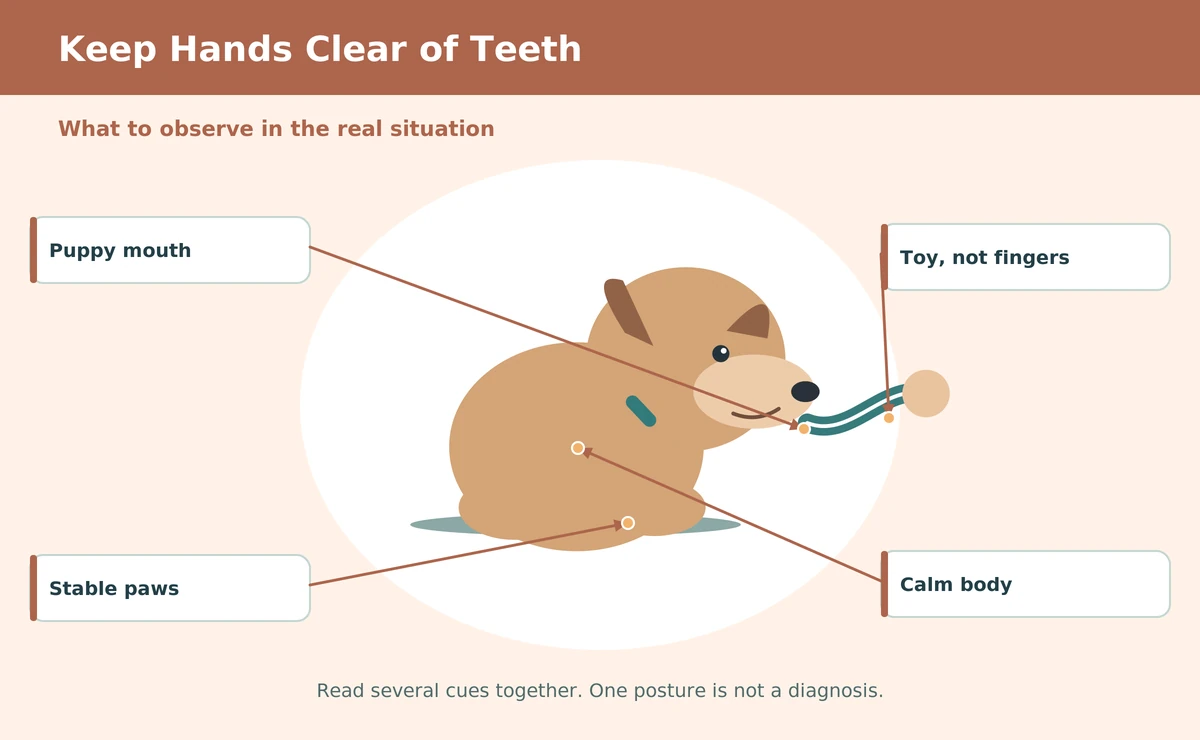
Spot the moments that usually start the nipping
Notice whether the puppy grabs hands during fast play, nips pants during greetings, or mouths when it becomes tired. Keep a short log of what happened right before the behavior. Common clues include bouncing, chasing feet, pawing, and sudden bursts of energy. Prevention is easier when you can recognize the buildup. Move an appropriate toy into the play area before the puppy begins grabbing clothing. Do not wave fingers near the mouth to test whether the puppy has learned to stop.
Choose a toy that keeps skin away from teeth
A longer tug or soft puppy-safe toy allows hands to stay clear of the puppy’s mouth. Check the size, seams, and any parts that might detach; supervise play and replace damaged toys. Encourage the puppy to grab the toy by moving it gently along the floor rather than pushing it into the face. Keep play low enough that the puppy can let go and rejoin calmly. Avoid using sleeves, shoelaces, socks, or bare hands as pretend toys, even if the bites are light.
Pause when teeth make contact
If teeth touch skin or clothing, become still rather than jerking your hand away. Calmly stop the game and remove attention for a brief moment. When the puppy releases and settles, invite it back to an appropriate toy. Dogs Trust recommends consistent, low-drama pauses that teach the puppy which interactions keep play going. Loud squealing, chasing, or pushing may excite some puppies more. A pause is information, not a punishment. If you cannot move away safely, use a barrier already set up for calm management.
Reward the behavior you want between nips
Do not wait for a problem before noticing good choices. Reward the puppy when it approaches with four paws on the floor, picks up its own toy, or lies down after play. A soft verbal marker followed by a small treat or a return to the game can make those choices worthwhile. Use rewards your puppy values without overwhelming it with high-energy praise. The ASPCA advises teaching gentle play rather than trying to suppress every expression of puppy play. Keep criteria easy at first.
Build rest into the daily routine
Many puppies become mouthier when overstimulated or overtired. After a short supervised game, guide the puppy toward a comfortable resting space and a calm activity. Avoid treating every burst of nipping as a demand for harder exercise. Quiet chewing, a predictable nap opportunity, or a less stimulating room may help the puppy recover. Puppies differ widely in activity and sleep needs, so watch the individual dog rather than following a rigid timer. Never use a crate or rest area as a frightening punishment.

Give every family member the same play rules
Agree that nobody uses hands as chew toys, runs from a nipping puppy for fun, or encourages biting with rough wrestling. Keep suitable toys where adults can reach them before play begins. Children should not be asked to manage a persistent nipping episode alone; an adult can calmly separate the child and puppy using a gate. Teach children to stop running, stand still, and call for help rather than scream or push the puppy. Consistency prevents confusion without blaming a young animal for normal exploration.
Avoid methods that make the puppy wary of hands
Do not tap the nose, hold the muzzle shut, pin the puppy down, or startle it with sprays. ASPCA warns that physical punishment can increase fear or harder biting. Reward-based teaching means arranging a safe setting and helping the puppy find a behavior that works. If the puppy is too excited to choose a toy, simplify the environment rather than demanding a perfect response. Handling, grooming, and veterinary preparation should remain predictable and gentle so the puppy can trust the approach of human hands.
Plan for ankle and clothing grabs
Puppies may chase pant legs because moving fabric seems like a toy. Before crossing a busy play area, have an adult offer the puppy a toy or scatter a few suitable treats on a clean floor for a supervised sniffing break. Walk at a normal pace and avoid jerky movements. If the puppy grabs fabric, stop rather than pulling against its teeth. End the moment calmly and reset with a more suitable activity. Keep hanging cords and small accessories out of reach as a basic household safety measure.
Know when professional help is the right next step
Seek guidance if bites puncture skin, the puppy becomes stiff and fearful around handling, guarding is involved, or the behavior escalates despite a calm routine. Adult interactions should stay safe while you arrange qualified reward-based help. A veterinarian can assess pain or health concerns if biting changes suddenly or accompanies discomfort. Do not force confrontations to prove the puppy should tolerate touch. Early humane support is more useful than waiting for risky behavior to become a habit.

Review progress by calm choices, not zero mouthing
Puppies do not learn gentle play in one afternoon. Notice whether your puppy switches to a toy more quickly, takes a pause without chasing, and settles more easily after a game. Improve one setting at a time rather than expecting perfect behavior during visitors, grooming, and outdoor play simultaneously. Keep household rules steady and shorten sessions when success fades. The goal is safer communication and predictable play, not a puppy that is afraid to use its mouth near people.
How We Research
HubPet reviewed current veterinary and animal-welfare guidance for this specific behavior, compared the practical recommendations, and separated normal context from signs needing an examination. We do not diagnose an animal from a posture or brief video. We accessed the sources below on November 1, 2026; individual dogs can communicate differently. Learn more about our editorial process at About HubPet.
Sources
Battersea: How to Stop Puppy Mouthing. Consult the complete source for context and limitations.
ASPCA: Mouthing, Nipping and Biting in Puppies. Consult the complete source for context and limitations.
PetMD: How to Stop a Puppy From Biting. Consult the complete source for context and limitations.
This article provides general education, not an individual diagnosis. For pain, injuries, sudden behavior changes, or safety concerns, speak with your veterinarian. Read the HubPet veterinary disclaimer.
Yes. Mouth exploration and playful biting are common in puppies, but they still need consistent, gentle guidance toward toys and calmer contact.
A loud reaction can excite some puppies. Calmly stop play, keep hands still, and restart with an appropriate toy after the puppy settles.
Use a suitably sized, supervised tug or soft toy long enough to create distance between your hand and the puppy’s teeth.
Excitement, fatigue, and a busy routine can contribute. Offer quiet downtime and an easy rest opportunity rather than escalating play.
Seek qualified help for puncture bites, stiff or fearful body language, guarding, sudden worsening, or situations you cannot manage safely.