
Puppies are curious and often move faster than they can coordinate. A bed ramp may offer a controlled route for some homes, but it is not a reason to invite a young puppy onto a high mattress. Safe choices depend on growth, confidence, supervision, and the ability to prevent falling from either side of the bed. This article focuses on cautious setup and reward-based practice, not a promise that all puppies should use ramps. Discuss age or orthopedic concerns with your veterinarian; see our veterinary disclaimer.
Decide whether the puppy needs bed access at all
First consider a secure, comfortable puppy sleeping space on the floor. It removes the need for climbing equipment and avoids the risk of falling from an elevated mattress. If you permit bed access, plan what happens when the puppy wakes at night or chooses to leave. A ramp only helps when the puppy knows how to use it calmly. Puppies that jump off the edge instead may remain at risk despite an excellent ramp. Supervision and a consistent routine come first.
Measure the full bed height and floor run
Measure from the floor to the stable landing surface, with bedding folded away from the ramp entrance. Mark the length and width of the proposed route on the floor. A very short ramp to a tall mattress creates a steep climb, even for a lively puppy. Choose a product rated for the intended setup and check the manufacturer’s recommended incline. Avoid unsupported modifications that change the angle or rest on a soft, shifting pillow.
Check paws, surface texture, and loose parts
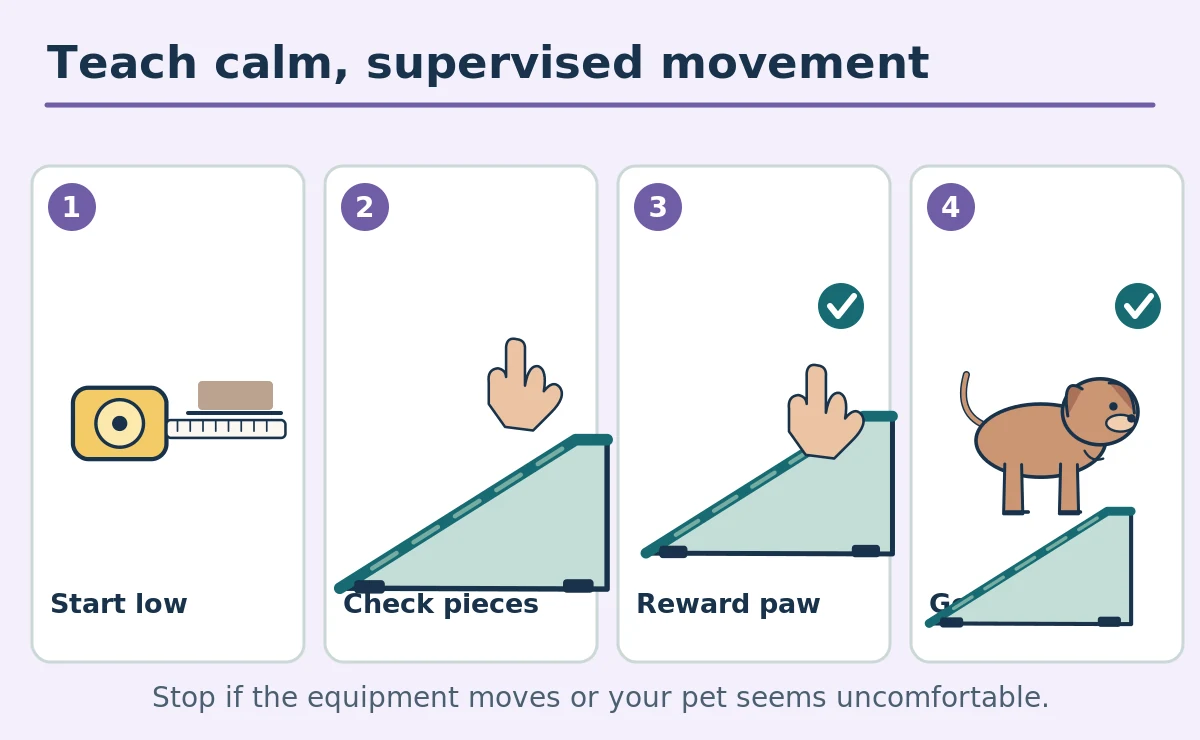
Puppy paws need traction without abrasive ridges, raised nails, or loose fibers. Examine the grip layer for adhesive edges and torn stitching that a curious puppy could chew. The ramp frame must have no accessible small caps, screws, or detachable rubber pieces that can be swallowed. Inspect the entire unit before every supervised session. Do not leave a chew-prone puppy alone with a ramp or use treats to distract from unsafe construction. Remove any damaged equipment promptly.

Make the landing broad and predictable
A puppy may arrive at the top with momentum and continue straight toward the mattress edge. The ramp should meet a stable, clear landing with no gap or unsupported lip. Keep loose blankets from drooping onto the walking surface. Avoid positioning the top beside an open staircase, sharp table corner, or drop on the far side. You cannot make a high bed puppy-proof using the ramp alone. Consider a lower resting area until the puppy has reliable, supervised movement.
Start on a flat surface before an incline
Place the ramp flat on the floor only if its construction permits that position. Let the puppy sniff it and reward calm voluntary paw contact. Take one step at a time and release the reward close to the surface rather than luring a jump. Short sessions are better than repeated full climbs. As confidence grows, introduce a gentle incline with a suitable low landing. Do not pull a collar, push the rear, or lift the puppy onto an uncertain height.
Teach descent separately and slowly
Going down changes what the puppy can see and where its weight moves. Practice tiny, supported descents before using the full bed route. Reward a pause at the top and calm walking down rather than racing. Stop if the puppy tries to leap off the side or runs to the end. Increase the challenge only when both directions look comfortable at a lower level. Carrying a puppy off a high bed safely may be preferable to an unsafe ramp attempt.
Set boundaries that prevent unsupervised jumping
When an adult cannot supervise, close off access to the elevated bed rather than assuming the puppy will choose the ramp. Use room layout and an appropriate puppy-safe sleeping area to prevent access to the edges. Do not use a narrow ramp as a barrier. Everyone in the household should follow the same routine, especially if the puppy shares a bedroom with people who may not notice movement at night. Consistent access rules reduce rushed, impulsive climbing.
Consider the puppy’s body and individual needs
A small puppy may have different reach and balance from a larger puppy of the same age. Growth plates, prior injuries, and breed-related concerns may affect appropriate activity. The Royal Kennel Club cautions against steep drops and repeated stair activity in young dogs. Ask your veterinarian for individual advice rather than trying to calculate a universal safe jump height. Watch the puppy’s gait and willingness to move after rest. Pain is not a training challenge.

Compare a ramp with foam stairs and low beds
Foam steps may be light and soft but can compress and shift under fast-moving paws. Sturdy stairs require discrete stepping and may not suit a puppy that races. A properly supported ramp offers continuous traction yet occupies more floor length. A floor-level bed avoids the entire rise. Choose the least complicated option that meets the household’s real goal. Product labels such as “puppy friendly” are not substitutes for stable construction, supervision, and veterinary advice when needed.
Check traction after cleaning or moving
Spilled water and cleaning residue can turn a grippy surface slick. Vacuum or wipe the material according to the maker’s instructions, then dry it thoroughly. After moving the ramp, recheck its feet, top contact, and approach space. A puppy can grow quickly, so repeat the fit assessment as stride length and weight change. Do not let a once-good setup become an unnoticed narrow path. Replace parts only with compatible components approved by the maker.
Stop when the puppy shows worry or discomfort
Hesitation, shaking, freezing, repeated off-ramp jumps, limping, or yelping mean the current routine is not working. End the session calmly and remove the opportunity for unsafe climbing. If symptoms suggest pain or an injury, seek veterinary advice. A frightened puppy learns better with smaller voluntary tasks and a secure low sleeping area. The goal is not to get the puppy onto a bed at any cost; it is safe, comfortable daily movement.
How We Research
We follow the HubPet editorial approach and compared veterinary and animal-welfare recommendations on traction, voluntary training, and safe access with the practical measurements above. Equipment examples are illustrative rather than tests of a specific brand. Manufacturer instructions determine the approved unfolding, contact, and cleaning methods. We separate routine setup advice from medical decisions and recommend veterinary assessment for pain, sudden mobility changes, injury, or recovery needs. This article does not claim that a ramp or stair prevents all falls.
Sources
American Kennel Club: Dog stairs and ramps — guidance on mobility, stable access, and positive introduction.
VCA Animal Hospitals: Accessible home for dogs — guidance on mobility, stable access, and positive introduction.
Canine Arthritis Resources and Education: Lifestyle modifications — guidance on mobility, stable access, and positive introduction.
No. A comfortable floor-level sleeping place may be safer and simpler. Elevated bed access is optional, not a developmental requirement.
Avoid unsupervised elevated access. Puppies may chew equipment, jump off another edge, or rush down even when a ramp is available.
Begin with a very low incline, reward each calm voluntary step, and increase height only when descent is steady and confident.
Neither is universally better. Foam may compress and stairs require repeated stepping. Fit, traction, age, and supervision determine suitability.
Stop the activity, provide easy access to essentials, and contact your veterinarian. Do not keep practicing through pain.