
A dog bed ramp may look compact online but take up most of a bedroom once its slope reaches a tall mattress. Start with the actual entry point and the path your dog uses at night, rather than a product name or a favorite color. The goal is a stable, reachable route in both directions, not merely a bridge that reaches the bed. This guide shows how to measure height and floor space, inspect traction and the top landing, and teach the route calmly. AKC and canine mobility guidance recommend stable, non-slip equipment suited to the individual dog. If jumping avoidance is new or linked with stiffness, ask a veterinarian about pain; see the HubPet veterinary disclaimer.
Measure to the actual paw landing
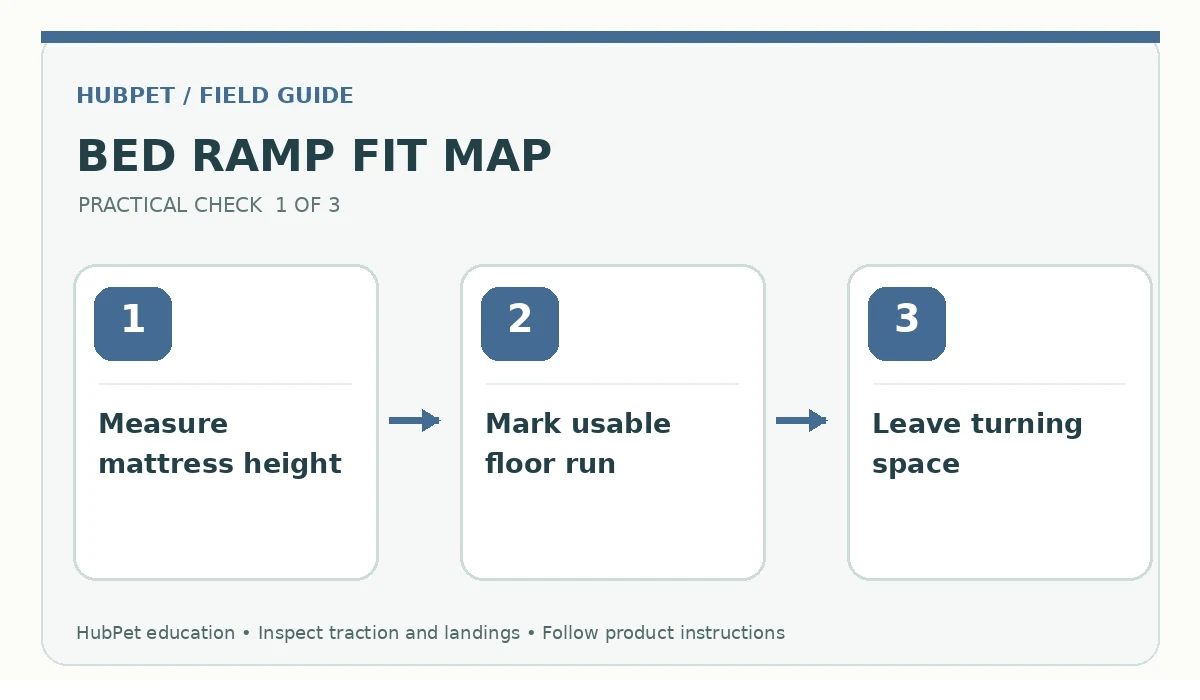
Use a tape measure from the floor to the surface where the dog’s front paws will arrive. On a bed, that might be the top of the mattress rather than the solid bed frame. A very soft edge may compress when the dog steps off, creating a gap or a height change. Record the height with the bedding arranged as you normally use it. If the frame has a raised rail or the mattress shifts, note that too. Some ramps are designed to terminate against a firm platform, and a loose mattress edge may not provide adequate support. Check the manufacturer’s permitted contact points.
Map the available run and turning area
A ramp has to extend out into the room to turn vertical height into a slope. Measure from the bed to the nearest dresser, door swing and walking path. Include space at the bottom for the dog to approach in a straight line and space at the top to turn on the mattress. A dog may refuse an otherwise secure ramp if the first step requires a tight corner. Draw a simple floor plan using painter’s tape to mark the proposed footprint. Walk the route at night as well. If the ramp blocks emergency access or creates a tripping hazard, reconsider the location or the bed height.
Compare slope without prescribing one number
The same ramp can feel gentle beside a low bed and steep beside a high one. Consider the working length once the ramp is fully installed, not its folded size. A steeper angle may demand more paw grip and more muscular effort during descent. There is no single slope that suits every breed, age, injury or mobility condition. Pay attention to how your dog walks on mild inclines already, and involve a veterinarian if climbing appears painful. Avoid treating a seller’s ‘senior-friendly’ label as evidence that the geometry fits your dog. Comfort during both directions is the real test.
Secure the upper edge before inviting a dog
Check how the ramp attaches or rests against the bed. An upper hook intended for a rigid frame may not suit a platform with a narrow fabric lip. Furniture changes when someone sits, and a soft mattress can slide against its base. Test the setup with a caregiver pressing the ramp gently at several positions while the dog is elsewhere. A sudden gap at the top can cause a stumble just before the destination. If the maker includes a bracket, strap or stop block, use it exactly as directed. Never rely on stacked books or loose cushions as structural supports.
Choose traction your dog can tolerate
Carpeted, rubberized and ribbed surfaces feel different under paws. Look for secure texture without curled edges, exposed staples or sharp ridges. A dog with long nails or sensitive pads may hesitate on a coarse coating. Test the walking width too: the dog must place its feet naturally rather than squeeze between side rails. Keep the floor beneath the ramp from sliding. An attached rug can still shift if the entire frame moves. Clean loose hair and dust from the tread because the surface can become slick gradually. Replace any worn tread with a part that preserves the rated design.
Consider night use and household traffic
Dogs often use bedroom routes when lights are low and people are half asleep. Place a low nightlight where it illuminates the starting point without dazzling the dog. Keep electrical cables, shoes and laundry baskets away from the ramp’s base. If a child or another pet shares the room, consider whether they could bump the equipment while the dog is using it. A ramp near a door may create a human fall hazard. Make the route consistent, especially for a dog with limited vision. Regular placement can matter more than adding extra accessories or lights to the unit.

Teach a voluntary route up and down
Start the ramp flat in a quiet area if the product’s design permits. Encourage investigation with a treat or familiar toy, then reward individual steps without pulling the dog along. As confidence grows, raise it in gradual, secure stages. Ask for a calm pause at the upper landing and practice stepping back down. Do not lure a hesitant dog so close to an edge that it feels trapped. If the dog jumps beside the ramp instead, make the safer route easier to approach rather than scolding. AKC recommends reward-based practice and avoiding forced introductions to stairs or ramps.
Pick materials you can maintain near bedding
Fabric-covered ramps may collect fur, dust or accidents; rigid tread panels may wipe clean but need periodic inspection for wear. Look for removable covers with clear cleaning instructions and replacement options. Some ramps have hollow storage compartments that attract clutter and make inspection harder. Check whether washing changes the fit of a cover or loosens its grip. If the dog chews fabric, watch for loose threads and discontinue use if pieces detach. A surface that remains clean and secure over months is more useful than a decorative fabric that slips after laundering. Include upkeep in the buying decision.
Decide when stairs or a lower bed make more sense
Wide stairs may occupy less floor run than a long ramp, but it asks the dog to lift each leg for repeated steps. Lowering the bed frame can reduce the total rise without adding equipment. Consult a veterinarian if the dog has a diagnosed joint or back problem; do not assume stairs always help or ramps are always gentler. The dog’s observed response matters. For some households, a floor-level dog bed beside the owner’s bed is the simplest, least hazardous solution. A product is not necessary if it creates more worry or obstacle than it solves.

Run a seven-night fit review
Watch the first week without forcing use. Record where the dog pauses, whether the ramp shifts, whether descent looks rushed and whether the approach remains clear. Keep alternative comfortable sleeping arrangements available. Inspect anchors and tread after heavy use and after cleaning. If the dog suddenly avoids an established route, seek a medical assessment instead of merely buying a steeper replacement. A well-fitting bed ramp should be easy to approach, steady underfoot and straightforward for every caregiver to maintain. The review is about behavior and physical fit, not an unverified promise to prevent injury.
How We Research
Our editorial review compared animal-welfare recommendations with consumer safety guidance for pet drinking stations, material safety, cleaning routines, and equipment reliability. Each source supports the specific safety context named above; water circulation and filters do not replace fresh drinking water or cleaning. We did not test specific products in laboratory conditions, certify filtration claims, or receive manufacturer endorsements. Follow equipment manuals and seek veterinary advice when a pet’s drinking pattern changes. We reviewed these sources on October 27, 2026. Read about our editorial standards on the About HubPet page.
Sources
American Kennel Club: Dog stairs versus ramps: selection, stability, grip, and introduction. Accessed October 27, 2026.
Canine Arthritis Resources and Education: Home and vehicle accessibility changes for dogs. Accessed October 27, 2026.
PetMD, reviewed by a veterinarian: When a dog may benefit from stairs or a ramp. Accessed October 27, 2026.
VCA Animal Hospitals: Helping dogs with osteoarthritis at home. Accessed October 27, 2026.
Yes. The installed slope depends on the bed height and usable ramp length. Avoid assuming a product suits every dog, especially with mobility concerns.
At a secure landing approved by the manufacturer, without a shifting gap or unsupported soft edge. Check the fit after normal bedding changes.
That depends on available floor space and the dog’s movement. A veterinarian can guide the choice for a pet with pain or a medical condition.
Reward approaching and walking on the ramp, keep the route convenient, and never punish jumping. Use a supervised gradual training plan.
No. Traction also depends on frame stability, upper anchoring, walking width, tread condition and how calmly the dog moves.