
A cat may still want to sleep in a familiar spot even when jumping there becomes awkward. A bedside ramp can offer another route, but it must feel stable and give the cat control over when to use it. The design matters as much as the incline: width, traction, landing clearance, and quiet placement all affect acceptance. New stiffness, painful movement, or reluctance to jump merits a veterinary assessment. See our veterinary disclaimer.
Observe how your cat approaches the bed
Watch where your cat normally jumps, lands, and retreats. Many cats approach from one preferred side because it feels quiet or offers a view of the room. Placing a ramp in a busy doorway may be convenient for people but unattractive to the cat. Note any nearby bedside table, drawer, or dangling blanket that narrows the entry. Keep the route visible and give your cat room to turn without backing off a narrow edge.
Measure mattress height with bedding in place
Measure from the floor to the stable point where the ramp will meet the bed. A thick comforter can drape over the upper landing and hide its edges. If the mattress compresses considerably, check whether the contact remains steady when somebody sits nearby. Avoid balancing the ramp on a loose pillow or blanket. Note the full length of the incline on the floor. A broad, shallow route is preferable to an abrupt climb that ends in one final jump.
Choose a width that permits natural walking
A cat may not travel straight up the center of a narrow plank. Allow for tail position, paw placement, and a small pause halfway along the path. Cats with limited vision or confidence may appreciate visible edges or low side guides, but tall walls can make a path feel confined. Look for a continuous tread with secure support from edge to edge. If the cat must sidestep at the top, reconsider where the ramp meets the bed.

Prioritize firm, comfortable traction
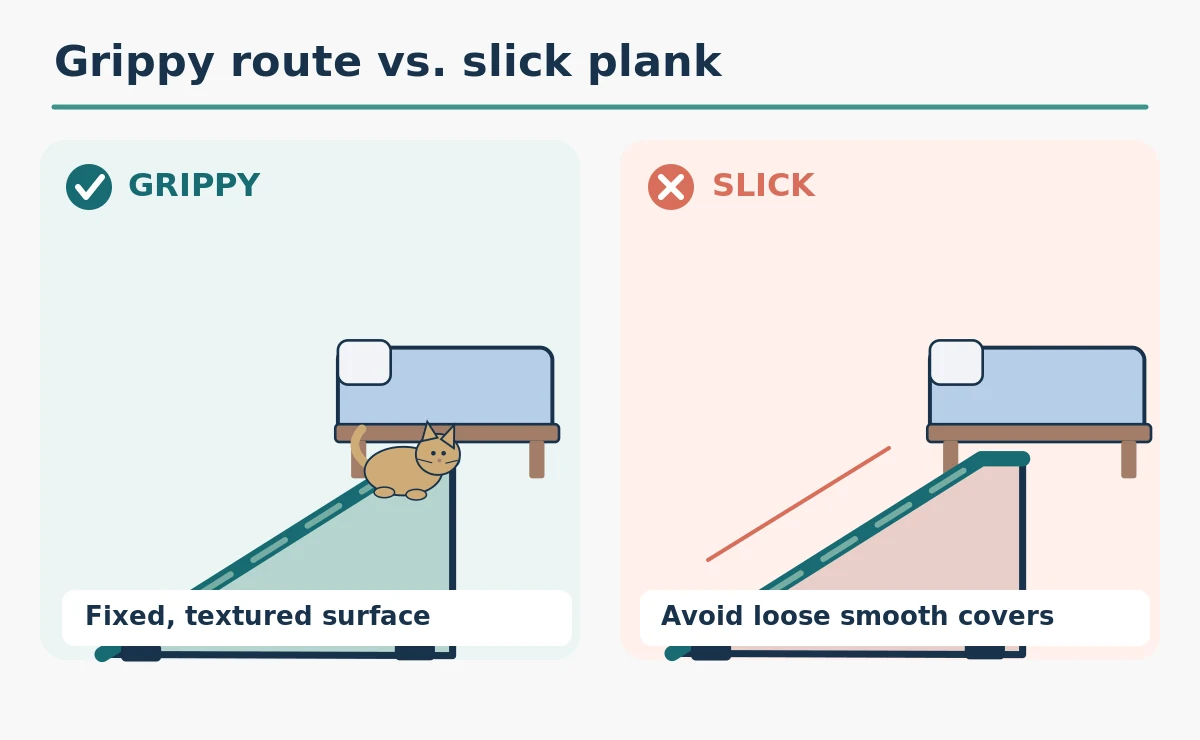
International Cat Care recommends non-slip surfaces such as carpet or rubber on ramps used by cats with limited mobility. Check that the covering is firmly attached, without lifted corners or loose strands that can catch claws. A smooth coated plank may look easy to clean but can become slick under paws. Test any removable mat for movement while the ramp is unloaded. Keep the tread dry and avoid scented cleaning residue that could discourage use.
Avoid blocking the cat’s other exits
A ramp should add a choice rather than trap a cat between the bed, wall, and another pet. Leave an alternative route to the ground where possible. If another animal waits at the base, separate the animals and move the ramp to a quieter side. Cats value the ability to retreat, particularly when they are resting. Never position the incline so that a closing door could strike it or leave the cat stranded on a high surface.
Introduce the ramp without forcing contact
Place the ramp in view for several days, allowing investigation at the cat’s pace. Reward a glance, sniff, or one step with a small familiar treat or calm interaction. Start from a low position if the design allows. Let the cat stop and turn away. Do not carry the cat to the top and release it in a way that requires a frightening descent. Gentle familiarity is more useful than rushing to a complete climb on the first day.
Account for sleepier and less agile cats
An older cat may move differently after waking or after a long rest. Observe the route during normal times of day rather than assuming a single successful trial is enough. A soft landing and nearby floor bed create options when the cat chooses not to climb. If you notice changes in grooming, missed jumps, hiding, or reluctance to use the litter box, discuss those patterns with a veterinarian. Mobility support should complement health care, not delay it.
Distinguish a cat ramp from small stairs
Steps create several separate paw placements; a ramp offers a continuous surface. Some cats prefer the familiar feel of steps, while others move more smoothly on a shallow incline. Assess the available floor length and your cat’s natural gait. Do not assume that a ramp is automatically comfortable if it is too steep or slippery. A stool can sometimes provide an intermediate resting spot, but it must be sturdy and not become a precarious tower.
Protect carpet, wood floors, and bedding
Ensure the bottom feet rest evenly on the actual floor. On wood or laminate, check that rubber pads do not slide. On carpet, test whether legs sink unevenly into thick pile. Protect the bed from rubbing contact without relying on a loose fabric slipcover to hold the ramp in place. If you need to move the ramp for cleaning, return it to the same safe location and recheck the top contact. Cats may hesitate if a familiar route suddenly changes.
Make routine inspection part of bed making
Look for loose grip fibers, chipped edges, wobbling joints, and displaced furniture pads each time you straighten bedding. Clear toys or shoes from the approach. Test the empty ramp for movement and clean hair from the tread. If a rail or attachment is damaged, stop using the equipment until repaired properly. Keep a floor-level bed available on days when the cat chooses not to climb. Small setup details protect a comfortable daily routine.

Know when to lower the destination
If your cat slips, repeatedly aborts a climb, or suddenly cannot use a route it previously knew, do not keep practicing through distress. Place a preferred bed on the floor and ensure food, water, and litter remain accessible on the same level. Ask your veterinarian about pain or mobility restrictions. The best accessibility plan may involve several modest changes rather than an elaborate ramp to one high destination.
How We Research
We follow the HubPet editorial approach and compared veterinary and animal-welfare recommendations on traction, voluntary training, and safe access with the practical measurements above. Equipment examples are illustrative rather than tests of a specific brand. Manufacturer instructions determine the approved unfolding, contact, and cleaning methods. We separate routine setup advice from medical decisions and recommend veterinary assessment for pain, sudden mobility changes, injury, or recovery needs. This article does not claim that a ramp or stair prevents all falls.
Sources
Cats Protection: Caring for elderly cats — guidance on mobility, stable access, and positive introduction.
International Cat Care: Home modifications for cats — guidance on mobility, stable access, and positive introduction.
VCA Animal Hospitals: Accessible home for dogs — guidance on mobility, stable access, and positive introduction.
Preferences vary. Watch the cat’s movement, check traction, and provide a choice where possible. A veterinarian can advise when mobility is impaired.
Wide enough for comfortable paw placement and turning at the landing, not merely the cat’s body width. Measure the actual usable tread.
Firmly secured, low-pile carpet can provide grip. Inspect loose threads and corners that might catch claws or shift underfoot.
Use small rewards for voluntary steps without pressuring the cat to climb faster than it feels comfortable.
A sudden change can indicate pain or another health issue. Provide low-level resources and arrange a veterinary evaluation.