
A pet car barrier separates a dog from another part of the vehicle, often behind the rear seats of a hatchback or SUV. That can reduce driver distraction, yet a partition does not necessarily restrain the dog against the forces of a crash. Both Center for Pet Safety and the American Red Cross distinguish barriers from secure travel systems. The practical question is whether your vehicle, the barrier, and the dog’s separate restraint plan work together. For health concerns and animal distress, consult a veterinarian and review the HubPet veterinary disclaimer.
Know exactly what a barrier is meant to do
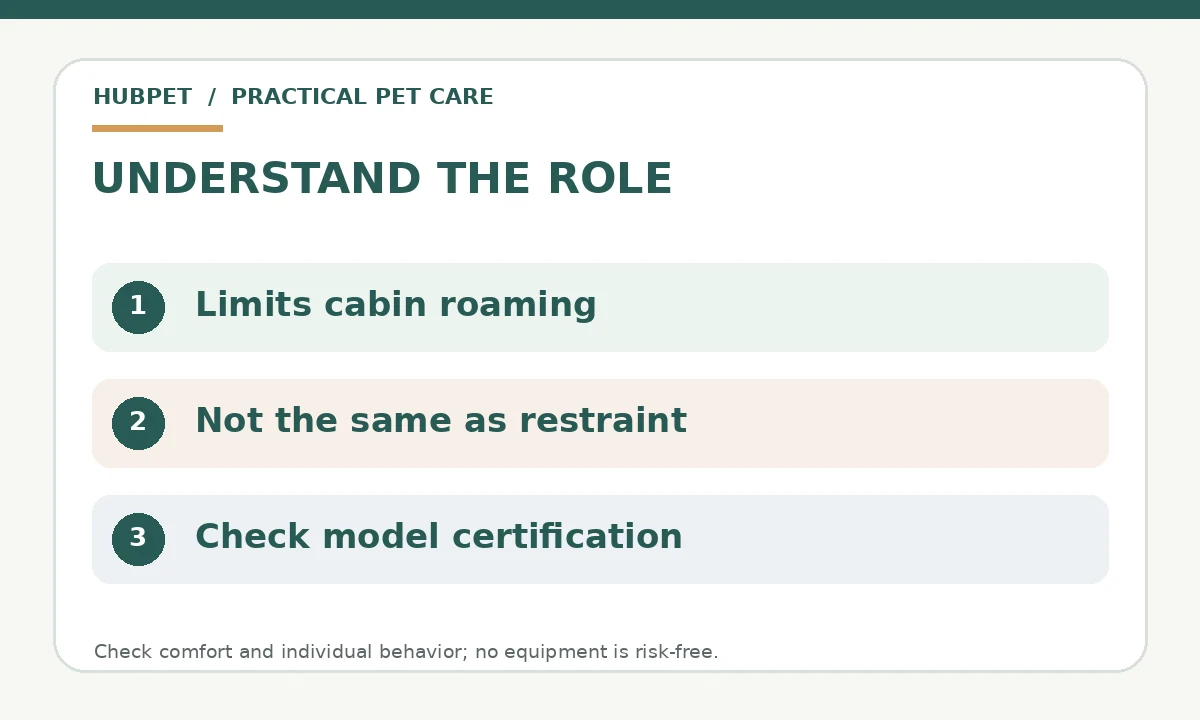
A barrier can make it harder for a dog to climb into the driver’s space during ordinary travel. It may help divide a large cargo area from the passenger cabin, but it leaves the animal free to move within that area. If the vehicle brakes suddenly, the dog may still strike hard interior panels, loose bags, or the barrier itself. Do not confuse a dog guard with a crash-tested kennel. Choose the containment layout for everyday movement while separately considering how to reduce impact risk through documented, properly installed restraints.
Compare pressure-fit and vehicle-mounted designs
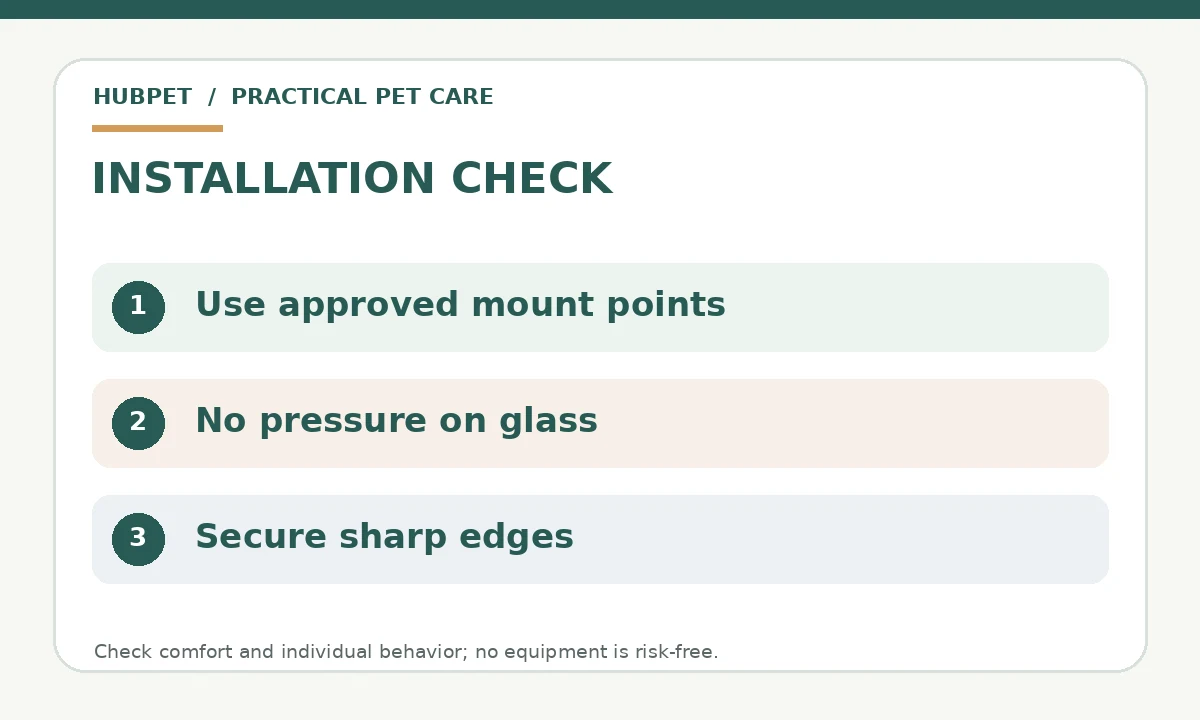
Some barriers press between the roof and floor; others bolt into manufacturer-specified mounting points. Pressure-fit arrangements can be convenient but may loosen on uneven surfaces or during seat adjustments. A fixed design may offer greater stability for ordinary use if the vehicle maker allows it, yet stronger-looking hardware does not establish crash protection. Check exact fit by year, model, trim, and seat position. Reject devices that require drilling into unknown structural, electrical, or airbag areas. Contact the vehicle maker if the mounting instructions leave any ambiguity.
Study the cargo area before choosing
Measure height, width, roof slope, and the distance to rear seatbacks. Then assess how the vehicle changes when seats fold or slide. A partition that fits with seats upright may leave a large opening when the backrest reclines. Inspect gaps beside wheel wells or around headrests where a dog could squeeze through and become stuck. Avoid mounting points near side airbags or emergency release controls. Keep the rear hatch accessible, and confirm the dog can enter and exit under calm human supervision when the vehicle is parked.
Do not rely on a barrier as the only impact protection
Center for Pet Safety notes that cargo-area restraint connections face important force and anchoring limitations. The American Red Cross advises that pet barriers be sturdy and firmly attached, but that does not turn them into a restraint for the dog. Consider a suitable travel crate with model-specific test evidence and proper anchors when possible. If you use a harness, follow its certified seating and attachment instructions rather than creating an extended connection across the cargo area. Avoid making claims of “crash safe” based solely on a metal mesh panel.
Control luggage and other flying objects
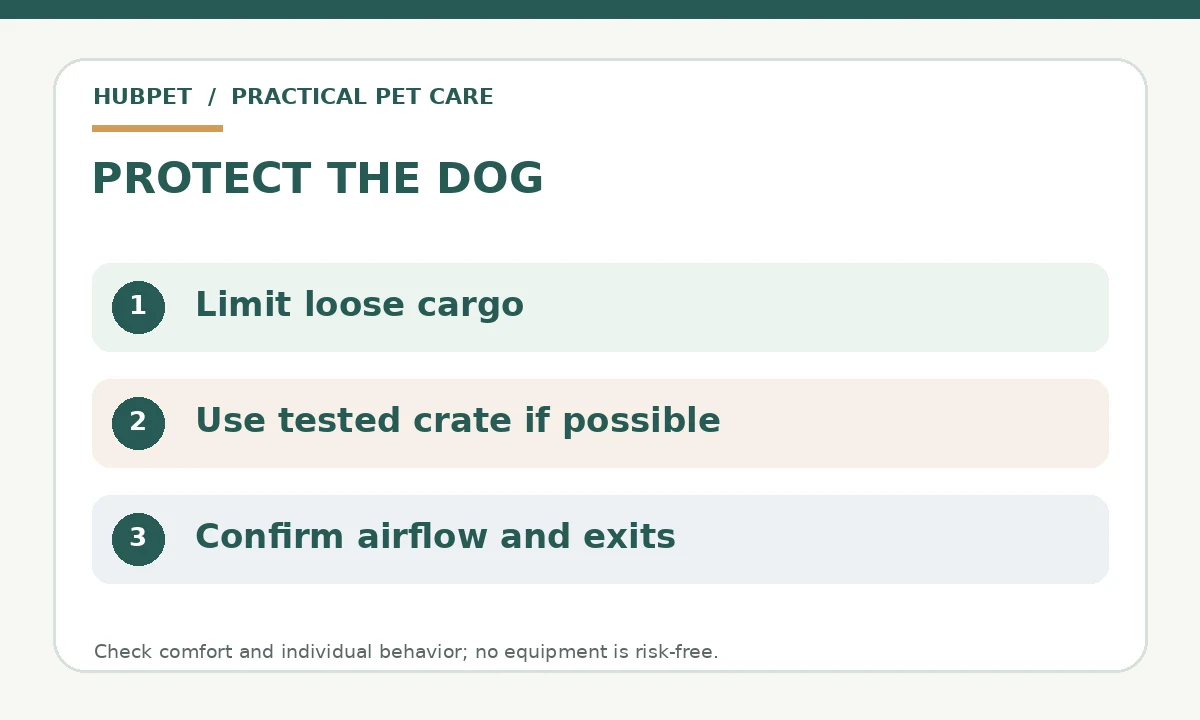
A dog behind a barrier can still be injured by loose luggage, groceries, or tools. Keep heavy items in approved vehicle storage or secure them as the vehicle maker directs. Do not stack hard objects above the line of the barrier. Check whether a crate or compartment interferes with crumple zones or blocks visibility. Never leave sharp hooks or spare tie-downs loose where a dog can mouth them. The cargo area is also not suitable for transporting a dog if poor ventilation, temperature extremes, or exposure to exhaust fumes makes it unsafe.
Check the partition openings and edges
Look for sharp edges, unfinished welds, loose caps, or spacing that could trap a paw or muzzle. A highly curious dog may push its head between bars or try to chew a plastic mesh. Inspect the barrier before installation and keep the animal away during assembly. Tighten only as instructed so the pressure points do not damage headliner panels or trim. After installation, test with gentle hand pressure while the car remains parked. If the guard shifts or rattles, investigate the mounting problem before traveling.
Evaluate visibility, ventilation, and comfort
Opaque panels can reduce distractions for some dogs but may also create a dark, stuffy compartment. Ensure the cargo space receives adequate ventilation and the dog can lie naturally without contacting the barrier. Keep windows secured so the dog cannot lean outside. Watch the first parked-car session for stress signals, including pacing, drooling, or attempts to claw through the partition. Anxiety cannot be solved simply by adding a stronger barrier. Ask your veterinarian about motion sickness or panic, and adapt the travel plan as needed.
Match the plan to your vehicle and passengers
A barrier across an SUV cargo area may be practical for short routine trips, while a small sedan may not have an appropriate location. Check the vehicle manual for load limits, cargo tie-down ratings, and airbag paths. Keep access to rear passengers and their seatbelts clear. If children ride in the back, do not use a pet divider to modify a child restraint or alter a headrest position required by the seat maker. Think through emergency access to the dog before choosing a design that blocks a rear door or hatch.
Recheck mounting after cleaning and seat changes
Barrier mounts can loosen over time, particularly if someone folds the back seats or removes cargo trim for cleaning. Inspect the fasteners and edges after each vehicle change. Recheck that no bolt is missing and the guard has not shifted into a window or belt. Wash removable mesh according to the maker’s material instructions, then reinstall from the manual rather than from memory. Keep the manufacturer’s vehicle-fit chart with your records; vehicle variants can affect whether the same barrier remains suitable after a car change.
Build the complete travel setup
Start with the dog’s size, posture, and ability to rest calmly. Choose an appropriate, independently evaluated restraint or secured crate as the primary safety solution when available. Next, decide whether a barrier adds useful separation in your specific vehicle. Test the guard for stable installation and eliminate dangerous loose cargo. Finally, practice short drives before longer travel and never leave the dog alone in a parked car. This approach gives the barrier a realistic job instead of expecting one product to prevent all injuries.
How We Research
Our editorial team compared current pet travel, vehicle restraint, and safety-testing guidance with the specific shopping question in this guide. The review distinguishes sourced safety principles from practical inspection prompts. Our team did not test specific products, and this guide does not claim any car accessory prevents injuries or fits every dog. Our team reviewed source pages on October 27, 2026. Learn about our process on the About HubPet page. For distress, injuries, or medical questions, consult your veterinarian.
Sources
Center for Pet Safety: Cargo-area connection advisory. Reviewed October 27, 2026.
American Red Cross: Pet travel safety. Reviewed October 27, 2026.
Center for Pet Safety: CPS Certified Products. Reviewed October 27, 2026.
Centers for Disease Control and Prevention: Pet travel safety. Reviewed October 27, 2026.
Merck Veterinary Manual: Traveling by car with pets. Reviewed October 27, 2026.
Not necessarily. It can limit roaming but does not by itself provide the protection of a properly evaluated and installed restraint.
No. Compare the exact vehicle year, trim, mounting locations and fit requirements.
Do not assume so. Request model-specific evidence and distinguish everyday stability from crash performance.
Do not improvise a tether connection to the guard. Follow the restraint manufacturer’s specified vehicle attachment method.
No. Secure cargo separately and avoid heavy or sharp objects where the dog travels.