
Embedded pet hair can cling to carpet loops even after a vacuum pass. A carpet rake uses friction to pull some strands toward the surface, but that same friction can snag loops or disturb a fragile rug. A good choice starts with the floor material and care instructions, not the number of teeth on a tool. For household safety questions, review the veterinary information disclaimer.
This guide explains when rubber, soft bristles, or specialty rakes make sense and when to stop before damage spreads. It complements a vacuum; it does not replace cleaning, sanitizing, or professional carpet care after accidents or contamination.
Identify the surface before choosing a rake
Look for the rug or carpet care label and note whether the carpet uses cut pile, loops, shag, flatweave, or a delicate specialty construction. A tool that works on a sturdy low-pile synthetic carpet may catch individual loops in a Berber-style surface. Check for loose seams and damaged yarn before any test.
Natural fibers and antique rugs may require specialized handling. If the maker warns against brushing, skip the rake entirely and use the approved cleaning method. When in doubt, ask a carpet professional; a small amount of trapped dog hair is preferable to permanently pulled carpet threads.
Understand the difference between rake materials
Rubber blades and soft rubber nubs can gather hair through controlled friction without using sharp teeth. Bristle-style tools vary from gentle to stiff. Metal teeth can reach into dense pile but may snag loops, scratch backing, or damage upholstery, especially under force. Product photos rarely show how sharp the ends feel.
Inspect the working edge with the tool off the surface. It should have smooth, secure components and no burrs. Choose a width that fits the area: a narrow tool may be useful on stairs, while a broad rake can be cumbersome around furniture legs or fragile rug borders.

Run a hidden-spot compatibility test
Pick a small inconspicuous location, preferably near a rug edge that does not already show damage. Use very light pressure and one short pass in the pile direction. Look closely for fuzzing, pulled loops, visible fibers in the rake, and any change in sheen or texture before expanding the test area.
If hair releases but the pile becomes rough or uneven, stop. Hair pickup alone does not justify damage. Compare the test with a vacuum or damp fabric-safe cloth so you can decide whether the rake provides meaningful improvement without unacceptable wear.
Use pressure and direction carefully
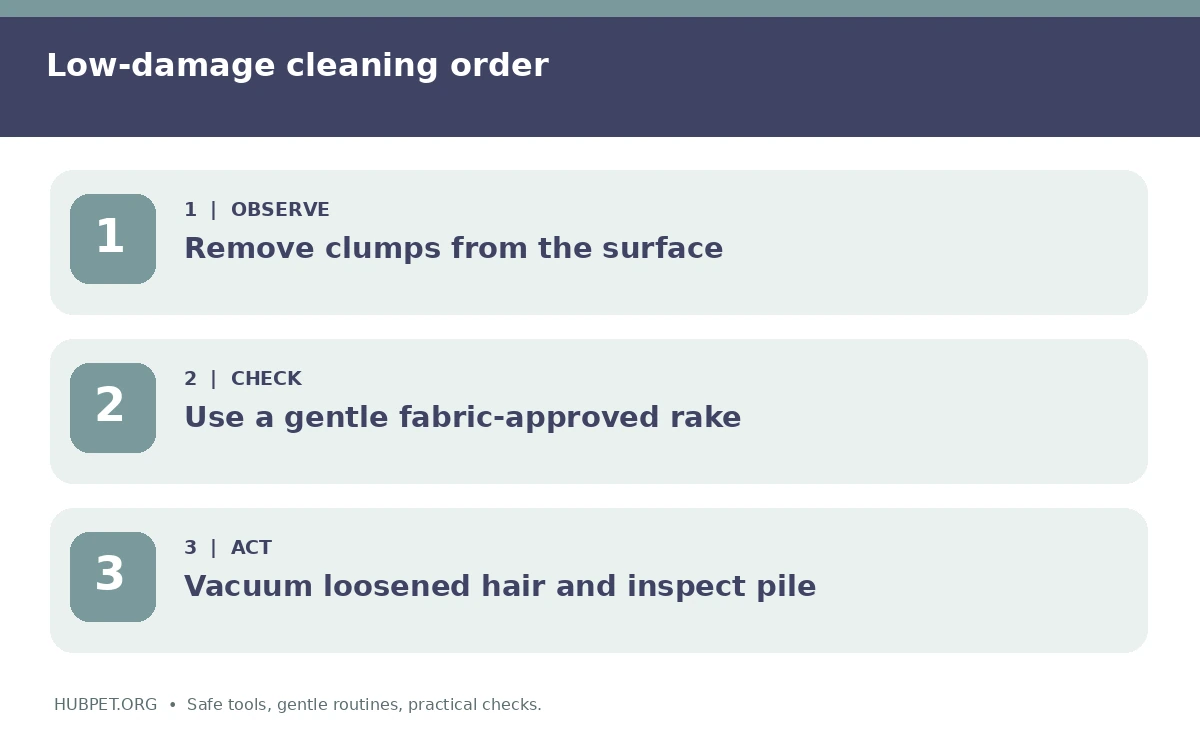
Work in short strokes rather than scraping back and forth vigorously. Start with the pile direction indicated by the manufacturer; crossing the grain can tug or lift fibers. Gather loosened fur in small clumps and remove it by hand so repeated passes do not push it deeper.
Avoid leaning on the handle or using a garden rake as a substitute for a fabric tool. Aggressive pressure can stress carpet backing and reveal wear that you did not previously notice. If one area needs many repeated strokes, change the method instead of increasing force.
Choose a rake by the location you clean
Stairs and tight corners require compact handles and clear visibility. Room-size carpets call for a stable grip that lets you keep pressure consistent while standing. Long pile may wrap around teeth; stop regularly to remove hair rather than pulling a trapped clump across the rug.
For furniture or car upholstery, check a separate fabric compatibility rating. The word “pet hair” on a listing does not mean the same head is suitable for carpets, velvet, leather, and car headliners. If you use the rake on multiple surfaces, make a small test on each one.

Pair the rake with an appropriate vacuum
A rake brings some embedded hair to the surface; a vacuum then removes loosened fur, dust, and fine debris. Use the vacuum attachment and suction level recommended for the carpet. The EPA notes that routine vacuuming of carpet and furniture can help limit indoor dust and dander accumulation.
Do not claim that a hair rake removes allergens completely or disinfects a rug. A visible mound of fur is not a measure of fine particle reduction. When allergies are a household concern, filtration, cleaning frequency, and medical advice for affected people matter beyond visible pet hair.
Check design details that affect safety
Look for a handle that does not slip when your hands are dry and a head that stays attached under gentle pressure. Small detachable teeth or broken rubber pieces must stay out of reach of chewing pets. Store the tool in a cabinet after cleaning.
Inspect edges frequently. A deformed metal tooth or split rubber blade may scratch the next surface even if it looked fine when new. For a rug with decorative fringe, keep the head away from tassels and bindings, which can wrap around the rake.
Avoid turning shedding management into carpet damage
Frequent hair accumulation often starts with a normal pet coat cycle. Gentle brushing and washable resting covers may reduce what reaches the rug. Cleaning a small high-traffic zone regularly can be easier than performing a harsh monthly scrape over the entire room.
Separate grooming from rug maintenance. Never rake a dog’s coat with a carpet tool. If your pet begins scratching or losing hair in patches, consult a veterinarian rather than buying increasingly aggressive cleaning tools to handle the new fur.
Evaluate whether a rake earns its place
After the spot test, compare a small section cleaned with your ordinary vacuum against a similar area treated gently with the rake and then vacuumed. Look for remaining visible fur, surface change, and time required. Document where the tool works and where you should avoid using it.
If your rug shows even minor snagging, discontinue the rake and seek a safer fabric-specific approach. No universal rake belongs on every carpet. A sensible purchase is one you can test, control, clean, and store without sacrificing the surface you want to protect.
How We Research
Our editorial process compares animal-welfare, veterinary, government, and consumer-safety guidance relevant to pet hair carpet rake. We separate supported safety principles from marketing claims and review practical use, maintenance, and limits. This is independent desk research, not hands-on product testing or veterinary endorsement. Sources were reviewed on October 26, 2026. Read more about HubPet and our editorial approach. This guide does not replace veterinary advice for your individual animal.
Sources
U.S. Environmental Protection Agency: Sources of Indoor Particulate Matter. Accessed October 26, 2026.
Consumer Reports: Best Vacuums for Pet Hair, Tested and Reviewed. Accessed October 26, 2026.
ASPCA: Dog Grooming Tips. Accessed October 26, 2026.
Not automatically. Teeth can catch loops. Check the flooring maker’s care instructions and test in a hidden area with very light pressure before use.
It may grip embedded hair differently, but stronger friction can also damage fibers. Choose according to the specific pile and test results, not tooth hardness alone.
No. Rakes mainly loosen visible hair. Vacuuming removes lifted material and helps with dust; neither step guarantees allergen elimination.
Only if the tool is appropriate for that fabric and passes a hidden-spot test. Vehicle headliners and delicate upholstery may snag or delaminate.
There is no universal schedule. Prefer light occasional use when permitted by the carpet maker, and stop when the pile shows fuzzing or pulled threads.