
Peanut butter can be a high-value flavor, but checking the complete label is more important than the product name. For individualized nutrition restrictions or health concerns, follow your veterinarian’s guidance and see the veterinary information disclaimer.
Start by reading every product label
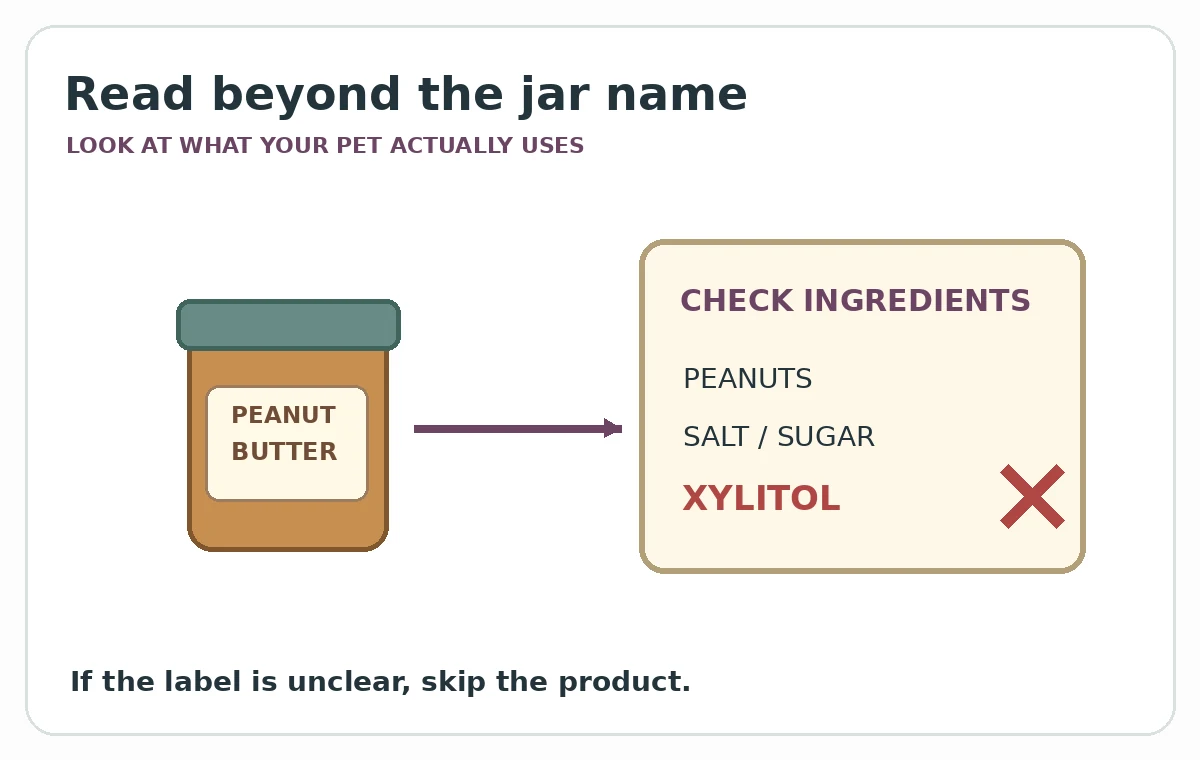
A dog treat described as peanut butter flavored may be a baked snack, a filled toy treat or ordinary human peanut butter added at home. Each has a different ingredient list and calorie density. Read the complete panel, including sweeteners and added coatings. Some human peanut butter products can contain xylitol, which is dangerous to dogs. Do not rely on the front label, product color or the assumption that all peanut butter is the same. When ingredients are missing or unclear, do not give that product to a dog.
Know the xylitol warning and its limits
ASPCA identifies xylitol as a sugar substitute that can trigger severe poisoning in dogs. It may appear in some sugar-free products, including certain peanut butter formulations. Check for xylitol and alternative names such as birch sugar in ingredient information. If you suspect a dog swallowed a product containing xylitol, contact a veterinarian or animal poison service immediately rather than waiting for symptoms. Do not attempt home treatment or give substances to induce vomiting unless a veterinary professional instructs you. Keep the label available for the emergency call.
Account for the rich texture and calories
Peanut butter is concentrated and calorie-dense. A spoonful may look small but can displace a meaningful share of a little dog’s treat allowance. VCA recommends keeping extras within a limited share of daily intake. Use a thin smear or tiny reward portion rather than filling a whole toy without measuring. Dogs with pancreatitis risk, prescribed diets or individual food sensitivities need veterinary advice before receiving fatty snacks. Calling a treat natural does not change its energy content or make it suitable for every dog.
Check the full recipe in baked treats
A biscuit marketed as peanut butter may also contain sweeteners, chocolate-like ingredients, raisins, macadamia nuts, flavorings or other components that need scrutiny. Compare the ingredient statement and any manufacturer feeding directions. Treats are not nutritionally complete meals, even when sold in attractive resealable bags. Keep the packaging and batch details in case of a recall or reaction. A product name is never enough evidence to declare it safe. Choose simple, clearly labeled options with serving information you can actually use.
Offer a smear instead of a large blob
For a lick mat or food-safe toy, spread a thin, measured layer so the dog works slowly without getting a large fatty portion. Check the material for wear before offering it. Use a clean tool to apply the spread and keep fingers away from excited bites. Supervise dogs that try to tear or swallow the mat. Wash the toy and utensils afterward, removing residue from grooves. If your dog compulsively licks until distressed or guards the item, choose a different reward activity.
Compare convenience with hygiene
A small commercial biscuit can be easier to carry than an oily spread, while a lickable reward may suit brief cooperative-care exercises. For outdoor training, sticky paste can contaminate treat pouches and pick up debris. Use a clean dispensing spoon or purpose-made tube when appropriate, and follow refrigeration guidance for the contents. Do not leave peanut butter coated toys in a sunny yard or inside a warm car. Food left behind in crevices can spoil even when the toy looks clean from a distance.

Introduce new snacks conservatively
Start with a very small taste of a clearly labeled product while the dog is calm. Watch for changes in stool, appetite or skin comfort without assuming every symptom has the same cause. Do not offer a new peanut treat at the same time as several other diet changes. If the dog has an established food allergy or a veterinary elimination diet, ask for permission before introducing any peanut-containing food. A successful taste test does not justify suddenly giving a large serving.
Keep jars, wrappers, and tubes inaccessible
Dogs can tear through soft packaging or investigate a countertop jar. Store peanut butter and dog treats securely with lids closed and original labels retained. FDA advises keeping pet food and treats away from unsupervised access and saving lot information. Wipe spills before a dog discovers them. Do not leave foil seals or torn wrappers on the floor where they might be swallowed. A closed refrigerator door is more dependable than assuming a pet will ignore food placed near the edge of a table.
Use the treat to support calm learning
A small peanut butter reward can mark a successful voluntary paw inspection or another brief training step. Keep each session short and let the dog choose whether to participate. Do not use sticky food to force handling of a frightened animal or distract it while someone performs a painful procedure. A familiar kibble reward, praise or a toy may be equally useful in many settings. The quality of reinforcement depends on the dog’s response, not on how expensive or rich the treat is.

Create a household safety checklist
Before the first serving, verify the ingredient list, confirm there is no xylitol, check dietary restrictions, decide the portion, inspect the food-contact toy and plan storage. Tell family members where the safe product is kept so nobody shares an unverified jar. If a dog vomits repeatedly or shows weakness after a possible sweetener exposure, seek urgent veterinary assessment. Never wait for an online recipe to solve a toxic ingestion. Clear labels, measured portions and prompt cleaning make a high-value treat easier to manage.
How We Research
We evaluated peanut butter dog treats through veterinary nutrition, public-health, and manufacturer-agnostic safety guidance listed below. The review compares observable labels, practical handling, predictable risks and real household use rather than claiming personal laboratory tests or endorsements. We did not diagnose individual animals, certify retail products, or assign untested performance scores. Product instructions and your veterinary team’s dietary advice take priority. Read our editorial approach. Sources reviewed October 28, 2026.
Sources
ASPCA, Updated Safety Warning on Xylitol. Read original guidance. Accessed October 28, 2026.
ASPCA, Foods You Can Safely Share With Your Pet. Read original guidance. Accessed October 28, 2026.
FDA, Got a Question About Your Pet’s Health?. Read original guidance. Accessed October 28, 2026.
VCA Animal Hospitals, Dog Treats. Read original guidance. Accessed October 28, 2026.
FDA, Tips for Safe Handling of Pet Food and Treats. Read original guidance. Accessed October 28, 2026.
Safety note: Treats and food puzzles are optional enrichment, not substitutes for complete nutrition or veterinary care. Stop use if choking, oral injury, distress or suspected toxicity appears; seek urgent veterinary assistance for emergencies.
No. Some products contain xylitol or other unsuitable ingredients; read the complete label every time.
Contact a veterinarian or animal poison service immediately with the package information; do not wait for symptoms or attempt home treatment.
A thin measured smear can work if ingredients are safe, the mat is intact and you supervise and clean it afterward.
Peanut butter is rich and calorie-dense, so even a small serving can consume a large share of the treat budget.
No. Treat biscuits generally do not provide complete daily nutrition and should remain an occasional addition to balanced meals.