
Training rewards should make a useful behavior worth repeating, not turn every session into an extra meal. A tiny familiar kibble piece may work in a quiet kitchen, while a more distracting place may call for another safe food your dog genuinely likes. Dietary restrictions matter; see the HubPet veterinary disclaimer before trying new foods.
This guide focuses on reward timing, treat selection, portion planning and the line between motivating and overfeeding. It complements our basic dog training guide rather than repeating a command-by-command lesson.
Choose the reward for the environment
Notice what captures your dog’s interest during easy practice. In a quiet room, a few pieces of the dog’s normal kibble may be enough. Outside, a safe soft bite with more smell can make it easier to reward promptly when other sights and scents compete for attention.
However, reward value belongs to the individual dog, not the price of a packet. Some dogs prefer food, while others work better for a favorite toy or a chance to sniff. Test choices in a low-pressure setting and watch whether your dog takes the reward comfortably.
Prefer small easy-to-swallow pieces
A training treat should be small enough to eat without a long pause or repeated chewing. Tiny pieces allow several clear repetitions without consuming a large calorie allowance. Soft pieces can help during rapid practice; however, the exact texture must fit your dog’s chewing ability and comfort.
Break a suitable treat into smaller pieces when possible instead of assuming the manufacturer’s whole biscuit equals one training reward. A dog that gulps, coughs or struggles to chew needs a different size or texture. Never use hard chunks that create a choking concern.

Count calories before opening a new bag
VCA and the UC Davis veterinary nutrition service advise keeping treats and other extras within about ten percent of daily calories for many dogs. The remainder should come from the complete and balanced diet. That guideline is not a personalized prescription for dogs with a medical nutrition plan.
Check calories per treat and pre-portion a daily reward container. If a session uses regular kibble from the daily ration, account for it rather than adding the same amount again at dinner. For a dog with a prescription diet, ask the treating veterinarian which rewards fit.
Read ingredient labels for actual safety
Scan the complete ingredient list rather than trusting a front-label promise such as natural or wholesome. Avoid known canine hazards, including chocolate, grapes, raisins, onion, and xylitol. Cornell warns that xylitol exposure can cause rapid, severe illness in dogs.
Also consider allergies, fat content and any veterinary diet limits. If a new reward causes stomach upset, stop using it and ask a veterinarian for advice when symptoms persist. Raw or freeze-dried raw treats bring hygiene considerations, so read the handling guidance carefully.
Deliver the marker before the food
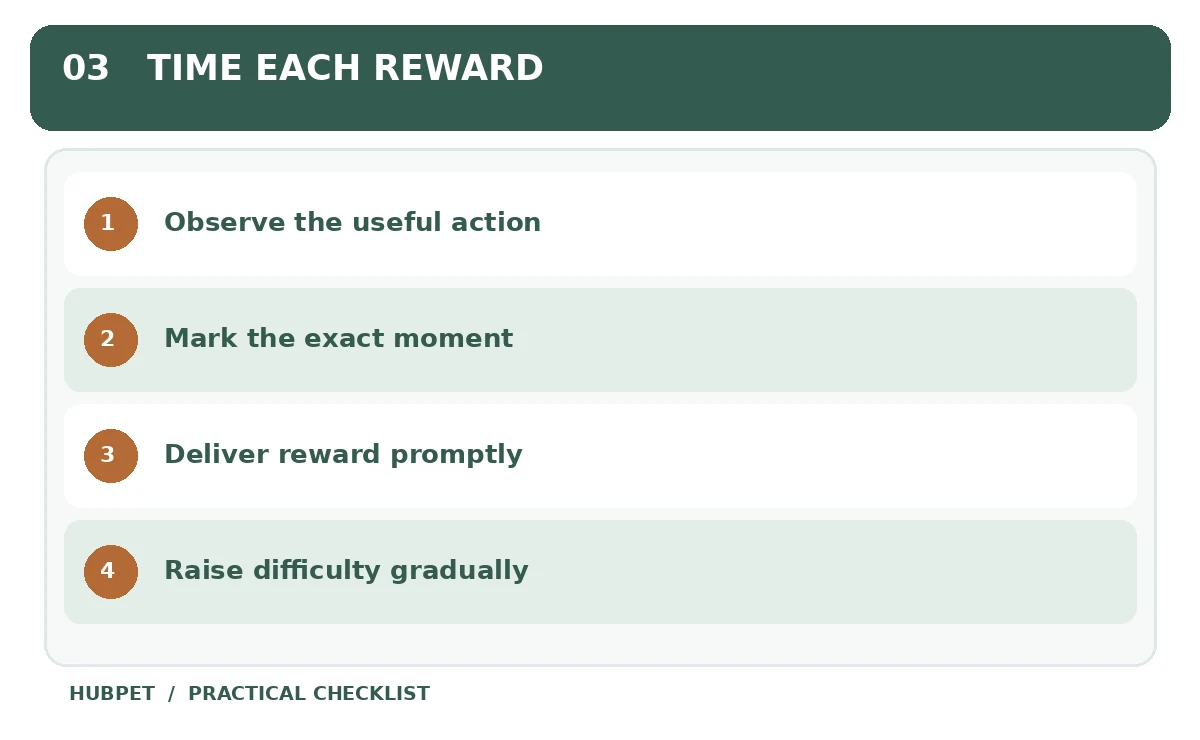
Choose a short marker such as yes or a conditioned click, then reward immediately after the behavior. A well-timed marker helps distinguish a loose leash from the excited jump that follows a moment later. Therefore, practice a simple behavior in a calm room before handling distractions.
Keep treats accessible in a clean pouch, yet avoid waving them in front of the dog continuously. The goal is to mark what the dog did, then deliver a reward. If you need a hand signal or lure at first, fade the lure as the dog learns the action.

Use rewards without building a bribe habit
A bribe appears before a requested behavior and may become the signal the dog follows. By contrast, a reward follows the completed action. Let your dog notice that good choices produce reinforcement, even when the food stays out of sight until you mark success.
Once an easy behavior becomes reliable, vary what happens afterward: sometimes offer a small food reward, sometimes praise or play if the dog enjoys it. Keep food available for harder settings, though. Removing rewards too early can weaken a still-developing skill.
Keep sessions short and end on an easy success
Two clear minutes of practice can teach more than a frustrated drill. Set one modest goal, such as four calm steps beside you, then mark and reward each successful attempt. If your dog looks away repeatedly or stops taking food, reduce the difficulty or finish for now.
For example, switch from the busy sidewalk to the living room when focus disappears. The change does not mean the dog failed. It simply restores a learning environment where timing and rewards make sense. Our short-session guide offers an easy planning framework.
Keep hygiene and storage simple
Handle food rewards with clean hands and keep the pouch free from old crumbs. The FDA advises washing hands and feeding equipment and storing pet foods according to package directions. Moist treats need attention to shelf life and any refrigeration requirement.
Use a sealed container rather than leaving a full bag within reach. Meanwhile, carry only the amount needed for the outing. A forgotten pouch of soft food in a hot car is not a safe reserve for a future training session.
Match the reward to a specific training goal
For recall practice, prepare something the dog enjoys enough to turn away from a mild distraction. For calm mat work, select a small reward that allows the dog to stay relaxed. A single expensive treat cannot substitute for gradually increasing the challenge.
Then compare your dog’s response across settings. Keep a brief note of reward type, practice location and actual behavior. This makes it easier to identify whether the problem is value, timing or an environment that became too difficult.
Know when food rewards are not the right next step
If your dog shows fear, aggression, guarding or sudden appetite loss, stop trying to solve the issue simply by buying a stronger-smelling treat. Contact your veterinarian or an appropriately qualified reward-based behavior professional. Changes in eating may require medical assessment.
AVSAB recommends reward-based methods rather than punishment in dog training. For persistent training errors, review common dog training mistakes before adding more food or pressure. Clear criteria often matter more than a different product.
How We Research
HubPet compared published guidance from veterinary and animal-welfare organizations with practical product-use criteria: fit, food safety, daily cleaning, and clear limits. We reviewed the linked material on October 26, 2026. We did not conduct laboratory or hands-on testing of named commercial models, and we do not claim brand endorsements. Learn about our process on the About HubPet page.
Sources
VCA: Using Food and Treats for Training Dogs. Reviewed October 26, 2026.
UC Davis Veterinary Medicine: Treat Guidelines for Dogs. Reviewed October 26, 2026.
Cornell College of Veterinary Medicine: Xylitol Toxicities. Reviewed October 26, 2026.
AVSAB: Position Statements and Humane Dog Training. Reviewed October 26, 2026.
Yes, if your dog enjoys it and can chew it comfortably. Measure training kibble from the daily food allowance to avoid adding unplanned calories.
Use small, easy-to-swallow pieces that suit your individual dog. The dog should be able to take a reward and return attention to training promptly.
Veterinary nutrition guidance generally suggests limiting treats and extras to about ten percent of daily calories for many dogs. Medical diets need individual veterinary advice.
No. Value means the dog wants the reward in that setting. Familiar kibble, a safe small food piece, play or praise may work for different dogs.
Do not remove reinforcement abruptly. Gradually vary rewards after a behavior is reliable, while keeping appealing food rewards for new or difficult practice.