
A practical method for homemade rewards that focuses on ingredient labels, handling and a useful training size. For individualized nutrition restrictions or health concerns, follow your veterinarian’s guidance and see the veterinary information disclaimer.
Define the reward before choosing a recipe
Training treats need to be easy to deliver repeatedly, not visually impressive. A tiny, soft piece that a dog can swallow comfortably often makes a cleaner reward than a large crunchy biscuit requiring a long break to chew. Decide how many rewards a short session needs, and whether you can use a portion of your dog’s regular kibble instead. Homemade treats are optional and do not provide a nutritionally complete replacement for everyday food. A dog on a prescription diet may need an entirely different plan approved by its veterinarian.
Screen every ingredient, including small add-ins
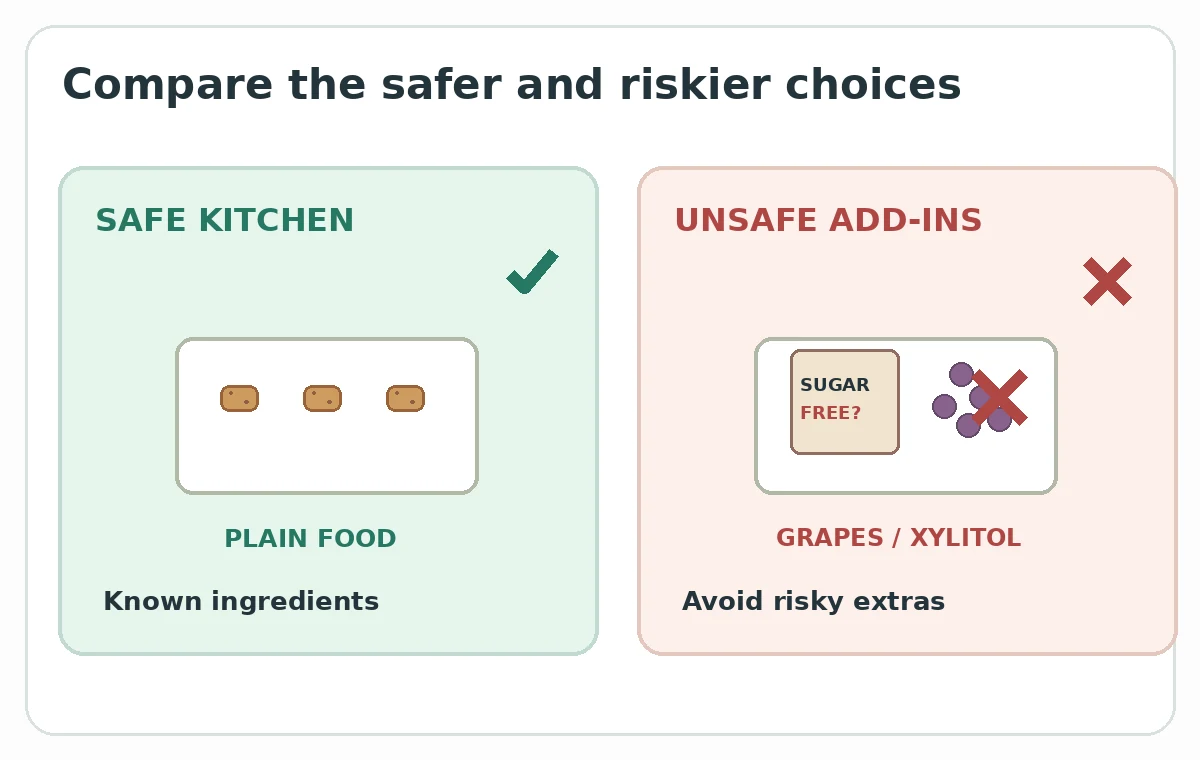
Read the label of each ingredient before mixing. FDA warns that certain common human-food ingredients, including xylitol, grapes, raisins, onions, garlic and chocolate, are dangerous to dogs. An apparently plain peanut butter or baking ingredient may contain sweeteners, flavorings or seasonings. Use simple ingredients your dog already tolerates, and do not assume that healthy for people means appropriate for pets. If any component is unclear, do not include it. Keep a written ingredient list with the finished batch so anyone who trains the dog can check it.
Choose a simple cooking method
Plain cooked ingredients are easier to evaluate than rich human-style cookies with sugar, frosting or spices. For meat-based rewards, follow ordinary food-safety cooking guidance and avoid raw or undercooked animal ingredients. Wash hands and utensils after handling uncooked meat. Do not assume that a dehydrator or brief low-temperature bake eliminates pathogens. If you do not have a reliable food thermometer or safe recipe guidance, use a commercial pet treat with clear instructions instead. A treat that smells appetizing is not proof that it is safely cooked.

Design pieces for the learning task
For clicker work or a short recall session, cut or break a cooled reward into small pieces that match the dog’s chewing ability. Large treats interrupt timing and can add many calories quickly. A crumbly recipe may fall apart in a treat pouch and be difficult to deliver cleanly. A very sticky reward can smear on fingers or make the dog gulp. Test a few pieces while the dog is relaxed, then adjust texture and portion size. Avoid giving a small dog an oversized hard piece simply because the recipe shaped it that way.
Keep the daily energy budget visible
The veterinarian-authored VCA dog treat guidance describes treats as a small share of daily calories, generally no more than about ten percent. Homemade recipes are harder to calculate because serving sizes and ingredients vary. Record what you used, the finished yield and the approximate portion per piece if reliable ingredient data are available. If you cannot estimate the calories, use small quantities and ask your veterinary team for help with the dog’s individual needs. Do not reduce balanced meals indiscriminately to offset a large treat batch.
Cool before packaging or offering
Hot food can burn a dog and condensation can encourage spoilage inside storage containers. Allow cooked treats to cool completely on a clean surface away from pets and household contamination. Do not leave moist or meat-based items on a counter for extended periods. Transfer them promptly into food-safe containers and refrigerate or freeze as appropriate for the recipe. Label the date made and main ingredients. Homemade snacks generally have less predictable shelf stability than properly packaged commercial products; do not guess a long room-temperature shelf life.
Use clean handling at every session
FDA recommends washing hands before and after pet-food handling and cleaning food-contact bowls and utensils. A treat pouch can accumulate crumbs, oil and moisture over many training walks, so empty and clean it according to its material. Use a clean spoon or container to transfer pieces; do not pour old crumbs back into fresh batches. If a treat smells off, changes color or develops visible mold, discard it rather than trimming away the suspect part. Keep portions away from children and food preparation surfaces when hygiene is uncertain.
Test one small change at a time
Changing flour, protein, fat and flavor in one recipe makes reactions harder to interpret. Offer a tiny trial piece and monitor how your dog chews and digests it before using the treat throughout a training session. Keep an ordinary commercial reward available if the homemade one proves too crumbly, rich or unappealing. Dogs with gastrointestinal conditions or food allergies should follow a veterinarian-designed plan; adding homemade treats can interfere with dietary trials. Never keep feeding a recipe just because you prepared a large batch.
Pack the right amount for the outing
Measure only the pieces needed for the planned lesson. Keep perishable food cold when transport requires it, and discard portions that have sat warm beyond safe handling directions. A sealed container avoids crumbs in pockets and reduces the risk of a dog finding an unattended bag. Reward promptly after the target behavior, then give the animal time to swallow before repeating. The point is a consistent learning signal, not constant snacking. Store the remaining batch safely rather than carrying it all day.

Identify when a store-bought treat is the better choice
Commercial treats with a clear ingredient panel, calorie statement and storage instructions can be simpler for busy households. Homemade rewards make sense only when you can verify each ingredient, cook and store appropriately, and control the portion. Skip DIY recipes that promise to fix a health condition or substitute for veterinary care. If your dog shows vomiting, diarrhea, weakness or signs of an adverse reaction, stop feeding the treat and contact your veterinarian. Preserve the ingredient list and storage details for that conversation.
How We Research
We evaluated homemade dog training treats through veterinary nutrition, public-health, and manufacturer-agnostic safety guidance listed below. The review compares observable labels, practical handling, predictable risks and real household use rather than claiming personal laboratory tests or endorsements. We did not diagnose individual animals, certify retail products, or assign untested performance scores. Product instructions and your veterinary team’s dietary advice take priority. Read our editorial approach. Sources reviewed October 28, 2026.
Sources
FDA, Got a Question About Your Pet’s Health?. Read original guidance. Accessed October 28, 2026.
FDA, Tips for Safe Handling of Pet Food and Treats. Read original guidance. Accessed October 28, 2026.
FDA, Proper Storage of Pet Food & Treats. Read original guidance. Accessed October 28, 2026.
VCA Animal Hospitals, Dog Treats. Read original guidance. Accessed October 28, 2026.
Safety note: Treats and food puzzles are optional enrichment, not substitutes for complete nutrition or veterinary care. Stop use if choking, oral injury, distress or suspected toxicity appears; seek urgent veterinary assistance for emergencies.
Only after checking the full label for xylitol and other unsuitable ingredients, and keeping portions small because peanut butter is rich.
There is no safe universal period; moisture and ingredients matter. Follow food-safety guidance and refrigerate perishable batches promptly.
Avoid raw or undercooked animal ingredients because of pathogen risks to dogs and people handling the food.
They can reward some exercises, but they are not a complete food. Set a small treat budget and retain balanced meals.
Stop the new food, save the ingredient list and consult a veterinarian, particularly with persistent gastrointestinal or unusual symptoms.