
Non-Slip Dog Bath Mats can make bath time more manageable, but the details matter more than a product name. This guide focuses on the specific fit, handling, cleaning, and comfort checks involved in non-slip dog bath mats. Start with your dog’s size, coat, mobility, and reaction to water. Work at a pace your dog can tolerate. Use only dog-appropriate grooming products. Contact a veterinarian for painful skin or unexplained irritation. A safe routine provides stable footing, comfortably warm water when needed, and an easy way for the dog to step away. For more background, see our veterinary disclaimer.
Start with the tub surface
A dog balancing on a slick surface may scramble even when the water feels comfortable. Before buying a mat, inspect the actual tub or shower pan. Smooth enamel, textured acrylic, tiled grout, and a curved plastic base all behave differently when wet. Measure the flat standing area rather than the advertised bathtub length. Leave room for a drain and for your dog to turn without stepping onto a raised edge. A small rug that only covers the center may still leave a slippery exit path.
When evaluating non-slip dog bath mats, compare the product to the place and routine you actually use, not just the packaging photograph. Check the contact surfaces, moving parts, and places that collect hair or water. Rehearse the setup while your dog is calm and dry. If anything shifts, leaks, snags, or creates an awkward reach, correct that problem before you use water or shampoo. A short, low-pressure trial usually reveals more about practical fit than a list of claimed features.

Check the underside contact
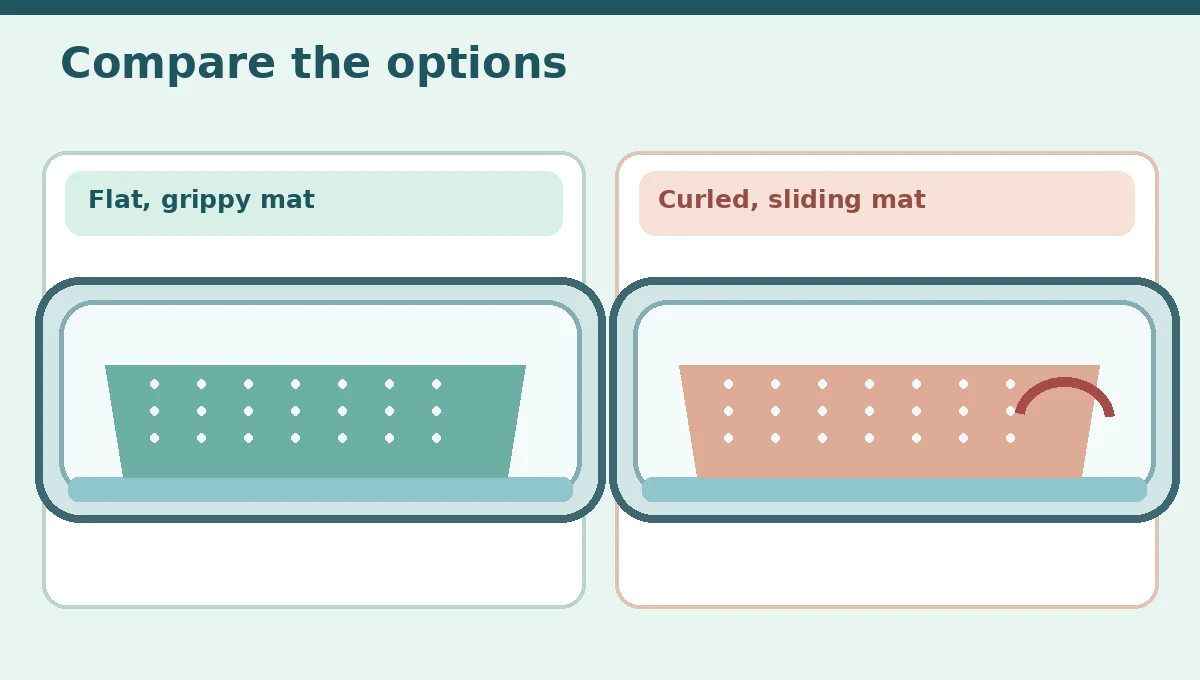
Look at how the mat holds to a clean, compatible surface. Some designs rely on suction cups; others use an inherently grippy backing. Suction cannot bridge deep grout lines, heavy texture, or a curved ridge. Flatten the mat on a clean, dry or manufacturer-recommended damp surface and apply pressure at each contact point. Give the mat a gentle sideways push before your dog enters. If a corner lifts or the mat walks across the floor, change the setup rather than trusting your dog to compensate.
A useful buying checklist for this bathing tool includes the usable dimensions, material care instructions, cleaning effort, and how quickly the tool you can remove if your dog is worried. Read the manual for restrictions that a product listing may omit. Avoid assuming a feature is safe because it appears in a marketing picture. Choose the simplest setup that allows a calm, controlled bath. Keep a towel and a dry, nonslip exit ready.
Give paws a usable top surface
A successful bath mat does two jobs: its underside stays in place and the top lets paws find traction. Fine texture often feels gentler than sharp raised studs. Avoid deep loops that catch nails or trap soap. Watch how the dog places paws during a brief dry practice run. A mat that wrinkles under their weight or makes them stretch their stance is not a good match, even if the product label promises strong grip.
One easy way to evaluate your routine is to observe your dog’s body language during a brief practice. Loose muscles, voluntary approach, and normal breathing suggest the setup is tolerable. Freezing, scrambling, repeated attempts to escape, or persistent avoidance mean you should stop and simplify. Never treat a tool as a restraint. Never leave a dog unattended on a raised surface. Ask a veterinarian about persistent pain or skin symptoms.
Plan drainage and rinsing
Standing water can make a grippy mat less reliable and can leave shampoo around the paws. Keep drain openings unobstructed and follow the mat maker’s instructions for placement. During rinsing, move water gradually instead of blasting the dog with a high-pressure spray. Check beneath the mat after bathing: soap residue and trapped hair can weaken grip at the next session. Lift it, clean both sides, and let the mat dry fully before storing.
When evaluating this bathing tool, compare the product to the place and routine you actually use, not just the packaging photograph. Check the contact surfaces, moving parts, and places that collect hair or water. Rehearse the setup while your dog is calm and dry. If anything shifts, leaks, snags, or creates an awkward reach, correct that problem before you use water or shampoo. A short, low-pressure trial usually reveals more about practical fit than a list of claimed features.
Use a calm entry and exit
Introduce the dry mat with treats and voluntary exploration. Keep the dog on the floor while you show the new surface; do not pull them into the tub by a collar. Use a stable, low entry path appropriate to the dog’s size and mobility. Provide a steady hand for guidance but do not rely on a harness or collar to suspend the dog. When the bath ends, keep traction available while the dog steps onto a towel or another safe floor surface.
A useful buying checklist for this bathing tool includes the usable dimensions, material care instructions, cleaning effort, and how quickly the tool you can remove if your dog is worried. Read the manual for restrictions that a product listing may omit. Avoid assuming a feature is safe because it appears in a marketing picture. Choose the simplest setup that allows a calm, controlled bath. Keep a towel and a dry, nonslip exit ready.

Know when to replace the mat
Inspect for brittle cups, cracked rubber, mildew, persistent odor, peeling backing, and raised corners. Remove a damaged mat rather than trimming an unstable edge and leaving a snag point. Some mats you can wash, while others need hand cleaning. Follow the material-specific label. A stable bath surface is a useful tool, not a guarantee against slipping. Stop if your dog panics, loses balance, or shows pain. Seek veterinary or professional grooming guidance where appropriate.
One easy way to evaluate your routine is to observe your dog’s body language during a brief practice. Loose muscles, voluntary approach, and normal breathing suggest the setup is tolerable. Freezing, scrambling, repeated attempts to escape, or persistent avoidance mean you should stop and simplify. Never treat a tool as a restraint. Never leave a dog unattended on a raised surface. Ask a veterinarian about persistent pain or skin symptoms.
How We Research
We reviewed veterinary guidance for bathing and coat care. We then assessed everyday fit and cleaning questions for this bathing tool. Our original diagrams illustrate practical concepts, not a particular brand or universal size. The right bath routine depends on your dog, and directions supplied with a product take priority for product-specific use. Learn about our team and standards on the About HubPet page.
Sources
VCA Animal Hospitals — Get Your Pet Bathing Routine Down. Read source.
VCA Animal Hospitals — Grooming and Coat Care for Your Dog. Read source.
Safety note: This article offers general pet-care information, not veterinary diagnosis or an assurance that any product is safe for every dog. Stop when a dog shows fear, pain, instability, or signs of a skin reaction. Ask your veterinarian about symptoms or medically prescribed bathing instructions.
Measure your actual space and observe your dog’s normal stance and movement before selecting a product. Follow the product-specific instructions, check for slipping or awkward reach, and try a calm practice session without rushing into a full bath.
A tool may simplify handling, but it will not automatically solve bath anxiety. Start with voluntary investigation, tiny steps and rewards, and stop if the dog freezes or tries to escape. A veterinarian or force-free groomer can help with persistent distress.
Inspect and clean the tool after each use, especially any seams, outlets, textured surfaces, or contact points that collect water or hair. Follow the manufacturer’s cleaning and drying directions, and replace damaged parts promptly.
Assuming that a product label guarantees safe fit is a common mistake. Test the actual setup first, keep water or product away from the dog’s face as appropriate, and stop when the dog is uncomfortable.
Seek veterinary guidance if your dog has ongoing itching, redness, open sores, painful handling, persistent odor, or a prescribed medicated product. The right treatment schedule and product concentration vary with the condition.