
Non-clumping kitten litter is often recommended for young kittens while they learn what belongs in the litter box and may investigate unfamiliar material with their mouths. Cats Protection advises avoiding clumping litter for young kittens because swallowed clumping material could create a blockage. That does not mean every non-clumping product feels the same under tiny paws. A safe first setup also needs a low entry, familiar texture, easy access and daily cleaning. This guide focuses on those observable features rather than an arbitrary age-based product switch.
Begin with the kitten’s familiar surface
Ask the shelter, foster caregiver or breeder what litter the kitten has used reliably. If that material is safe and suitable, preserving the texture during the first days at home reduces unnecessary change. A new household already brings unfamiliar sounds and smells. Offer a low-entry open tray in a quiet place where the kitten can reach it without climbing stairs or pushing through a flap. Do not introduce multiple new textures and box shapes at once, because you then cannot tell what affected litter box use.
Understand why non-clumping is often advised
A very young kitten may mouth objects while exploring. Cats Protection recommends avoiding clumping formulas for young kittens because swallowed material may form a blockage. This is general preventive advice, not proof that a particular swallowed amount is harmless or dangerous. Choose a product labeled for young kittens or discuss options with a veterinarian. Keep packaging, scoop handles and small plastic parts out of reach. If you suspect your kitten swallowed litter and shows vomiting, weakness or distress, contact veterinary care instead of offering home remedies.
Choose a soft, easy-to-stand-on texture
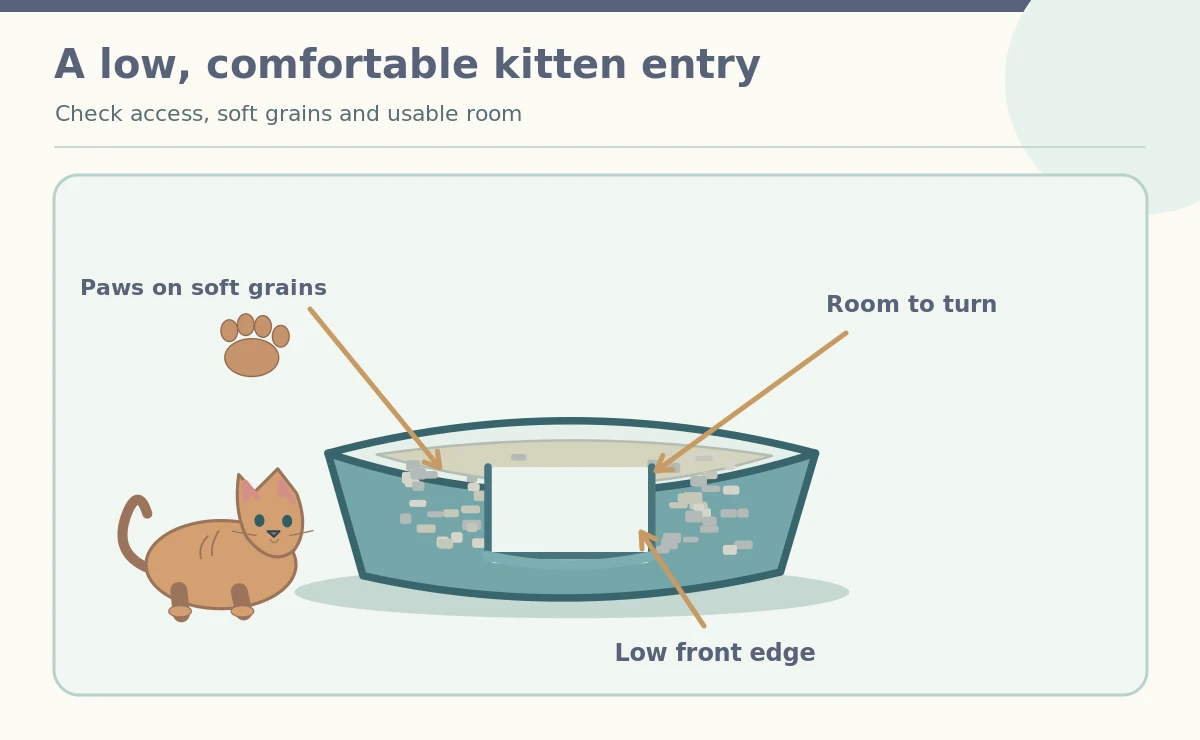
Some non-clumping products use paper, wood or mineral granules. Larger hard pellets may feel unfamiliar and may be difficult for little paws to balance on. Run a visual check for sharp fragments, strongly perfumed additives or dusty powder. Favor a texture the kitten can stand and turn on comfortably without frequent foot lifting. A fine, soft surface can work well, but package contents differ. The cat’s behavior matters more than a universal claim that one substrate is automatically the most gentle.
Pair the litter with a genuinely low entrance
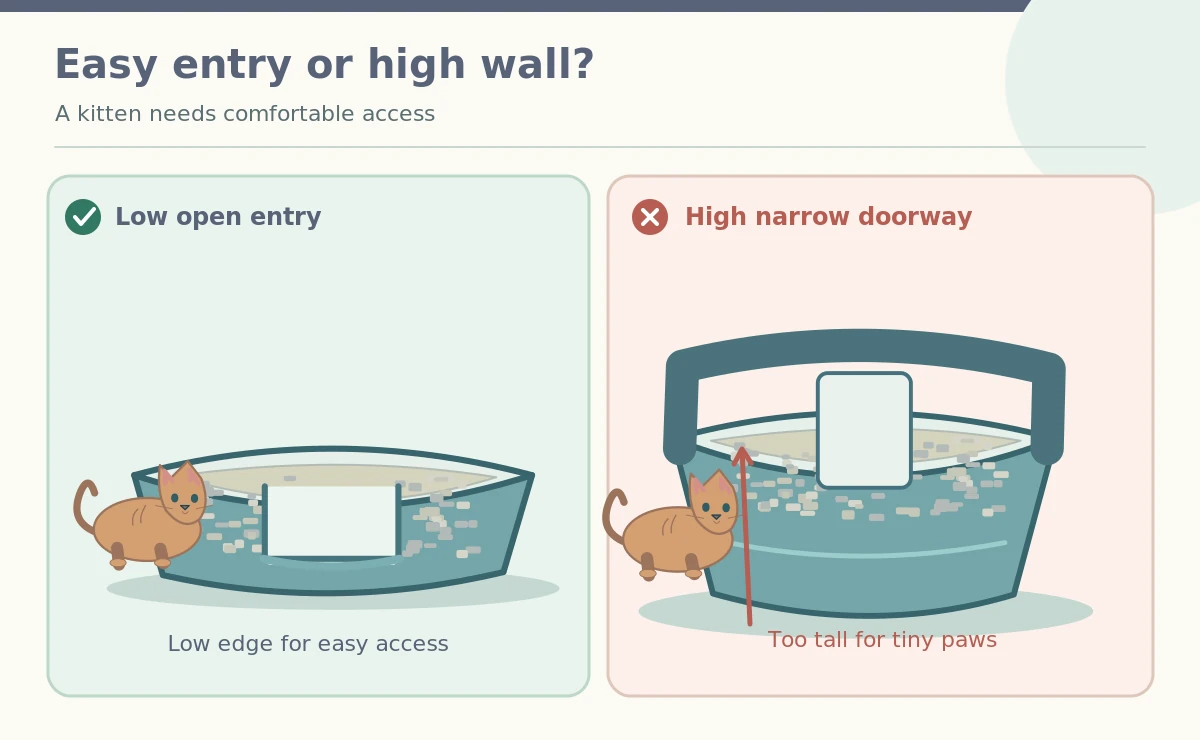
A young kitten needs to enter and leave the box without jumping. A shallow tray with enough interior space to turn around is more useful than a tall covered model with a narrow door. Position the tray on a stable floor and keep the route clear of toys, food bowls and dog traffic. Check that the tray edge stays stable when the kitten rests its front paws on it. As the kitten grows, increase the box size instead of waiting until the kitten starts standing awkwardly on the rim.
Plan for wet patches, not only feces
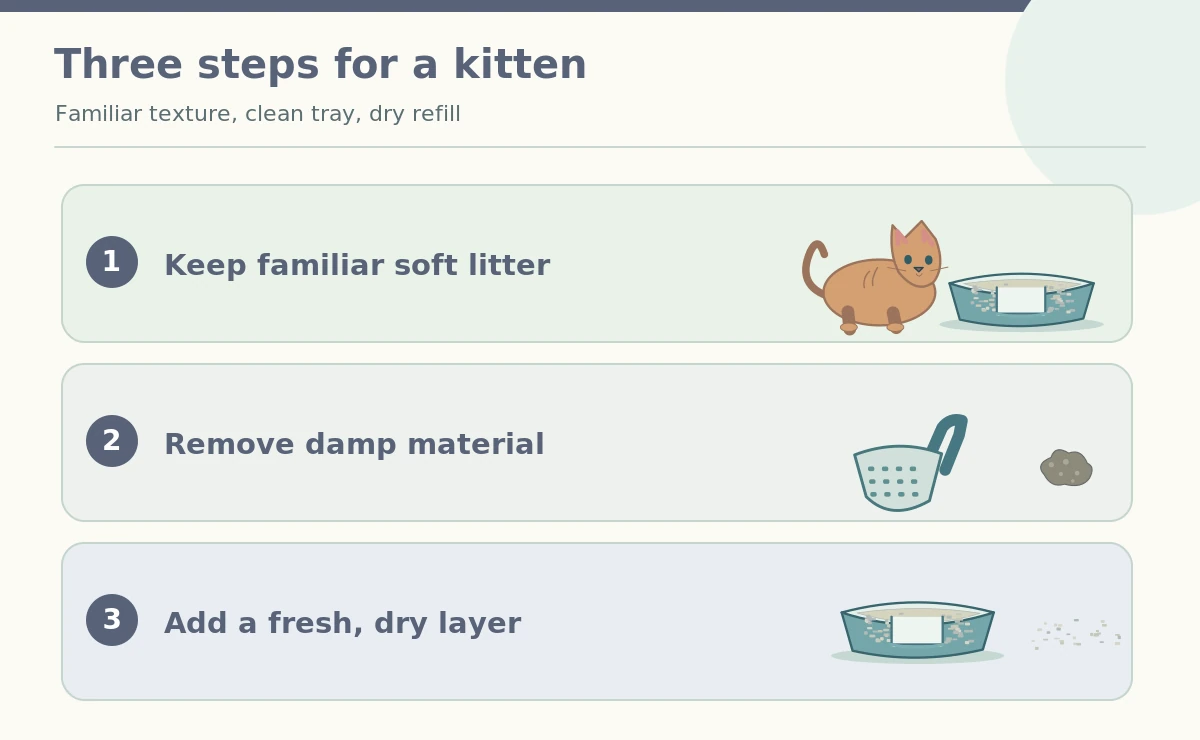
Non-clumping litter may absorb urine without forming a single removable ball. Follow the manufacturer’s directions for changing damp material and emptying the tray. Scoop feces at least daily and look for darker or wet spots rather than stirring them throughout the box. Replace used substrate often enough that the surface stays clean and dry. Do not add thick layers to hide wet material. A small tray with frequent wet patches may need more complete changes than a large adult box, especially during early training.
Use a gentle refill routine
Keep a clean bag and scoop ready before opening the tray. Remove solid waste, replace damp material as instructed, and refill to a modest comfortable depth. Too little litter leaves the bottom exposed; too much can make the surface unstable for a kitten. Avoid violently shaking the box or dumping litter from overhead. Wash your hands after contact and clean the tray with a mild cat-safe product before rinsing and drying it. Strong fragrance in the box can create another obstacle to dependable use.
Make the box easy to find all day
Place the kitten’s toilet where it can reach it after waking, eating or playing. In a larger home, use more than one accessible tray so a small kitten does not need to cross a busy room or negotiate stairs. Offer calm privacy without enclosing it in a dark cabinet. If a dog shares the home, prevent dog access while keeping the kitten’s route open. Never punish an accident or carry the kitten roughly to the litter. Quiet, consistent access supports learning better than startling corrections.
Watch behavior around the substrate
A kitten that enters, digs lightly, eliminates and leaves comfortably probably finds the setup workable. Repeatedly stepping onto the rim, hopping out, hesitating or toileting beside the tray deserves attention. Check temperature, location, cleanliness and grain feel before guessing at a behavioral problem. Offer a second safe substrate if necessary and preserve a reliable familiar option. If the kitten cries, appears uncomfortable or shows unusual elimination patterns, ask a veterinarian; discomfort cannot be diagnosed by looking at litter type alone.
Keep storage and litter dust under control
Close the litter bag and store it somewhere dry, inaccessible to playful kittens. Paper or plant materials can absorb moisture while in storage, while mineral substrates may generate fine dust during refills. Check for dampness, unusual smells or broken packaging before use. Pour slowly close to the floor rather than producing a cloud above the kitten. Do not add scent crystals or essential oils to mask odors. If a room smells dirty, remove waste and clean the tray rather than changing the aroma.
Change substrates based on the kitten, not a deadline
There is no single age at which every kitten must switch to a clumping formula. Discuss a suitable time with your veterinarian and check the particular product guidance. When a change makes sense, introduce the new material gradually or offer a second box so you can observe what the kitten accepts. Keep a low-entry tray throughout the transition. If the kitten samples granules with its mouth, stop the experiment and seek veterinary advice about a safer substrate. A predictable toilet routine matters more than a faster product upgrade.
Handle waste with care for everyone at home
Clean the box daily and wash hands afterward. The CDC notes that cat feces can expose people to Toxoplasma in some situations and recommends additional precautions for pregnant or immunocompromised caregivers. Ask another household member to perform cleaning when possible, and use gloves if necessary. Bag used litter and follow local waste guidance; do not compost contaminated material. Keep small children away from the litter and cleaning tools. These practices apply even when the kitten is healthy and the product packaging advertises a natural material.
How We Research
We review established guidance from veterinary schools, cat welfare organizations and public health agencies, alongside product attributes that readers can inspect. We distinguish general cat preferences from guarantees about any specific brand. Sources were checked on October 28, 2026. We have not performed laboratory testing or a veterinary examination for this article. Learn more about HubPet.
Sources
Cats Protection, How to Choose the Best Cat Litter for Your Cat. Read the original guidance.
Cornell Feline Health Center, Feline Behavior Problems: House Soiling. Read the original guidance.
CDC, About Cleaning and Disinfecting Pet Supplies. Read the original guidance.
ASPCA, Litter Box Problems. Read the original guidance.
Safety note: This is general litter and hygiene guidance, not medical diagnosis. If your cat strains, has trouble passing urine, appears painful, or suddenly avoids the box, contact a veterinarian promptly. People who are pregnant or immunocompromised should follow CDC litter-handling precautions. See our veterinary disclaimer.
Young kittens may mouth litter, and Cats Protection advises avoiding clumping formulas because ingestion could create a blockage.
A low-entry open tray usually offers easier access and allows you to observe use and keep the interior clean.
Follow the manufacturer’s wet-area removal and replacement instructions; do not expect every urine spot to form a scoopable ball.
Discuss timing with your veterinarian and product guidance; individual development and litter-mouthing behavior matter.
Remove access to unsuitable material, preserve a safe box, and consult veterinary care if ingestion is suspected or symptoms appear.