
Cat litter for multiple cats should support frequent cleaning without creating a texture or scent that one cat avoids. A label reading “multi-cat” may suggest enhanced odor control, but it does not increase access to a crowded toilet. The better buying decision starts with clump removal, grain comfort and how many clean boxes the cats can reach without confrontation. This guide provides a practical comparison routine for different formulas while keeping the social layout and individual choices in view.
Count usable boxes before choosing a stronger litter
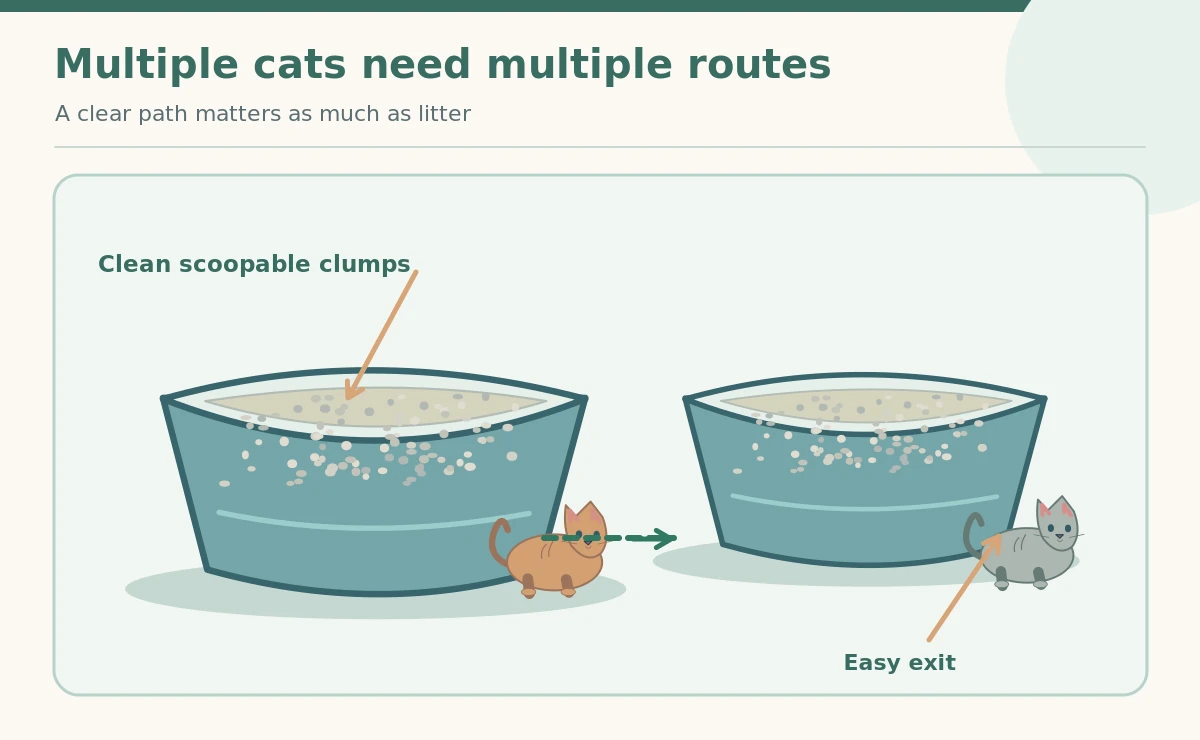
A common veterinary starting point is one litter box per cat plus one, placed across multiple useful locations rather than grouped like a single station. AAHA explains that separate accessible locations and escape options can reduce conflict. Two boxes next to each other may still function as one contested resource. Check whether each cat can enter, use and leave without passing another animal that guards the doorway. No litter additive solves a blocked route, so fix the layout first.
Choose a texture that each cat accepts
A litter that pleases one cat may feel unpleasant to another. Most cats prefer unscented finer textures, according to Cornell, but individual habits vary. Keep a familiar box available if you test a new multi-cat formula. Watch for cats balancing on edges, scratching outside the box or quickly exiting without digging. A household average is not enough: the shyest cat still needs a comfortable option. An extra box with a different texture can reveal a preference that a single shared product hides.
Assess clump strength during ordinary cleaning
When several cats visit different boxes, you may scoop many times a day. Observe whether wet litter forms distinct masses that lift cleanly or breaks into smaller damp bits. Compare the same amount of use and the same scoop rather than trusting a front-label “extra strength” slogan. If wet clumps adhere to the tray, check depth and condition of the plastic before blaming all material failures on the litter. Hard clumps can be easier to lift, but they should not require aggressive scraping that wears the box.
Treat fragrance as an added variable
A scented “multi-cat” product may smell pleasant to people while discouraging a cat from approaching. Cats Protection advises avoiding heavily scented litter and controlling odors by regular maintenance. Do not add perfumes, essential oils or deodorizing powders inside an occupied tray. Try an unscented version of a familiar texture before introducing an entirely new formulation. Keep boxes in locations with reasonable ventilation, not at the end of a sealed tunnel. A strong smell may signal that too few boxes need more frequent cleaning.
Set a scooping routine that matches actual traffic
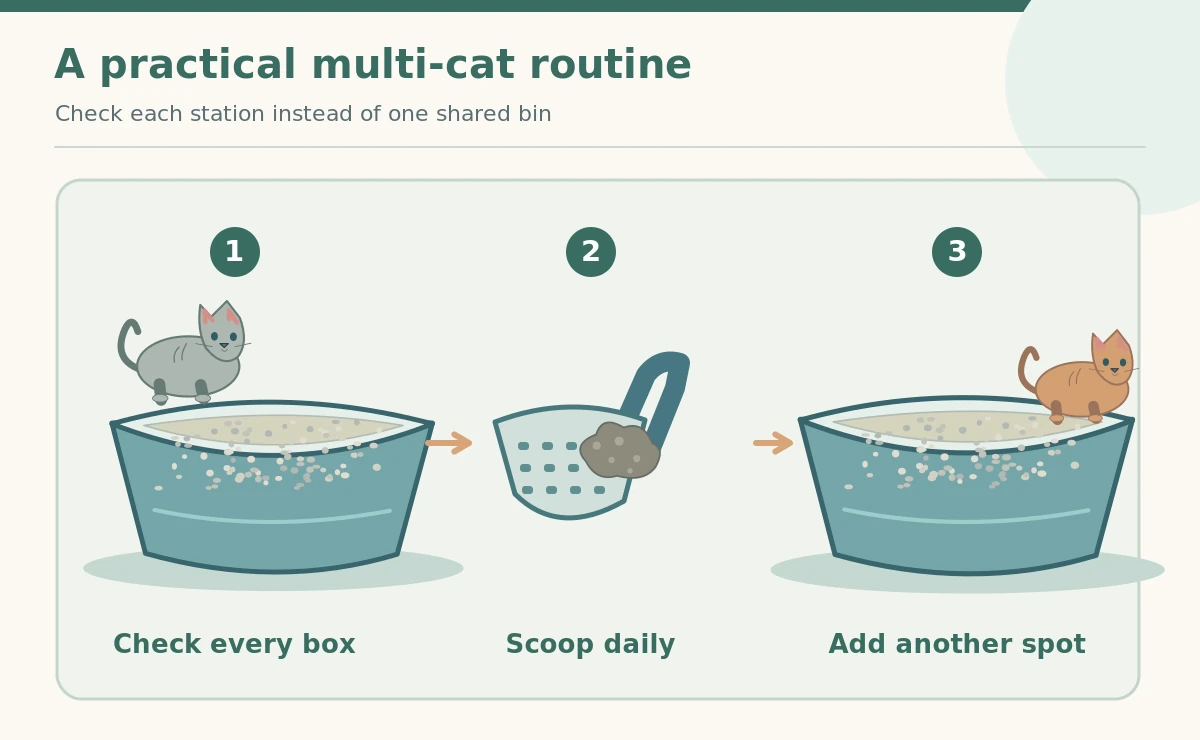
Scoop feces and wet clumps at least daily, and more often when use makes the boxes dirty. Make a brief round of every location rather than cleaning only the easiest tray. Keep waste bags and a dedicated scoop near each station while preventing children and pets from accessing them. Refill to a depth that allows comfortable digging without hiding soiled areas. The goal is for every cat to find a clean surface at its next visit. A box used by one cat still deserves care, even if another stays empty.

Watch whether cats share voluntarily
Some cats happily use several boxes; others favor one or avoid an area where a more confident cat waits. Observe traffic from a distance, including whether a cat lingers near an entrance, corners another or chases after a visit. Do not force cats to share or move a preferred box suddenly. Adding a quiet alternative on another route may be more effective than buying a stronger perfume. If conflict is frequent, ask your veterinarian or a qualified feline behavior professional to review the household setup.
Compare tracking and cleanup across stations
Multiple cats may carry more particles through the home simply because the boxes see more use. Place flat washable mats where paws land, and keep a hand vacuum or gentle broom ready for surrounding floor space. Avoid heavily textured mats that snag claws or obstruct a low-entry tray. Test whether a finer formula leaves more grain outside the box than a different version, while considering cat comfort. A small amount of tracking may be acceptable if the cats consistently use the substrate without distress.
Measure consumption by cleanups, not marketing
Large bags and “long-lasting” claims can encourage owners to under-clean boxes. Track how many top-ups each station needs, how much clean litter leaves with clumps and how often a full change occurs under the manufacturer’s directions. Do not compare products solely by pounds because dense clay and lightweight plant granules differ. Storage also matters in a multi-cat home: keep a closed reserve where it stays dry and pets cannot chew the packaging. Choose the formula that keeps every station workable, not the one with the most dramatic label.
Give every cat a predictable exit
Large, open boxes often provide better sightlines than a narrow covered unit, particularly when a cat worries about ambush. Corners, closets and laundry rooms can become bottlenecks. Make sure each tray has enough interior room for turning and an easy path away from other cats. The ASPCA notes that litter box aversion can follow unpleasant experiences or difficult access. Adjust the environment without punishing a cat that has an accident. A second unobstructed route often helps more than moving the same tray deeper into a cabinet.
Keep hygiene consistent across the household
Use mild cat-safe products to clean empty trays, dry them fully and replace damaged boxes that retain odor. Do not mix cleaning chemicals or use strong fragrance to cover dirty plastic. Wash hands after scooping and bag waste securely for appropriate household disposal. The CDC advises daily litter cleaning and extra care for people who are pregnant or have weakened immunity. Assign responsibilities clearly so a busy home does not accidentally skip one tucked-away station for days.
Treat sudden box avoidance as a warning
If one cat abruptly begins toileting outside the box, cries, strains, repeatedly visits or seems uncomfortable, arrange veterinary advice. Do not assume a multi-cat litter claim can prevent medical or social problems. Keep a log of which cat used which location when possible without invasive monitoring. Preserve familiar boxes while investigating and avoid punishment. A veterinary examination can address physical causes while a thoughtful layout review may reveal blocked exits or competition. Both deserve attention when the problem starts suddenly.
How We Research
We review established guidance from veterinary schools, cat welfare organizations and public health agencies, alongside product attributes that readers can inspect. We distinguish general cat preferences from guarantees about any specific brand. Sources were checked on October 28, 2026. We have not performed laboratory testing or a veterinary examination for this article. Learn more about HubPet.
Sources
AAHA, General Litter Box Considerations. Read the original guidance.
Cornell Feline Health Center, Feline Behavior Problems: House Soiling. Read the original guidance.
ASPCA, Litter Box Problems. Read the original guidance.
CDC, About Cleaning and Disinfecting Pet Supplies. Read the original guidance.
Safety note: This is general litter and hygiene guidance, not medical diagnosis. If your cat strains, has trouble passing urine, appears painful, or suddenly avoids the box, contact a veterinarian promptly. People who are pregnant or immunocompromised should follow CDC litter-handling precautions. See our veterinary disclaimer.
Formulas and marketing claims vary. Compare texture, scoop performance and fragrance rather than assuming the label guarantees better results.
A commonly recommended starting point is four accessible boxes in different areas, then adjust to the cats’ needs.
Fragrance may hide odors from people but discourage some cats. Scooping and accessible clean boxes matter more.
Some can, while others prefer different textures. Offer an alternative rather than forcing every cat onto one new litter.
Add separate locations and clear exits, and seek feline behavior advice if blocking or chasing continues.