
Non-clumping cat litter absorbs liquid without forming firm urine clumps that a scoop can lift away. It can suit some cats and household routines, but urine remains in the bed until the used material is removed or the pan receives a complete change. That makes the cleaning schedule an essential part of the buying decision, not a small detail after checkout. See the HubPet veterinary disclaimer for health and safety limits.
This guide explains how common non-clumping materials behave, which costs are easy to overlook, and how to compare them fairly with a familiar litter. It does not assume that pellets, mineral granules, or plant fibers are automatically healthier for every cat. The cat’s willingness to dig and toilet normally is the real starting point.
Understand the difference between absorption and clumping
An absorbent material can take up liquid without holding it in a solid, scoopable mass. When urine spreads through the bed, a scoop may remove feces but leave moist granules underneath. Manufacturers may emphasize absorbency, yet that alone does not say how much used litter remains between complete changes.
Inspect the pan during ordinary cleaning and follow the product instructions for replacement. Do not equate the absence of obvious wet spots with a clean, dry toilet. Some substrates change color or break into smaller pieces as they absorb moisture, and others show little visible change.
Compare clay, paper, wood and other substrates
Non-clumping choices may use mineral granules, recycled paper, wood pellets, or other plant materials. Particle shape, softness, odor, weight, and breakdown behavior differ among formulations. The raw ingredient does not establish a complete safety or environmental verdict without considering production and disposal.
A cat familiar with fine sandy litter may dislike large hard pellets, while another readily uses a different texture. Ask what the paws actually contact and whether waste can be removed without leaving dirty material at the bottom. Avoid judging fit from a package photograph alone.

Calculate full-pan replacement effort
Because urine cannot always be lifted as a single clump, non-clumping litter often needs more frequent full replacement than a well-maintained clumping bed. Exact intervals depend on the specific material, cat numbers, pan size, and instructions. A strong perfume does not extend a safe cleaning schedule.
Estimate how much litter fills your pan and the labor of removing it completely. Consider bag storage and the weight of wet waste. A low-priced large bag may cost more over time if you replace the whole bed often or if tracking adds cleanup work.
Keep scooping feces on a daily schedule
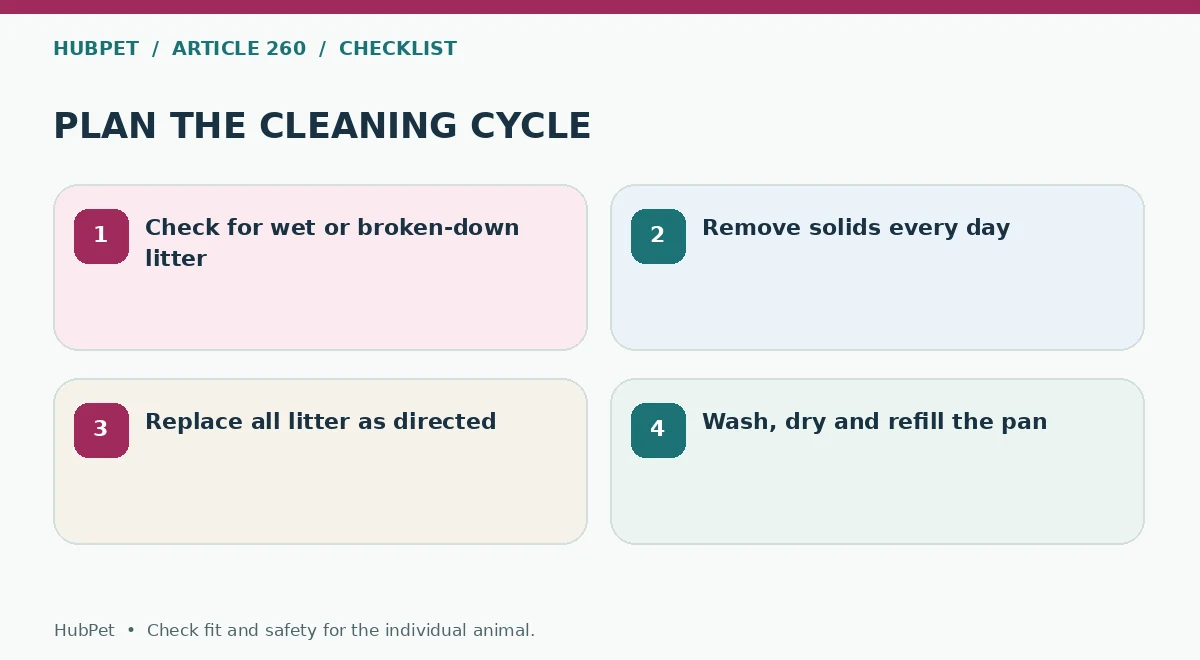
Regardless of urine handling, remove solid waste at least daily and more often when the pan is busy. Check corners for hidden deposits and areas where wet granules collect. During full replacement, wash with mild unscented soap, rinse if required, and dry the pan before refilling.
Avoid bleach or ammonia-based odor masking. Keep waste sealed and dispose of it under local rules rather than assuming cat litter can enter plumbing or a compost pile. Wash hands thoroughly after cleaning; used litter deserves basic hygiene even when its ingredients sound natural.
Think about kitten and cat needs separately
Young kittens need easy entry, safe digging space, and material compatible with their age and behavior. Do not assume all non-clumping products are automatically appropriate for every kitten. Check the specific instructions and ask your veterinarian if your kitten mouths or eats litter.
Older cats may prefer a soft, fine substrate because stiff joints or sore paws make hard pellets unpleasant. Watch for changes in posture and hesitancy. A gradual transition with an open familiar box is safer than expecting an animal with mobility concerns to adapt overnight.
Measure odor without adding heavy scent
Non-clumping formulas can absorb some moisture yet still allow urine odor to build as the pan becomes saturated. Scented granules may cover that smell to a person, but cats often prefer unscented toileting materials. A persistent odor usually calls for cleaning and replacement, not more fragrance.
Keep the pan in a ventilated, low-stress area where the cat has a clear exit. Avoid strong room deodorizers that might encourage avoidance. Track how quickly odor returns after a fresh fill so you can set a realistic change interval for your actual household.
Watch what happens to pellets after wetting
Some wood-based pellets crumble into fine material after they absorb liquid; paper products may swell or soften. A sifting pan can assist with certain pellet systems, but only when the design and material work together. Fine breakdown material may make removal easier or create unwanted spread.
Read the litter maker’s directions instead of assuming every pellet system operates alike. Check that the cat can still dig, stand comfortably, and cover waste. If the pan looks tidy only because particles fall through a grate, examine the collecting tray and clean it thoroughly.
Compare dust, tracking and paw comfort independently
A non-clumping label tells you nothing definitive about airborne dust or granules carried through the house. Some coarse products shed relatively little visible dust initially but feel harsh underfoot. Finer absorbents can track widely or become powdery after use.
Observe gentle pouring, normal digging, and the nearby floor without deliberately raising dust. Test a washable non-slip mat if tracking matters. Do not force a cat to walk across scratchy surfaces or climb awkward barriers to reach a cleaner-looking bathroom area.
Run a preference test with two similar pans
Keep one pan with the familiar litter and put a candidate non-clumping material in a second, similarly sized open box. Match location and cleaning frequency as closely as possible. Watch whether the cat voluntarily enters, digs, and uses both boxes over several ordinary days.
If the new bed goes unused, restore the prior arrangement. A litter choice should not become a contest of wills. Sudden urine changes, straining, or accidents can signal illness and require veterinary assessment; do not delay care while trying another substrate.

Choose the maintenance pattern you can sustain
Before buying, write a two-line routine: daily removal of feces and the complete change frequency recommended for that exact material. Add a plan to refill the pan to a comfortable depth and monitor urine output. If full changes are impractical, a different litter system may better suit the household.
Accept the cat’s preference as a limiting factor. A cheap absorbent product is not a bargain if the cat avoids it, and an expensive one is not automatically cleaner. Reliable toileting depends on comfort, accessible box placement, and the cleaning work you really perform.
How We Research
We checked this guide against the authoritative sources listed below on October 26, 2026. We reviewed practical differences, safety limits, and relevant home conditions rather than drawing conclusions from brand advertising. Specifications, warranty policies, and device capabilities change; check the manufacturer’s current manual. We did not purchase, laboratory-test, rank, or endorse individual products. Where a pet has pain, skin concerns, or fear, seek individual veterinary advice. See our approach at About HubPet.
Sources
VCA Animal Hospitals: Different Types of Cat Litter. Accessed October 26, 2026.
ASPCA: General Cat Care. Accessed October 26, 2026.
ASPCA: Litter Box Problems. Accessed October 26, 2026.
VCA Animal Hospitals: Cat Behavior Problems: House Soiling. Accessed October 26, 2026.
Yes. It can absorb moisture without forming firm urine clumps for scooping. Used material may remain until a full change.
Follow the exact manufacturer instructions and adjust to real use, number of cats, and pan condition. Remove feces daily and replace wet or saturated litter promptly.
No. Clumping behavior and dust are different properties. Compare each specific formula during normal pouring and use.
Some can, but coarse pellets may be uncomfortable for sore paws. Offer a softer familiar choice and ask your veterinarian about possible pain.
Keep at least one familiar litter option while testing. Let your cat choose voluntarily and seek veterinary help if toileting habits change suddenly.