
General educational guidance only. For sudden behavior changes, suspected ingestion or litter box distress, speak with your veterinarian. Read our vet disclaimer.
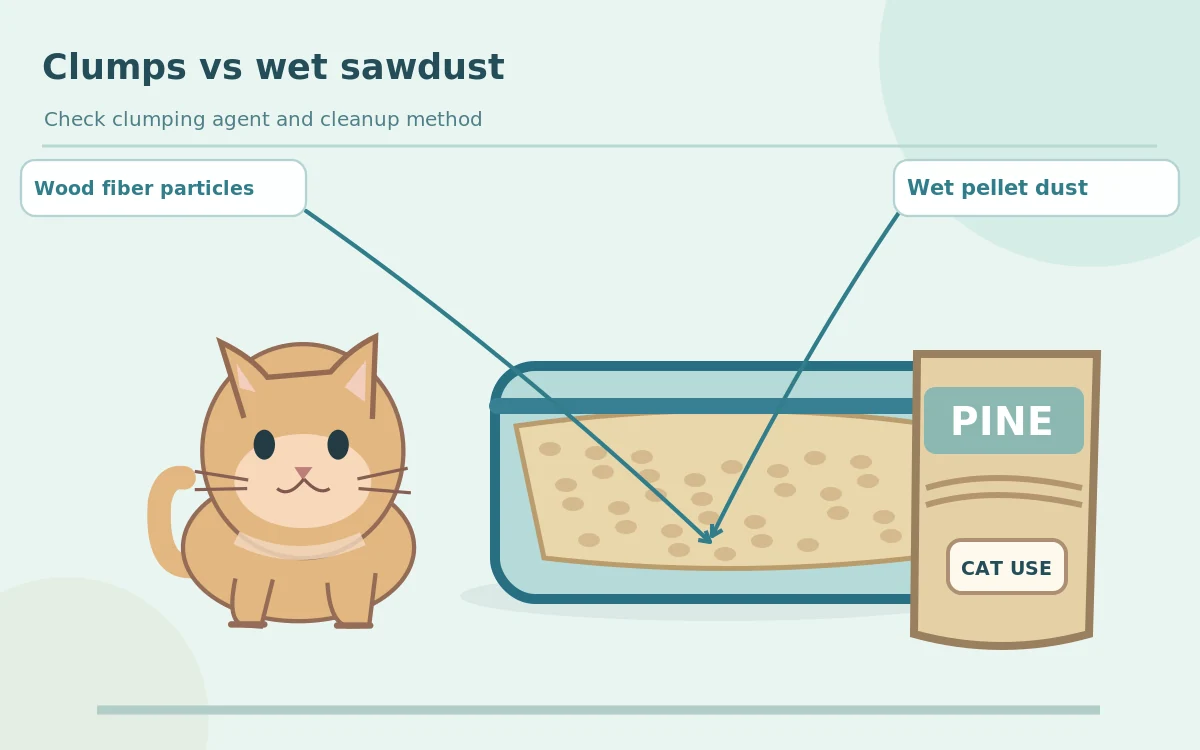
Pine clumping cat litter is not the same thing as a sack of ordinary compressed pine pellets. Many traditional pine pellets absorb urine, then break into loose sawdust; specially formulated clumping pine litter contains added material that helps urine form scoopable clusters. For example, Feline Pine describes a pine-and-clumping-agent formula, whereas its original non-clumping pellets are designed to break down when wet. Before switching, compare what you actually need to scoop, how the litter feels under paws and whether a cat already accepts wood-based litter.
Identify the formula rather than trusting the pine label
Look for the literal ‘clumping’ or ‘non-clumping’ statement and the ingredients or formulation details. ‘Natural,’ ‘plant-based,’ ‘pine scented’ and ‘wood’ are not substitutes for a clumping specification. Feline Pine’s own documentation describes a clumping option with a plant-derived clumping agent and mineral oil for dust control, and a distinct traditional compressed-pellet product that turns into sawdust. Those are manufacturer descriptions, not independent proof that either is best for all cats.
Wood-fiber clumpers may have a finer, more irregular particle structure than large rigid pine pellets; other products make their own distinctive shapes. Read the particular package because scoop slots, recommended layer depth and removal instructions may differ. The fact that pine appears in the name does not mean the litter consists of raw pine needles or essential oil. Do not add pine essential oil to a tray. If full ingredient and usage details are unclear, choose a better-documented cat-specific formulation.
| Feature | Pine clumping formula | Traditional pine pellet |
|---|---|---|
| Wet urine behavior | Forms scoopable clumps | Pellets typically become sawdust |
| Ingredient check | May include clumping agent | Compressed wood fiber |
| Scoop choice | Removes fragile urine clumps | Separates solids and used sawdust |
| Texture | Variable finer fiber/granule | Usually firm larger cylinders |
| Tracking | Depends on particle size | Pellets may scatter less before wet |
| Trial priority | Cat acceptance and clump quality | Cat acceptance and cleaning system |
Match cleaning habits to clumping behavior
For a clumping pine formula, follow the maker’s instructions for setting the litter depth, then remove feces and formed urine clumps regularly. Monitor whether the clumps hold together well enough to lift without leaving wet fragments behind. With a traditional non-clumping pellet, urine usually breaks down the pellets into sawdust, so cleanup follows an entirely different method. A scoop that works for large intact pellets may not be ideal for fragile clumps.
Do not assume all biodegradable labels permit toilet flushing. Local plumbing rules, sewage treatment, parasite concerns and the product label all matter; disposal in a sealed waste bag is generally simpler unless local guidance explicitly allows another route. Likewise, do not market clumping pine as dust-free: pouring and scooping can generate particles, especially near the bottom of the package. The real decision is whether the waste-removal routine works for your schedule without letting the tray become unpleasant.
- Read the exact label: confirm clumping, main ingredients and any added fragrance.
- Compare the recommended cleaning method with your scoop and tray design.
- Offer the new litter in a separate box rather than abruptly replacing every tray.
- Observe clump stability, dust, tracking and cat comfort over several days.
- Keep the new formula only if normal litter use continues and cleaning remains practical.

Check comfort before celebrating less plastic or less mess
Cats Protection explains that many cats favor fine, heavy, sand-like material. A cat may accept wood fibers yet avoid full-size pellets, or may already prefer a familiar clay texture. If you are changing from clay, offer a second tray with a small quantity of the pine clumper while retaining the preferred one. Watch entry, digging, elimination, time in the tray and repeated scratching at the floor. The pet’s willingness to use the box is more important than a plant-based marketing label.
An older cat with sensitive paws may prefer softer litter, while very young kittens require age-appropriate litter advice; Cats Protection recommends non-clumping litter for young kittens. Do not use a new scented product to cover poor cleaning habits. If the pine smell itself seems unpleasant to the cat, consider an unscented alternative in another material. The published explanation of digging and texture can guide how to interpret normal behavior.
Evaluate value as daily scooping time and acceptance
A practical product comparison can record clump integrity, remaining wet litter, dust while pouring, tracking near the mat, cat preference and frequency of a full box change. Compare a few days with a familiar option before purchasing a large supply. Claims like ‘twice the odor control’ or ‘lasts a month’ depend on conditions that may not match your household. Do not treat a clumping pine formula as identical to Q000091’s 30L bulk wood pellets just because both originate from trees.
Keep the litter in a dry location and follow the actual shelf and disposal instructions. If your cat repeatedly refuses the new tray, return to the established litter rather than forcing a trial for a full month. Never punish elimination accidents; medical and environmental causes need separate evaluation. The litter box troubleshooting guide offers a structured review if habits change. If urine output appears different, talk to your veterinarian promptly.
A brand-specific search such as “feline pine clumping litter” can find both the genuine clumping product and listings for traditional non-clumping pellets. Verify the exact package rather than relying on search thumbnails or user reviews alone. Manufacturer information is cited here to document the formulation, not as independent proof of performance. For alternate box placement and access, consult the published box setup guide.
When to Call Your Vet
If a cat avoids the box, seems painful while digging or changes urinary habits after the transition, contact the veterinary team. Straining to urinate with little or no output requires emergency evaluation. Never assume litter texture is the only possible cause.
How We Research
HubPet reviewed veterinary, animal welfare and relevant manufacturer documentation for this exact reader question. We distinguish verified manufacturer specifications from independent evidence and do not claim to have conducted proprietary tests. This article offers practical, observable decision criteria rather than medical diagnosis, hidden product rankings or paid endorsements. Read our editorial approach for more context.
Sources
Feline Pine — Product Formula FAQ — reference for product facts, safety or feline/dog welfare.
Feline Pine — Clumping Product Specifications — reference for product facts, safety or feline/dog welfare.
Cats Protection — Litter Types and Kitten Guidance — reference for product facts, safety or feline/dog welfare.
Cornell — Litter Texture and Toileting — reference for product facts, safety or feline/dog welfare.
The manufacturer distinguishes non-clumping pellets, which break into sawdust, from a separate Feline Pine clumping formula.
Formulas can include added clumping agents; the particular manufacturer ingredient list should explain the product rather than a generic assumption.
No. Performance depends on particle shape, pouring, the individual cat and the box; product claims need confirmation in your own setup.
Check compatibility in both product instructions. A sifting system designed for sawdust may not work well with formed clumps.
Very young kittens require age-appropriate advice; Cats Protection recommends non-clumping litter for young kittens. Ask your vet if unsure.