
Wood-pellet cat litter absorbs moisture and, in many non-clumping formulas, breaks into softer particles that need a different cleanup routine from clay clumps. The larger pellets may scatter less in some homes, but a hard texture or noticeable wood scent can make a tray uncomfortable for an individual cat. See the HubPet veterinary disclaimer for health and safety limits.
Use this guide to compare actual behavior at the litter box, not a label claiming that pellets are natural or universally superior. The key decision is whether your cat will enter, dig, turn, and use the tray comfortably while you can keep it clean with a reliable daily routine.
Check the exact pellet material and intended use
Choose a product specifically labeled for cat litter, not loose fuel pellets or treated wood from a workshop. Packaging should identify the material, intended purpose, additives, scent, and any instructions for use. A heating-fuel product may have different handling standards; a bag of unidentified pellets is not a safe substitute for pet litter.
Some cat-litter pellets come from processed softwood, while other wood products differ in grain and binders. Do not assume a green label guarantees suitability, low dust, or harmless ingestion. Keep the bag closed, dry and away from pets who chew objects. Ask a veterinarian if a cat persistently eats litter.
Understand what happens when urine reaches pellets
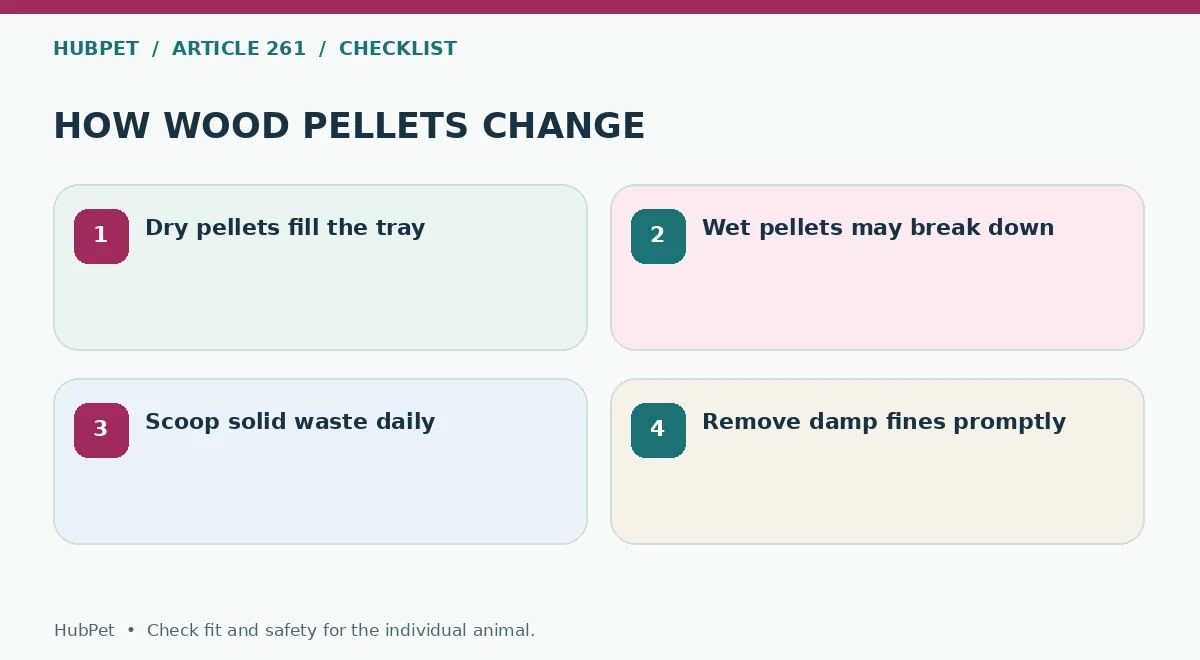
Many wood pellets swell and crumble into sawdust-like material after getting wet rather than forming a liftable clump. You may need to remove feces and collect damp breakdown material using a suitable scoop or sifter. Specific formulations behave differently, so follow their actual instructions instead of copying a clay litter routine.
Test your scoop against dry pellets and fine wet particles before filling a large tray. An oversized grid can let intact pellets fall through with waste; a very fine mesh can clog. The practical aim is to remove soiled material without dumping clean pellets back into the waste stream.
Match the texture to your cat’s paws
Large pellets feel different from soft, sand-like grains under paw pads. Professional feline guidance notes that pelleted litter can be uncomfortable for some cats, especially those with painful joints or tender feet. A cat standing on the rim or trying to avoid contact may be telling you the surface is unpleasant.
Offer an easy-entry tray and observe how your cat digs before and after eliminating. Do not force the animal into the pellets or block the exit. If a senior cat hesitates, restore familiar litter and discuss mobility or pain concerns with a veterinarian rather than assuming resistance is stubbornness.
Control scent without adding fragrance
Wood has its own odor, even when a package says that no perfume was added. A smell you find pleasant may be strong inside a litter box. Cats often favor unscented material, so the animal’s willingness to return to the tray matters more than the room fragrance detected by a person.
Avoid applying essential oils, deodorizer crystals, sprays, or fragranced powders to compensate for litter that needs changing. Clean the pan with mild unscented soap when appropriate, rinse and dry it, and locate the tray away from food and noisy appliances. These basics still matter with absorbent pellets.
Choose an open, roomy tray before accessories
Begin with a large low-entry open box that allows a comfortable turn and digging space. An enclosed hood may trap moisture and odors where the cat must stand. A specialized sifting tray is optional rather than proof the litter will work; some designs make thorough cleaning harder.
If you try a sifter, check that its slots separate the exact pellet size and crumb texture without pinching paws or leaving debris behind. Place the unit on a stable surface and keep the entrance clear. In multi-cat homes provide separate accessible boxes instead of concentrating every animal at one station.
Build a simple scooping and sifting routine
Remove feces promptly and check for damp breakdown material every day. Lift and remove wet material using the tool suited to the particular product, then restore a comfortable depth. Follow package instructions for full changes; wet sawdust left beneath dry pellets can create odors even when the upper layer looks tidy.
Keep a covered waste bin away from pets and wash hands after handling used litter. Empty and wash the tray on a schedule that matches visible soil and the manufacturer’s directions. The objective is a consistently dry, acceptable box, not an arbitrary promise of weeks without cleaning.

Compare dust and tracking as separate problems
Pellets may track differently from fine clay, yet broken-down wood particles can become fine dust during sifting or disposal. A product described as low-tracking is not automatically low-dust. Look at what happens during ordinary scooping and pouring without deliberately creating a cloud in a room occupied by pets.
Try a flat, washable mat that leaves a non-slip route out of the tray. Clean scattered particles with an appropriate vacuum or damp method rather than sweeping clouds into the air. If a cat coughs, sneezes repeatedly, or seems unwell, consult a veterinarian instead of attributing symptoms to a bag label.
Run a two-box preference trial
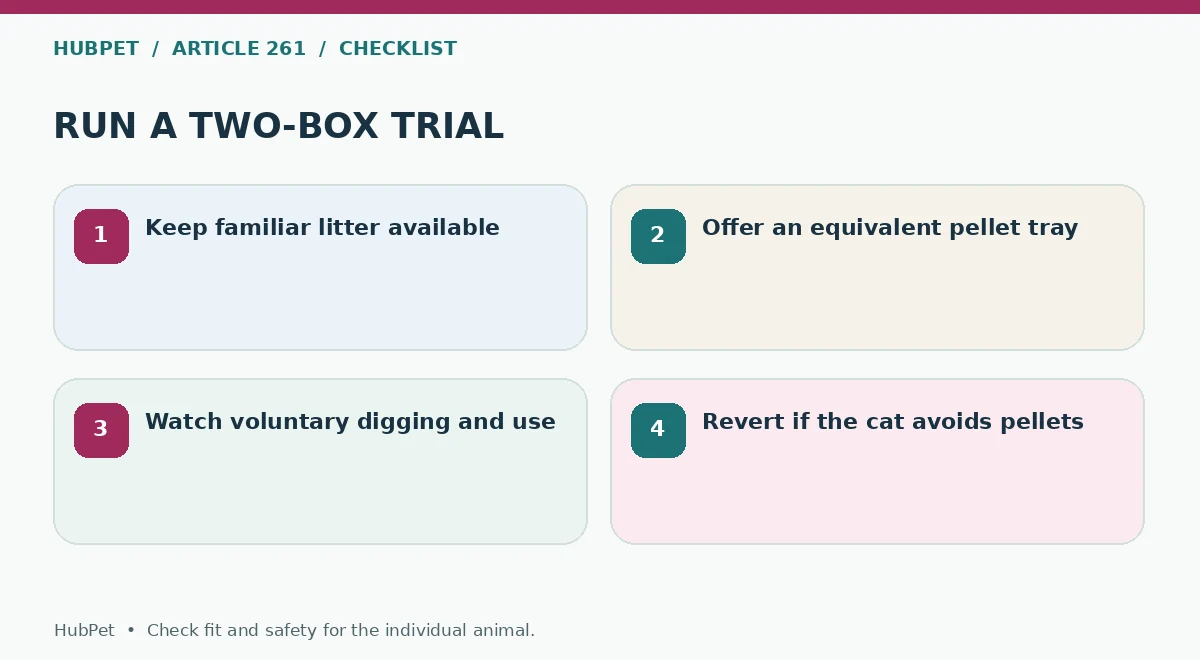
Place a familiar litter and the proposed pellets in two similar open boxes with comparable entry heights, cleanliness, and quiet locations. Allow your cat to choose freely over several days. Take notes on comfortable entry, digging, covering, and whether the animal returns rather than judging success from one visit.
Keep the preferred familiar option accessible throughout the trial. If your cat avoids the pellet tray, do not remove the alternative to make the change happen. Sudden house-soiling or repeated unproductive attempts to urinate can signal a medical problem and require veterinary attention, sometimes urgently.
Calculate total effort and real cost
Compare how much material is replaced per week, what goes into waste, how often the tray needs washing, and whether sifting creates an extra job. Bag weight alone cannot compare usable volume between clay granules and wood pellets; a low shelf price can hide frequent replacement and a higher handling burden.
Record actual household consumption for a short trial instead of extrapolating from packaging promises. Consider storage needs because moisture can affect unused pellets. A practical material must fit the cat’s comfort, your available time and the disposal options where you live.
Know when to switch back or seek help
The strongest reason to stop a pellet trial is a clear change in your cat’s behavior: reluctance, repeated accidents, painful-looking postures, or sustained avoidance. Restoring the familiar substrate is often a better first step than buying another accessory. Keep the tray accessible while investigating the cause.
Contact a veterinarian about new elimination changes, difficulty urinating, blood, apparent pain, or suspected litter ingestion. Pellet choice is a maintenance decision, not a treatment for illness. The safest setup respects feline preferences and lets you monitor urine and stool rather than concealing them.
How We Research
We checked this guide against the authoritative sources listed below on October 26, 2026. We reviewed practical differences, safety limits, and relevant home conditions rather than drawing conclusions from brand advertising. Specifications, warranty policies, and device capabilities change; check the manufacturer’s current manual. We did not purchase, laboratory-test, rank, or endorse individual products. Where a pet has pain, skin concerns, or fear, seek individual veterinary advice. See our approach at About HubPet.
Sources
ASPCA: Litter Box Problems. Accessed October 26, 2026.
AAFP and ISFM: Guidelines for Diagnosing and Solving House-Soiling Behavior in Cats. Accessed October 26, 2026.
ISFM and AAFP: Cat Friendly Veterinary Environment Guidelines. Accessed October 26, 2026.
Many non-clumping wood pellets break into fine material when wet rather than forming firm clumps. Check the individual formulation and cleaning directions.
No. Some cats dislike the scent or coarse texture, and painful paws may make pellets especially unpleasant. Offer a familiar alternative.
Choose products specifically intended and labeled as pet litter; do not substitute unidentified fuel or treated wood materials.
Not necessarily. Slot size and pellet breakdown differ. Confirm that the tray captures damp fines and remains easy to clean.
Offer a choice between a familiar litter tray and a similar pellet tray. Watch voluntary use and seek veterinary help for sudden elimination changes.