
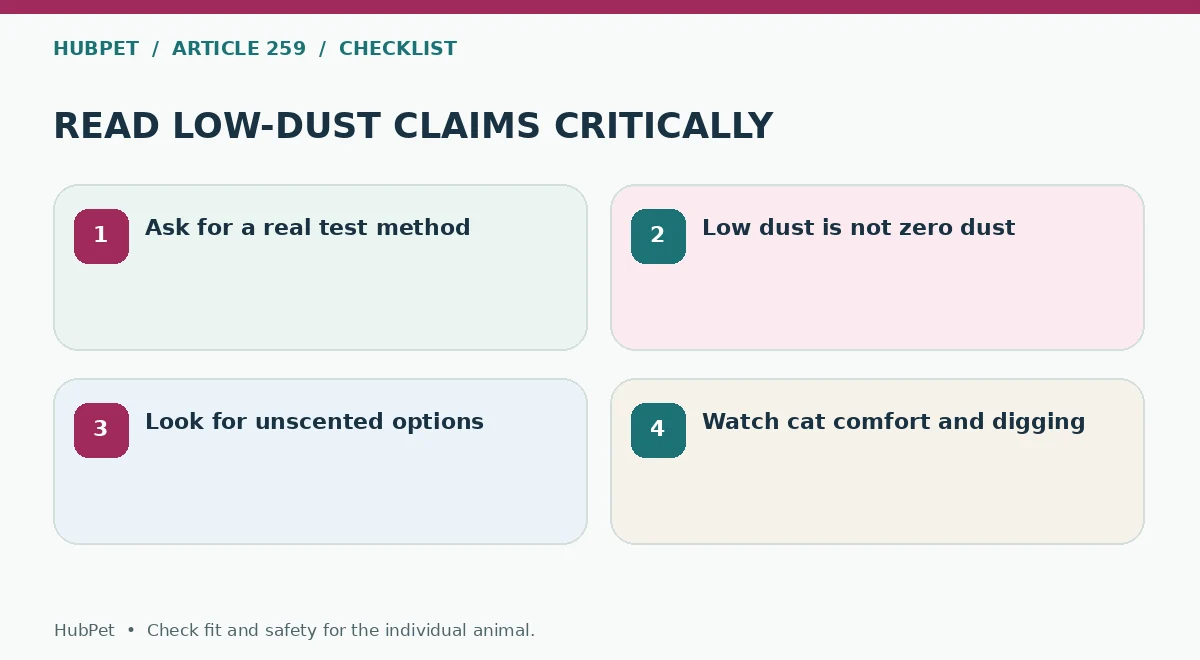
A low-dust litter claim can sound reassuring, especially when a cat sneezes near the box or a person notices a cloud while refilling it. Yet the package may not say how dust was measured or whether the result applies to pouring, digging, or scooping. Low-dust does not mean zero-dust, and it does not establish that a formula will prevent asthma symptoms or allergies. See the HubPet veterinary disclaimer for health and safety limits.
Instead of trusting a badge, compare particle release under normal use, fragrance, paw texture, and how easily the household can maintain the pan. This guide provides an observational checklist, safer cleaning habits, and clear boundaries for veterinary or human medical advice.
Define what low-dust claims can and cannot tell you
Dust is made of small particles that become airborne when litter shifts. A percentage such as ninety-nine percent dust-free is difficult to interpret without a described test method, particle-size cutoff, baseline, and independent verification. Marketing numbers do not tell you how much material your cat may breathe.
Treat a clear method and accessible test description as more meaningful than an unsupported label. Observe dust during the actual tasks you perform at home, but do not conduct exposure experiments around a cat with breathing difficulty. A household comparison cannot diagnose respiratory disease.
Compare the dust from pouring and from digging
Some materials release a visible cloud when poured from height; others produce finer particles later as granules rub together. Different litter depths, scoops, and pan styles can change the plume. Litter that looks clean when new may create more fines after days of repeated digging.
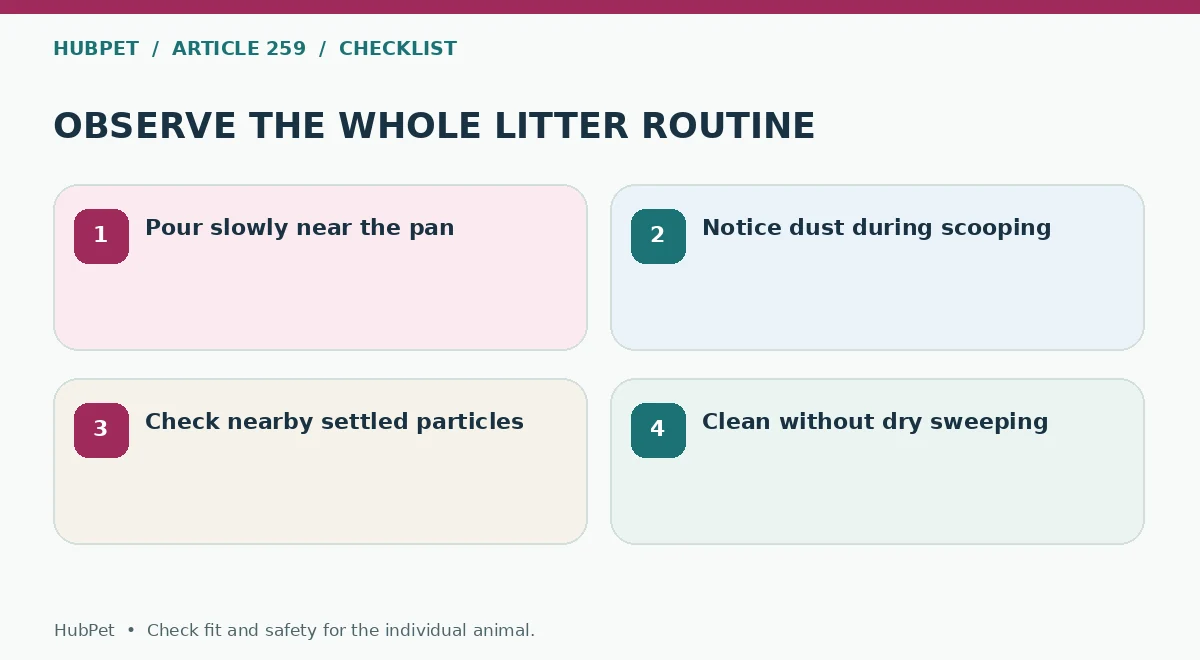
Pour gently from close to the bed while the cat is elsewhere. Watch in consistent light and note whether particles settle on nearby surfaces. Revisit the box during routine cleaning. Do not shake a bag or deliberately raise dust to test a claim; minimizing unnecessary exposure is the safer approach.
Choose unscented over odor-masking perfume
A heavy fragrance is not a substitute for removing waste. Cats have sensitive preferences, and strong odors may discourage them from entering a pan. Products that promise deodorizing power can still release dust or contain perfumes that a household finds irritating.
Start with a truly unscented option when possible, especially if a cat has an established preference for it. Avoid powders or room sprays added to the litter without veterinary guidance. Improving ventilation and a consistent scooping schedule makes more sense than masking an overlooked mess.
Look at granule texture and paw comfort
Pellets and larger pieces can create less visible dust in some formulations but may feel less pleasant on sensitive paws. Fine granules often match feline digging preferences, yet some fine materials can produce airborne particles. The tradeoff is individual rather than a universal ranking of clay, paper, wood, or plant products.
Check whether the cat can dig and cover waste calmly. Watch for balancing on the rim, leaving immediately, or refusing to enter. If paw pain or arthritis is possible, ask a veterinarian for guidance; a comfortable low-entry pan may matter more than a material advertised as hypoallergenic.
Separate tracking from airborne dust
A mat may capture granules carried on paws, but it cannot guarantee cleaner air. Tracking depends on granule size, foot fur, pan height, and the route out of the box. Loose litter spread across the hallway is a different measure from particles hovering near the pan.
Use a flat, washable, non-slip mat that does not frighten the cat or block an exit. Keep the area clean with methods that capture dust rather than scatter it. Do not add a textured obstacle that a stiff or elderly cat must jump over to reach the toilet.
Make cleaning less dusty for humans and cats
Scoop with slow controlled motions, seal waste in a container, and follow local disposal rules. When replacing litter, remove the cat from the room, empty the pan carefully, and clean with mild unscented soap before drying. Avoid dry sweeping clouds of fine dust back into the air.
People with respiratory conditions should discuss protective measures with their clinician. A low-dust label cannot replace medical care. Keep supplies and dust bins away from curious pets, and never mix litter with household chemical cleaners or harsh fragrances.
Avoid assuming a covered pan fixes air quality
A lid may conceal tracking and dust from the person standing nearby while trapping smells or making entry less appealing to the cat. Many cats prefer open boxes and a clear view of approaching pets. A filter on a hood is not proof of safe air quality for the animal inside.
Assess ventilation and the cat’s behavior instead. A roomy open tray in a quiet, accessible location may be easier to maintain and monitor. If you choose a hooded design, preserve another open option and watch for avoidance rather than expecting the cat to adapt.
Compare two formulas without changing everything
Offer two similarly sized pans with comparable depth and location, one holding familiar litter and the other a candidate low-dust formula. Keep scents out of the comparison and scoop both. Note pouring dust, visible residue nearby, tracking, and which pan the cat chooses voluntarily.
Observe over enough ordinary days to see repeat use. If the cat avoids the trial pan, do not force a switch just to meet a household dust goal. A litter that works for the person but fails the cat’s toilet needs is not an acceptable solution.
Know what to do when sneezing or wheezing occurs
An occasional sneeze near a dusty task does not establish an allergy diagnosis. Persistent coughing, wheezing, labored breathing, or changes in activity require veterinary attention. Open-mouth breathing or obvious respiratory distress in a cat is an emergency and needs immediate veterinary care.
Do not attempt to treat respiratory signs by repeatedly changing litter without medical advice. Share observations about substrate, room conditions, and symptom timing with the veterinarian. Similarly, people who have asthma should follow their own clinician’s guidance.

Balance dust, comfort, cost, and waste
Compare the entire experience: litter price, depth needed, how often it breaks down, how it smells after scooping, and how much cleanup the room demands. Bag weight alone does not predict dust. A lightweight material may still scatter, and a heavy formulation is not automatically low-dust.
Choose the option your cat uses confidently and your household can keep clean. Keep the familiar backup available during any transition. The goal is reliable toileting with sensible exposure reduction, not a promise that a single product eliminates all particles or allergy triggers.
How We Research
We checked this guide against the authoritative sources listed below on October 26, 2026. We reviewed practical differences, safety limits, and relevant home conditions rather than drawing conclusions from brand advertising. Specifications, warranty policies, and device capabilities change; check the manufacturer’s current manual. We did not purchase, laboratory-test, rank, or endorse individual products. Where a pet has pain, skin concerns, or fear, seek individual veterinary advice. See our approach at About HubPet.
Sources
ASPCA: Are You Allergic to Your Pet?. Accessed October 26, 2026.
ASPCA: Litter Box Problems. Accessed October 26, 2026.
VCA Animal Hospitals: Different Types of Cat Litter. Accessed October 26, 2026.
VCA Animal Hospitals: Cat Behavior Problems: House Soiling. Accessed October 26, 2026.
No. Many labels lack a disclosed test method, and dust can arise during pouring, digging, or cleaning. Reduced visible dust does not mean zero exposure.
Do not treat packaging claims as medical advice. Ask your veterinarian about the cat’s respiratory needs and seek prompt care for persistent breathing symptoms.
No. Fragrance and airborne particles describe different features. Look at both, along with texture, tracking, and whether your cat chooses the litter.
A cover does not establish safer breathing air and can trap odors or discourage some cats. Prioritize a roomy, clean, accessible pan.
Offer a familiar box beside an alternative with similar depth, scoop consistently, and watch voluntary use. Stop the trial if avoidance or distress develops.