
A new puppy checklist works best when it answers a practical question: what must be ready before the puppy arrives, and what can wait until you know this individual’s size, chewing habits, and comfort level? The first 48 hours are about predictable access to water, appropriate food, a secure resting place, safe bathroom opportunities, and calm human support. They are not a test of how many products you bought. Choose one easy-to-clean room where someone can supervise and prepare a short list of the people responsible for feeding, toileting, and nighttime outings.
Choose one safe base room
Start with a kitchen corner, family room, or another space that can be closed off with a suitable gate. Move cleaning products, medications, power cables, shoes, batteries, trash, string, and swallowable decorations outside reach. Block narrow gaps behind appliances and check for houseplants that are toxic to dogs. Secure balcony and window access, even for a small puppy that seems unable to climb. Sit on the floor to inspect at puppy eye level. Make sure any gate has safe spacing and a mounting method appropriate to its location; a freestanding barrier may be unsuitable near stairs.
Place the four essentials where they make sense
Set fresh water in a stable washable bowl; place food bowls away from the sleeping spot; create a comfortable, uncluttered rest area; and keep an exit route ready for bathroom trips. If using a crate or pen, introduce it positively rather than shutting the puppy in for a long first session. Pick up dangling collars or leashes during unsupervised crate rest because they can catch on hardware. Keep an absorbent cleanup kit for accidents but store cleaners out of reach. A marked storage basket for treats, bags, wipes, and spare towels saves time when a puppy needs an immediate outing.

Buy essentials that fit today, not imagined adulthood
Choose a properly fitting harness or collar, a lightweight leash, an appropriately sized crate or pen, washable bowls, the puppy’s familiar food, safe supervised chew toys, waste bags, and basic grooming supplies. Check manufacturer sizing instead of using only breed labels: your puppy may grow quickly and change shape. A bed with decorative buttons or loose filling may be a poor first choice for an enthusiastic chewer. Skip electronic training gadgets, giant toy bundles, and special supplements unless a veterinarian advises otherwise. Keep receipts for items whose size or material you may need to exchange.
Write a calm arrival plan
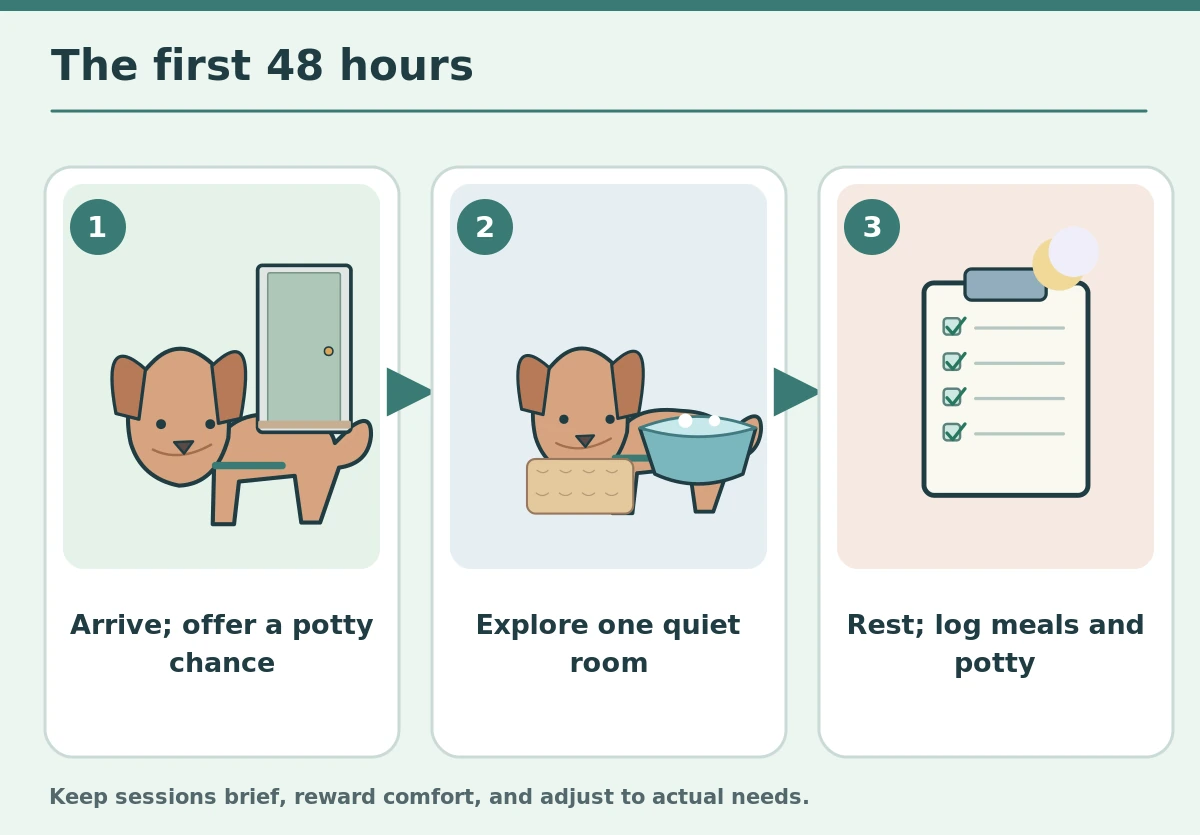
On arriving home, offer a bathroom opportunity in a suitable designated place, then introduce a limited area rather than touring the whole house. Let the puppy investigate at their own speed with people seated nearby. Avoid a parade of visitors, loud games, and repeated handling by excited children. Explain that sleeping, retreating, or moving away are normal choices. If you have other pets, prepare separate spaces and gradual supervised introductions instead of assuming immediate friendship. Take a picture of your puppy’s identification information and keep the breeder or rescue’s feeding and medical instructions accessible.
Create a real-world veterinary and safety folder
Collect the puppy’s vaccination, deworming, microchip, and adoption or breeder records; arrange an initial veterinary appointment and ask about local infectious-disease risks and safe socialization locations. Store the vet’s phone number, emergency clinic details, and poison-contact information in your phone. Ask the vet which outdoor routes are appropriate before vaccinations are completed. Familiarizing the puppy with the car or carrier should be gradual and safely restrained, not an excuse for long, stressful trips. Do not guess medications, supplements, or feeding amounts from a generic online chart.

Assign every human a job
A short written household schedule prevents ‘I thought you took the puppy out’ accidents. Decide who handles the first morning potty trip, meals, fresh water, short play sessions, quiet breaks, cleanup, and the overnight plan. Agree on simple consistent words for going outdoors and rewarding calm behavior. Keep treats small and use the puppy’s own food when possible. Children can help prepare supplies under adult supervision but should never be left responsible for managing a puppy’s chewing, confinement, or contact with other animals. An agreed routine matters more than a perfect printed schedule.
Use a first-day rhythm instead of constant stimulation
Build the day around bathroom breaks after waking, eating, drinking, and active play, with plenty of naps in between. Take the puppy to the same permitted bathroom area and reward success immediately. If they do not go, return indoors to direct supervision and try again soon; don’t turn the outing into a long, exciting tour. Expect sleep, sniffing, and quiet exploration to take up much of day one. An overwhelmed puppy may hide or become mouthy even in a loving home. Lower the demands rather than labeling the behavior defiant.
Prepare the first night without unrealistic promises
Keep the sleep area within earshot so you can respond to legitimate needs. Offer a final calm bathroom opportunity, dim household activity, and let the puppy settle in a space they have explored positively. Young puppies often need overnight outings; make them quiet, brief, and focused on toileting before returning to rest. Do not punish crying or leave a visibly distressed puppy to panic. Check for discomfort, thirst, temperature, or a need to eliminate. If the puppy is persistently inconsolable, vomiting, or unusually lethargic, contact a veterinarian rather than assuming ordinary adjustment.
Log three observations for the first two days
Track eating and drinking, bathroom successes and accidents, and sleep or stress patterns. A simple line for each meal and outing reveals gaps more clearly than a detailed color-coded planner. Note the texture and frequency of stool without assuming it has one simple explanation; prolonged diarrhea, repeated vomiting, blood, or marked lethargy warrants veterinary advice, especially in a young puppy. Record how the puppy responds to household sounds, handling, and visitors so you can plan gentler future exposures. Share the log among caregivers and adjust the routine together.
Avoid three common first-week traps
First, do not provide unsupervised access to the entire house because a puppy has been calm for an hour. Second, do not treat a crate as a place for punishment or expect it to replace adequate toileting and human interaction. Third, avoid exhausting play and crowded introductions to ‘socialize quickly.’ Socialization should be safe, positive, and adapted to veterinary guidance. Reward curiosity and voluntary engagement; make unfamiliar sights, people, and sounds manageable. A checklist is useful when it creates safer choices, not when it pressures the puppy to meet arbitrary milestones.
Do a five-minute end-of-day reset
Wash bowls, check the rest space for damaged fabric or loose objects, restock waste bags, clear any accident areas according to cleaner instructions, and confirm tomorrow’s caretaker plan. Put away chewed or damaged toys. Adjust barriers as the puppy becomes more mobile: a gate that worked on day one may be climbable next week. Save one quiet moment to notice progress, such as choosing a mat or accepting a short handling session. The best setup is adaptable and gives the puppy safe ways to rest, learn, and ask for help.
How We Research
We compared AKC arrival-day, supply, and house-rule recommendations with AVSAB guidance on reward-based teaching. Our checklist prioritizes hazard reduction, a manageable home setup, and observations over purchases; it is not a substitute for your veterinarian’s vaccination or nutrition plan. Read About HubPet for our general editorial approach.
Sources
American Kennel Club — New Puppy Checklist: Read source. Reviewed October 27, 2026.
American Kennel Club — First Day at Home With a New Puppy: Read source. Reviewed October 27, 2026.
American Kennel Club — How to Create House Rules for Your New Puppy: Read source. Reviewed October 27, 2026.
American Veterinary Society of Animal Behavior — Humane Dog Training: Read source. Reviewed October 27, 2026.
Safety note: This puppy care and training guide cannot replace individual veterinary advice. Seek veterinary care for illness, painful elimination, suspected ingestion, or significant ongoing distress. Read our veterinary disclaimer.
A safely puppy-proofed supervision area matters more than any single accessory. Combine it with food, water, a suitable rest space, a bathroom plan, and reachable veterinary contact information.
Usually start with one secure area and expand access gradually under supervision. This makes it easier to notice hazards, toilet signals, and signs of stress.
Arrange an initial appointment promptly and follow the guidance from the breeder, rescue, and local clinic. Bring the existing medical record and ask about vaccination and socialization safety.
No. Choose an easily cleaned, appropriately sized rest surface that suits the puppy’s chewing behavior. Remove loose fabric or filling if the puppy tries to ingest it.
Note meals, water access, bathroom trips, accidents, sleep, and unusual symptoms. A short shared log helps caregivers provide consistent opportunities and identify concerns.