
Puppy plush toys typically suit gentle carrying, comfort, or light interactive play, not prolonged destructive chewing. A soft animal-shaped toy can help a puppy practice picking up and releasing an object, but its safety depends on the individual puppy’s mouth habits. Some pups cuddle or carry fabric; others immediately tear off ears, noses, or stitching. Start with a clear use case—brief supervised play or a quiet carry toy—and avoid buying only for how cute it looks on a shelf. The ideal choice is simple, appropriately sized, and easy to inspect.
Check size, weight, and shape together
A toy that disappears entirely into the puppy’s mouth is too small, while an oversized plush may be awkward to carry. Look at the body shape as well as advertised dimensions: thin tails, dangling limbs, and removable accessories can create small-part risks even on a large toy. A compact, broadly rounded form with few appendages is often easier to check. Avoid heavy weighted filling or decorative beads that could spill if the seam opens. Reassess size frequently as the puppy grows, particularly when the dog develops a stronger chewing style.
Prefer secure embroidery over loose ornaments
Inspect the face closely. Embroidered eyes and noses remove the separate hard buttons sometimes found on decorative stuffed animals, but the thread still needs to remain intact. Tug lightly on ears, felt patches, ribbons, and tags to see whether anything shifts or frays. Do not give a puppy a child’s plush toy without examining its construction and manufacturer guidance; it may contain plastic beads, wires, batteries, or decorations unrelated to pet use. Skip suction cups, bells, or fragile plastic accessories attached to soft toys. The simpler the surface, the fewer parts to monitor.

Find the main seam and stress points
Gently spread the fur where the torso meets the head and limbs. Look for an even closure with no visible filling or long loose loops. A toy with an opening along its belly or neck is vulnerable if a puppy grabs that edge. Feel the stuffing area for hard objects or crunchy material you cannot identify. Even a well-sewn plush cannot withstand every chewing style, so plan to inspect it after each game. Do not rely on a claim that seams are ‘reinforced’ if the toy begins to split under normal play.
Treat stuffing as a hidden hazard
Many plush toys contain polyester fiberfill, squeakers, or other materials that a puppy must not swallow. If a seam opens, remove the toy before the puppy can extract the contents. Do not assume tiny pieces will pass harmlessly. AKC warns that dogs who consistently destroy stuffed toys may be better served by another toy type. If your puppy ingests filling, thread, a squeaker, or a detached part, call a veterinarian promptly, especially if the amount is uncertain. Avoid trying to induce vomiting without veterinary instructions.
Introduce a new toy at the puppy’s pace
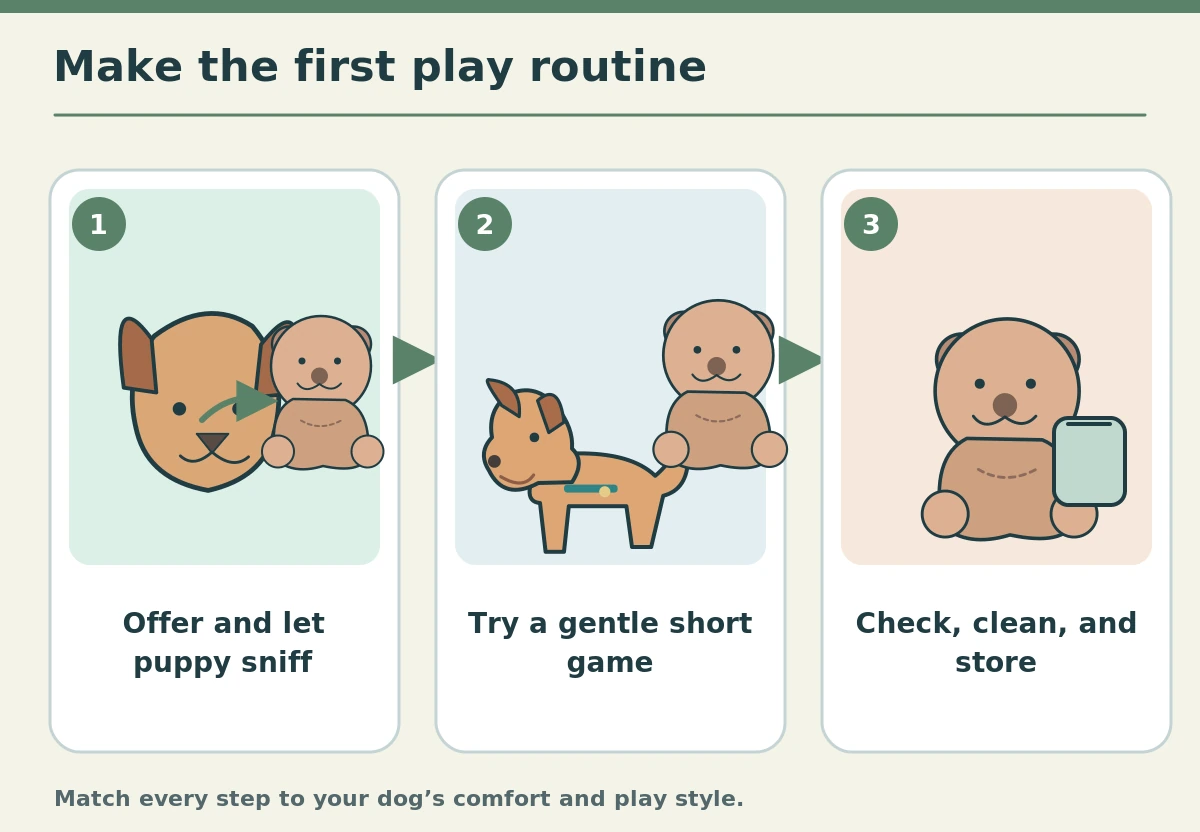
Place the plush on the floor and allow a voluntary sniff. Praise a relaxed approach, then offer a short, gentle carry or exchange game rather than shaking it in the puppy’s face. If the puppy seems worried by a squeak or unfamiliar texture, give space and use another object. Reward returning or releasing the toy, and end before frantic chewing begins. Positive, predictable play builds practical handling skills without forcing contact. Do not use the toy to tease the puppy into nipping at hands or clothing.
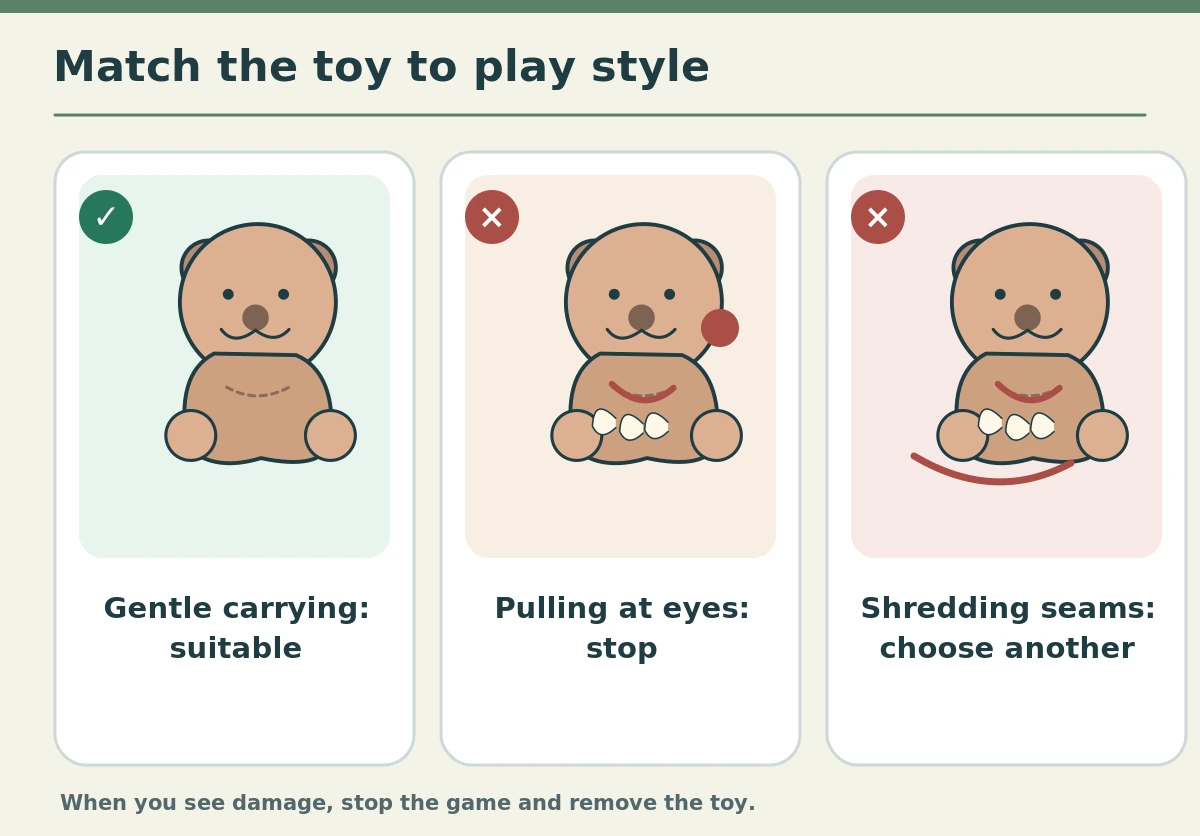
Separate chewing needs from comfort play
Puppies often explore the world with their mouths, but a stuffed toy may not be a suitable outlet for vigorous teething or shredding. If the puppy repeatedly attacks seams, choose a veterinarian-approved, size-appropriate chew toy designed for supervised mouthing instead. Very hard chews also have dental risks, so do not simply replace a soft toy with the hardest option available. Provide different safe activities for gentle carrying, food-based enrichment, and chewing as appropriate. The right rotation depends on what actually happens during play, not the puppy’s age alone.
Make the sleeping-area decision separately
A plush that works during a supervised living-room game is not automatically appropriate for an unattended crate or sleeping area. If the puppy chews fabric, swallows objects, or becomes entangled with long attachments, leave the soft toy outside while you cannot observe. Choose bedding and crate rules around the puppy’s real behavior and veterinary guidance. Do not place battery-operated comfort toys with accessible compartments into an unattended space. Early supervision provides evidence about whether the dog can handle an item safely; it is not a guarantee of future behavior.
Choose cleaning that protects the toy structure
Read the product care label. Many simple plush designs are washable, but some contain squeakers, electronics, special filling, or adhesives that require specific cleaning methods. After washing, dry the toy fully and check that seams remain tight, eyes stay intact, and filling stays smooth and concealed. A damp interior can become unpleasant, and a damaged toy should not return to play just because it looks clean. Keep a backup appropriate toy available while the first is drying, rather than offering a still-wet toy from the laundry.
Watch for signs of stress and overexcitement
A comfortable puppy may sniff, carry, drop, or briefly chase the plush with relaxed posture. A puppy who becomes frantic, grabs skin instead of the toy, or guards it from approaching people may need a calmer interaction and professional advice. Never punish a puppy for releasing late or guarding an object. Teach voluntary trades with food or another valued toy, and keep the session easy enough to succeed. If behavior changes abruptly, consider discomfort or illness and consult a veterinarian rather than assuming the toy is the cause.
Use a simple decision rule to keep or retire
After each supervised play period, check the face, attachment points, fabric, and major seams. Keep the toy if it is fully intact and the puppy uses it gently. Put it away if the puppy is turning toward destructive chewing, and retire it for visible filling, loose decorations, exposed squeakers, or significant fraying. As chewing strength changes, consider whether a plain fabric carry toy still fits the dog’s needs. One good soft toy and a consistent inspection habit are more useful than a bin of damaged plush animals.
How We Research
We used AKC and American Humane guidance on size, small parts, and inspection, then applied ASPCA ingestion principles to stuffing and fabric. We did not laboratory-test construction, evaluate a manufacturer, or assess the needs of an individual puppy. For our site-wide standards, see About HubPet.
Sources
American Kennel Club — A Guide to Toy Shopping for Your Pup: Read source. Reviewed October 27, 2026.
American Humane — Choosing Safe Toys for Pets: Read source. Reviewed October 27, 2026.
ASPCA — Position Statement on Dog Chews and Treats: Read source. Reviewed October 27, 2026.
VCA Animal Hospitals — Behavior Management: Enrichment and Activity Toys: Read source. Reviewed October 27, 2026.
Safety note: General product information is not veterinary advice. If your dog may have swallowed a toy fragment, or shows pain, choking, or sudden distress, promptly contact a veterinarian or emergency service. See our veterinary disclaimer.
Purpose-made puppy plush toys can be suitable for gentle supervised play when properly sized and intact. Decorative children’s toys may have small parts or filling that are not appropriate.
Embroidery avoids a separate hard button or bead, but stitching can still loosen. Inspect the face and seams every time and remove any toy showing damage.
Not automatically. A puppy that shreds or swallows fabric should not have plush within reach while unattended. Base crate choices on observed behavior and veterinary advice.
Remove the toy immediately and discard it. If filling or another part the puppy might have swallowed, contact your veterinarian promptly instead of waiting for symptoms.
Follow the maker’s care instructions and wash when soiled. Dry it thoroughly and reinspect every seam and attachment before returning the toy to supervised play.