
This guide provides general educational information, not veterinary diagnosis or treatment. A cat straining to pass urine with little or no output needs emergency veterinary care immediately; do not wait or assume constipation. See the HubPet veterinary disclaimer.
New litter box cat won’t use is a common frustration after changing to a covered, automatic or high-sided tray. The useful first question is not how to make a cat obey. It is what changed: entry height, floor area, scent, noise, texture, privacy or position. For an otherwise well cat, a side-by-side choice is gentler and more informative than removing the old box overnight. However, new house-soiling and any change in urination also deserve veterinary attention.
Do a before-and-after audit of the two trays
Compare the old box and the new one from the cat’s viewpoint. Can the cat turn around without touching the walls? Is the opening narrow or high? Does a hood trap odor or create an exit that another pet can block? An automatic unit may vibrate or cycle unexpectedly. Record which features changed and which you can reverse without buying anything. Cats Protection advises keeping familiar litter when a kitten or adult cat moves homes; the same principle helps when the container changes.
If your cat still uses the original tray, leave it available. Place the replacement nearby if there is enough room for separate access, but do not block a path or create a corner trap. Put the same familiar litter at the usual depth in the trial tray. Avoid switching the tray, litter brand and location on the same day because you will not know which factor caused avoidance.
| What changed | Why it may matter | Gentle test |
|---|---|---|
| High front entry | Difficult step or joint pain | Offer low-entry version |
| Hood or flap | Trapped odor or restricted view | Remove cover and flap |
| Scented litter | Unfamiliar strong smell | Return to familiar unscented litter |
| Automatic cycle | Unexpected motion or sound | Disable while cat acclimates |
| New room | Busy or blocked approach | Offer accessible quiet location |
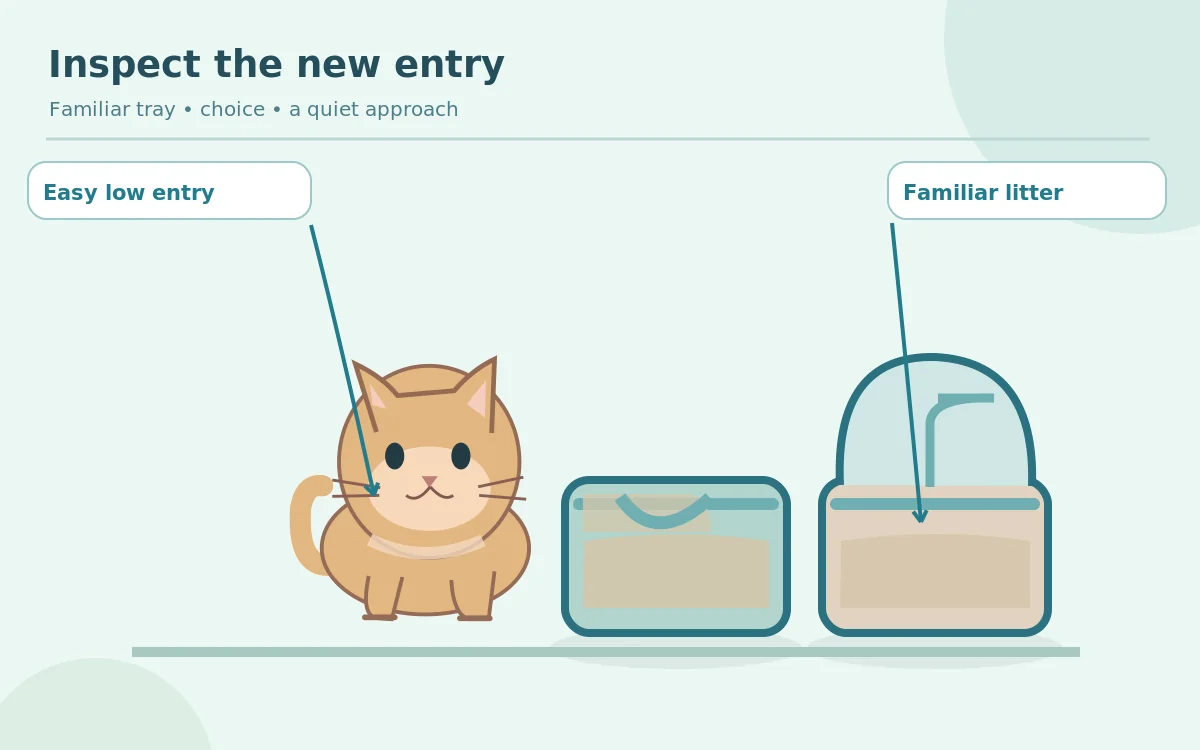
A calm seven-day choice-based transition
During the first two days, keep both litter boxes clean and available. Allow the cat to investigate the replacement without carrying the cat into it or holding it there. Scoop both and quietly note which tray the cat chose for urine and feces. Days three and four are observation days: if the cat voluntarily uses the new tray, continue without fanfare; if not, try changing only one variable, such as removing the hood or lowering the entrance.
On days five through seven, continue offering choice and checking that use remains comfortable. This is a troubleshooting schedule, not a promise that every cat will convert in one week. If a cat shows stress, stops passing urine, strains, or begins house-soiling suddenly, stop the transition and contact a veterinarian. Never withdraw the familiar usable box merely to force the issue; you are trying to preserve reliable toileting, not win a contest.
- Keep the old litter box in service beside the replacement when safe.
- Match the familiar litter and scoop both trays daily.
- Watch voluntary use without placing the cat into the new tray.
- Change only one problem feature at a time, using an open low-entry trial if needed.
- Keep a log and ask a veterinarian about persistent new accidents or urinary signs.
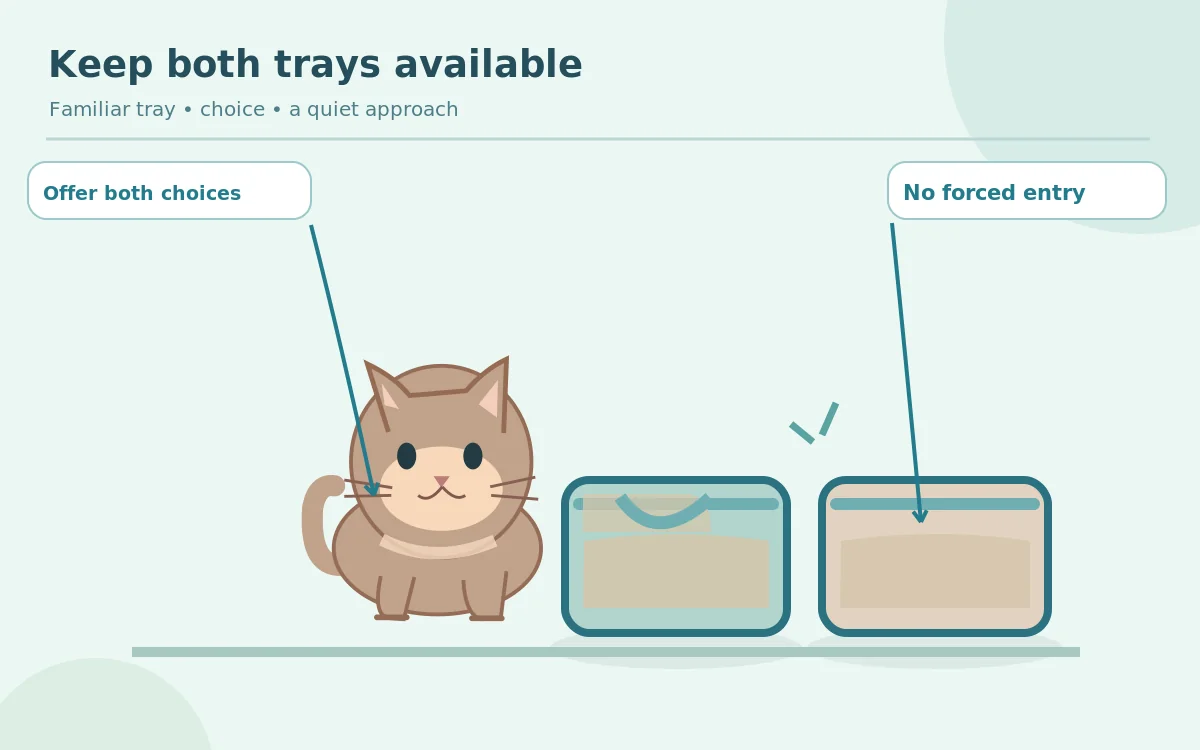
Use a preference test rather than random upgrades
Offer an open rectangular box and the original tray with matched familiar litter to test tray design. If the cat accepts neither new container, test litter texture separately with two similar open boxes. Many cats prefer soft, unscented granules; Cats Protection and Cornell describe the importance of maintaining familiar substrate. A cat with sore joints may find a low cutaway entry easier than a high-walled fashionable tray.
Place litter boxes away from feeding stations and loud laundry appliances. The approach should be visible and free of dogs or other cats guarding access. A change in the toilet location can be as important as a change in the box itself. Our published litter-box location guide explains how to choose a calm accessible spot rather than hiding every tray behind furniture.
Common mistakes that make avoidance last longer
Do not scold accidents, rub a cat’s nose in a puddle or move its paws through the litter to demonstrate digging. Such handling can make the tray feel unsafe. Avoid strongly scented deodorizers, fragranced litter and harsh box cleaners. Keep a self-cleaning product turned off until your cat accepts it and the manufacturer’s instructions allow safe acclimation; never assume a kitten meets the device’s age and weight limits.

If accidents persist after a veterinary evaluation and a stable trial setup, collect a written log of where the cat goes and which tray was available. Ask the veterinary team about a qualified feline behavior professional when social tension, fear or avoidance remains. Further choice often works better than adding more gadgets; the goal is consistent comfortable elimination, not a particular brand of box.
There is no evidence-based countdown after which it becomes safe to remove a useful familiar box simply because you bought a replacement. Some cats prefer separate trays for urine and feces. If the new box is smaller, noisier or harder to reach, the right outcome may be keeping the old one. A second tray is especially practical in multi-cat homes where another cat might block the first.
When to Call Your Vet
Seek immediate emergency veterinary care if the cat repeatedly strains to urinate and little or no urine appears. Contact your vet promptly for sudden house-soiling, blood, pain, abnormal stool, lethargy or a worrying behavior change. Cat behavior guidance does not substitute for veterinary assessment.
How We Research
HubPet checked the specific cat behavior and safety guidance linked below, compared environmental choices with veterinary warning signs, and avoided unsupported product superiority claims. The tables offer decisions a household can observe without diagnosing disease. Read HubPet’s editorial approach for our process. For individual medical concerns, ask your veterinarian to adapt these choices to your pet.
Sources
ASPCA — Litter Box Problems — referenced for animal-welfare guidance and safety limits.
Cats Protection — Toileting — referenced for animal-welfare guidance and safety limits.
Cornell — House Soiling — referenced for animal-welfare guidance and safety limits.
The new box may change size, entry, scent, sound, visibility or location. Offer the old tray alongside the new one and test variables gently.
No. Keep an already accepted option while assessing the replacement so the cat retains a safe place to toilet.
There is no fixed deadline. A week of observations can guide changes, but do not force an arbitrary switch.
Often the opposite. Many cats prefer familiar, unscented substrates; test a small choice rather than a sudden scented change.
Arrange a veterinary assessment for new house-soiling, and seek emergency help if the cat strains but produces little or no urine.