
This article is general information, not veterinary advice. If your pet seems unwell, is in pain or may have eaten something harmful, contact your vet or an animal poison control line right away. Read our vet disclaimer.
This guide provides general educational information, not veterinary diagnosis or treatment. A cat straining to pass urine with little or no output needs emergency veterinary care immediately; do not wait or assume constipation. See the HubPet veterinary disclaimer.
My cat keeps going to the litter box can describe a harmless visit to dig, a stressful environment, constipation or a dangerous inability to urinate. The number of visits alone cannot tell you which situation applies. First determine whether the cat passes urine. A cat straining repeatedly and passing little or none needs an emergency veterinarian immediately, especially when the cat is male. This triage guide directs action without attempting to diagnose a bladder condition.
The first question is urine output, not behavior
Look for a visible urine clump if the litter allows one, but do not spend time collecting perfect measurements when a cat appears distressed. Cornell describes difficulty, frequent attempts, crying and small output as lower urinary tract signs. These signs can reflect several conditions including urethral obstruction; an obstructed cat can deteriorate quickly. Call an emergency clinic immediately for repeated unproductive efforts, a painful tense posture or obvious distress. There is no reliable home maneuver to unblock a cat.
Owners sometimes mistake urinary straining for constipation because both involve crouching in the same tray. If you cannot tell whether the cat is trying to urinate or defecate, a veterinarian should assess the cat without delay. Never assume that seeing a few drops of urine excludes a partial or developing obstruction. Do not give human painkillers, use leftover antibiotics, press on the abdomen or try to express urine.
| Pattern seen | Risk level | Action |
|---|---|---|
| Repeated squat, no urine | Emergency | Go to emergency vet now |
| Drops, cries or blood | Urgent medical concern | Contact vet immediately |
| Large urine amounts, thirst change | Medical check needed | Arrange prompt examination |
| Digging with normal output | May reflect setup or habit | Document; vet check if new |
| Multiple cats, blocked entrance | Social access problem possible | Add separated trays after health check |

Distinguish frequent trips from large-volume urination
Repeated trips with tiny amounts and long periods of straining suggest a different pattern than large puddles and increased thirst, but both warrant medical evaluation. VCA notes that urinary tract signs can include blood, pain and excessive genital licking. A cat that drinks markedly more or floods the tray may need evaluation for a metabolic or kidney problem; these are possibilities for a clinician to investigate, not diagnoses inferred by a website.
Watch for other clues you can report by phone: appetite, energy, vomiting, visible blood, crying and the last confirmed urine. If safe, note whether the cat enters the box calmly, digs and leaves, or repeatedly crouches without result. Sharing a brief timeline can help the veterinary team triage urgency. Avoid bringing a frightened cat repeatedly to the tray to see if it will perform; that adds stress and does not help.
- Check whether urine is actually being produced; do not delay if the cat appears distressed.
- Call an emergency veterinarian for straining with little or no urine.
- Report the last observed urine, number of attempts and any pain, blood or vomiting.
- Follow veterinary instructions; never press on the abdomen or give home medications.
- Only after medical clearance, review tray access, hygiene and cat-to-cat conflict.

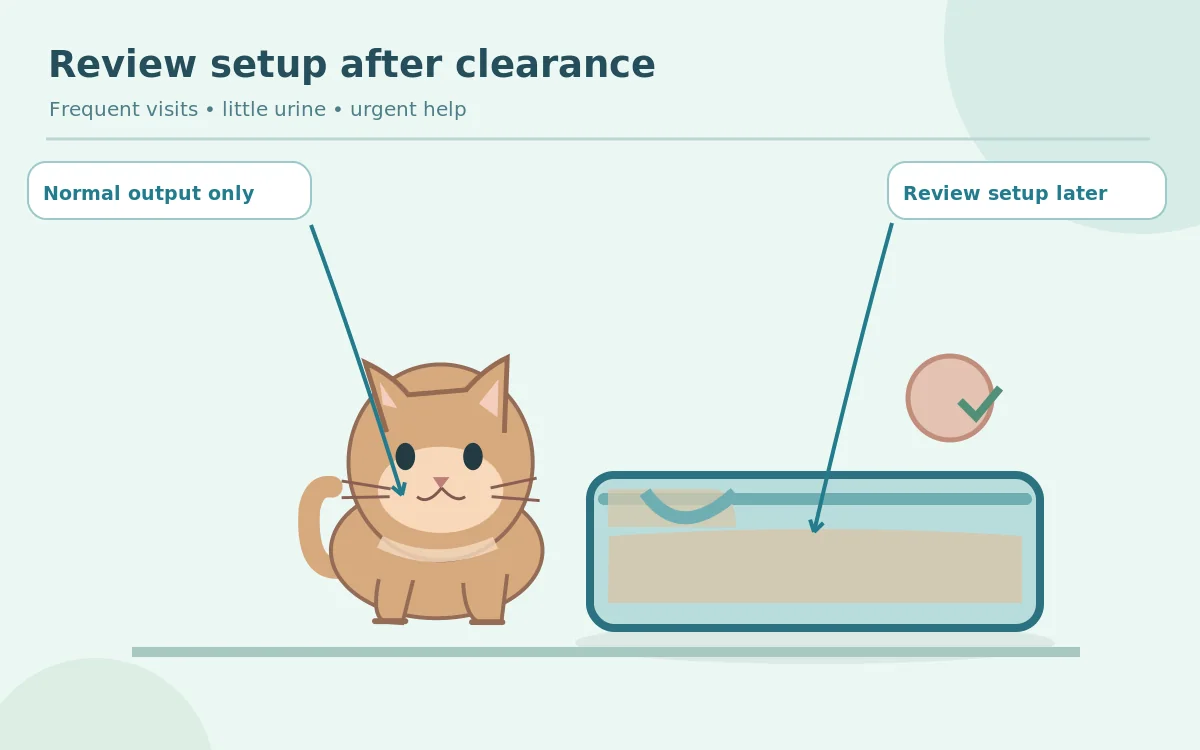
Once a vet has cleared a urinary problem, consider the environment
Cats sometimes visit, dig and leave if a tray smells strong, the entry feels uncomfortable or another pet blocks the route. Check for a cover, limited space, clutter or a location close to a noisy machine. The ASPCA recommends large clean boxes, unscented litter, safe placement and approximately one box per cat plus one extra. A confident cat might investigate a box during a household change without eliminating each time.
Environmental improvements do not replace medical checks. A previously healthy cat can have both stress and a lower urinary tract disorder. Provide clean fresh water and normal access to litter boxes while arranging professional care, but do not treat water access or a different litter as emergency treatment. Our general litter-box behavior guide applies only after a veterinarian has addressed urgent medical signs.
Make a useful record without delaying care
If the veterinary team advises routine monitoring rather than immediate evaluation, keep a simple log of visits, confirmed urine output, visible blood, stool, eating and drinking. Count actual eliminations separately from investigatory visits. Write down any sudden changes in litter, diet, visitors or relationships between cats. In a multi-cat home, a camera aimed at the tray entrance may help identify which cat uses it, but avoid trapping or frightening animals.
Seek re-evaluation promptly if symptoms intensify or do not follow the expected course. A cat with repeated visits after previous urinary treatment should follow its veterinarian’s written relapse instructions. This page cannot distinguish cystitis, obstruction, stones, infection and other causes remotely. Always prioritize the cat’s condition over confirming whether a new litter-box product will solve the problem.
A cat may crouch near the box but leave without using it, or appear to visit repeatedly because several cats share a single tray. Neither observation rules out illness. The safest household decision is to keep litter access easy while obtaining professional advice. Never confine a symptomatic cat alone to “teach” correct toilet use. If a clinic requests transport, use a secure carrier with familiar bedding and call the veterinary clinic for immediate arrival instructions.
When to Call Your Vet
Seek immediate emergency veterinary care if the cat repeatedly strains to urinate and little or no urine appears. Contact your vet promptly for sudden house-soiling, blood, pain, abnormal stool, lethargy or a worrying behavior change. Cat behavior guidance does not substitute for veterinary assessment.
How We Research
HubPet checked the specific cat behavior and safety guidance linked below, compared environmental choices with veterinary warning signs, and avoided unsupported product superiority claims. The tables offer decisions a household can observe without diagnosing disease. Read HubPet’s editorial approach for our process. For individual medical concerns, ask your veterinarian to adapt these choices to your pet.
Sources
Cornell — Lower Urinary Tract Disease — referenced for animal-welfare guidance and safety limits.
VCA — Cystitis and Lower Urinary Tract Disease — referenced for animal-welfare guidance and safety limits.
ASPCA — Litter Box Problems — referenced for animal-welfare guidance and safety limits.
Some cats are investigating a box, but repeated trips can signal painful urination or obstruction. Confirm urine output and seek veterinary help.
A few drops do not reliably exclude urinary obstruction. Repeated straining with little output warrants emergency assessment.
The signs can look similar to owners. If unsure what the cat is straining to pass, contact a veterinarian urgently.
No. When visits are suddenly frequent or painful, rule out medical conditions before changing products or locations.
Male cats are at increased risk of urethral blockage, a potentially fatal emergency. Unproductive attempts need immediate veterinary care.