
This article is general information, not veterinary advice. If your pet seems unwell, is in pain or may have eaten something harmful, contact your vet or an animal poison control line right away. Read our vet disclaimer. My kitten keeps biting me during play, cuddling or while I walk through the room—what can I do? Biting is common in young kittens as they chase, grab, pounce and investigate with their mouths. It is not proof that your kitten is bad or trying to dominate you. The main task is to teach that toys, not human hands and ankles, are the exciting things to catch. Predictable play, timely redirection, short pauses and rest work better than loud reactions. Sudden severe biting with illness or pain signs needs veterinary attention, not a training experiment.
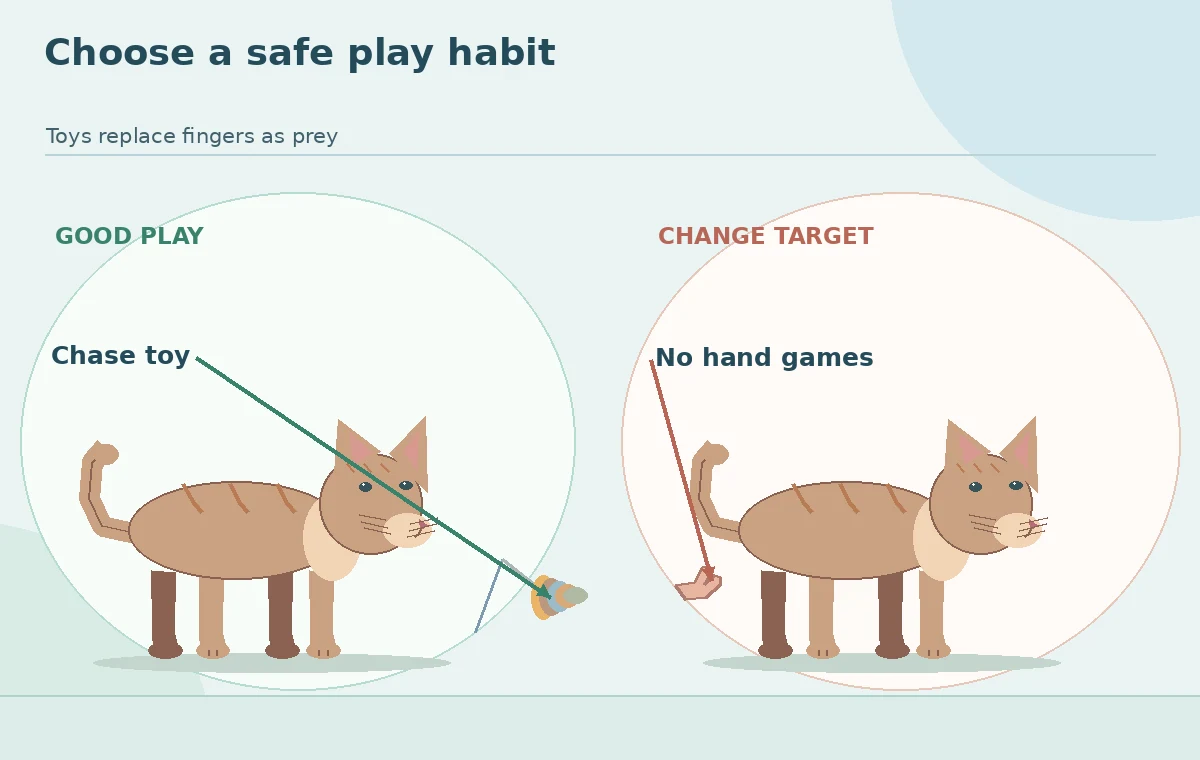
A simple starting routine is to keep a wand toy within reach, move it away from your body before the kitten locks onto fingers, allow a successful catch, then end the session gently. If teeth touch skin, keep movements controlled, pause contact and reset the game with an appropriate toy once the kitten settles. Do not roughhouse with bare hands. A kitten that gets plenty of appropriate hunting play may still need quiet sleep and a safe space away from overstimulation.
Why a playful kitten targets hands and feet
Kitten paws, teeth and sudden bursts of energy develop through normal play. Moving toes under a blanket are an irresistible target if a kitten has learned that chasing feet makes something interesting happen. Hands are particularly confusing when one household member wiggles fingers as bait and another dislikes biting. Young kittens also explore textures by mouthing, which makes it important to put away string, ribbon, electrical cords and anything small enough to swallow. A change in biting accompanied by hiding, vocalizing or reluctance to be touched is different from bouncy play.
| Pattern you see | Likely context | Best first response | Watch for |
|---|---|---|---|
| Ambushes bare ankles | Chasing moving prey-like targets | Use a wand or rolling toy away from feet | Escalation to hard injurious bites |
| Grabs fingers during cuddles | Hands have become play cues or petting lasted too long | Separate petting from play and shorten strokes | Pain or sudden touch aversion |
| Bites toys and chews household objects | Exploration, exercise or inappropriate objects | Offer supervised safe cat toys; remove hazards | Possible swallowing or inability to eat |
| Bites after a very busy play session | High arousal or fatigue | End early and offer a calm retreat | Stays highly agitated or fearful |
| Growls, limps or suddenly avoids touch | May be discomfort or illness | Stop handling; contact vet | Same-day clinical evaluation may be needed |
Make the toy more interesting than your body
Choose a wand toy that allows you to stand away from claws and teeth, and guide it across the floor like prey rather than shaking it directly against the kitten’s face. Allow short chases and catches so the kitten experiences a complete game. Put wand toys away after supervised use; string and ribbon can be hazardous if swallowed. A soft kicker toy can redirect grabbing and back-feet kicks without offering a human forearm. VCA and UC Davis advise avoiding hands and feet as toys and using structured play instead of punishment.

A repeatable six-step routine for your household
- Set up a clear play area without dangling cords or small swallowable parts.
- Start a brief wand-toy chase before predictable high-energy periods, such as early evening.
- Move the toy away from your body; reward the kitten for chasing and catching it.
- If the kitten mouths a hand, keep calm, avoid yanking or wrestling and pause attention safely.
- Resume only when calm, offering an appropriate toy at a distance rather than teasing bare fingers.
- End with the kitten settled and provide a quiet resting area; ask everyone at home to follow the same rule.

If your kitten is a keen foot attacker, consider socks, slippers and barriers while you retrain the environment; never let children become the chase toy. The HubPet article Why Cats Attack Feet focuses specifically on ankle ambushes. If the kitten becomes aroused by stroking rather than chasing, observe petting boundaries and see why cats bite during petting. These are different triggers, so a single one-size-fits-all command will not solve every bite.
What changes as your kitten grows?
| Approximate stage | Typical focus | Practical adjustment |
|---|---|---|
| Around 8–12 weeks | Exploration, handling, energetic play | Short frequent toy sessions; consistent no-hands play |
| Around 3–4 months | More confident climbing and stalking | Offer climbing spots and daily toy variety |
| Around 5 months | Fast chases and strong play preferences | Add predictable chase–catch–rest rhythm |
| Around 6–7 months | Adolescent activity and boundary testing | Refresh enrichment and calm interaction rules |
| Older kitten or adolescent | Individual style becomes clearer | Seek help if bites remain injurious or fearful |
Age is context, not a deadline. A five-month-old kitten biting ankles may simply need more structured play, while a much younger kitten suddenly rejecting touch may be unwell. Use kitten-safe puzzle feeders and sturdy scratchers appropriate to the animal’s size; avoid leaving interactive string toys unattended. Choose playtimes that fit the kitten’s waking periods instead of demanding long sessions when the kitten wants to rest. For broader age-specific changes, the dedicated kitten behavior guide in this queue is a separate future draft and is deliberately not linked here.
When to Call Your Vet
Call your veterinarian if biting is sudden, severe, paired with limping or mouth pain, accompanied by reduced appetite, or develops with hiding, persistent fear or unusual aggression. For repeated injurious bites, a qualified veterinary behavior professional can assess the circumstances and household setup. If a bite punctures human skin, cleanse the wound thoroughly and contact a medical professional; even small cat punctures may become infected. Never physically restrain or hit a struggling kitten as a response to biting.
A one-week tracking note that catches what works
Write down the time, what moved just before the bite, the toy you offered, whether the kitten caught it, and how quickly calm returned. A reduction in finger chasing and more toy-directed play are better measures than demanding that all mouthing disappear overnight. Also note tiredness, hunger and a noisy household, without assuming these are the cause. The HubPet guide to cat social grooming and safe boundaries helps explain why welcome affectionate contact needs a voluntary stop signal too. Over a week, change one part of the routine at a time so you can tell what helped.
How We Research
We based the training sequence on UC Davis veterinary behavior advice and VCA guidance against using human skin as prey. Kitten age stages are approximate and are not used to diagnose behavior. We distinguish normal hunting play from sudden pain-related biting and emphasize supervised toys and consistent household routines. Rather than an aversive correction technique, the guide provides a measurable play alternative and tells readers when to consult a clinician. For our editorial method, see About HubPet.
Sources
UC Davis School of Veterinary Medicine: Managing Your Kitten’s Rough Play; VCA: How to Deal With Kitten Biting; VCA: New Kitten Guide; ASPCA: Aggression in Cats. These are independent educational references, not personalized veterinary examinations.
Many kittens become more controlled as they mature, but teach toy-directed play now instead of relying on age alone.
Look for the context, offer an appropriate chase or kicker toy, pause attention when teeth meet skin and reinforce calm play.
Avoid startling or punishing the kitten. Calmly stop the interaction and make the alternative toy available.
Kittens explore and play with their mouths. Remove swallowable hazards and ask a vet about persistent unusual chewing or illness signs.
Seek veterinary input for sudden changes, pain or injurious attacks; consult a behavior specialist for persistent unsafe behavior.