
A dog waste station is more than a bag holder. In a shared apartment yard, small park, or managed pet area, it is a system of visible directions, accessible bag refills, a nearby closed bin, and someone responsible for service. A station with an empty dispenser or overflowing waste container can be worse than no station because it invites bags to collect on the ground. This guide explains how to choose a location, compare mounted components, schedule refills and trash collection, and reduce common misuse. Residents and property managers can use these ideas, not as a substitute for local building or accessibility codes.
Place the station where people naturally exit
Walk the likely paths from doors, parking, and pet exercise areas. A waste station should be visible near the end of a typical pickup route, not hidden behind shrubs or far from the place people need bags. Keep it outside the clear walking path, away from food areas, and out of a gate swing. Check that someone using a mobility aid can reach the dispenser and bin without stepping into mud. Sightlines and lighting matter more than an oversized sign. Ask the property owner about permitted placement and any required clearances before drilling into a post or wall.
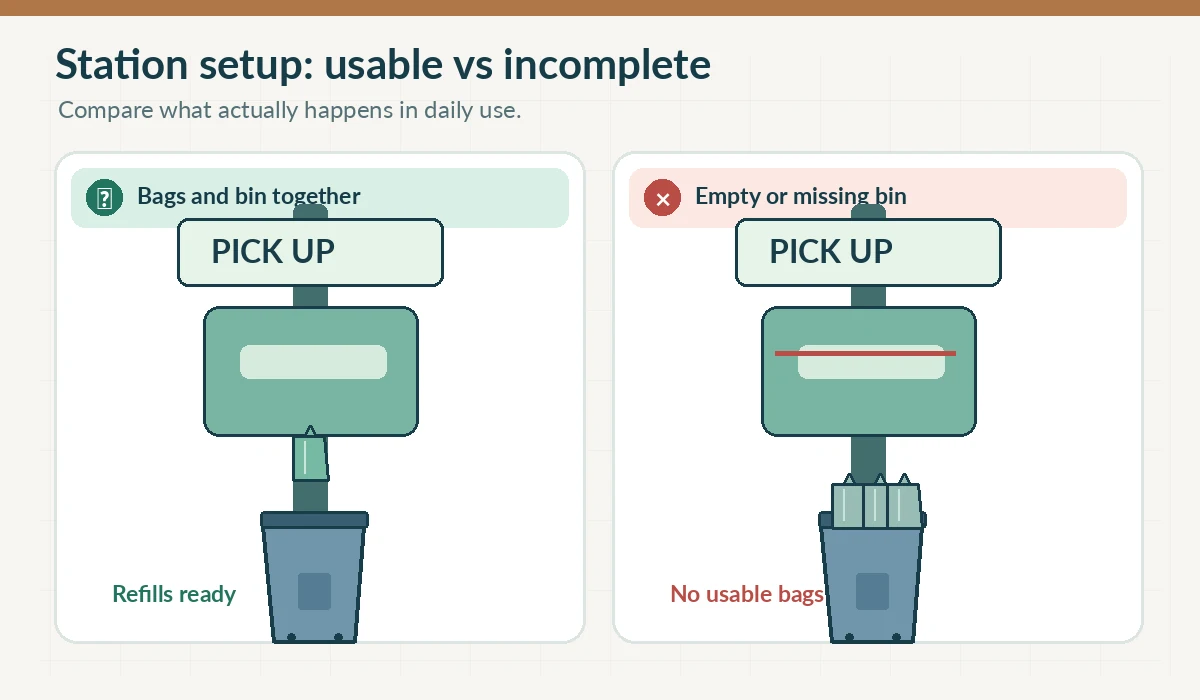
Pair bags with a nearby covered bin
A dispenser without a disposal destination may encourage people to leave tied bags nearby. Put the bin close enough to be obvious, while maintaining walking clearance and keeping it away from doors or seating. Choose a secure lid and stable base to discourage wildlife and tipping. A bin that is easy to remove and reline encourages regular servicing. Do not place the opening where children can touch waste. Bags and waste must go through locally accepted disposal routes; placing a station beside a storm drain does not turn it into an approved waste inlet.
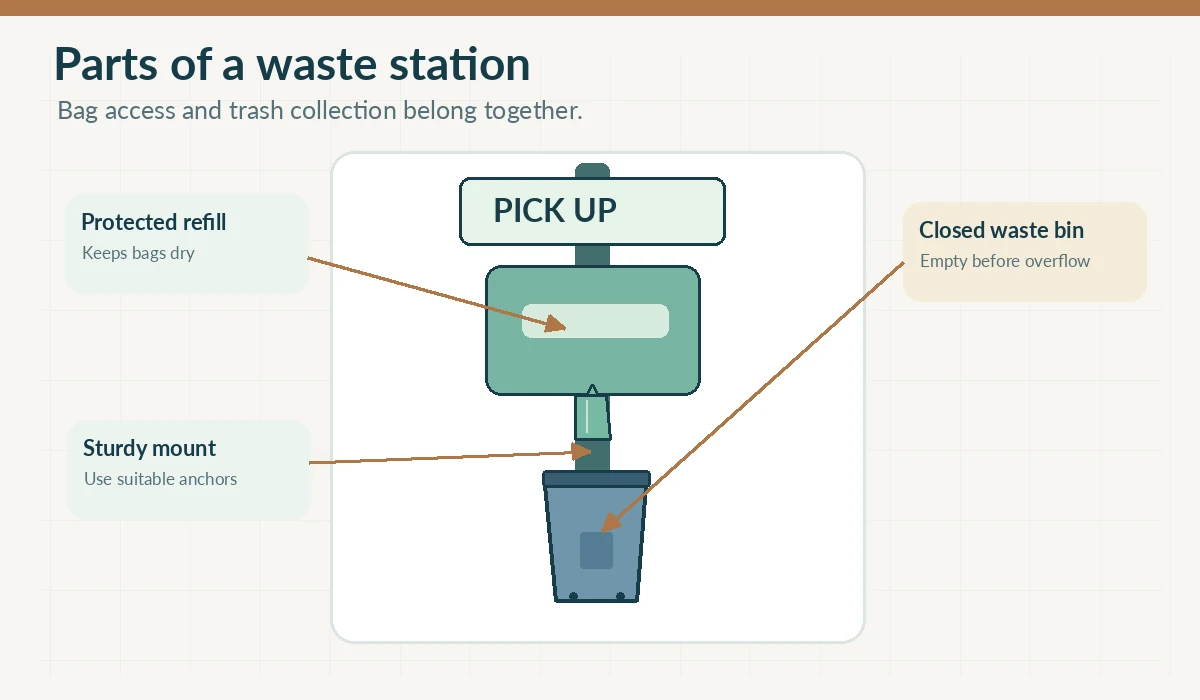
Compare post-mount and wall-mount hardware
A metal post can support both dispenser and bin where no suitable wall exists, but the foundation must resist wobbling, rust, and repeated opening. Wall-mounted dispensers can save floor space, provided the surface and anchors are appropriate. Avoid improvised screws into weak siding, utilities, or shared structures. Check for sharp protrusions, snagging corners, and bolts that can loosen. A station that rocks while someone pulls a bag may spill rolls or injure a user. Follow manufacturer installation guidance and have property maintenance review structural and accessibility requirements.
Choose a refill format people can use quickly
Look at how bags leave the slot and whether the next bag remains accessible. Roll dispensers can make refills simple if the format is common; folded or header-mounted bags can work well where rolls frequently jam. A protected opening helps limit rain damage, but there must be a practical way to inspect remaining inventory. Avoid sharp tear edges that shred bags. Stock the exact refill style recommended for the holder and test at least several pulls before walking away. Leave extra bags in a secure maintenance location, not scattered in an unlocked compartment where pets can reach them.
Design a service schedule before installing
Decide who checks the station, where the team stores replacements, and who handles overflowing bins on weekends or holidays. Begin with frequent inspections while you learn actual demand, then adjust the schedule based on usage. A checklist can record bag level, lid condition, liner fullness, litter around the base, and damage to fasteners. A public station is not self-maintaining, even if it has a large capacity. When service staff remove waste, they should use safe handling practices and wash hands. Post a contact method for maintenance requests without exposing private personal information.
Make signage simple and accurate
An effective sign tells users where to take a bag and where to put a tied, filled bag. Do not include claims that pet waste is safe for compost, mulch, or storm drains. Visual icons can help, but clear lettering should identify the bin. For multilingual properties, check whether residents need translated instructions. Keep signs legible in daylight and low light; people often miss small stickers behind the bin. Wording should invite responsible pickup rather than shaming dog owners. Clear communication works best when the station itself is clean and stocked.
Plan for water, weather, and animal access
Wind can blow loose bags onto lawns, rain can wet paper rolls, and sun can degrade weak plastic housings. Choose covered refill compartments and corrosion-resistant mounting suited to the actual site. Inspect for cracked lids, trapped water, exposed sharp edges, and chew damage. In areas visited by raccoons or other scavengers, secure the bin with an appropriate cover. Do not choose a location next to a sprinkler that repeatedly soaks the dispenser. Even a weather-resistant metal cabinet needs regular cleaning and may collect grime around the slot or hinges.
Measure success with real use, not appearance
Look for fewer uncollected deposits, fewer loose plastic bags, and a bin that rarely overflows. Track service reports separately from complaints about dog behavior; a full station cannot correct every owner’s habits. If bag stock disappears quickly, check actual use and theft or tampering before buying a larger cabinet. If the bin fills before scheduled collection, shorten the service interval rather than forcing waste into it. Use the data to move the station or add a second location when the footprint and maintenance budget allow. Avoid declaring a site clean based only on a newly installed sign.
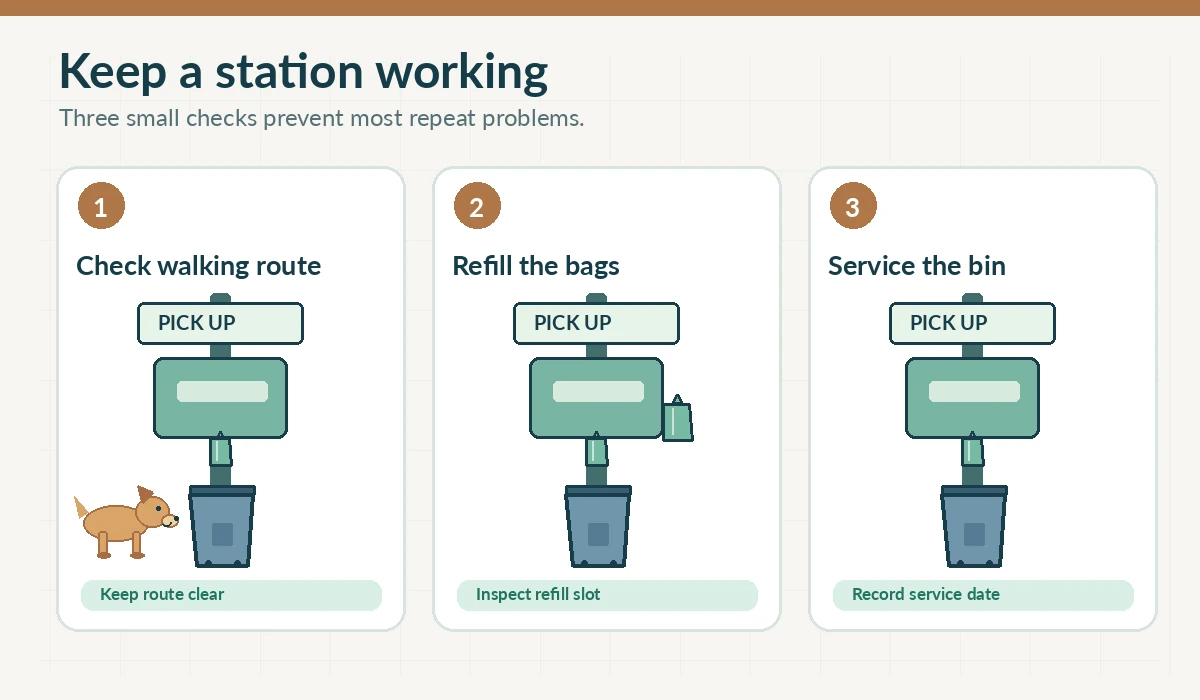
Run an installation and maintenance walkthrough
Before purchasing, confirm property permission, clear access, safe anchors, replaceable liners and compatible refills. Mount a sample dispenser and test its reach and bag feed with a real user. Verify that the bin lid closes with the liner fitted and that staff can empty it without lifting over an obstacle. Check trash collection rules and keep waste out of waterways. Assign a named maintenance role rather than assuming a neighbor will volunteer indefinitely. A modest, regularly serviced station is more useful than elaborate hardware that nobody can refill.
How We Research
We review public-health guidance, the actual functions of the tools discussed, and the practical disposal pathway before recommending a setup. Our checklist focuses on access, clean handling, failure points, and the difference between product claims and outcomes. We do not claim to have independently tested individual products, inspected local facilities, or verified a manufacturer’s unprovided performance data. Check current municipal rules and read our editorial approach. Sources reviewed October 28, 2026.
Sources
CDC, Ways to Stay Healthy Around Animals. Read the original guidance. Accessed October 28, 2026.
Philadelphia Water Department, Pet Waste = Pollution. Read the original guidance. Accessed October 28, 2026.
New York City Open Data, Canine Waste Dispensers. Read the original guidance. Accessed October 28, 2026.
Safety note: Pet feces may contain germs or parasites. Use appropriate waste containers and wash hands after cleanup. This article offers general product and hygiene guidance, not veterinary advice. Read our veterinary information disclaimer.
A clearly accessible, appropriate covered trash bin nearby makes correct disposal easier. A bag dispenser alone may invite litter.
There is no universal number. Walk the routes, note entry points and demand, and adjust locations based on access and service data.
No. Confirm permission and structural suitability, choose approved fixings, and avoid obstructing gates or accessible routes.
Start with frequent service checks and adjust for actual use. Empty bins before overflow and never leave a dispenser knowingly empty.
No. Storm drains are for runoff and may flow to local waterways. Dispose of tied waste through the approved trash service.