
Large cat beds vary wildly because manufacturers may measure the exterior edge, the usable inner cushion, or a flat piece of fabric before its bolsters rise. A bed described as XL can have less comfortable floor space than a plain mat with smaller listed dimensions. Watch how your cat sleeps: tight curl, side stretch, belly-up sprawl, or a combination. Note whether the cat likes to brace against a wall or leave paws hanging over the edge. A practical purchase begins with those habits and the clear sleeping area your cat needs, not with an arbitrary breed-specific promise.
Measure the usable area correctly
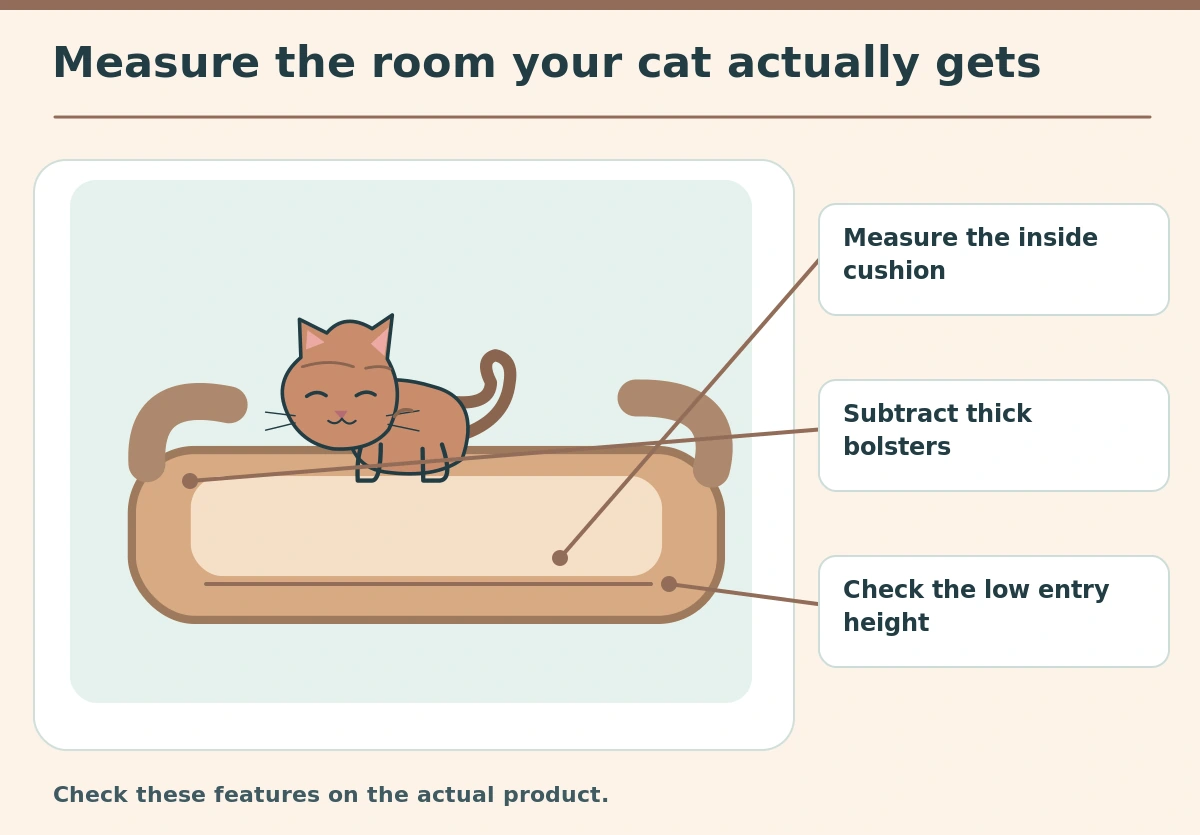
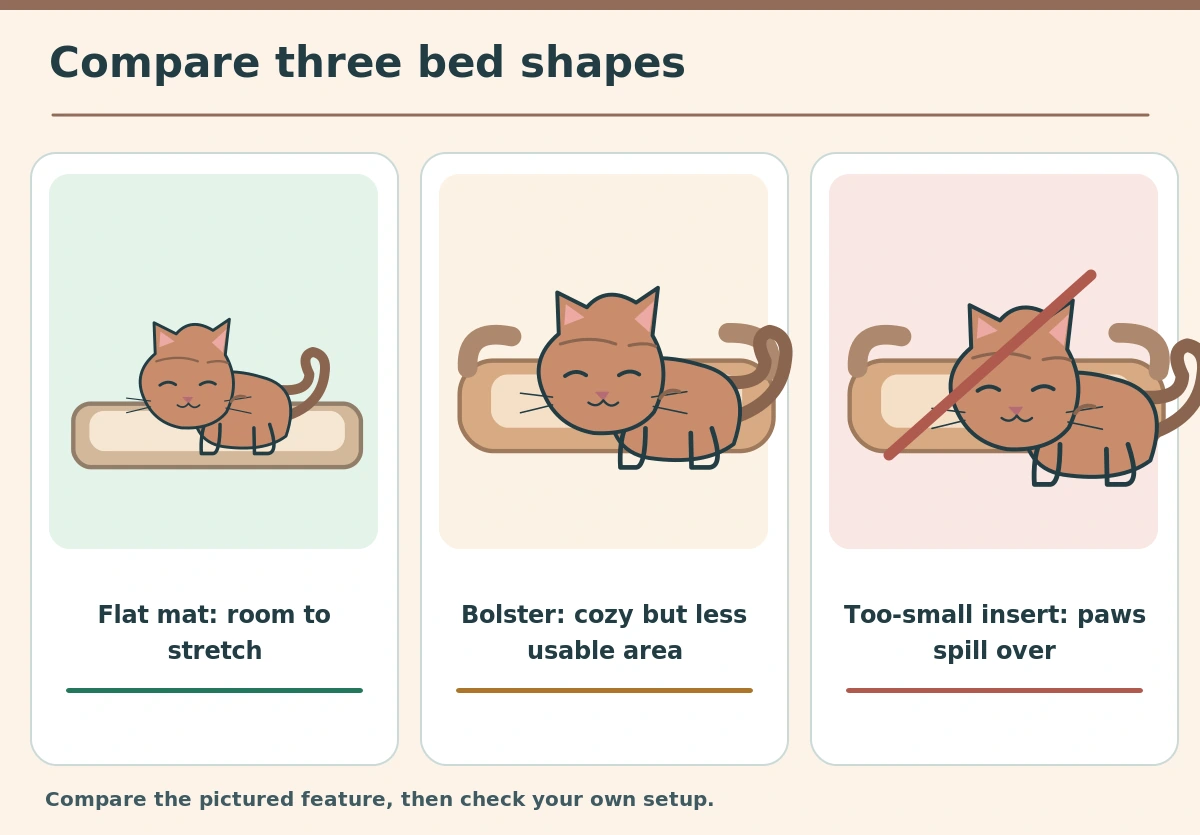
For a rectangular bed, measure the flat portion between the inner faces of its raised sides. For an oval or round bed, consider the clear width through the center and how much the cushion compresses when occupied. If shopping online, find a size diagram with both outside and inside dimensions; if none is offered, ask the seller. A thick roll can occupy a surprising share of a bed’s width. For a cat that stretches, compare the longest relaxed sleeping pose you have observed with the uninterrupted cushion, allowing practical repositioning room rather than forcing exact contact with the walls.
Check the sleeping position before the filling type
Some cats naturally fold into a compact loaf even when a big sofa is available. Others extend the front legs or change sides repeatedly during a nap. A deep doughnut-style bed may suit one posture and discourage another. Consider two inexpensive shapes rather than the biggest highly cushioned design: a broad washable mat for stretching and a separate small bolster for sheltered curling. Cats Protection describes a preference for choice among warm, quiet sleeping locations. Your cat’s behavior after trying the surface is more informative than a reviewer’s blanket description of the bed as universally supportive.
Evaluate the pad under load
When your cat lies down, the cushion should not abruptly flatten onto a hard frame or gather into uncomfortable lumps. Check whether the base pad is removable and whether its filling returns evenly after washing. Overstuffed bolsters sometimes tilt the whole bed or push the animal toward one edge. A supportive cushion does not have to be excessively thick; stable, even contact and easy turning matter. Avoid making orthopedic or pain-relief claims based only on foam labels. If a cat has mobility problems or apparent discomfort, veterinary guidance is more appropriate than trying to diagnose a need for special foam.
Do not overlook the entry height
Large beds often have high padded walls, decorative corners, or deep nests. A cat with stiff joints may reject such a bed even when the interior is spacious. Identify the lowest point of entry while the bed is placed on the floor; check that it does not shift when a cat steps over it. For a senior cat, consider a flat cushion or a low-front bolster with a non-slip route from favorite furniture. International Cat Care suggests modifying access to resting places for cats with compromised mobility. A giant bed placed high on a wobbly shelf is not an accessible upgrade.
Choose a base that stays where you put it
A slick underside can slide when a cat jumps or pivots, especially on smooth flooring. Test the grip in the intended room before leaving the bed in regular use. If it moves, place it on a stable non-slip area or choose a different construction rather than balancing it against fragile objects. Raised frames and wooden rims introduce pinch points and sharp edges that a plain fabric mat may not have. If your cat chews, inspect seams and closures routinely. Size cannot compensate for a poor surface, weak construction, or a dangerous location.
Plan the location before buying extra width
An oversized bed that blocks a doorway, heater vent, or litter access route may create more trouble than comfort. Measure the clear floor area where the bed will actually sit, and leave room for your cat to approach from a preferred direction. A quiet corner where the cat already relaxes usually deserves priority over an attractive photo spot. If you have more than one cat, consider several separated resting options so a confident cat cannot monopolize the only comfortable bed. Keep a familiar resting location available during any furniture change.
Think about washing a bigger cushion
A large removable cover may fit in a household washing machine, but a single oversized stuffed unit may not. Check the product’s care instructions, the dimensions of its removable parts, and whether drying the center is realistic. Damp filling left inside can become unpleasant and discourage use. Select durable tightly finished seams, a washable cover, and straightforward access to the pad rather than complex buttoned upholstery. Avoid beads, loose decorations, or foam exposed by torn stitching. Never return a newly washed bed until its inner cushion is dry.
Keep temperature options rather than one giant nest
Thick plush bolsters can retain warmth, which may be appealing during cooler periods and less appealing in a hot room. Cats can change sleeping locations as light and temperature change. Offer an open, cooler rest surface in addition to the large cushioned bed, especially in warmer seasons. Keep beds away from direct heater output and places where a cat could be trapped next to a heat source. You do not need to buy every seasonal variation; a washable light mat and a stable sheltered option may cover most preferences without crowding the space.
Run a seven-day fit check
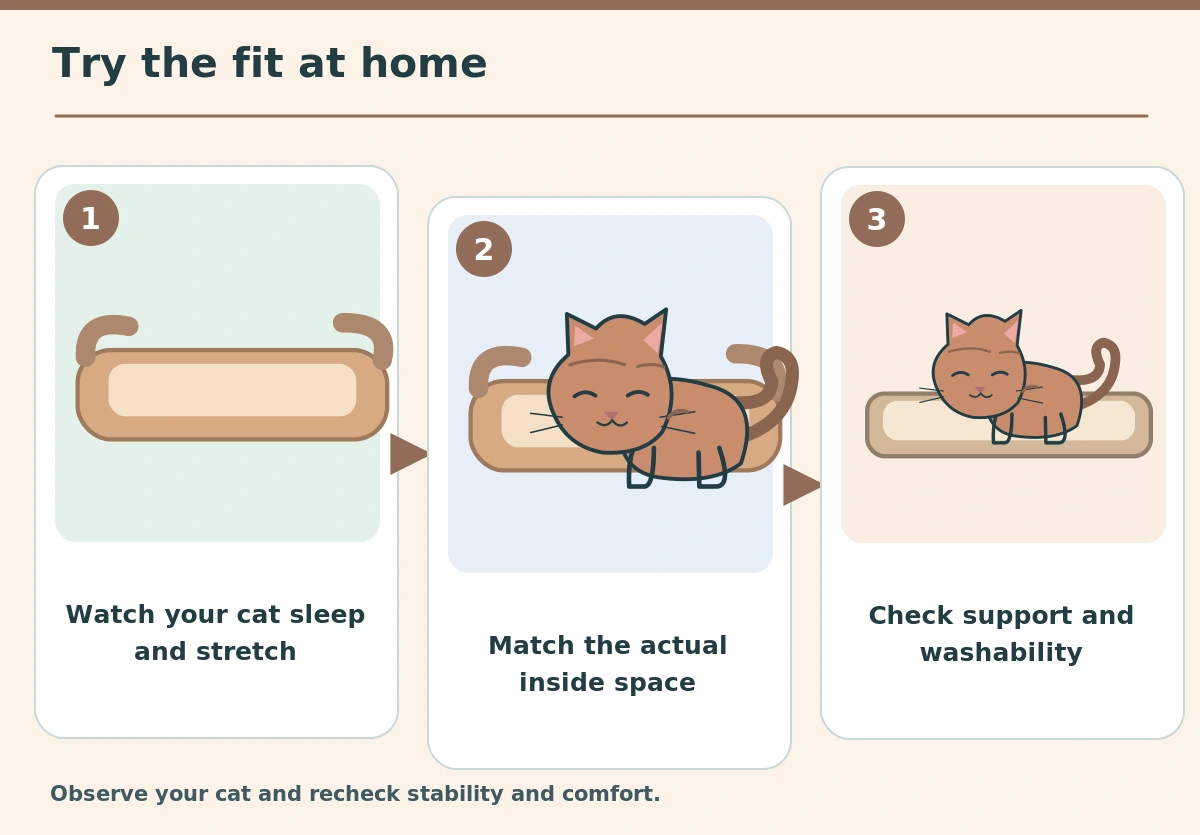
During the first week, note where your cat actually lies and whether it can turn, stretch, and exit without stumbling over a bolster. Watch for sliding, uneven filling, or a habit of choosing the hard floor beside the new bed. That may signal discomfort or simply a strong preference for another location. Move the bed once to a familiar quiet area if needed, but do not repeatedly reposition it during rest. If a cat suddenly avoids jumping or shows pain, contact your veterinarian rather than assuming a larger cushion will address discomfort. Keep the receipt until fit is clear.
How We Research
We used Cats Protection sleeping-space advice and International Cat Care mobility recommendations to define a practical measurement and accessibility approach. We do not invent manufacturer capacities or claim a specific cushion prevents disease. For broader editorial methods, read About HubPet.
Sources
Cats Protection — How to Choose the Perfect Cat Bed: Read the source. Accessed October 27, 2026.
Cats Protection — How to Create the Perfect Cat Sleeping Spot: Read the source. Accessed October 27, 2026.
Cats Protection — How to Create the Perfect Cat Sleeping Spot: Read the source. Accessed October 27, 2026.
International Cat Care — Cat Carer Guide: Changes to the Home Environment: Read the source. Accessed October 27, 2026.
RSPCA NSW — Meeting the Needs of Cats: Read the source. Accessed October 27, 2026.
Safety note: This selection guide is not individual veterinary advice. Seek a veterinarian for sudden behavioral changes, pain, injury, or suspected swallowed material; see the HubPet veterinary disclaimer.
Choose from the actual interior cushion and your cat’s relaxed sleeping positions. Exterior labels such as XL do not provide a universal fit standard.
They can work if the usable surface is broad enough, but a flat mat or roomy oval often offers less interruption from raised side bolsters.
Only if the cat enters comfortably. A low-front or flat surface with a non-slip approach may be more accessible for reduced mobility.
Check for uneven stuffing or a thin base that bottoms out. Follow care instructions and consider a better supported cushion rather than adding loose hazardous filling.
Not necessarily. Offer multiple resting choices, including separate quiet areas, so neither cat must compete for access to a comfortable place.