
Cat radiator beds place a suspended or supported fabric surface close to a heat source. They can appeal to cats that enjoy a warm vantage point, but there are two separate decisions: whether your radiator and brackets are compatible, and whether the area stays comfortable and safe when the heating changes. Cats Protection discusses radiator hammocks, but its advice does not certify the safety for an individual bracket or appliance. Begin with the radiator maker’s instructions and the pet-bed maker’s allowed attachment types. If either is unclear, choose an ordinary floor bed in a warm, safe part of the room.
Identify the heating surface before choosing hardware
Radiators differ: flat panel units, column radiators, towel warmers, exposed pipes, electric heaters, and covers are not interchangeable mounting points. A bracket shaped for one edge can slip from another. Do not hang a cat bed on a heater grille, valve, pipe, or decorative cover unless both manufacturers explicitly permit it. Measure the exposed surface and usable mounting lip when the system is cool, and check for obstructions such as thermostatic controls or fragile paint. A product listing that says ‘universal’ is not a substitute for a precise compatible-radiator diagram.
Inspect how the brackets transfer weight
Look for hooks that engage completely, a frame that stays square, and fasteners that cannot loosen during ordinary movement. The brackets must not depend on balancing friction alone where the cat will land. Follow the actual product’s installation instructions and specified load limit, counting the whole bed plus cat, not only the animal. The frame should be free of sharp ends and trapping gaps. Do not invent an extra strap, drill the radiator, or bend the hooks to force a fit. Any doubtful mounting is a reason to stop using the accessory and choose a stable standalone resting surface.

Test stability empty, then under observation
Fit the bed only while the radiator is cool and the system is off. Apply a careful hand check to the supported frame in the directions your cat might load it, without using force that could damage the appliance. Watch for rocking, tipping, slipping, or a bracket lifting when weight shifts. If it moves, remove it; do not ‘wait and see’ with a cat aboard. A cat jumping in from the side may produce a different motion from a gentle vertical hand press. Supervise first use and watch the entire entry and exit path, not just whether the cat lies down.
Think about surface heat through an entire cycle
A radiator that feels mild when off can become uncomfortable after the heating runs. Check reachable metal, hooks, and fabric contact points when the unit is operating under normal household conditions, following radiator safety guidance. Avoid designs where a cat must touch exposed hot metal to climb on or off. Ensure the textile does not contact surfaces that the appliance or bed maker prohibits covering. If you cannot reliably monitor heat or the cat cannot move away easily, do not use a suspended radiator bed. Never add an electric pad or place the cat close to a space heater to increase the warmth.
Make the exit safer than the entry
Cats may jump onto a radiator bed from furniture, but getting down can be harder, especially if the bed hangs over a slick floor. Arrange a stable nearby step or low landing surface that does not obstruct the radiator or create a fire risk. Do not position the perch above a sharp table edge, glass object, open stairwell, or clutter. A young athletic cat and an older cat with stiff joints may need different routes. International Cat Care recommends giving cats with mobility limitations accessible approaches to favored resting places. If an easy exit is impossible, a ground-level heated-by-the-room location is a better choice.
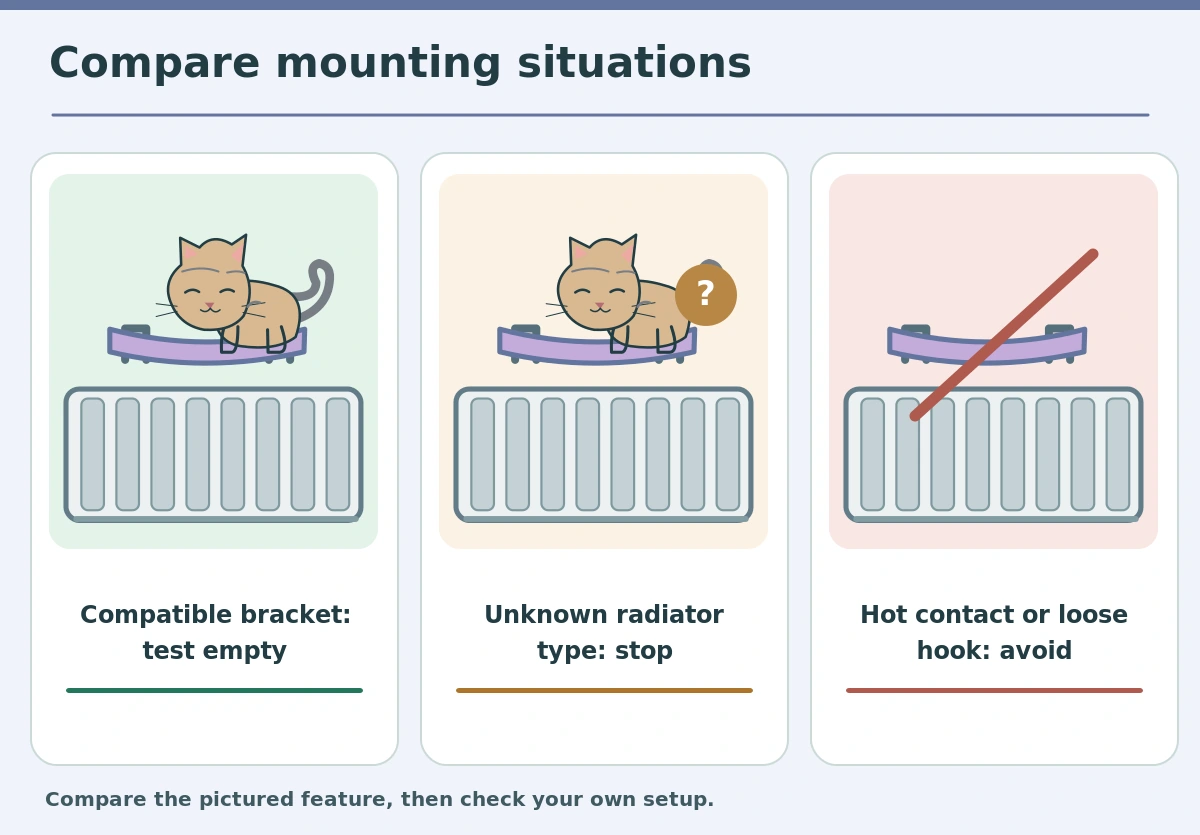
Keep hanging fabric clear of controls and pipes
Loose textile corners can snag on radiator knobs, leak water onto a heating unit, or sit against exposed piping. Verify that the cover remains taut under normal loading and does not droop onto forbidden surfaces. Remove detachable ribbons, fringe, and long ties where a curious cat could chew or become entangled. Check that the radiator still operates as its maker intends and that nothing blocks air circulation. Never cover an electric convector, portable heater, or manufacturer-designated ventilation slot with improvised pet bedding. These are equipment rules, not preferences that a soft cushion can override.
Compare a radiator bed with a nearby alternative
A cat might simply enjoy a warm, elevated location. A stable cat tree perch or securely positioned chair set safely nearby can provide a view without hanging weight on heating equipment. For a second option, place a soft mat in a draft-free corner when the radiator is running hot or turned off. Place the alternative so the cat is free to choose; do not remove its current favorite sleeping place during a trial. In a multi-cat household, supply more than one resting area and avoid narrow entrances where one cat can block another. A safe alternative is a sensible outcome, not a failed purchase.
Inspect after cleaning and seasonal changes
Before reinstalling a washed cover, confirm all fasteners and supports have returned to their intended positions and the fabric is fully dry. Recheck brackets after any radiator maintenance, furniture rearrangement, or seasonal heating restart. Examine the frame for bends, corrosion, cracked plastic, and loose seams; retire damaged parts rather than improvising repairs. Turn off the appliance and allow it to cool before removing the bed or adjusting brackets. Ask the radiator manufacturer or a qualified professional if mounting compatibility is uncertain. Do not treat an accessory as safe merely because it appeared stable last winter.
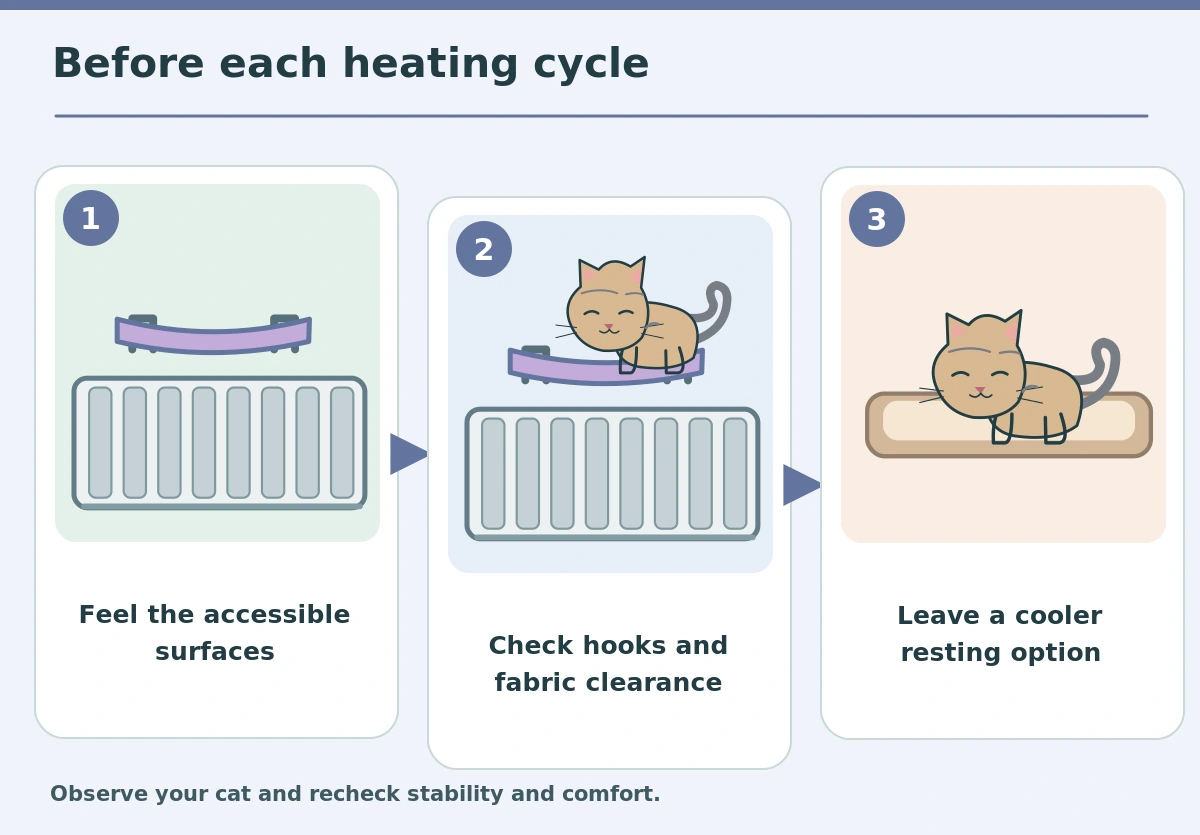
Prioritize a cat that can choose cooler space
The ideal setup makes a warm resting option available without confining the cat near heat. A cat should be able to approach, stretch, and leave without negotiating hot metal, slipping on descent, or needing a person to lift it. If you notice reluctance, altered mobility, singed fabric, persistent excessive warmth, or any unstable hook, stop use. An unexpectedly heat-seeking or distressed cat may need veterinary attention; extra bedding does not diagnose the cause. A well-chosen floor bed is safer than a radiator perch with an uncertain bracket or obstructed exit.
How We Research
We cross-checked Cats Protection advice on radiator resting spots with VCA heat-risk guidance and International Cat Care access recommendations. We keep radiator compatibility and load limits specific to each manufacturer because radiator types vary. For broader editorial methods, read About HubPet.
Sources
Cats Protection — Cats and Cold Weather: Read the source. Accessed October 27, 2026.
Cats Protection — How to Create the Perfect Cat Sleeping Spot: Read the source. Accessed October 27, 2026.
Cats Protection — How to Choose the Perfect Cat Bed: Read the source. Accessed October 27, 2026.
International Cat Care — Cat Carer Guide: Changes to the Home Environment: Read the source. Accessed October 27, 2026.
VCA Animal Hospitals — Heating Pads: True or False?: Read the source. Accessed October 27, 2026.
Safety note: This selection guide is not individual veterinary advice. Seek a veterinarian for sudden behavioral changes, pain, injury, or suspected swallowed material; see the HubPet veterinary disclaimer.
No. Bracket shape and permissible attachment points depend on the heater model. Confirm compatibility with both sets of manufacturer instructions before installation.
Not unless the equipment maker and bed maker explicitly allow that exact use. Different heater shapes and temperatures make an assumed fit unsafe.
Check reachable contact surfaces during a normal heating cycle in accordance with the heater instructions. If you cannot verify safe contact and departure, remove the bed.
Only when mounting and temperature are safe and entry and exit require no uncomfortable jump. A stable low bed may be more practical.
Stop using the perch immediately. Do not force hooks into place or improvise a fix; choose the correct compatible unit or a stable alternative.