
A large cat carrier must do more than hold a printed weight rating. Big-framed cats and cats carrying extra weight may struggle in cramped cases even when the listed capacity seems generous. A useful carrier allows a relaxed posture, a reliable door and a supported floor while remaining manageable through your home and into a vehicle. This guide focuses on sizing and access rather than ranking products. Cats with breathing difficulties, painful joints or severe travel anxiety may need veterinary advice about transport; see HubPet’s veterinary disclaimer.
Measure your cat and its natural resting posture
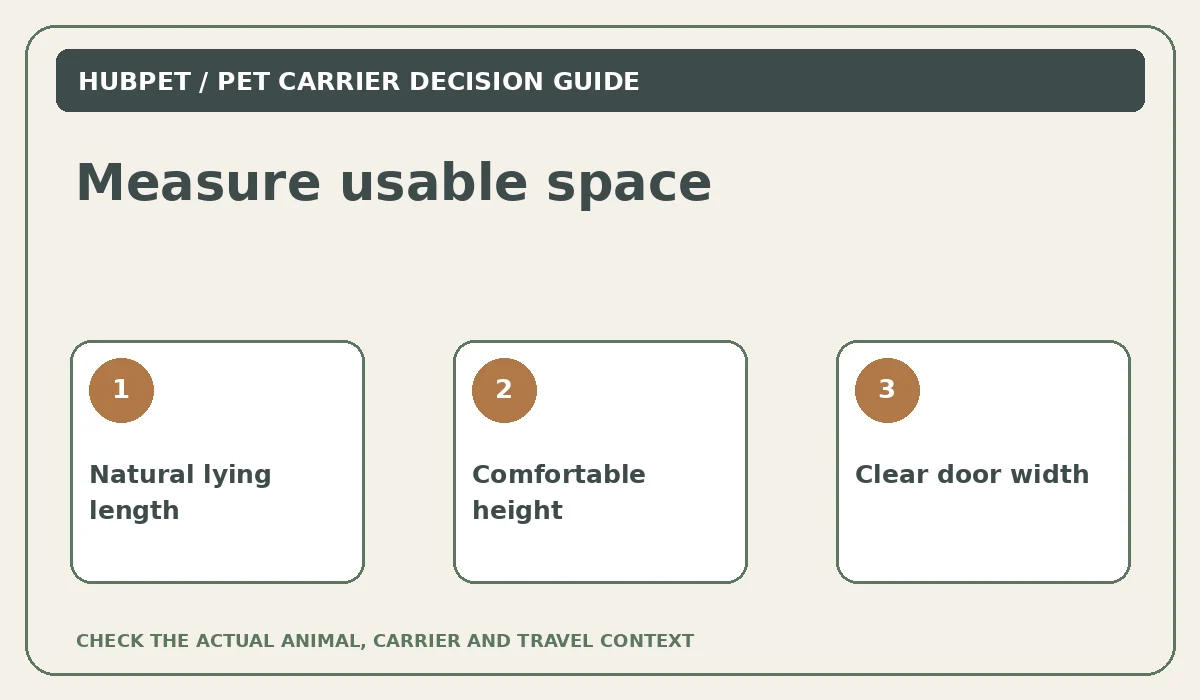
Use a soft tape to measure your cat’s length from nose to tail base, width at the chest and comfortable standing height. Observe the space the cat uses to lie down and turn on a firm surface without being pushed or folded. Compare those dimensions with actual internal carrier measurements, not the outer box size. Thick walls, a raised latch and padding reduce usable interior space. For a large-framed cat, the limiting factor may be shoulder width or doorway height instead of overall length. Make a cardboard mock-up if necessary to test a footprint. Do not assume that a large label corresponds to the room your cat needs.
Balance movement space with stability in transit
Cats should be able to settle comfortably and adjust their position, but a very oversized empty case can slide or tip more easily when lifted. The goal is adequate natural movement with a stable, non-slip floor and a design you can hold level. Lay a washable, thin towel on the base and check the remaining headroom. When you lift the case by its handle, check that the floor stays firm instead of bowing into a hammock shape. A frightened cat may brace against the side, so thin plastic or floppy fabric can feel insecure. Choose a size that fits both the cat and the real journey through doorways and vehicle spaces.
Prioritize a door a large cat can pass calmly
A roomy interior is unhelpful if the entrance is narrow or the cat must be squeezed through it. Check the clear opening after hinges, trim and locks are considered. Top-opening models may allow a cat to enter feet first with less pushing. A carrier with a removable upper half lets a veterinarian examine some cats while they remain seated on a familiar base. Inspect the latch mechanism from inside and outside, especially where pressure might pop a weak clip. Never improvise by tying the door shut with loose strings that could entangle paws or delay safe access in an emergency.
Choose a rigid base and comfortable carrying points
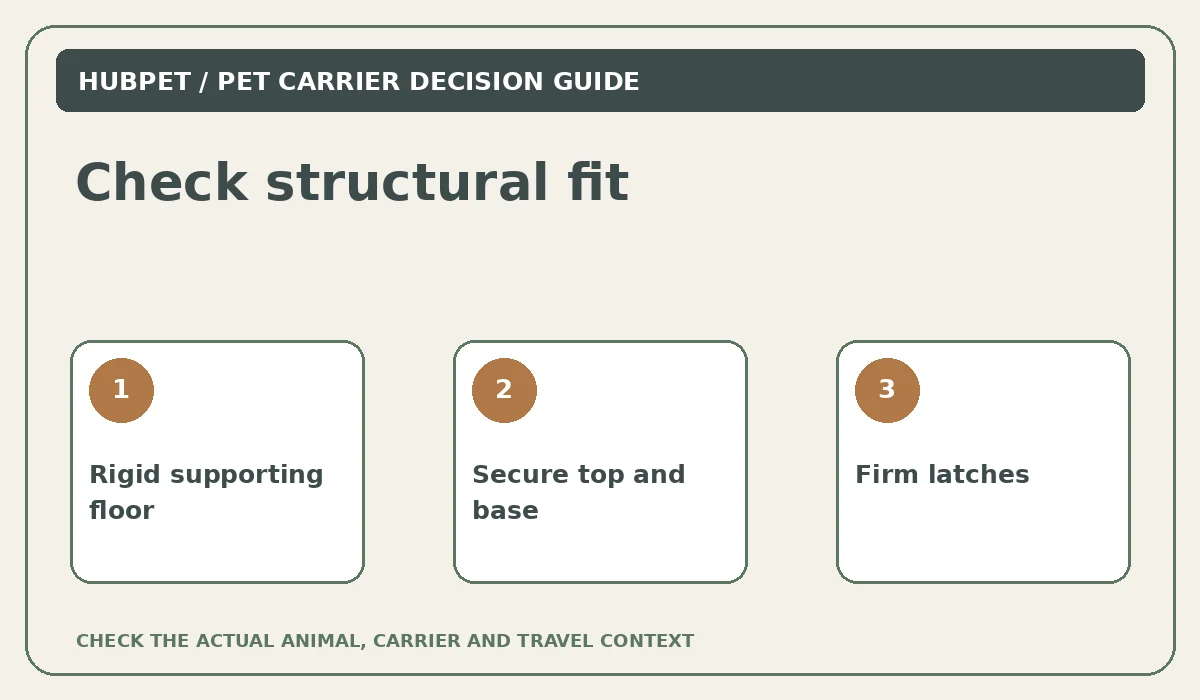
A big cat’s weight concentrates on the carrier floor when you lift it. Press gently on the empty floor and examine attachment points that connect the base to the roof. Some cases seem sturdy on a table yet flex when suspended from a single handle. Compare a handle with a comfortable grip, side handholds that allow two-handed carrying and any manufacturer guidance for heavier occupants. If your arms or back cannot manage the load, ask another adult for help. Do not drag the case or carry it by the door. A wheeled base may introduce additional movement and is not automatically suitable for every mode of travel.
Assess ventilation and opportunities to hide
Large cats need airflow throughout a carrier, particularly during stressful trips or warm weather. Verify that vents remain open when you set the case beside a seat or wall. A mesh opening can provide ventilation while a partial light cover can limit frightening views; never cover all air passages. Transparent cases with little visual shelter are not always reassuring to a cat. Avoid placing the carrier in direct sun. If you observe panting, weakness or extreme agitation, stop safely and contact a veterinarian promptly. Weather and temperature management matter at least as much as which material appears most attractive in photographs.
Think about cleaning before the first accident
Choose smooth, washable internal corners and a base that does not leak onto the car seat. A removable top may simplify cleaning after travel sickness or elimination. Avoid designs with thick, permanently sewn padding that stays damp or traps odor. Line the floor with a washable towel or absorbent layer that cannot bunch around the cat’s legs. Practice removing and replacing the door in advance if the design allows it. An easier-to-clean carrier makes it more likely that you will keep it in sanitary condition between trips. Follow cleaning product instructions and rinse residues thoroughly before reuse.
Train with the big carrier in the living room
Set up the carrier with the door fixed open and familiar bedding inside. Let the cat approach without pressure. Place rewards near the opening, then just inside, gradually building positive visits over several days. If the top detaches safely, training can begin with the lower half as a resting spot. Briefly close the door when the cat stays relaxed, then reopen before distress escalates. Avoid loading a big cat by chasing it through the home. The carrier should become a familiar object, not a signal that a stressful vet visit begins. Schedule the introduction well before a necessary journey when possible.
Fit the case to the actual vehicle or trip
Before purchasing, measure your car’s practical carrier space and check how the case will remain secure without blocking exits, pedals or sight lines. A large carrier may not fit properly on a small seat. Follow your vehicle and restraint equipment instructions; do not assume any case has passed crash tests. Check airline requirements before booking a flight, since in-cabin dimensions may exclude larger cases entirely and cargo conditions differ. Never assume “airline-approved” guarantees acceptance. Ask your veterinary clinic whether their entry doors and examination procedures accommodate the chosen carrier if your cat is especially large or difficult to handle.

Use a purchase scorecard instead of a brand claim
Compare the actual internal floor area, clear doorway, ventilation from different sides, base rigidity, latch quality and how confidently you can lift the case. Give extra weight to easy veterinary access and cleaning if your cat travels mainly to the clinic. Reject a case that collapses under mild hand pressure or requires a cat to crouch painfully. Record dimensions before you shop and take the tape with you if practical. If an existing carrier is too small, replacing it is more sensible than adding another thick cushion that reduces space further. The right case is one your cat fits and you can handle reliably.
How We Research
We reviewed animal-welfare and veterinary guidance on containment, handling, fit, travel stress and equipment limitations, prioritizing practical owner checks over commercial claims. These sources inform the safety recommendations but do not constitute endorsements of individual products. We did not independently crash-test carriers, measure manufacturer specifications in a lab, or receive compensation for this article. Airline and transport rules may change; confirm current requirements with the provider and ask a veterinarian about a specific animal’s health. Learn more About HubPet.
Sources
Cats Protection: Choosing and using a cat carrier. Reviewed October 27, 2026.
VCA Animal Hospitals: Reducing the stress of veterinary visits for cats. Reviewed October 27, 2026.
American Veterinary Medical Association: Traveling with your dog or cat. Reviewed October 27, 2026.
RSPCA: How can I train my pet to feel comfortable in a transport carrier?. Reviewed October 27, 2026.
Choose enough internal room for the cat to rest, adjust posture and turn normally. Compare measurements inside the carrier rather than its exterior dimensions.
Some soft-sided designs may work for certain trips, but check floor rigidity, secure mesh and shape under weight. Sturdy hard-sided carriers often offer more consistent protection.
No. The weight limit concerns structural capacity. Door width, usable floor and height must also match the individual cat.
It is not universally required, but top access or a removable top can help with low-stress placement and veterinary examinations.
Not automatically. More room is useful only when the carrier remains stable, securely handled and fits the travel setup. Choose a balanced size.