
A kitten litter tray should be easy to discover and step into today, yet roomy enough to allow normal digging and a quick exit. This guide focuses on the decision that actually changes daily use. Consider the animal’s access and comfort first, then fit, cleaning, and long-term upkeep. The examples are practical screening tests rather than promises that one design works for every pet.
Start with a step, not a jump
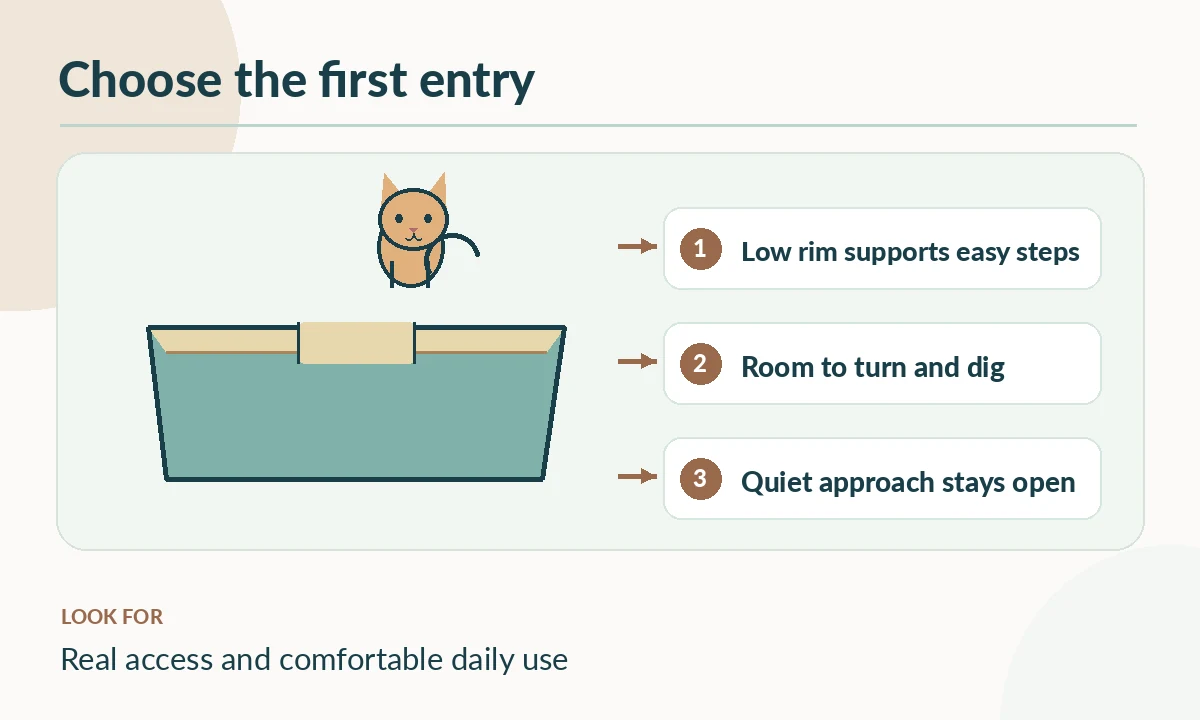
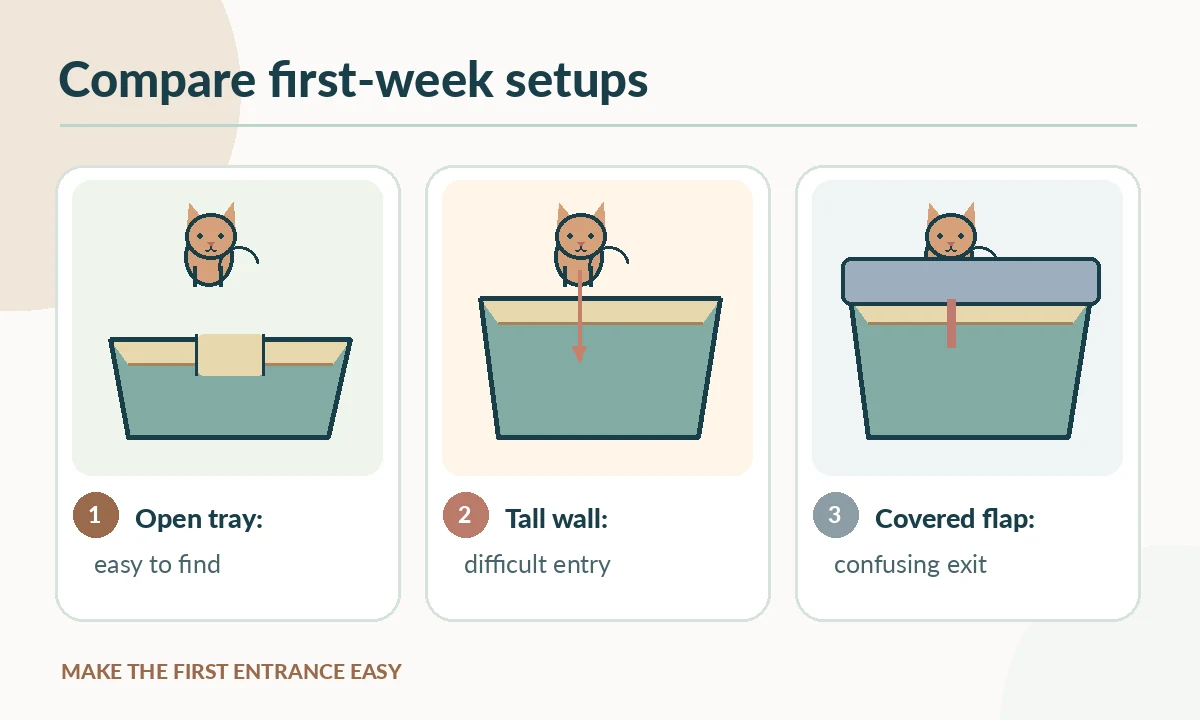
A kitten’s first litter tray needs an entrance that can be crossed with a normal step. High walls may contain scatter but can discourage a very young or small kitten who has not yet developed confident coordination. Look for a low opening or low-sided tray with no sharp molded lip. Do not confuse “kitten size” with a tiny interior. Your kitten must be able to turn around, dig, and choose a comfortable spot without standing in previous waste. A flat, stable base and a secure position on the floor matter more than decorative features. If the tray slides when touched, put it on a flat nonslip surface.
Plan for growth without making entry hard today
A roomy adult-sized litter box may last longer, but an adult box with uniformly tall walls may not work at the start. An open tray with a low cutout can combine future space with present access. Assess interior usable dimensions, not just the outside of the box; heavily rounded corners can reduce room to turn. Generous tray length matters, but watch how your kitten actually moves. Avoid applying a rigid measurement to a tiny animal. If a larger box is temporarily inaccessible, use a low tray now and offer a larger option once the kitten can step in easily.
Use a familiar surface in the first week
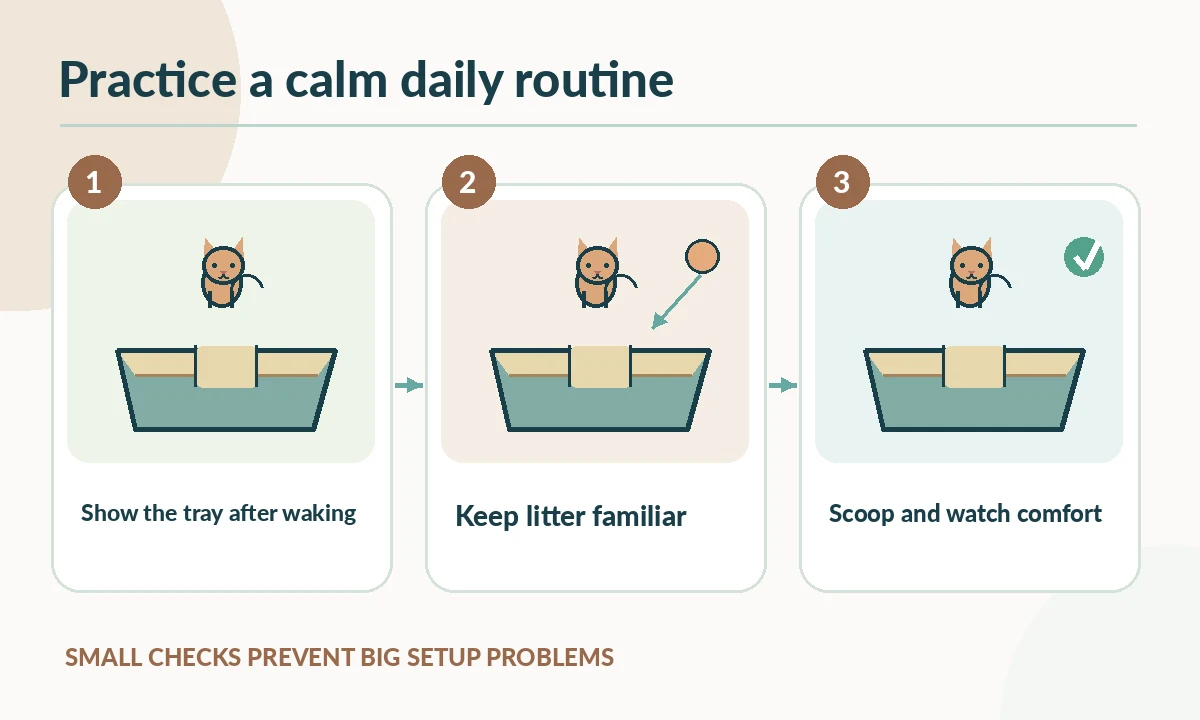
Ask the breeder, shelter, or previous caregiver which litter texture your kitten knows. Familiar smell and feel may matter more than finding the “premium” litter on day one. Avoid sudden changes to the tray, litter, and room all at once. Soft, unscented material is a common recommendation. Some kittens explore substrate with their mouths. Ask your veterinarian or rescue about litter choice if ingestion concerns you. Keep litter deep enough for digging without making footing unstable. Do not use highly fragranced additives to mask odors or punish accidents; both can increase avoidance.
Make the tray easy to find and reach
Initially place a tray in a quiet part of the kitten’s safe room, away from food and water. A kitten should not have to pass a loud appliance, busy doorway, or family dog to reach it. If the kitten has access to multiple rooms or floors, consider an additional accessible tray. Keep the route free of trailing cords and sliding mats. Show the kitten where the tray is after meals, waking, or play; then give privacy rather than holding the kitten inside. Reliable access at night matters as much as daytime placement.
Read behaviors rather than expecting instant perfection
Many kittens already know how to use a litter tray, but a new home can briefly disrupt habits. Watch for sniffing corners, scratching, or restlessness, then gently guide the kitten toward a nearby tray. Praise normal calm behavior rather than loudly celebrating while the kitten is toileting. Never rub a kitten’s nose in an accident or withhold access. Clean accidents with a pet-appropriate product and look for an environmental cause. If the kitten strains, seems painful, or has a sudden elimination change, arrange veterinary assessment rather than attempting a training fix.
Make cleaning easy for a small animal
Scoop at least daily and inspect more often in the first week. A shallow tray can fill quickly, so a clean surface may require more frequent attention. Replace soiled litter appropriately, wash the box with a product safe for cats, rinse well, and dry before refilling. Avoid phenol-containing cleaners and heavily scented deodorants. Use a small scoop with slots matched to the material so you remove waste without throwing away clean litter. Store bags safely away from curious kittens. Wash hands after litter handling and follow CDC precautions when a household member is pregnant or immunocompromised.
Transition to a larger tray with choice
As your kitten grows, observe whether the body can still turn and dig easily. Offer the larger box beside the familiar one with the same litter before retiring the smaller tray. If you introduce a different entry style, change just that feature first. Continue providing separated toilet resources in multi-cat homes. A new adult box should not force a leap or narrow the exit. The success measure is simple: the kitten can reach, enter, use, and leave the tray without hesitation. The rest of the setup should serve that experience.
Quick decision checklist
Before making a change, check your cat’s approach and exit. Check stability and cleaning access. Ask whether the setup still works on a busy day. Offer a familiar alternative when testing a new toilet feature. Watch real use rather than relying on a product promise, and revise the arrangement if your cat hesitates or appears distressed.
How We Research
Our research compares physical design and daily use with feline welfare guidance. We prioritize voluntary access, enough room, familiar litter, and cleaning that works in a real home. Relevant sources include veterinary bodies such as AAHA, plus Cats Protection and International Cat Care. Marketing claims do not count as evidence. We make no claims of hands-on testing on commercial models. Illustrations demonstrate general principles, not safety certifications. Learn more about our editorial approach on the HubPet About page.
Sources
International Cat Care, Caring for your new kitten: Read the source. Accessed October 27, 2026.
Cats Protection, Bringing a new kitten home: Read the source. Accessed October 27, 2026.
AAHA, General Litter Box Considerations: Read the source. Accessed October 27, 2026.
CDC, About Toxoplasmosis: Read the source. Accessed October 27, 2026.
Safety note: A sudden change in urination or defecation, repeated straining, apparent pain, or persistent litter-box avoidance needs veterinary assessment; do not assume a behavior or equipment problem. For general context see our veterinary disclaimer.
Choose a rim the kitten can step over without climbing or jumping. The right height depends on the kitten’s size and mobility.
A simple open tray is often easier at first because the entrance and exit are visible and accessible.
It is usually easier to begin with the familiar litter from the rescue or prior home, then make changes gradually.
Check it frequently and remove waste at least daily. Keep the area clean while preserving consistent placement and texture.
Check access and environmental changes and contact a veterinarian promptly if toileting changes suddenly or the kitten seems unwell.