
A covered litter box can hide waste from view, yet a lid changes the environment inside the tray. Odor can build up, the cat may have less space to turn, and a swing flap can deter entry. Some cats accept or prefer a hood; others choose a large open tray. Any change in toilet behavior deserves attention, as outlined in our veterinary information disclaimer.
This guide helps you test comfort rather than buying privacy for the human at the cat’s expense. AAFP/ISFM guidance does not identify a single covered style that all cats prefer. Size, cleaning, location, and individual behavior matter more than a claim that cats naturally want enclosed toilets.
Start with a choice rather than a forced conversion
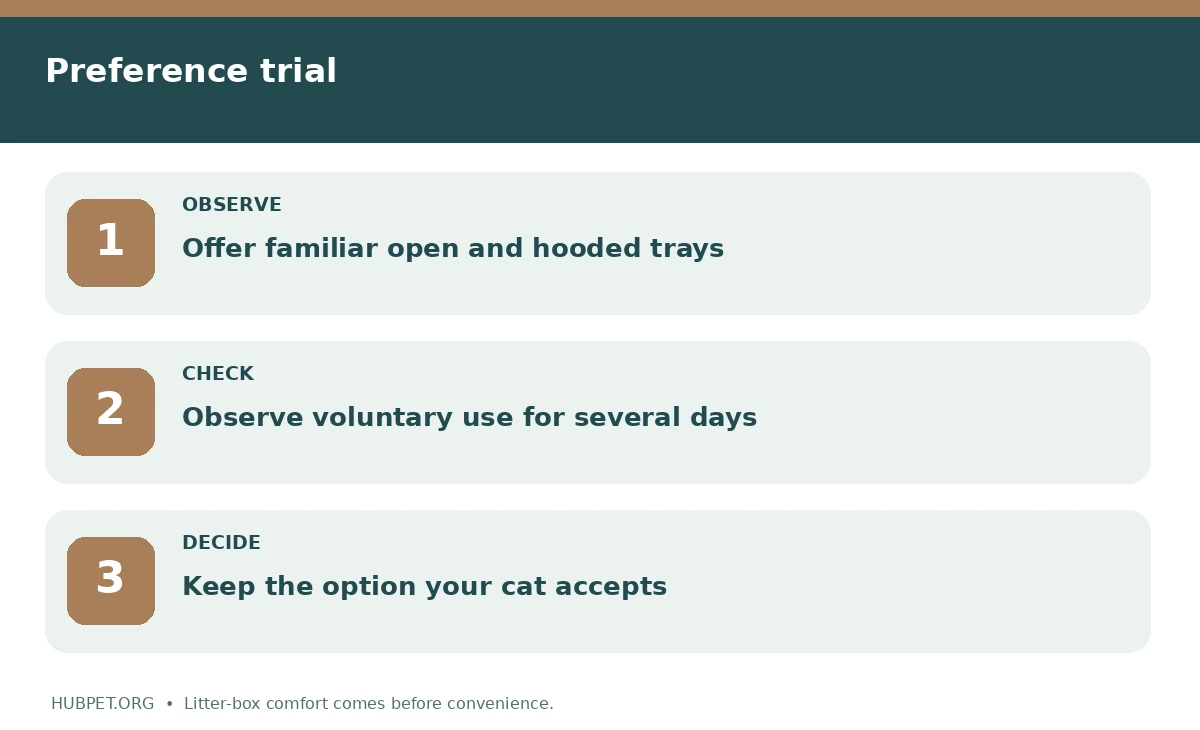
Place a roomy open litter box beside the proposed hooded style and use the same familiar unscented litter in both. Let the cat choose over several ordinary days. That is more informative than closing a cat inside a new box or moving its only familiar tray overnight. Some cats appreciate visual screening without liking an enclosed roof.
If you have limited floor space, test the hood separately when possible. A removable top makes it easier to compare one change at a time. Track entrance hesitation and visit frequency, but avoid watching so closely that you disturb the cat. Respect a clear preference for the open option.
Measure the inside, not the attractive shell
Rounded roofs and angled walls can reduce usable headroom even when exterior measurements look generous. Measure the litter-floor length and width, plus the space where the cat stands with a natural posture. AAFP/ISFM generally recommends generous tray dimensions; a length around one and a half times the cat’s nose-to-tail-base length offers a useful starting point.
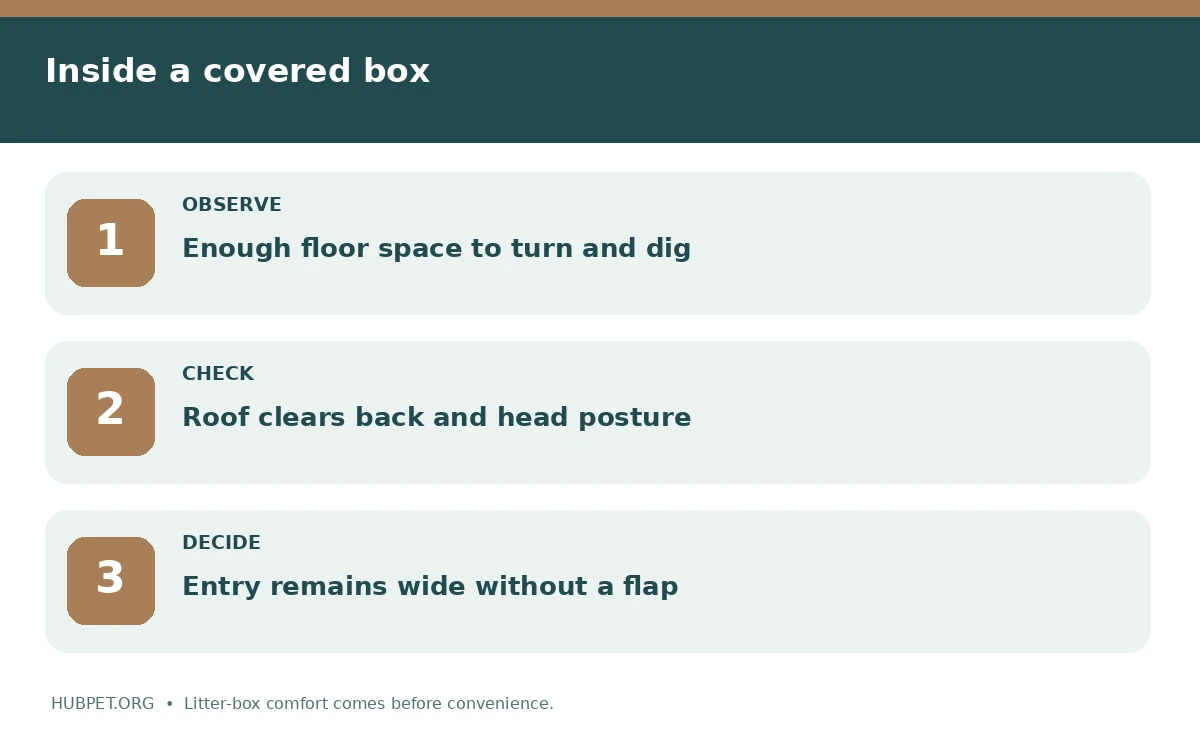
Check that your cat can enter, turn around, dig, eliminate, and exit without brushing the roof or rear wall. The inside needs space for the animal, not just for the litter. Large or long-bodied cats may find a standard enclosed model too small even when the packaging labels it extra-large.
Inspect the entrance and remove the flap
A small door flap can strike a cat’s back or trap odors inside. Cats Protection recommends removing flaps from hooded trays because they can discourage use. Choose a large unobstructed entry that does not require pushing through plastic. Test how widely the cat can turn at the threshold and how easily you can see the entire path.
Cats with mobility problems need an especially low, wide opening. Do not expect a senior cat to climb over a high base simply because the box has a roof. A hidden entrance that faces a wall can create a dead end; ensure the cat can approach and leave without another pet blocking its route.
Understand odor and ventilation limits
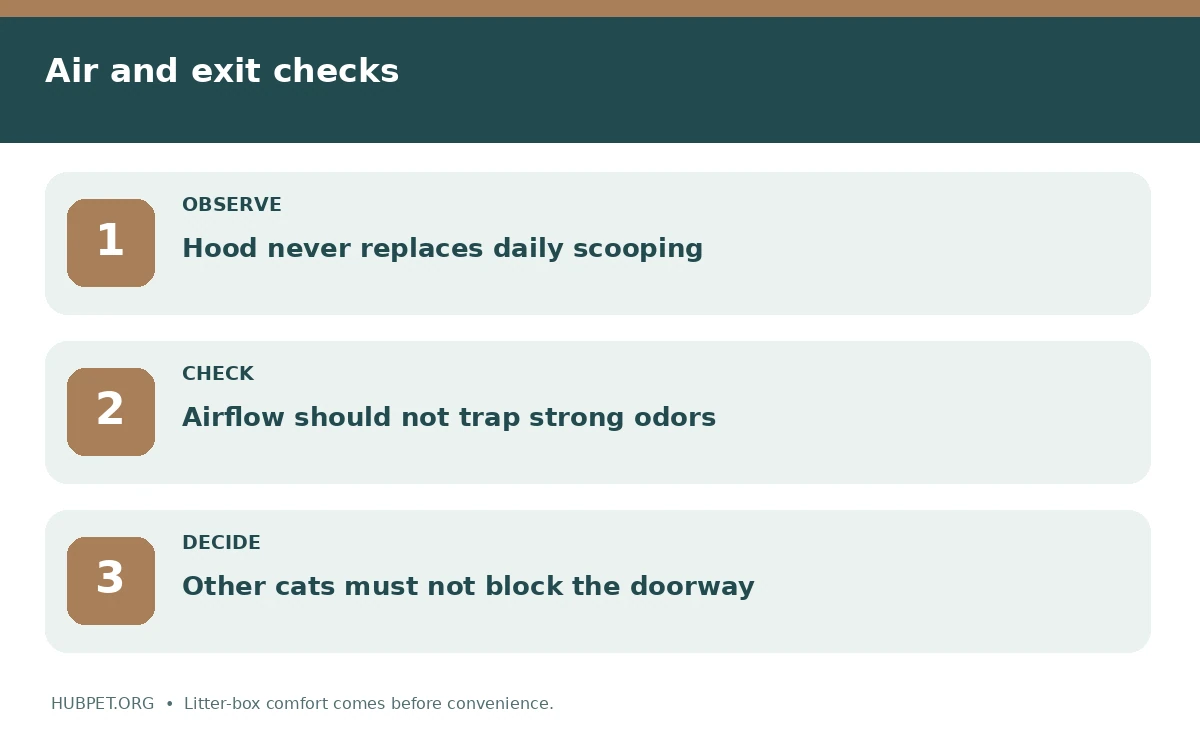
A hood can hide smells from people while concentrating odor closer to the litter surface. That does not make the box cleaner or more pleasant for the cat. Look for open ventilation paths that stay unobstructed in the intended corner. Decorative carbon filters cannot substitute for removing waste and cleaning the tray regularly.
Ohio State University highlights daily scooping and routine washing as core litter-box care. If odor increases, check cleaning frequency, litter depth, residue in seams, and the animal’s health before adding a deodorizer. Strong perfumes and cleaning fragrances can put cats off using the area.
Watch social access in multi-cat homes
A hooded box has a more constrained doorway than an open tray. A confident cat may block it or surprise another cat leaving. Observe approach paths and make sure the exit stays visible and unrestricted. Distinct litter-box locations allow cats to choose a safe route instead of competing at a single doorway.
Follow the general planning rule of one box per cat plus an extra where feasible, but also distribute them rather than clustering every box in one corner. Two covered boxes side by side may function like one contested bathroom zone. Keep an open alternative in a separate location if another cat causes tension.
Choose a lid you will actually remove to clean
Try the hood release mechanism before buying. Can you remove the top without tilting dirty litter onto the floor? Does the lid expose the entire base for scooping? Tight clips, hinges, and decorative seams can collect residue and make a quick daily task harder than expected. A visually clean shell may conceal a dirty interior.
Prefer smooth, washable surfaces and simple joints. Follow the manufacturer’s washing directions; rinse and fully dry parts before adding litter again. Avoid heavily perfumed products. If the hood makes normal scooping inconvenient, the tray design is working against the hygiene the cat needs.
Test a familiar location before relocating the box
An enclosed tray still requires a quiet spot away from food, water, and startling appliances. Do not move a box into a loud laundry closet merely because its lid hides waste. Offer the new style close to the established place, then consider location changes only after the cat reliably uses the new setup.
A roof does not turn a hallway into a private toilet. People and other pets should not disturb the cat while it digs. Avoid blocking the doorway with baskets, stored litter, or cabinet doors. Check air movement around the hood without putting the tray beside an irritating draft or noisy fan.
Know who may need an open tray instead
A kitten, an arthritic cat, or a cat with limited sight may struggle with a high opening or dark narrow interior. Some anxious cats prefer a clear view of the room while toileting. None of these animals needs to learn to tolerate a cramped hood for the sake of décor. Large accessible open trays remain a sound option.
Sudden box refusal, straining, frequent small urinations, or obvious pain requires veterinary advice rather than a different lid. Do not diagnose a medical cause from the tray design alone. Restore an easy-to-use familiar box while arranging appropriate care, and keep the route free of obstacles.
Use a trial checklist instead of a product ranking
For seven days, record whether your cat chooses the covered box, moves comfortably, and returns without hesitation. Check whether odor accumulates, how long scooping takes, and whether another pet can block the exit. A design passes only when it supports normal toilet behavior and realistic daily care.
If the cat rejects the hood, remove it or keep the open tray. A covered litter box is not inherently better or worse for all cats. Your best evidence is a comfortable individual cat using a roomy, clean tray consistently; marketing photos cannot replace that observation.
How We Research
HubPet reviewed veterinary guidance, cat welfare recommendations, and practical cleaning information relevant to covered cat litter box. We distinguished expert advice about litter-box comfort from product-design claims that lack independent testing. This is desk research, not hands-on evaluation of individual products or veterinary endorsement. Sources were reviewed on October 26, 2026. Read about HubPet and our editorial approach. General information cannot replace veterinary guidance for an individual cat.
Sources
AAFP and ISFM: Guidelines for Diagnosing and Solving House-Soiling Behavior in Cats. Accessed October 26, 2026.
Cats Protection: Elderly Cats: Care Guide for Older Cats. Accessed October 26, 2026.
Ohio State University Indoor Pet Initiative: Litter Boxes. Accessed October 26, 2026.
Merck Veterinary Manual: Providing a Litter Box for a Cat (reviewed July 2025). Accessed October 26, 2026.
Preferences differ. Offer a roomy open and covered choice with familiar litter, then observe use rather than assuming a hood provides needed privacy.
Cats Protection recommends removing it. A flap may strike the cat, trap smells, or become an entry barrier, especially for cautious animals.
No. A roof may conceal odors from people but also concentrate them inside. Daily scooping and regular washing remain essential.
Only if the entry is low and wide enough and the cat can turn easily. Many older cats benefit from a low-sided, accessible open tray.
That adds a second enclosure and can worsen access or airflow. Measure both spaces and provide an open alternative if your cat hesitates.