
Finding cat hair on your sofa or sweater does not automatically mean something is wrong. Cats naturally replace old hair as their coats grow, and some shed more visibly than others. What matters is whether the coat stays generally full and the cat acts and grooms normally—or whether the pattern has changed. See the HubPet veterinary disclaimer for health and safety limits.
This article helps you observe that difference without diagnosing an illness online. You will learn how to track shedding, introduce comfortable grooming, manage fur around the house, and recognize signs that call for a veterinary visit. A shedding brush is a housekeeping tool, not a treatment for skin disease.
Recognize the difference between loose fur and bald areas
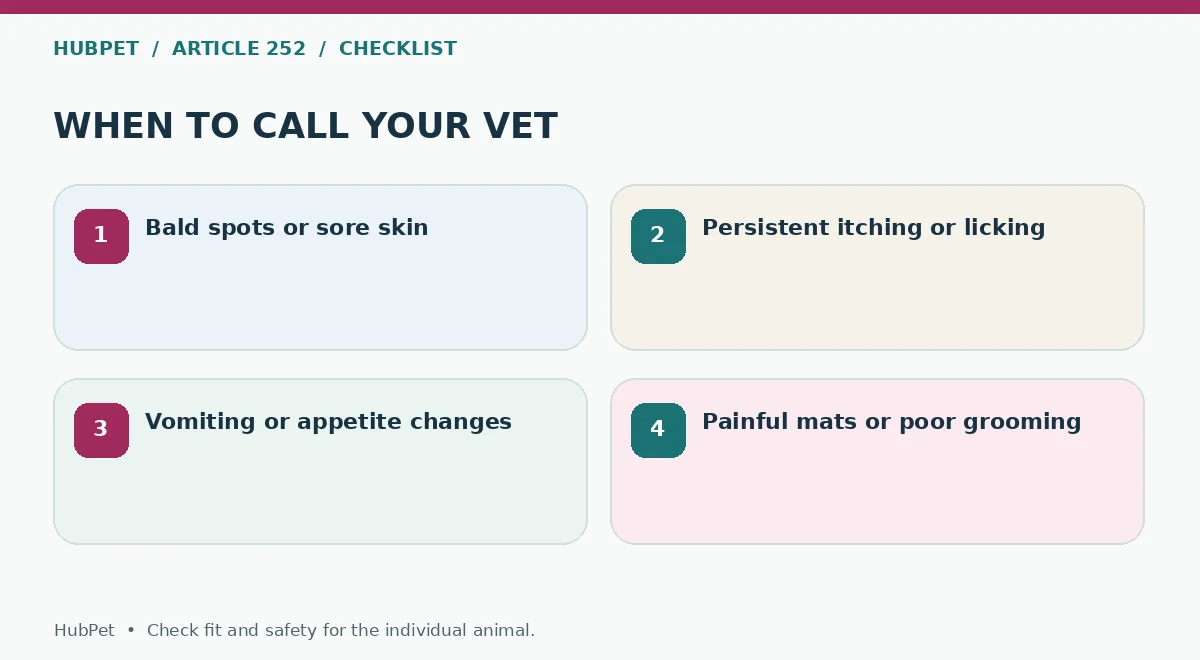
Normal turnover can leave many individual hairs on fabric while the coat remains evenly covered. Part the fur gently under good light and look for bare spots, broken hair, redness, flakes, sores, or irritated skin. The MSD Veterinary Manual notes that obvious coat loss and bald areas can point beyond routine shedding.
Take dated photos if a change concerns you. Compare the same body area under similar light instead of judging one unusually hairy blanket. A cat may shed visibly while healthy, but a new bald patch or repeated scratching needs more than a stronger grooming tool.
Notice seasonal change without using a fixed rule
Daylight exposure, indoor living, coat length, and individual differences influence how much loose hair owners notice. Some cats show a seasonal pattern, while indoor cats may leave hair throughout the year. There is no universal number of strands or grooming minutes that defines a healthy coat.
Use your cat’s own baseline. Record when you first noticed a change, whether it follows a recurring season, and if the cat remains comfortable. If the shift arrives with itching, a thinning coat, or other changes, arrange veterinary advice rather than assuming the weather explains it.

Track the whole cat, not just the amount of fur
Coat change can accompany alterations in appetite, activity, grooming, weight, and toileting. VCA explains that cats who feel unwell may groom less or excessively. Write down anything new instead of treating each clue as separate. That history helps a veterinary team assess the situation.
Watch for repeated licking of one spot, frequent scratching, reluctance to be touched, or a sudden greasy and matted coat. A brush cannot reveal whether the cause involves parasites, discomfort, stress, or another medical problem. Leave diagnosis to the veterinarian.
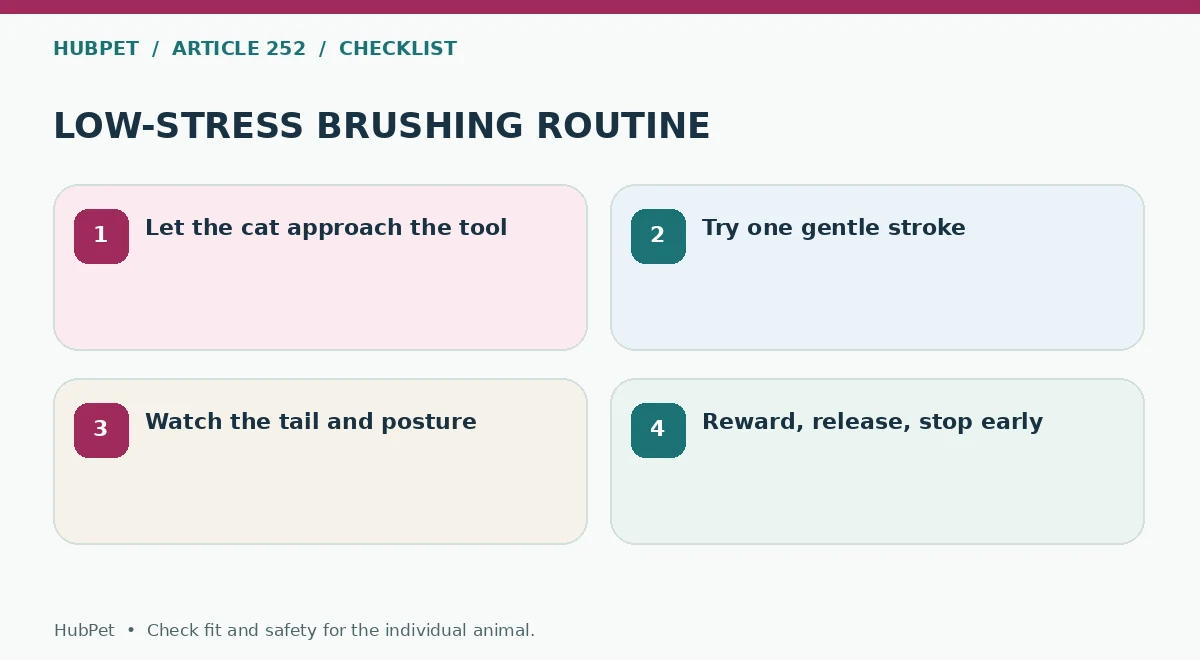
Introduce short, voluntary brushing sessions
Choose a calm time and let your cat sniff the grooming tool. Start with one easy pass over a comfortable area, reward or pause, and finish before the cat pulls away. Cornell recommends regular brushing to collect loose fur and monitor the coat; it does not require wrestling a reluctant cat.
If the cat stiffens, flicks the tail sharply, turns to bite, or moves away, stop. Return to brief contact practice another day. A comb that reaches the coat gently may help long-haired cats, but sharp tools and aggressive deshedding can hurt skin.
Adapt grooming to coat length and tolerance
Short coats often need less detangling than long coats, but the cat’s comfort decides session length. With a longer coat, lift small sections and check areas behind the ears and legs where mats can form. Do not pull tightly on tangled hair or try to cut a mat close to skin.
Ask a groomer or veterinarian to handle difficult matting, particularly if the cat seems painful. A severely matted coat is not just a cosmetic issue; trapped skin can become irritated. Our mat-prevention guide offers routine-care context without promising to fix existing painful mats.
Keep grooming tools clean and comfortable
Inspect pins, bristles, and comb teeth for bends and sharp tips before each session. Remove collected hair and clean the tool according to the manufacturer. Avoid perfumes or sprays close to a cat’s nose. Choose a handle that lets you maintain light pressure instead of tugging.
A tool that catches hair should not scrape the skin. Try a gentler design if you see irritation or the cat repeatedly resists. Professional advice matters more than buying multiple new products when your cat has persistent coat or skin changes.
Separate hairball concerns from simple shedding
Cats swallow some hair while grooming. Cornell discusses hairballs and stresses that vomiting patterns deserve attention, especially when other symptoms occur. Do not assume frequent retching is harmless or give a laxative or special diet without a veterinarian’s guidance.
Regular gentle brushing can reduce some loose fur available for swallowing, but no grooming schedule guarantees that a cat will never have a hairball. Call your veterinary team for repeated vomiting, unproductive retching, lack of appetite, constipation, or signs of distress.
Manage loose hair in rooms without overgrooming
Use washable blankets on favored resting places and remove loose hair from upholstery with an appropriate fabric-safe method. Vacuum seams and clean pet bedding according to care labels. Housecleaning can make ordinary shedding easier to live with without turning every brush session into a long project.
Plan a small daily reset where fur gathers most, rather than trying to eliminate every hair. Our furniture-fur routine offers practical surface care; it does not replace assessment of a changing skin or coat condition.
Do not self-treat suspected allergies or parasites
Patchy loss, red skin, scabs, and persistent itch can have several causes. The MSD Veterinary Manual lists problems that require examination and sometimes tests to distinguish. Never apply essential oils, insecticide meant for another species, or human skin medication without a veterinarian.
Flea control also needs species-appropriate veterinary products. Some dog-only ingredients can be dangerous to cats. Bring information about any recent products and grooming tools to the appointment. An accurate timeline can be more useful than photographs of collected hair alone.
Keep a simple two-week observation log
For an otherwise comfortable cat with an intact coat, write down brushing frequency, the amount of loose fur in broad terms, skin appearance, and any behavioral changes. Avoid counting hairs; note changes that a person can reliably see. Take photos of specific areas if the pattern shifts.
If a bald patch, lesion, worsening itch, appetite change, or other concerning sign appears, contact your veterinarian promptly instead of waiting for the log to finish. A stable routine plus quick attention to red flags makes grooming both kinder and more informative.
How We Research
We checked this guide against the authoritative sources listed below on October 26, 2026. We reviewed practical differences, safety limits, and relevant home conditions rather than drawing conclusions from brand advertising. Specifications, warranty policies, and device capabilities change; check the manufacturer’s current manual. We did not purchase, laboratory-test, rank, or endorse individual products. Where a pet has pain, skin concerns, or fear, seek individual veterinary advice. See our approach at About HubPet.
Sources
ASPCA: Cat Grooming Tips. Accessed October 26, 2026.
MSD Veterinary Manual: Hair Loss (Alopecia) in Cats. Accessed October 26, 2026.
Cornell Feline Health Center: Choosing and Caring for Your New Cat. Accessed October 26, 2026.
VCA Animal Hospitals: Recognizing the Signs of Illness in Cats. Accessed October 26, 2026.
The amount varies with the cat and environment. Loose hair with an evenly covered coat can be normal; new bald patches, sore skin, or unusual grooming warrant veterinary advice.
Many indoor cats shed across the year, and some still show seasonal change. Track your individual cat rather than assuming that every change is seasonal.
Some cats enjoy brief daily grooming, while others need slower introductions. Match frequency to coat needs and your cat’s comfortable response; do not force the session.
Repeated licking can contribute to coat loss, but the underlying trigger may involve skin disease, pain, parasites, or stress. A veterinarian should examine a new patch.
No. A tool removes loose fur, not causes of bald spots or skin irritation. Pause aggressive grooming and contact your veterinarian for a change in coat condition.