
High-Velocity Dog Dryers: Airflow, Nozzle Control, and Noise Safety addresses a specific everyday task, not a promise of a perfectly fur-free home. Start by identifying the material or coat in front of you, then choose a method that avoids damage and unnecessary stress. This guide explains what to inspect, which tools fit the job, and how to recognize when a simple maintenance task needs professional help. Product manuals and the animal’s comfort always take priority over generic advice. For concerns involving your pet’s health, read our veterinary disclaimer.
Understand what a force dryer does
A high-velocity dog dryer pushes air through a hose to displace water from a wet coat. Its main working feature is airflow, not a blast of heat. That distinction matters for dogs with thick fur, because moving water outward can help the coat dry without prolonged hot air. However, more power is not automatically better for every animal. Consider coat density, dog size, sensitivity to sound, and the operator’s control. A dryer that a frightened dog cannot tolerate is a poor match even if it looks capable on paper.
Choose adjustable airflow over an extreme setting
Look for a control that lets you begin on a low usable setting and gradually increase only if your dog stays relaxed. A fixed high-speed jet can lift delicate ears, stir debris, or make skin ripple uncomfortably. The nozzle should remain moving across a broad section of coat, never fixed against one spot. Test its strength on your own hand at the recommended working distance first. Choose an airflow and distance based on the product manual rather than copying a photograph from a listing.
Inspect the hose, handle, and intake
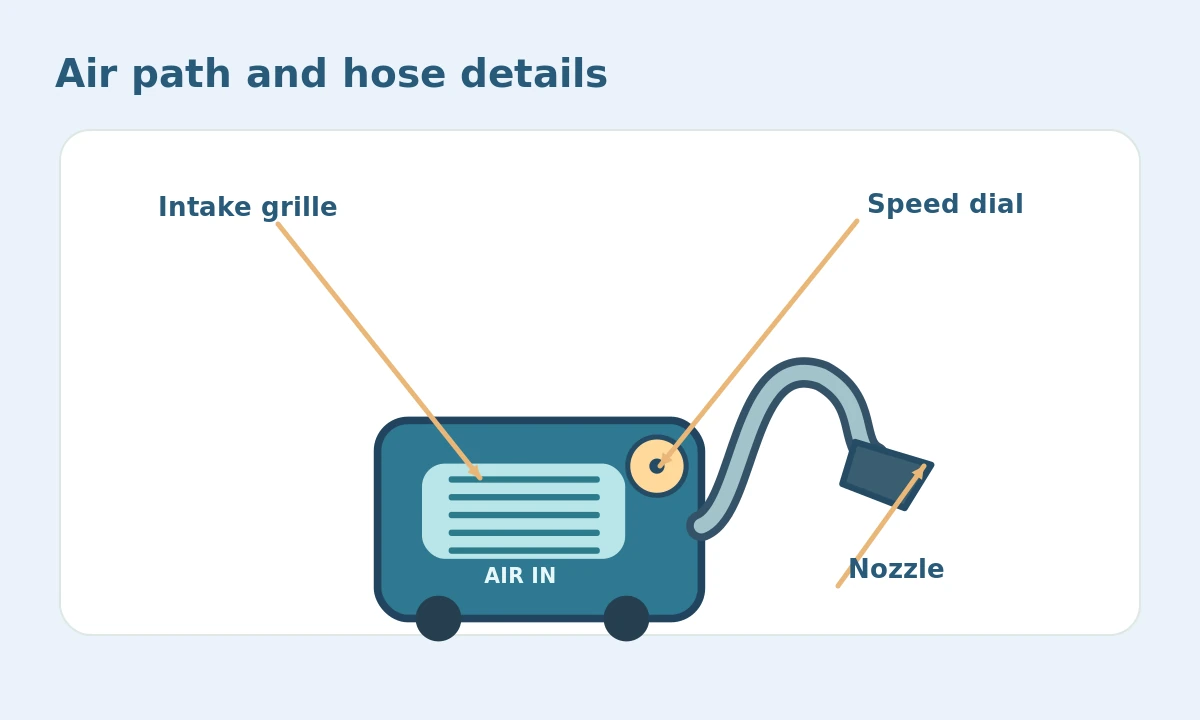
The hose needs enough reach that the main dryer unit can remain on a stable dry floor while you work. Check that the nozzle locks securely and cannot fly off. Look for an accessible intake screen that collects loose hair before it enters the motor. Keep towels and shed fur away from the intake. A twisted hose can pull across the dog’s legs or jerk the nozzle toward the body. Route the cord away from water, paws, and foot traffic; use only electrical connections approved for the setting.
Protect sensitive areas from direct airflow
Do not point a forceful stream into eyes, ears, nostrils, the mouth, or genital areas. Use a towel and a slower finishing technique around the face. Keep the nozzle above the coat rather than pressing it into skin. Avoid blasts that cause visible discomfort, especially on thin-coated or tender areas. Check the skin between short passes. If a dog has irritated skin, an open wound, or a recent procedure, ask the veterinarian before introducing a powerful airflow tool.
Treat sound as a real buying feature
Force dryers can be loud, and published measurements of professional units document substantial noise exposure for operators. That research does not establish a safe noise threshold for every dog. A quiet marketing label without a test method is not enough. Listen to the dryer away from the pet first. During training, allow the dog to leave, reward calm investigation, and stop for fear signals. People using loud dryers regularly may need hearing protection; consult workplace guidance for professional use.
Compare nozzles for control rather than speed
A narrow concentrator directs a strong stream into a small area, while a broader outlet may spread air across more coat. The right choice depends on manufacturer instructions and the dog’s tolerance. Never use a nozzle that presses into skin or concentrates air in the ear canal. A loose attachment can become a projectile. A low setting with a broad steady pass is often easier to handle than frantic sweeping at maximum power. Check that the fitting stays attached before each grooming session.

Begin training long before bath day
Put the unplugged dryer in the room and reward voluntary investigation. Next, run it briefly at a distance with the dog free to retreat. Pair the sound with something pleasant, and end before the dog becomes distressed. Only after that should you introduce a gentle stream at an appropriate distance from the body. Some dogs may require several sessions across multiple days. Do not restrain an animal in panic merely to finish faster. A professional fear-free groomer can help when home practice is not progressing.
Dry damp fur without overheating
First blot excess water with absorbent towels. Set the dog on a stable, non-slip surface and use the lowest effective airflow. Keep the nozzle in motion, follow coat direction when appropriate, and pause frequently to check warmth. Avoid heating one location, particularly the armpits and belly where airflow may feel intense. Some dryers heat up during operation even without a dedicated heater, so test the air repeatedly. Stop if the dog pants excessively, struggles, or shows signs of skin discomfort.
Know when a towel is the safer choice
A force dryer is not compulsory. A small short-coated dog may dry comfortably with towels and room-temperature air in a warm indoor environment. An anxious dog may need a slower approach or professional support. Do not leave wet dense fur packed against skin for prolonged periods, but do not make a forced session the alternative. If mats are present, consult a groomer before aggressive blowing or tugging. Proper prep and dog cooperation take priority over a dramatic before-and-after result.

Clean and store the dryer safely
Switch off and unplug the unit before removing collected hair from the intake or wiping attachments. Let the equipment cool, then follow the manual for filter access and cleaning. Check electrical cords for cracks and nozzle fittings for damage. Store the unit where pets cannot chew the hose or cable. Never improvise replacement electrical parts or use a household hair dryer as a direct equivalent. Good maintenance protects airflow and reduces the chance of unexpected loud rattles during the next grooming session.
How We Research
Our research draws on veterinary, animal welfare, manufacturer, and government guidance for this task. The article separates documented recommendations from practical inspection advice that depends on the pet, surface, or machine. HubPet has not independently tested products or certified a safety result. Source material was checked in October 2026, and the exact equipment manual should govern maintenance and use. Read more about our process on the About HubPet page.
Sources
VCA Animal Hospitals — Grooming and Coat Care for Your Dog (accessed October 2026).
CDC — Noise Impacts From Professional Dog Grooming Forced-Air Dryers (accessed October 2026).
OSHA — Noise Exposure During High-Velocity Dryer Use (accessed October 2026).
Equipment and noise safety note: Follow the dryer manufacturer’s electrical and nozzle instructions. Never force a frightened pet to remain under a strong air stream. A veterinarian should assess painful or inflamed skin before drying.
No. A force dryer relies on substantial airflow to move water; a human hair dryer may deliver heat unsuitable for a pet.
Avoid strong direct airflow at eyes, ears, nose, or mouth. Use a towel and gentler finishing around sensitive areas.
Not necessarily. Compare measurements and conditions where available, and test sound at a distance before approaching your dog.
No. Start with the lowest effective setting and stop if the dog shows discomfort or skin irritation.
Stop rather than forcing the session. Practice gradual sound exposure with rewards or consult a qualified low-stress groomer.