
Pea-husk litter can look like tofu-style plant pellets, but pellet hardness, breakage, clumping and your cat’s comfort need separate checks. The checks below prioritize your cat’s normal toilet habits and the real handling limits of the material. For health-related decisions, see our veterinary information disclaimer.
Identify the product rather than assuming all plant pellets match
Pea-husk litter often contains plant-derived material shaped into pellets, sometimes with other binders. Two bags that sound similar can use very different pellet sizes, hardness and clumping systems. Read the ingredient label, any added fragrance and the recommended disposal method before buying. Do not assume that a pea-husk formula behaves like every tofu or wood-pellet litter. The useful question is whether its particles stay comfortable under your cat’s paws while handling moisture and waste at a manageable cost. Use a small trial bag to learn that, rather than purchasing bulk stock solely from an ingredient headline.
Use pellet dimensions as a paw-comfort clue
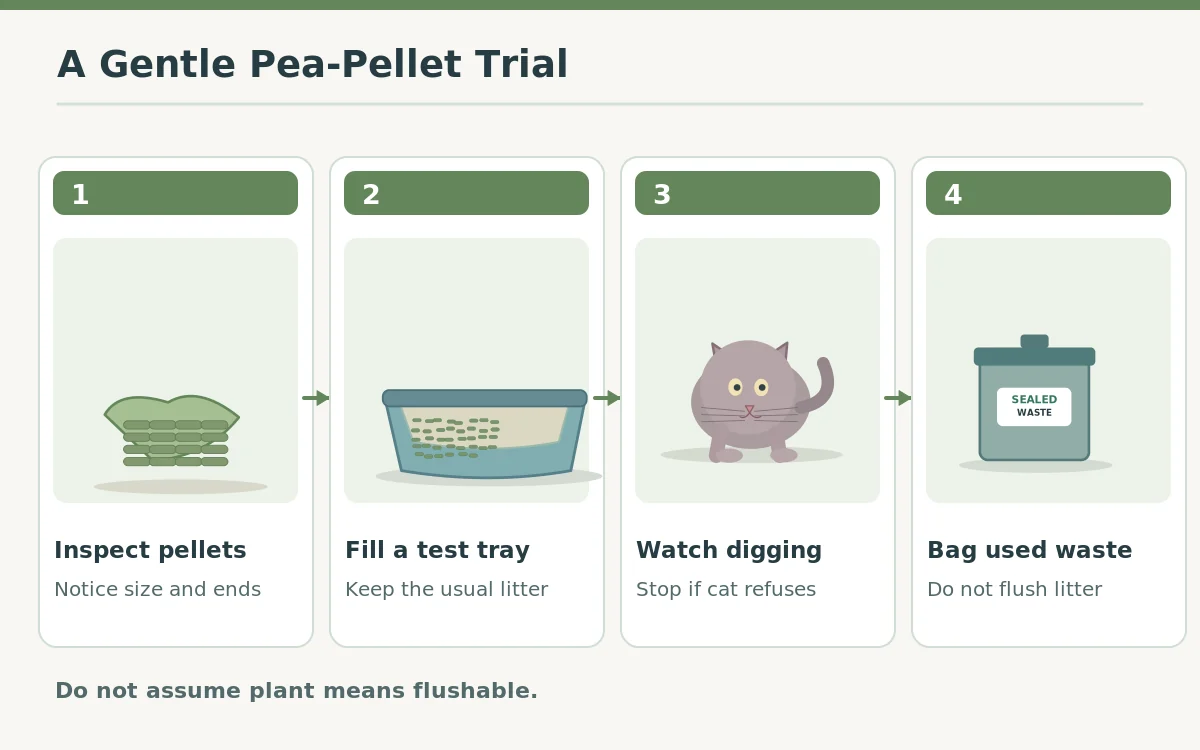
Compare the diameter and length of a few clean pellets with your cat’s current litter. Long hard rods may roll under the paw instead of offering a sand-like surface for digging. Smaller softer granules may feel more familiar, but they can track differently. Cats Protection says many cats prefer a fine, sandy substrate and that older cats can find coarse materials uncomfortable. Your cat may show discomfort by balancing on the tray rim, scratching the wall instead of the litter or walking away. Stop the trial if the cat rejects the surface. The material is not worth forcing.
Read clumping directions before treating pellets as scoopable
Some pea-husk formulas advertise rapid clumping, while others absorb and soften in a different way. The point of a clump is to let you remove soiled material cleanly. Lift a naturally formed clump gently and see whether it crumbles or leaves damp residue underneath. Avoid timing the cat’s bathroom visits or withholding toilet access to conduct an experiment. A narrow scoop may catch long pellets differently from fine grains, so try the scoop you already own before buying special accessories. Clean up wet residue and change the remaining litter when it no longer stays fresh.

Watch how the pellets fragment across several days
Litter can look tidy immediately after pouring but create fragments after footsteps, scooping and moisture exposure. Notice whether the ends of pellets break into smaller pieces that spread around the entrance. A mat with a comfortable walking surface may help collect stray particles without creating another unpleasant texture. Do not choose a mat with sharp edges or deep uncomfortable holes simply to trap every grain. Compare the actual floor cleanup and how often you must empty the mat. Any claim that plant pellets eliminate tracking should earn skepticism without consistent product-specific measurements.
Keep moisture out of the unopened supply
Plant-based granules may change after humid storage, depending on the recipe and package barrier. Keep unopened bags off damp floors and close opened bags after each refill. Use a dry container with a clean lid if the manufacturer’s instructions permit repackaging, and save the lot and ingredient information. Inspect for unusual odor, visible moisture, pests or clumping inside the storage container before filling the tray. Discard compromised litter according to the label rather than trying to dry or heat it. Store heavy packages where they cannot topple near pets or children.
Skip fragrance as an odor-management shortcut
Scented plant pellets can cover odors for people while making the tray less inviting to the cat. Cats Protection and ASPCA describe unscented litter as a good starting point. Regular scooping, box cleaning, ventilation and adequate tray numbers address the sources of odor. Do not spray deodorizer directly onto litter or add perfume, baking mixtures or essential oils without clear product and veterinary guidance. Keep a newly switched cat’s routine steady: same box location, quiet access and a familiar toilet available. A pleasant smell to you is not evidence of comfort to the animal.

Separate compostable claims from safe household disposal
A bag may call unused plant pellets biodegradable, compostable or flushable, but these labels answer different questions. The Federal Trade Commission requires substantiation and appropriate qualification for environmental marketing claims. Once a cat uses the litter, feces and urine create hygiene considerations that a plant ingredient does not erase. Do not compost used cat litter in a backyard pile, and do not flush it. Bag waste and check the rules of your municipal collection service. Do not treat a green-colored package as permission to put pet waste in garden soil.
Give your cat an unpressured comparison
Place pea-husk litter in a separate tray near the established toilet, keeping both trays clean and reachable. A very gradual transition can work for some cats, but allowing a side-by-side choice avoids burying disliked pellets inside the usual litter. Observe normal visits over several days. If the cat eliminates elsewhere, promptly restore access to the old substrate and consult a veterinarian when toileting habits change suddenly. Never punish or physically place a cat into a tray it is trying to avoid. Comfort comes before a household preference for easier disposal.
Calculate the true benefit of the new litter
Weigh the purchase against the number of days a bag remains usable, the volume you scoop, pellet breakage, cleaning time and acceptance. A lighter-looking bag may not last longer, and a pricey formula may still work well if it creates less waste in your particular tray. Keep notes for about two weeks and compare against the same cat’s prior routine. Make the final choice based on consistent toilet use and ordinary cleaning results. If you cannot verify what the disposal label means in your area, assume bagged household waste rather than sewer or garden disposal.
How We Research
We compared feline welfare and public-agency guidance cited below, separated general litter-box preferences from product-specific claims, and identified what owners can safely observe during normal use. Our comparison of pea-husk cat litter does not claim laboratory testing, brand endorsement, veterinary diagnosis, measured dust scores, or proof that an eco label applies to used pet waste. Product instructions, local disposal rules and the individual cat’s response take priority. See how we approach editorial research. Reviewed October 28, 2026.
Sources
Cats Protection, How to Choose the Best Cat Litter for Your Cat. View the guidance. Accessed October 28, 2026.
ASPCA, Litter Box Problems. View the guidance. Accessed October 28, 2026.
RSPCA Australia, How Do I Encourage My Cat to Use a Litter Tray?. View the guidance. Accessed October 28, 2026.
Federal Trade Commission, Environmental Claims: Summary of the Green Guides. View the guidance. Accessed October 28, 2026.
Safety note: For sudden litter-box avoidance, repeated straining, obvious pain, breathing difficulty or abnormal urination, contact a veterinarian rather than attempting to treat the problem by changing products. Follow safe hygiene and local waste-disposal rules.
They can have similar pellet shapes, but ingredients, binders and clumping performance vary; read the specific product label.
They may track differently, but pellet breakage, cat movement and tray setup all affect the real result.
Do not flush used litter or add it to backyard compost; a plant ingredient does not remove pet-waste hygiene risks.
No. Some cats dislike coarse pellets; choose a softer texture and accessible box when paw comfort is a concern.
Offer it in a separate clean tray while keeping the familiar litter available and monitor the cat’s preference.