
Use supervised, reward-based activities and ask your veterinarian about injuries or suspected swallowed toy parts. See the HubPet vet disclaimer.
“Fetch it ball” can mean a basic game, a rubber retrieval ball or a ball used with an automatic launcher. Before comparing gadgets, start with the ball itself: it must be too large to lodge in the dog’s mouth, comfortable to carry and free from detachable parts. A safe fetch game also needs a suitable surface, sensible distances and regular recovery. This guide treats “fetch it” as an invitation to retrieve rather than a command to sprint until exhaustion. It includes a mouth-size check and a gentle way to teach bringing the ball back without chasing the dog.
Size the ball for the mouth rather than the breed label
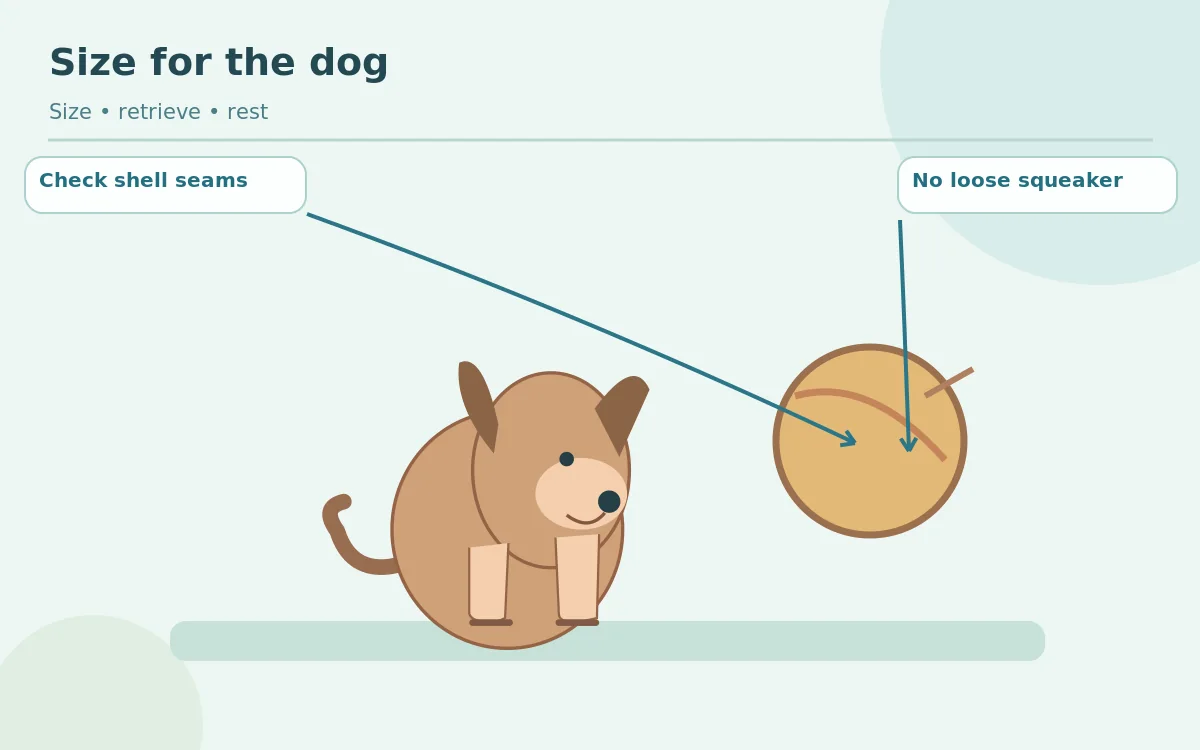
A ball should be larger than the dog can fit completely inside its mouth. PDSA and VCA both stress that undersized or damaged balls can create a choking hazard. Evaluate your own dog with the toy in view and do not rely on a product marked “medium” or “large.” A long-headed dog and a broad-jawed dog may handle different sizes despite similar weights. Choose material that yields somewhat under pressure, with no removable squeaker or loose surface. Inspect the entire shell, seams and air opening where applicable. If the ball becomes slippery or cracks during use, retire it before another throw.
| Ball feature | Good sign | Reject when |
|---|---|---|
| Diameter | Cannot fit completely in dog mouth | Small enough to swallow |
| Surface | Grippy and comfortable to hold | Frayed or very abrasive coating |
| Structure | Resilient with no loose pieces | Cracked shell, loose squeaker |
| Weight | Easy for dog to carry | Hard enough to risk injury |
| Cleaning | Washable per maker directions | Traps grime in damaged seams |
Start with a nearby exchange, not a long throw
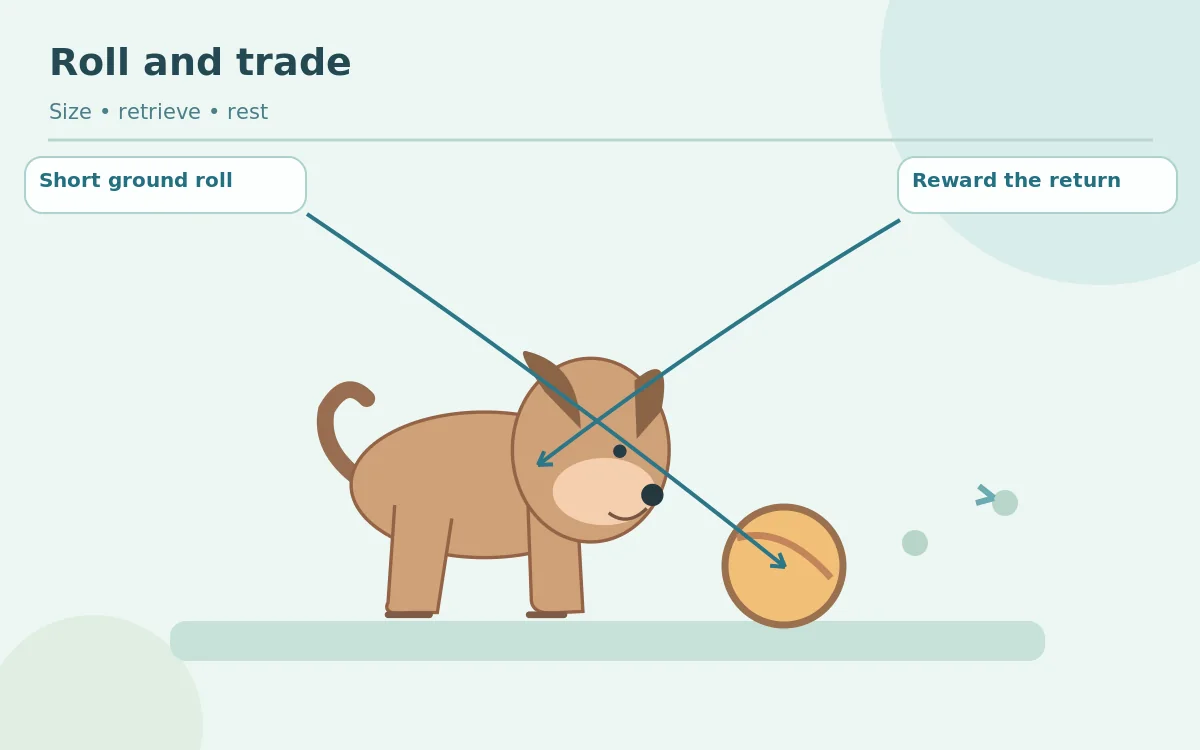
A dog may understand chasing long before returning. Start in a quiet room or fenced space, offer the ball and take one step back. Reward the dog for moving toward you, then exchange the ball for a treat or second ball when it arrives. Add the word “fetch” only after the movement is predictable. An AKC drop-it guide recommends trading rather than prying objects from a dog’s mouth; the same approach prevents fetch from becoming a possession struggle. A short roll along the ground is enough for the earliest sessions. Keep your voice relaxed and allow the dog to opt out instead of repeating commands more loudly.
Avoid throwing at walls, into traffic, near slippery stairs or across hot pavement. Frequent explosive turns and leaps can be particularly hard on growing, older or injured dogs. PDSA recommends allowing sniff breaks and watching for fatigue, even when the dog would continue chasing. Do not use an automatic launcher as a substitute for observing the pet: launchers have model-specific ball restrictions and can encourage repetitive sprinting. Some dogs enjoy carrying a ball more than running after it, and that is a valid play preference. Our guide to balancing play and rest offers additional cues for reducing overarousal.
- Choose an undamaged ball that cannot fit wholly into the dog’s mouth.
- Introduce it on nonslip ground and reward voluntary interest.
- Roll the ball a short distance, then step back to invite a return.
- Trade for a treat or second ball; reward the release and reset.
- Stop for sniffing, water and recovery before fatigue or frantic arousal.
Match the game to the dog and the space
In a small room, a few gentle rolls can build a reliable return without speed. In a fenced yard, use soft, controlled throws and change direction gradually rather than repeatedly launching straight down a long corridor. A young dog benefits more from practice and confidence than from exhausting sprints. Dogs with brachycephalic faces, heart or respiratory concerns, painful joints or recent injury need veterinary guidance on strenuous exercise. Always watch the temperature and footing; a ball can roll under fences, into roads or into areas containing hazards. For multi-dog homes, run separate sessions if the dogs compete intensely over one object.
| Situation | Adjust the fetch game | Why |
|---|---|---|
| Puppy learning return | Indoor roll and trade | Lower speed, clear learning |
| Older or stiff dog | Gentle carry and short distance | Less joint loading |
| Hot day | Indoor scent or calm toy search | Avoid heat stress |
| Dog keeps ball | Reward a quiet trade | Prevents chasing/conflict |
| Two dogs contest ball | Separate sessions | Reduces guarding risk |
Make the end of fetch easy to predict
Tell the dog the session is finished while it is still comfortable, then trade the ball for a calm activity rather than abruptly grabbing it. A sniff walk, drinking water or resting nearby can help the transition. Inspect the ball again for punctures, split seams or a loose squeaker. If the dog resists the trade, work on drop-it away from high-arousal fetch before increasing the game. Where the ball is stored matters too: a dog that shreds toy pieces should not have unsupervised access. Rotate it with gentler enrichment so the game stays novel without becoming compulsive.
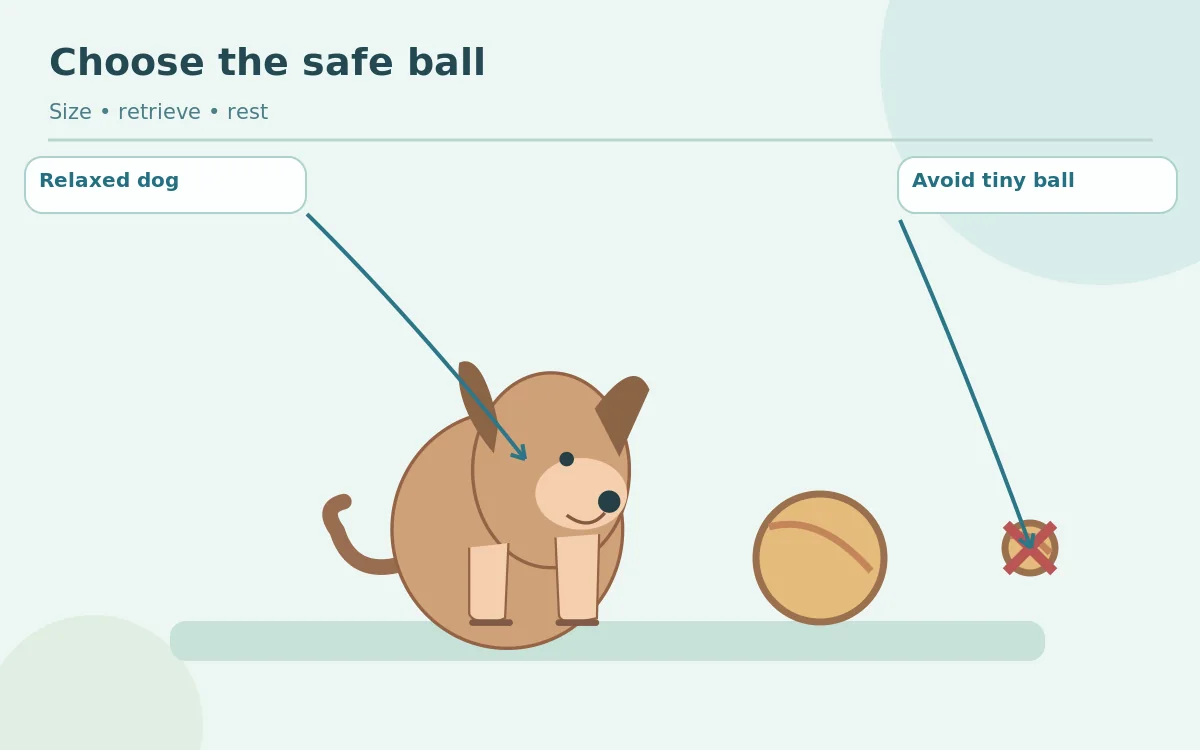
Do not select a ball because a ranking calls it “indestructible.” No chew material is safe for every jaw. Rough tennis-ball felt, rigid plastic, very small rubber balls and loose toy attachments have different drawbacks. Manufacturer cleaning and material instructions can inform use, but independent safety checks are still needed. If a dog coughs, gags or seems unable to breathe while playing, seek emergency help. Less urgent changes—such as suddenly refusing to carry a ball, dropping food or pawing at the mouth—can reflect dental discomfort and justify a veterinary exam. The best fetch setup is the one your dog can enjoy calmly, repeatedly and without injury.
When to Call Your Vet
Seek emergency veterinary help for choking, breathing trouble or suspected lodged ball pieces. Call promptly after swallowing part of a ball, repeated gagging or unexplained vomiting. Discuss exercise intensity with your veterinarian if your dog has heart, breathing, orthopedic or dental conditions.
How We Research
PDSA’s safe-ball checklist and VCA’s toy-selection criteria inform the size and materials checks. The AKC’s positive-reinforcement guidance informs the return-and-trade progression. We do not claim a specific brand, launcher or material is universally safe, and we do not invent automatic-thrower performance ratings. Read HubPet’s editorial approach for more information.
Sources
PDSA — Choosing a Safe Dog Ball — source and guidance checked for this article.
VCA — Choosing Safe Toys — source and guidance checked for this article.
AKC — Teach Drop It — source and guidance checked for this article.
Choose one too large to fit completely inside your dog’s mouth; confirm the toy is comfortable to carry and not damaged.
Abrasive felt and worn surfaces are concerns. Fetch balls should be used as intended under supervision, not as indefinite chews.
Begin with short rolls, reward movement toward you, then trade the ball for a treat or a second toy.
It is not necessary and is not automatically safe. Follow product restrictions and supervise exercise and fatigue.
Pause for panting, slowing, stiffness or frantic behavior, and allow calm sniffing and rest before any further activity.