
Dryer balls can separate garments during tumbling, but they are not a dependable pet-hair catcher; fabric care and lint-screen cleaning remain essential. This article provides practical checks and limitations. See our veterinary information disclaimer for health-related decisions.
Understand the mechanical job of a dryer ball
Wool, rubber and plastic dryer balls move among garments as the drum turns. Their main job is to separate fabric layers, reduce clumping and help air move between items. They do not contain a filter or magic adhesive that stores all the loose fur. Some strands release into the dryer airflow, while others remain woven into fabric or end up on the lint screen. A laundry routine with pet hair may benefit from tumbling, yet it is misleading to promise that dryer balls alone will clean a furry fleece blanket. Look for realistic explanations of materials and care rather than an unsupported percentage printed on a product listing.
Match the ball material to the load
Wool balls are typically quiet and reusable, but rough or shedding wool can leave fibers on delicate garments. Rubber or plastic balls may create more noise, and pronounced spikes or seams can be unsuitable for delicate knits or lightweight fabrics. Read the product and dryer manufacturer instructions before adding anything to the drum. Do not assume that a pet toy or a tennis ball is an equivalent replacement; dyes and materials may transfer or behave poorly under heat. Inspect balls for cracks, loose pieces and strong odors before each use. Keep them away from pets who might mistake them for chew toys.
Remove the worst fur before washing
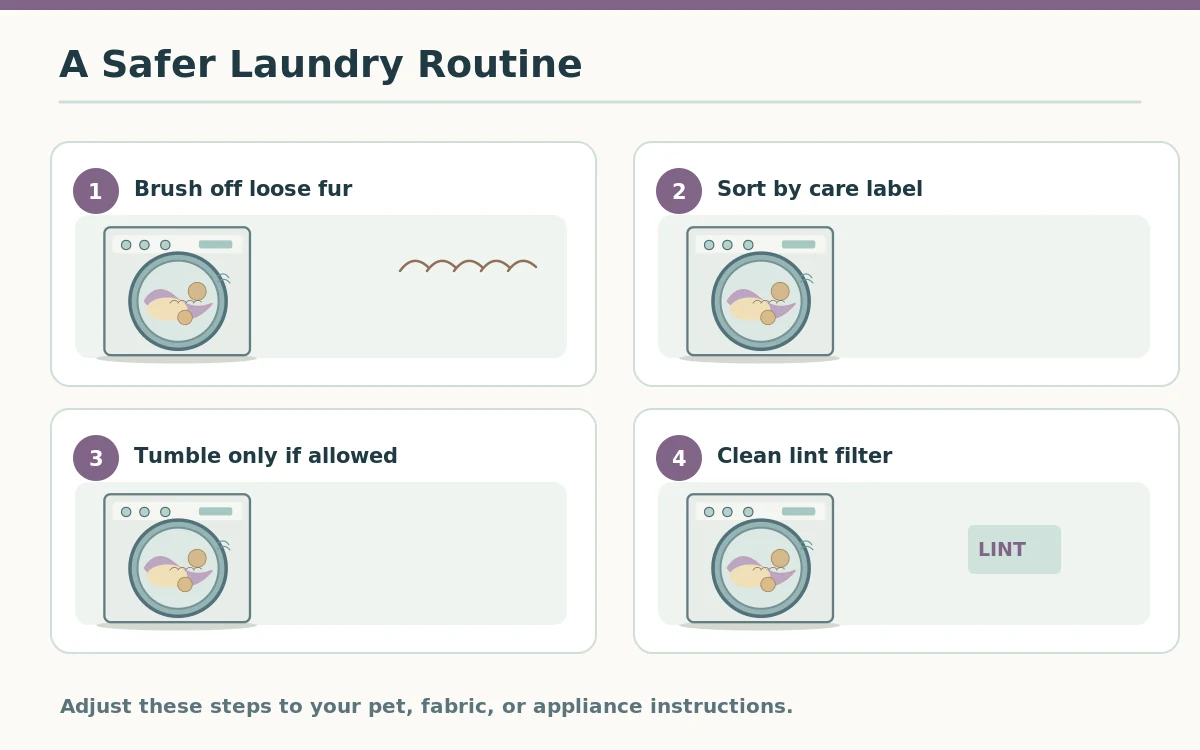
Take a washable throw outside and shake it when conditions allow. Use a fabric-safe lint brush or gentle vacuum attachment on heavily coated blankets. Check pockets and remove clumps from seams so the washer does not have to handle every strand. Sort lint-shedding items away from fabrics that attract lint, following the American Cleaning Institute’s guidance. Do not overcrowd the washer: clothing needs room to move and rinse. If a textile has a rubber backing, foam filling, waterproof membrane or special finish, check its label before washing or tumble drying. Avoid high heat merely because a load contains pet hair.

Choose the dryer setting from the fabric label
A care label sets the temperature limit and whether the textile belongs in the dryer at all. Use that guidance rather than a universal pet-hair setting. An air-only or low-heat cycle can be appropriate for some eligible textiles, but not every material tolerates tumbling. If you test dryer balls, compare similar loads with the same settings to see whether garments separate better or lint accumulates differently. Do not leave a dryer operating while nobody is home. Stop if you hear loud impacts, smell scorching, or see a damaged ball. Keep pets and children away from the running appliance.
Treat the lint screen as the real collection point
Pet hair can accumulate quickly on the lint filter and in the vent path. Clean the lint screen before or after every load according to the dryer maker; do not operate the appliance without it. The U.S. Consumer Product Safety Commission warns that lint buildup can restrict airflow and contribute to overheating. If drying takes longer, examine the filter and arrange vent inspection as needed. Dryer balls do not replace these steps. Never push a tool deep into the vent while the dryer is connected to power. Seek qualified service when airflow problems persist. This safety check matters much more than any untested hair-catching accessory.

Compare wool and synthetic balls fairly
Wool balls may feel gentler and make less noise, while some synthetic designs spread apart thick loads more vigorously. Neither material consistently promises to remove all dog or cat hair. Count physical considerations: material compatibility, durability, noise, ease of cleaning and whether a curious animal might chew the product. Be skeptical of claims that a ball dissolves hair, sterilizes fabric or prevents every static cling problem. Static depends on fiber mix, drying level and the appliance, not merely the presence of an accessory. Consider reusable options on their actual performance and long-term wear instead of decorative packaging.
Run a controlled home trial
Choose two similar loads of pet-hair-covered everyday fabrics with the same care labels. Remove visible clumps from both, wash each properly, then use dryer balls in one trial while holding other factors as constant as practical. Compare visible strands on fabric under the same light, lint collected in the screen, and any new pilling or snags. This is a household comparison, not a scientific effectiveness rating. If a delicate fabric looks worse or a ball sheds fibers, discontinue that combination. A reasonable conclusion might be that the balls help with separation but not with every stubborn strand.
Store accessories and maintain the dryer
After the cycle, let the balls cool and remove trapped lint or hair as their instructions permit. Store them out of reach of dogs and cats; chewed rubber or plastic pieces present a swallowing risk. Check the dryer’s door seal, lint filter and vent maintenance schedule. Avoid stuffing too many balls into an already overloaded drum. Remove clothes promptly when the cycle ends so they do not sit in a damp clump. For households that struggle with heavy fur, frequent gentle grooming and pre-wash removal often make a bigger practical difference than adding more dryer accessories.
How We Research
We compared pet-care or textile/equipment guidance from the sources below, looking for practical checks that an owner can verify without buying a particular brand. We separated observed mechanisms from marketing claims and checked the limitations specific to dryer balls for pet hair. This guide does not claim original laboratory tests, certified product performance, veterinary diagnosis, or exhaustive testing of every model. Read more about our editorial approach. Product manuals and fabric care labels take priority. Reviewed October 28, 2026.
Sources
Maytag, What Do Dryer Balls Do?. Read source. Accessed October 28, 2026.
American Cleaning Institute, Laundering Problems and Solutions. Read source. Accessed October 28, 2026.
American Cleaning Institute, Laundry Basics. Read source. Accessed October 28, 2026.
U.S. Consumer Product Safety Commission, Overheated Clothes Dryers Safety Alert. Read source. Accessed October 28, 2026.
Safety note: Product and routine advice must be adapted to the individual animal, fabric, and appliance. For pain, injury, unexplained coat changes, or persistent distress, contact a veterinary professional. Follow equipment and care-label instructions rather than forcing an unsafe workaround.
Most separate clothes mechanically; they are not specialized lint filters and will not catch every strand.
No. Check garment labels and avoid combinations that cause pilling, shedding fibers or other damage.
No. Pet toys are not necessarily designed for appliance heat and may break or transfer materials.
Never. Clean the lint screen every load and maintain the vent to protect airflow.
Remove more fur before washing, avoid overloading, use fabric-safe brushing, and reassess the appliance and care labels.