
This guide offers general information, not individualized veterinary advice. For pain, distress, illness, sudden changes, or unsafe behavior, contact your veterinarian. Read HubPet’s veterinary disclaimer.
A dog kennel with bed can be a comfortable retreat when the enclosure and resting surface work together. The word kennel can describe an indoor crate, a furniture-style enclosure or a sheltered outdoor doghouse. Those options need different airflow, weather and cleaning checks. Begin with the location and the dog, not a bundled product photo. Measure the usable floor after adding the bed. Next, inspect whether the dog can enter without slipping and settle without forced confinement. This guide offers an indoor-versus-outdoor decision chart, a safe bedding setup and a weekly maintenance routine. It does not recommend leaving a dog isolated outdoors for long periods.
Decide what kind of kennel your dog actually needs
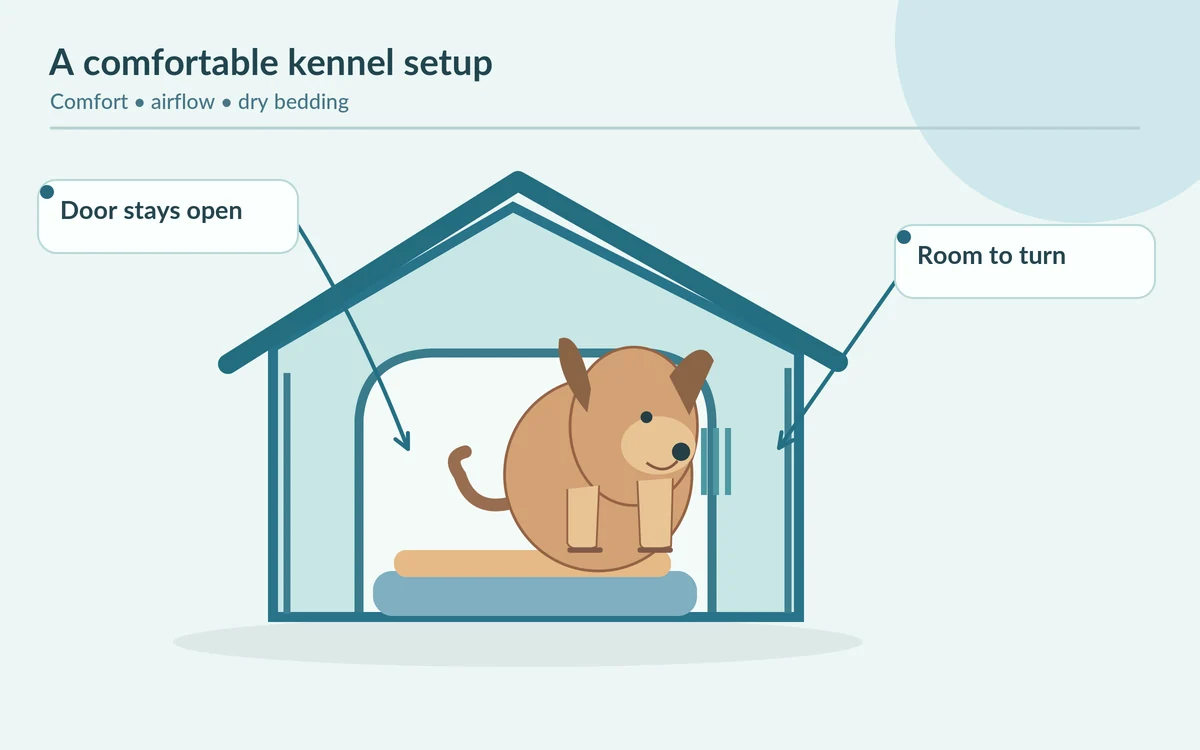
An indoor wire crate can provide a predictable resting spot in a shared family room. A solid-sided travel kennel offers a different balance of privacy and ventilation. By contrast, an outdoor kennel needs weatherproof walls, shade, drainage and a dry resting platform. Do not treat these as interchangeable just because each comes with a cushion. Cornell says a crate should let the dog stand, turn around and lie down comfortably. When you add bedding, repeat that test with the bed in place. Check the entry opening, latch path and corners for protrusions that could snag fabric or a paw.
| Kennel type | Bed priority | Nonnegotiable check |
|---|---|---|
| Indoor wire crate | Low-profile, washable mat | Room to turn and good airflow |
| Indoor solid-sided crate | Dry, removable cushion | Ventilation and an easy exit |
| Furniture-style enclosure | Pad fits without gaps | Secure structure; no trapped heat |
| Outdoor sheltered doghouse | Elevated, washable dry bedding | Weather protection, shade and drainage |
Plan a resting zone rather than filling every inch
Leave a straightforward route through the door and enough level floor for the dog to turn. If a mattress fills the opening or folds against the walls, choose a smaller profile. A bed with a thick bolster may work in a large indoor enclosure but reduce useful space in a compact crate. Also match the texture to the dog. Some dogs settle on a light pad, while others prefer a firmer mattress. Keep accessible zippers, ties and exposed stuffing out of reach of chewers. VCA cautions that swallowing bedding material can lead to gastrointestinal problems.
Position indoor enclosures where the family spends time and where the dog can rest without constant footsteps. However, do not block vents with blankets or push the crate against a heat source. A partial cover may help some dogs, but leave enough open sides to maintain airflow. Outdoor structures need protection from wind and rain as well as a dry sleeping platform. RSPCA guidance also emphasizes shade and weatherproof construction. A kennel is one resting option among several; dogs still need company, exercise, toileting opportunities and time outside an enclosure. The HubPet floor-lounger guide covers open-room alternatives.
- Choose a quiet, ventilated location away from extreme heat or damp.
- Measure the dog, kennel floor, doorway and bedding after setup.
- Place a flat washable bed without blocking an exit or latch.
- Invite the dog inside voluntarily with praise and small rewards.
- Check the floor daily for wet patches, chewing and trapped dirt.

Compare bedding options for regular care
A removable cover often makes daily upkeep easier than a bulky mattress without washable layers. Choose fabrics that dry fully before the bed returns to the enclosure. If wet paws or accidents are likely, a protective liner beneath the soft cover can help keep the core dry. However, verify the liner’s actual care label and keep plastic edges inaccessible. A bed in an outdoor structure needs extra attention after rain, because a dry-looking top can hide moisture below. The CDC recommends washing pet beds and blankets regularly and following the care tag. Clean the kennel tray or floor separately.
| Situation | Choose | Avoid |
|---|---|---|
| Calm indoor sleeper | Flat or medium-density washable pad | Blocking the doorway with a high bolster |
| Mud or occasional accidents | Removable cover plus protected liner | A damp core sealed under fabric |
| Outdoor resting area | Dry raised platform and washable bedding | Wet ground or exposed wind |
| Persistent bedding chewer | Discuss safe alternatives with veterinarian | Loose foam, strings or torn stuffing |
Introduce the kennel with choice and rewards
Leave the entrance open while the dog examines the new bed. Drop a treat just inside and let the dog decide whether to approach. Then reward calm pauses near the resting spot. If the dog lies down, do not immediately close the door. Instead, build a positive association over several short sessions. The HubPet puppy crate-training guide explains gradual introductions. Dogs that pant, drool, scratch frantically or repeatedly escape may need a different resting arrangement and professional support rather than a thicker mattress.
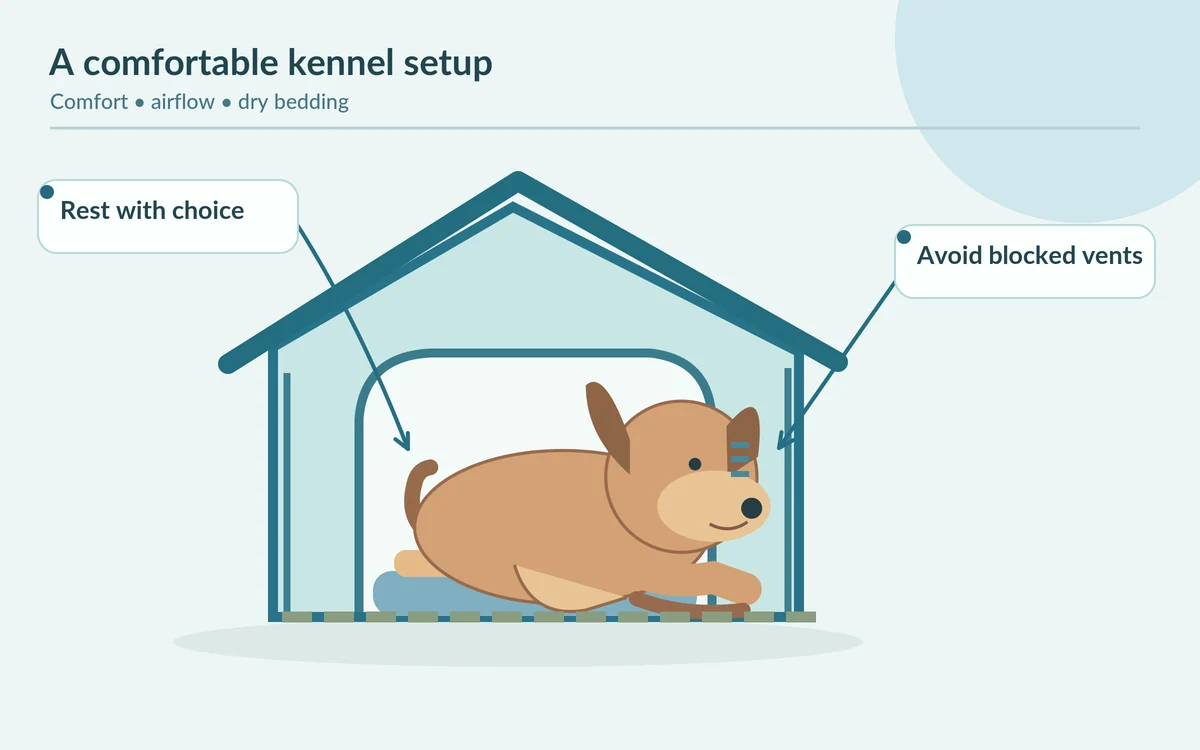
Check the setup after the dog’s actual first nap. Look for flattened padding, wall rubbing, slipped fabric and blocked ventilation. If the bed is too small, the dog may choose the bare corners. If it is too large, it may fold and create uneven footing. For outdoor kennels, assess the location at different times of day. Sun angles, rain runoff and wind can change quickly. Move the sleeping spot to maintain shade, airflow and dryness. Avoid leaving a dog outside in heat or cold without access to a safer environment and human supervision.
When to Call Your Vet
Seek veterinary advice if your dog chews and swallows bedding, limps after resting, has persistent skin irritation or suddenly becomes unwilling to enter a familiar kennel. Distress during confinement can reflect a behavior problem or underlying illness. Ask about safe alternatives before forcing crate time. If outdoor conditions threaten your dog’s temperature regulation, move the dog into a protected space and contact a professional when necessary.
How We Research
This guide draws on Cornell and VCA for crate fit and positive acclimation, CDC for soft-item cleaning, and RSPCA guidance for outdoor shelter. It does not rank brands or imply that a bundled kennel-bed set is automatically safe. Learn how we evaluate practical pet guides in HubPet’s editorial approach.
Sources
Cornell — Crate Selection — source consulted for the relevant section of this guide.
VCA — Reward-Based Crate Training — source consulted for the relevant section of this guide.
CDC — Bed Cleaning — source consulted for the relevant section of this guide.
RSPCA Pet Insurance — Outdoor Kennel Basics — source consulted for the relevant section of this guide.
Not necessarily. Separate washable bedding often gives you more flexibility, while bundled beds still need independent checks for fit, seams and cleaning.
Choose thickness by usable headroom, easy turning and the dog’s comfort. A low-profile pad may fit a compact crate better than a high bolster.
An outdoor resting place needs secure weather protection, shade, ventilation and dry bedding. Dogs also need companionship and access to a safe indoor option during extremes.
The CDC gives weekly bed cleaning as a practical general schedule. Wash sooner after accidents or visible dirt and always follow the textile label.
Try voluntary, reward-based introductions with the door open. Persistent fear or distress deserves a different setup and help from a qualified professional.