
Dog fetch toys should support a predictable pickup, carry, and return. A toy flying farther is not automatically more beneficial. Consider the dog’s mouth width, tendency to gulp objects, grip strength, energy level, and the available landing area before selecting a ball or disc. Many dogs prefer short rolls and successful retrieves to full-speed chases. The most useful buying decision is often between a large flexible rubber ball, a soft structured fetch toy, and a purpose-made disc. None is universally safe; how the dog mouths it matters as much as a product label’s claims.
Judge ball size without a made-up universal diameter
A ball should be large enough that it cannot fit entirely into the dog’s throat, yet manageable to carry without jaw strain. Breed labels and ‘medium dog’ sizing are rough cues, not reliable safety tests. Look at the actual dog’s mouth shape and how the ball changes under jaw pressure. If jaw pressure can squash it small, puncture it into sections, or hide it completely inside the mouth, choose a different size and design. A ball that is too large to pick up is also unsuitable. Ask your veterinarian for guidance when choosing for a dog with unusual jaw or dental needs.
Inspect the surface and bounce
A textured surface can help the dog get a grip, but deep channels may catch dirt and fray. Inspect rubber for peeling coatings or openings where teeth could tear chunks away. Excessively hard or abrasive objects may injure teeth, and an extremely bouncy ball can ricochet into traffic or furniture. For casual fetch, look for moderate bounce and an easy-to-clean finish. Try a slow indoor roll in a clear, nonslip area before any throwing session. A toy should remain in one piece when compressed and carried by your own dog.

Why tennis balls deserve limits
AKC highlights two concerns with felt-covered tennis balls: abrasive fuzz can wear tooth surfaces, especially when gritty, and strong chewers can split balls into choking hazards. That does not mean every supervised brief retrieve with a tennis ball produces harm, but it is a poor default for a dog who obsessively chews the felt. For regular play, consider a suitably sized durable rubber fetch toy without an abrasive fabric layer. Remove any ball that develops a split, loses covering, or collects embedded grit that cleaning cannot remove.
Skip sticks and other improvised projectiles
Thrown branches may splinter or land at an angle that injures a running dog’s mouth or body. Choose an intended fetch toy instead of a stick, rock, or hard household object. Choose Frisbee-style discs designed for canine mouths and inspect them for chipped rims; damaged plastic can become sharp. Don’t use stones as a stand-in even for dogs that seem interested in them. A lightweight, forgiving object is generally preferable to an unpredictable sharp one, and never aim throws toward the dog’s face.
Read the play surface before deciding to throw
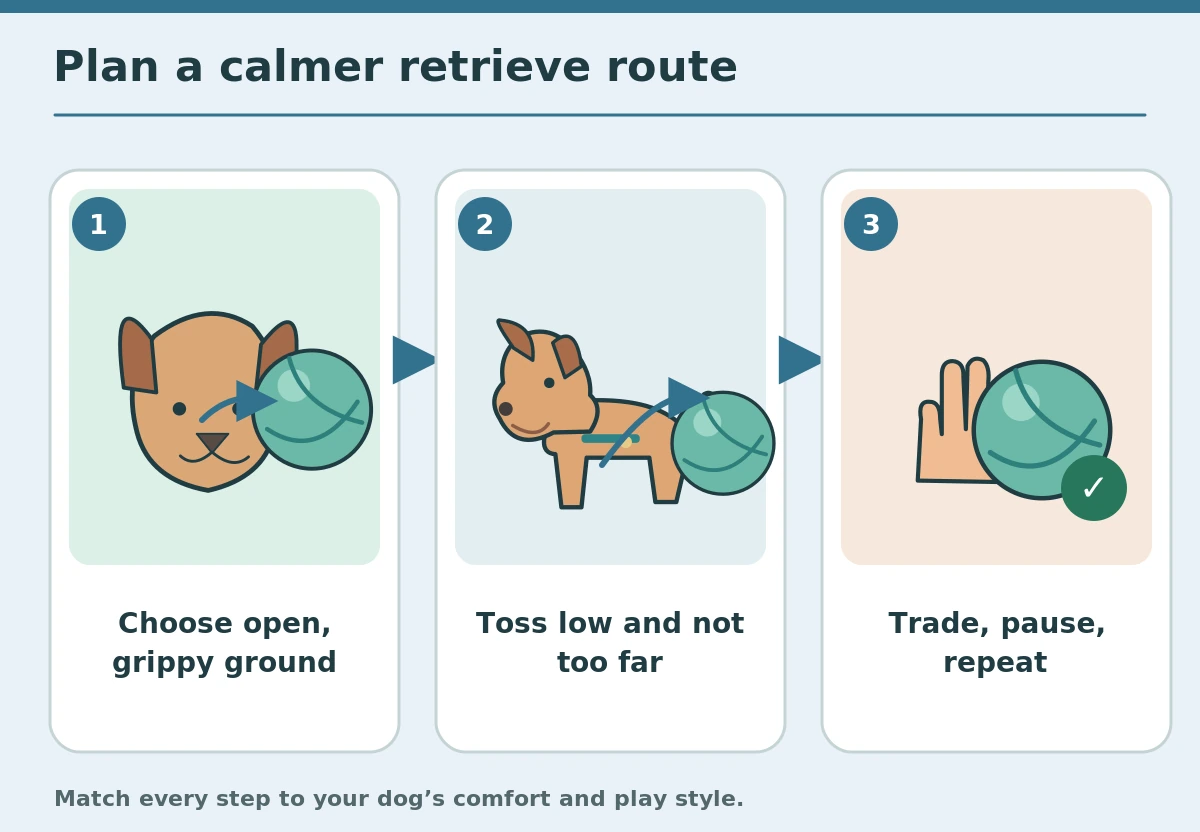
A clear field with predictable footing is safer than a wet tile corridor or a yard full of holes. Check for broken glass, sticks, slopes, hidden drains, traffic access, and other dogs before tossing. A low roll or short gentle toss reduces the need for hard braking and twisting. Keep landing points away from walls, stairs, or water hazards. If the dog slips, crashes into objects, or accelerates uncontrollably, shorten the distance or switch to a sniff-and-find game instead of making the throws more difficult.

Make returning worthwhile through an easy trade
Some dogs love chasing but do not yet understand bringing the toy back. Use a quiet area and a short distance, celebrate any movement toward you with the toy, and offer a second toy or food reward for a voluntary release. Avoid chasing the dog to reclaim it. You can toss only after the dog has returned and reset, rather than firing toys one after another. A reliable exchange is especially important when a ball becomes damaged and you need it out of reach. If guarding develops, stop the game and get suitable training support.
Adjust play for puppies, older dogs, and heat
Fast stop-start sprinting, repeated leaps, or sharp turns can be too strenuous for some dogs, especially growing puppies or animals with physical concerns. An easier version of fetch is rolling a toy a short distance and allowing a calm walk to retrieve it. Provide shade, water, and recovery breaks, and limit activity when weather or indoor temperature is uncomfortable. Do not treat enthusiasm as proof that a dog is physically ready for more repetitions. Discuss unusual fatigue, limping, or exercise limitations with your veterinarian.
Watch the dog, not only the toy
A dog can enjoy fetching while still showing signs that the pace is too high. Repeated slipping, frantic scanning, collisions, excessive panting, refusing to release, and reluctance to walk back suggest it is time to stop or simplify. A dog who begins chewing through the ball after each retrieve is telling you the material or format may be wrong for that session. Switch to a hand-delivered toy, gentle search, or rest rather than repeating the same throw and hoping the behavior disappears.
Compare a ball, soft bumper, and disc
A solid rubber ball can roll predictably and may rinse clean, provided its size and chew resistance are appropriate. Meanwhile, a fabric-covered bumper may give a broad grip but needs frequent seam inspections and is a poor choice for shredders. By contrast, a flexible dog-specific disc offers a different chase path, but airborne catches demand more jumping and can be a bad fit for dogs with joint or mobility concerns. The best choice is the one your dog retrieves calmly without fragmenting, swallowing, or sustaining repeated slips.
Run a thirty-second equipment check
Before every game, squeeze the toy gently and look for cuts, missing segments, loose seams, sharp edges, and grit. Confirm the surface is clear and that a route back to you is open. Begin with one short roll, watch the grip and return, then increase complexity only when the dog stays comfortable. Remove the toy promptly if it breaks. If you suspect a swallowed fragment or sudden choking, seek veterinary help immediately. Record the size and type that works so you can base replacement decisions on actual behavior, not product hype.
How We Research
We prioritized hazards described in AKC’s ball, stick, and toy-shopping guidance and American Humane’s toy inspection principles. Our recommendations distinguish observable fit and wear from unverified product performance or breed-based size assumptions. For our site-wide standards, see About HubPet.
Sources
American Kennel Club — A Guide to Toy Shopping for Your Pup: Read source. Reviewed October 27, 2026.
American Kennel Club — Are Tennis Balls Safe for Dogs?: Read source. Reviewed October 27, 2026.
American Kennel Club — Is Throwing a Stick to Your Dog Dangerous?: Read source. Reviewed October 27, 2026.
American Kennel Club — How to Teach Your Dog to Drop It: Read source. Reviewed October 27, 2026.
American Humane — Choosing Safe Toys for Pets: Read source. Reviewed October 27, 2026.
Safety note: General product information is not veterinary advice. If your dog may have swallowed a toy fragment, or shows pain, choking, or sudden distress, promptly contact a veterinarian or emergency service. See our veterinary disclaimer.
It must be large enough that the dog cannot swallow it or lodge it in the throat, but manageable to grip. Evaluate your individual dog and avoid relying on breed-label size alone.
Tennis balls can abrade teeth with their felt and become choking hazards if chewed apart. Supervise any use and consider an appropriately sized smooth rubber ball for frequent retrieves.
Do not use thrown sticks as fetch substitutes. Branches can splinter or cause puncture injuries, so select an intact purpose-made dog fetch toy instead.
Keep puppy games gentle and brief, prioritizing short rolls over hard braking, jumping, and sharp turns. Ask a veterinarian about activity limits for an individual puppy.
Build a reward-based return and voluntary trade at short range rather than chasing or grabbing. If your dog guards the ball, stop and seek qualified training support.