
An escape-resistant dog harness is designed to make slipping backward less likely, not to make escape impossible. A frightened dog can rotate, reverse, or pull hard enough to expose a weak buckle. Owners need a combination of secure fit, a safe handling plan, and behavior support. If fear or sudden escape attempts are new, discuss possible pain or distress with a veterinarian; our veterinary information disclaimer explains those limits.
VCA notes that some deep-chested dogs may benefit from a double-H style harness, while an incorrect fit can still let a dog back out. This guide focuses on the geometry and failure points of escape-resistant designs, not on generic harness reviews or aversive equipment.
Identify how the dog escapes
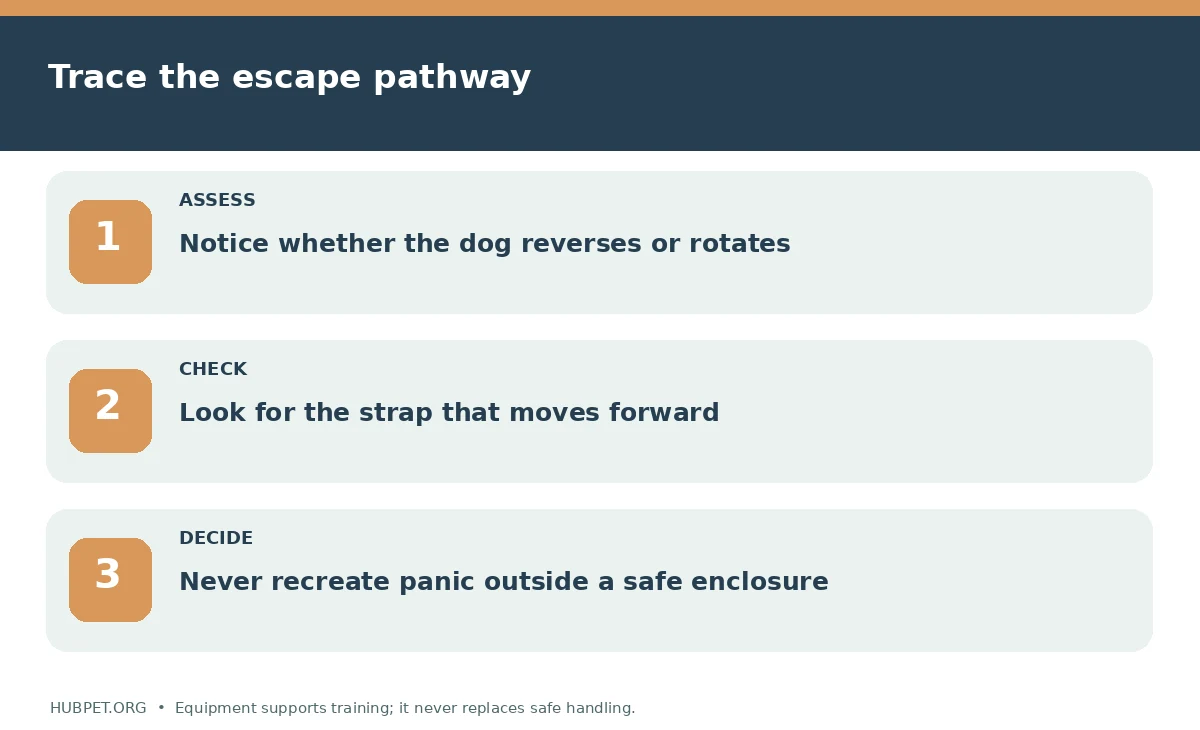
Observe the last few seconds before an escape attempt, ideally from safe footage or in a secure fenced area. Does the dog brace backward, rotate sideways, lower the head, or catch a strap on a leg? Do not provoke a real escape on a street just to gather evidence.
Different body shapes create different problems. Narrow shoulders and a deep chest may allow a basic two-strap harness to slip forward. A thick coat can disguise loose girth straps. Record the circumstances, including startling noises or encounters, because reducing those triggers matters as much as hardware.
Compare ordinary and third-strap designs
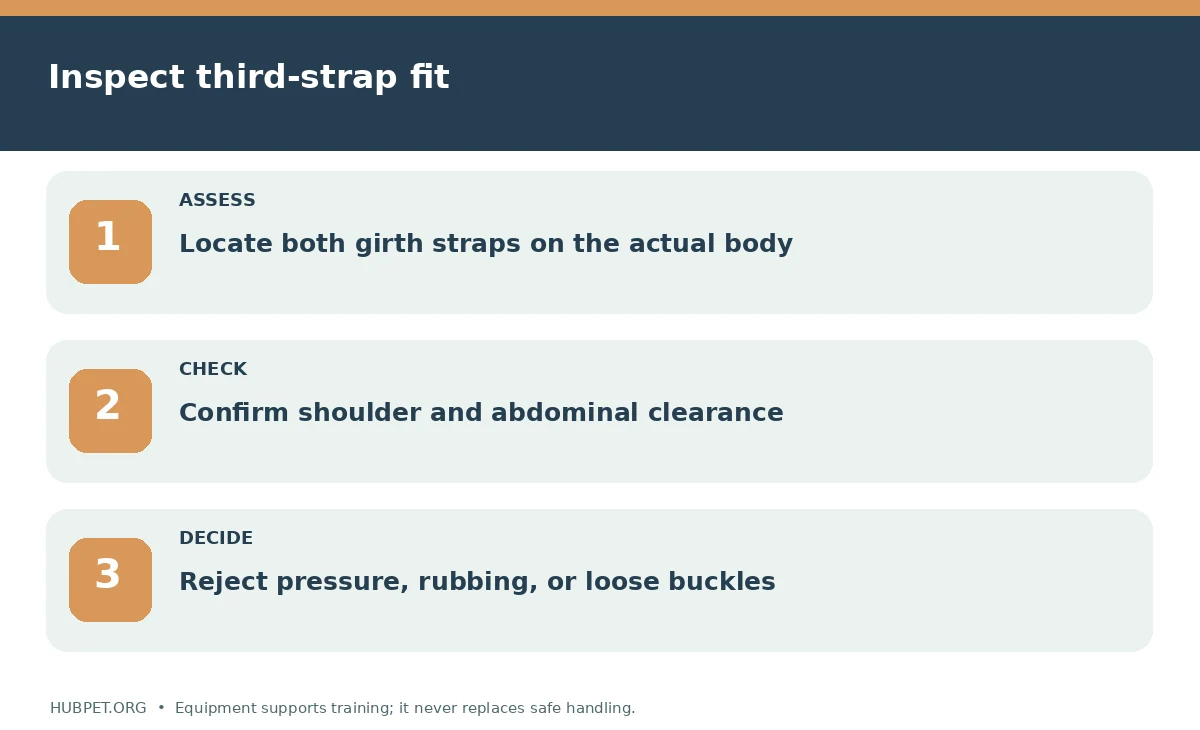
Many escape-resistant harnesses add a second girth strap farther back behind the widest portion of the rib cage. This can make reversing out harder when the body shape and adjustment permit that strap to stay in the intended place. Some designs offer multiple adjustment points.
An extra strap can also interfere with movement if it falls on the soft abdomen or rides too far back. Check that each strap has a secure path and does not tighten into the belly. Do not interpret the word three-point as a safety certification.
Measure more than the widest chest
Measure chest circumference and any additional position requested by the manufacturer. Check neck opening, body length, and the distance from the front legs to the rear strap. A secure chest measurement alone will not tell you where that rear strap lands on a short-bodied dog.
Compare measurements with the real adjustment range rather than assuming one-size-fits-all. Inspect the inside seams and buckle locations for pressure points. If a strap must be tightened until the dog cannot breathe comfortably, that design is not a suitable solution.
Perform a controlled back-out check
In a closed room or securely fenced space, fasten the harness and connect a fixed leash. Invite gentle backward steps while keeping the leash slack enough to avoid choking or jerking. Watch whether the neckline advances toward the ears or the rear strap slides forward.
Stop immediately if the dog shows fear or the straps press into vulnerable areas. Never stage a panic response to prove security. If the fit fails with mild motion, reject the harness before using it outdoors; a busy sidewalk is not a fitting room.
Inspect buckles, stitching, and attachment rings
Look for reinforced stitching at the leash ring, secure adjustment sliders, and buckles that cannot partially release under a gentle tug. A handle is useful for some close-control moments but is not a substitute for reliable leash hardware. Examine fabric edges where a twisting dog may rub.
Routine wear changes the risk profile. Wet webbing can stretch, hook-and-loop closures may collect debris, and chewed straps lose strength. Replace damaged gear promptly. No manufacturer label can replace checking the exact item you own.
Use a backup only when it adds real security
Some handlers use a secondary connection from the leash to a correctly fitted collar or separate point, selected to avoid tangles. Evaluate the geometry with a trainer familiar with your dog rather than fastening multiple loose straps at random. The backup should not shift the main force onto the neck.
Avoid using head halters with long lines or retractable leashes; VCA warns that sudden pulls can injure the neck. A backup arrangement must not become another trip loop or a reason to ignore the dog’s stress signs.
Reduce the reason the dog wants to flee
A dog escaping during fireworks or when a stranger approaches needs distance and a calm plan. Start in environments where the dog can stay relaxed, reward engagement, and avoid forcing exposure. AVSAB favors reward-based behavior work over physical corrections.
For persistent fear, seek a veterinarian and appropriately credentialed behavior professional. A tighter harness does not treat anxiety; it may increase panic. Plan the route so there are exits, sheltered spaces, and fewer surprises while you work on confidence.
Practice a predictable emergency response
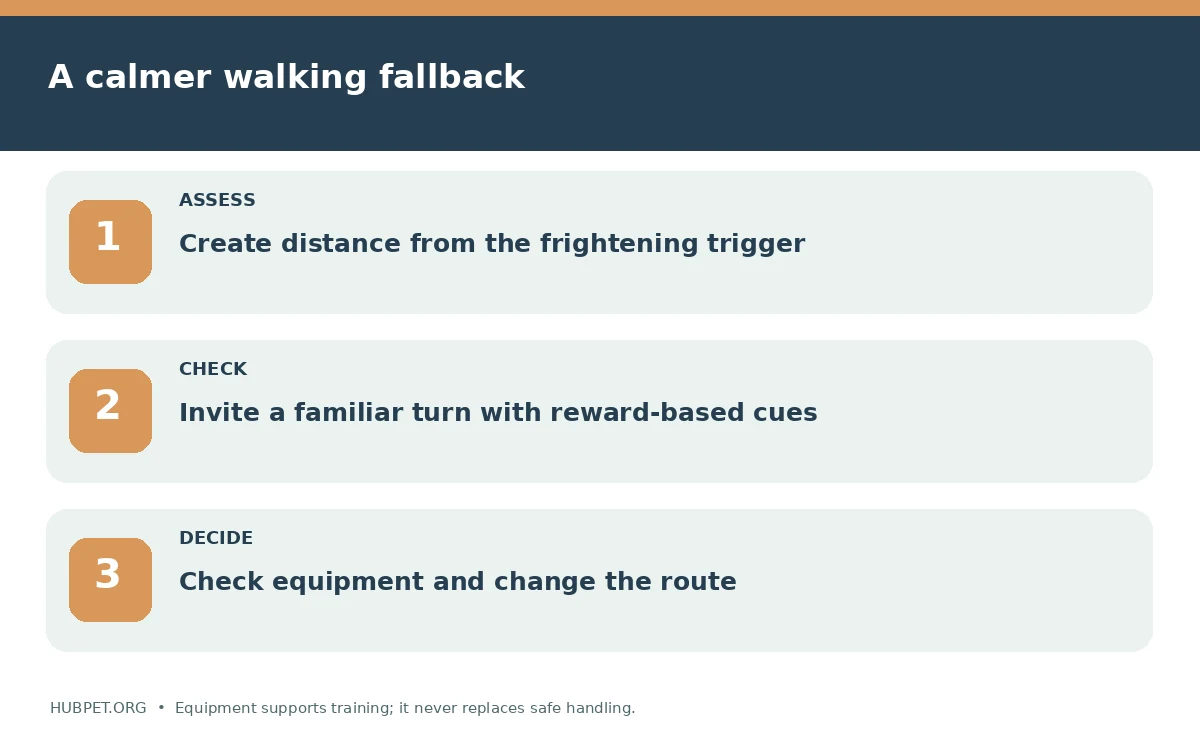
Keep a short fixed leash with a secure grip and carry identification information. If the dog freezes or reverses, stop moving forward, create distance from the trigger, and invite an easy turn with a familiar cue. Do not yank the harness toward the source of fear.
Avoid open-road experiments. Practice turning toward safety inside a fenced area, rewarding voluntary movement. If the dog has already slipped gear outdoors, prioritize preventing another exposure and seek qualified help before resuming the same route.
Build redundancy without more pressure
Fit problems are easiest to catch before a distracting walk. Have another adult check the side view while the dog moves in a closed space. Confirm that the ring and snap hook remain aligned during gentle turns. Keep the identification tag and microchip details current in case an unexpected escape occurs.
Never solve an escape problem by switching to pain-based collars or tightening straps past comfort. When an animal panics, more pressure can increase distress. A safe containment plan may include securely fenced exercise and low-distraction training while a behavior professional helps address the underlying fear.
Use a purchase checklist that can fail
Choose a harness only when all straps land appropriately, shoulders move freely, buckles close reliably, and the back-out check passes without distress. Ask whether the manufacturer publishes a real adjustment chart, replacement-parts policy, and washing instructions.
A genuinely safer setup also includes an environment plan and training. Reject products that promise perfect escape protection. If the dog can still rotate out, use a secure enclosed exercise space until you find a fit and management plan that works.
How We Research
HubPet reviewed accessible veterinary and animal-welfare guidance about escape resistant dog harness. We distinguished published equipment and handling advice from marketing claims without independent measurement. This guide reports desk research, not product testing or endorsements; HubPet did not conduct hands-on evaluations. We reviewed the references on October 26, 2026. See About HubPet and our editorial approach. For individual health and behavioral concerns, seek professional guidance.
Sources
VCA Animal Hospitals: Collar and Harness Options for Dogs. Accessed October 26, 2026.
VCA Animal Hospitals: Controlling Pulling on Walks. Accessed October 26, 2026.
American Veterinary Society of Animal Behavior: Position Statements: Humane Dog Training. Accessed October 26, 2026.
American Kennel Club: Dog Leashes 101: Choosing the Right Dog Leash. Accessed October 26, 2026.
No. Designs can reduce specific slip-out pathways, but fit, condition, and the dog’s movements still matter.
No. A rear strap must land in a comfortable position for that dog’s body shape without pressing the abdomen.
Use a calm indoor or secure fenced setting and gentle movement; never intentionally frighten the dog.
No. Excessive tightness can hurt. Address triggers and seek professional advice alongside an appropriate fit.
No. It is management equipment and does not replace positive reinforcement or professional support for fear.